
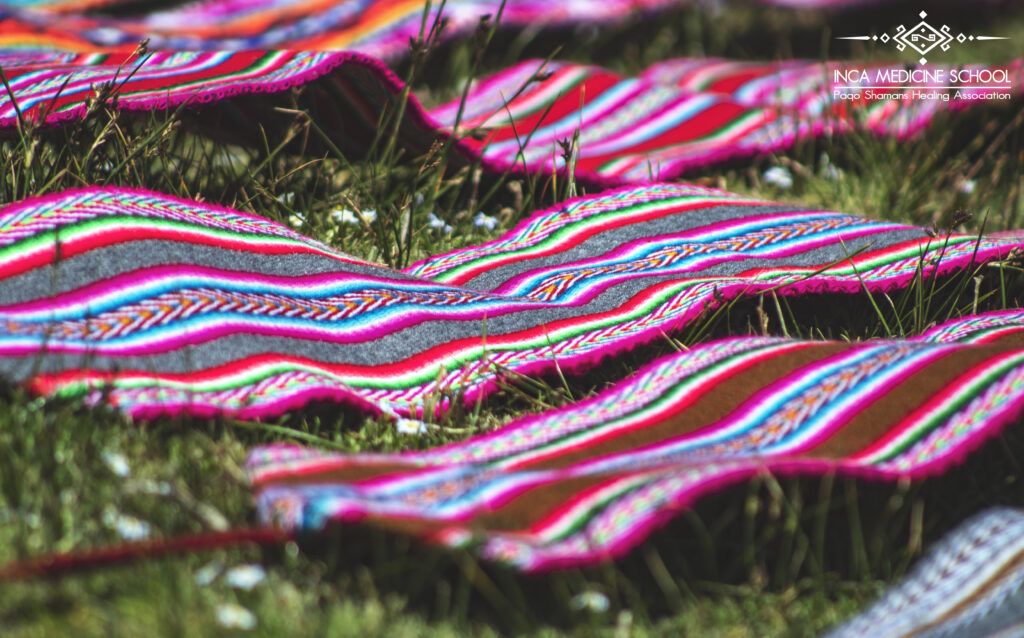
As the final week of June brings the deepest freeze of the winter season. The survival of the Andean communities depends on a profound, tactile art form. While the modern world views weaving as a purely decorative craft, the master artists of the high Punas understand that spinning and dyeing wool is an act of cosmic transcription. Through the practice of Andean textile wisdom, the weaver acts as a mathematician and a priest, capturing the structural alignments of the winter solstice and locking them into the sacred codes, of the Chusi (heavy blanket).
The Loom as a Cosmic Matrix
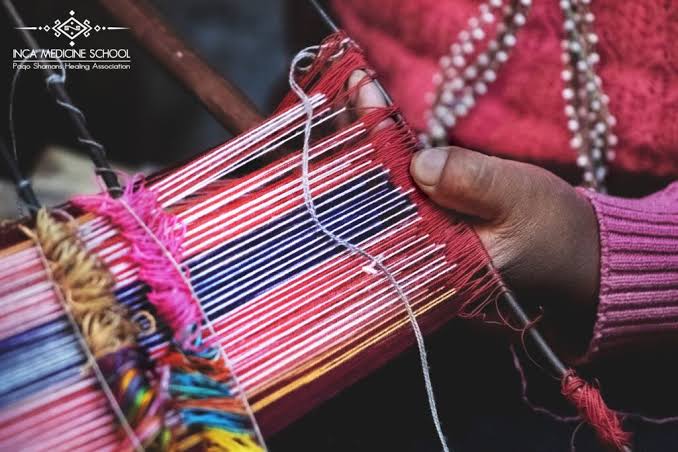
An Andean backstrap loom (Awa K’iku) is a physical model of the universe. The vertical warp threads represent the unyielding, invisible lines of light that connect the earth to the sky. While the horizontal weft threads represent the fluid, human actions that weave across time.
When a master weaver sits on the earth in late June, their hands move with absolute intentionality. They do not use written patterns. Instead, they pull the complex geometric codes directly from their memory and their deep relationship with the landscape.
This creative process illustrates the core transpersonal concept of Pampa:
The blank, fertile canvas of the mind that allows universal truth to manifest without ego distortion.
By selecting specific, naturally dyed wools, cochineal reds for the solar fire of the solstice, and wild indigo blues for the midnight Mayu (the celestial river), the weaver physically anchors the high-vibration frequencies of June into an energetic shield that protects the human body from both physical cold and spiritual density.
The Pallay as Living Scripture
The intricate, woven designs that emerge on the fabric are known as Pallay.
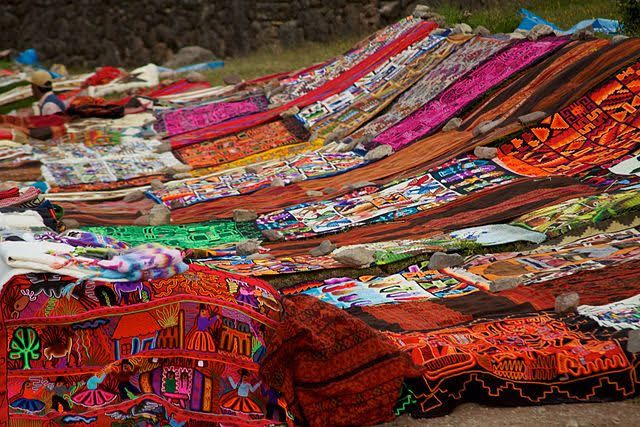
These are not random decorations; they are a highly sophisticated visual language. A single blanket woven in late June might feature the Inti (the sun) sitting perfectly inside a diamond matrix. Flanked by the stylized silhouettes of the Apus (mountain protectors) and the Qollqa.
To wrap oneself in a sacred textile during the freezing June nights is to literally clothe your soul in the architecture of the cosmos. The fabric acts as a portable altar, continuously feeding your personal energy field (Poq’po) with the balanced, harmonious frequencies of the universe. It ensures that your inner light remains steady and insulated against the harshness of the outside world.
“The weaver does not invent the pattern; she listens to the stone, the sky, and the wool until the pattern remembers itself. To wear a sacred textile is to let the ancestors wrap their arms around your spirit.”
The Codes of the Loom
- Pallay: The sacred, geometric iconographic designs woven into textiles that carry deep historical, astrological, and spiritual meaning.
- Awa K’iku: The ancestral backstrap loom, which utilizes the weaver’s own body weight to create the precise tension required to bind the energetic codes into the fabric.
- Pampa: A flat plain or open space. Spiritually, it represents the state of pure, quiet mental openness required to receive cosmic inspiration.
The Centers of the Thread
To witness and integrate this profound textile alignment in late June, two historic weaving sanctuaries offer a direct connection to the living tradition:
- The Textile Sanctuary of Chinchero: Sitting at a high, wind-swept altitude, the master weavers here still utilize 100% natural plants and minerals to dye their wool. They match the precise color frequencies of the June landscape.
- The Ancient Terraces of Pitumarca: Located in the valley beneath Apu Ausangate, this community preserves some of the oldest, pre-Columbian weaving techniques on Earth. They specialize in capturing the heavy, grounding energy of the mountain lords within their wool fibers.
References
- Franquemont, C., Franquemont, E., & Isbell, B. J. (1992). Awa K’iku: The Art of Andean Weaving.
- Silverman, H. (1994). The Signs of the Inka: Textiles and Ideology in the Sacred Valley.
This article draws on both academic literature and oral, lineage-based Andean knowledge. Teachings that originate from living traditions are cited in recognition of their ongoing transmission within Andean communities, while scholarly sources are used to support contextual interpretation.