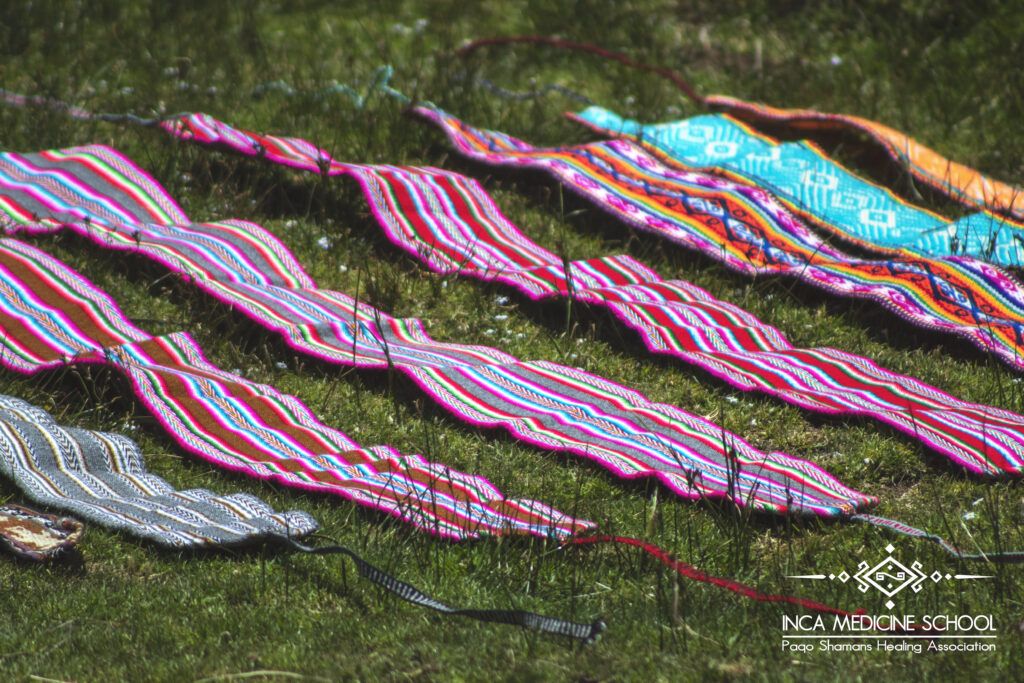
As July draws toward its final days, the sub-zero night temperatures in the high Andes reach their absolute peak. Survival during these freezing midnight hours depends on a heavy, coarse textile known as the Chusi.
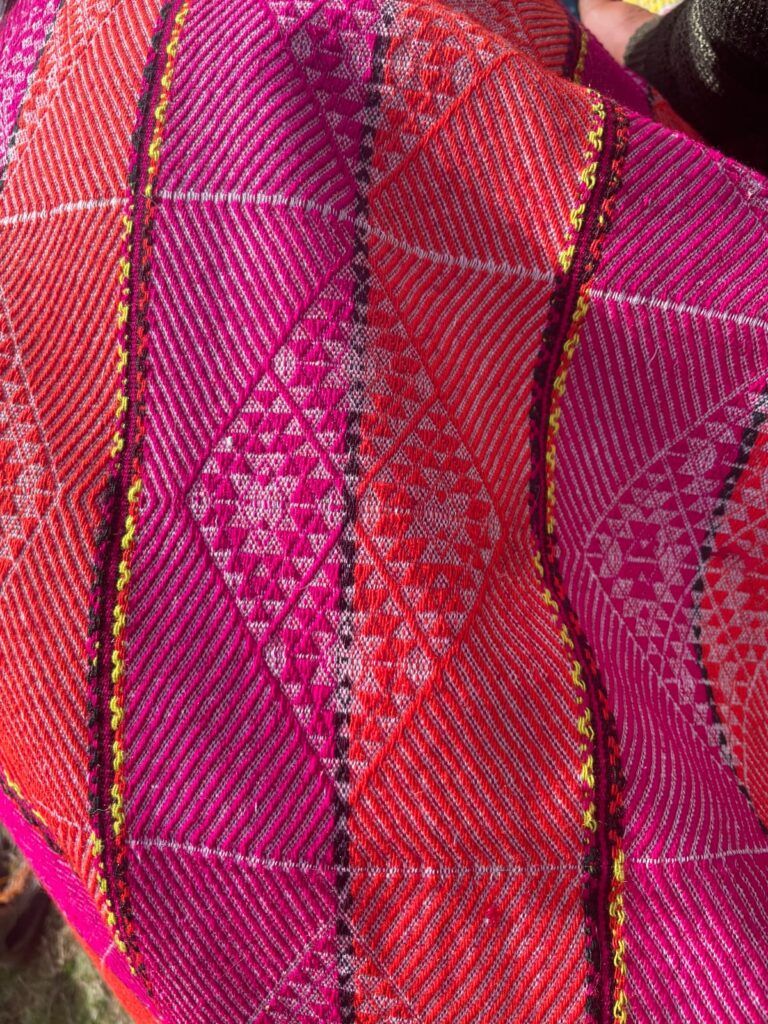
While lightweight garments display fine, delicate patterns, master artisans weave the Chusi. They use thick, hand-spun wool specifically engineered for thermal weight and structural density.
Within the framework of shamanic energy healing, constructing this heavy blanket acts as a profound somatic practice. It teaches the practitioner how to build a thick, unyielding energetic shield capable of repelling the harshest external forces.
The Architecture of the Heavy Chusi
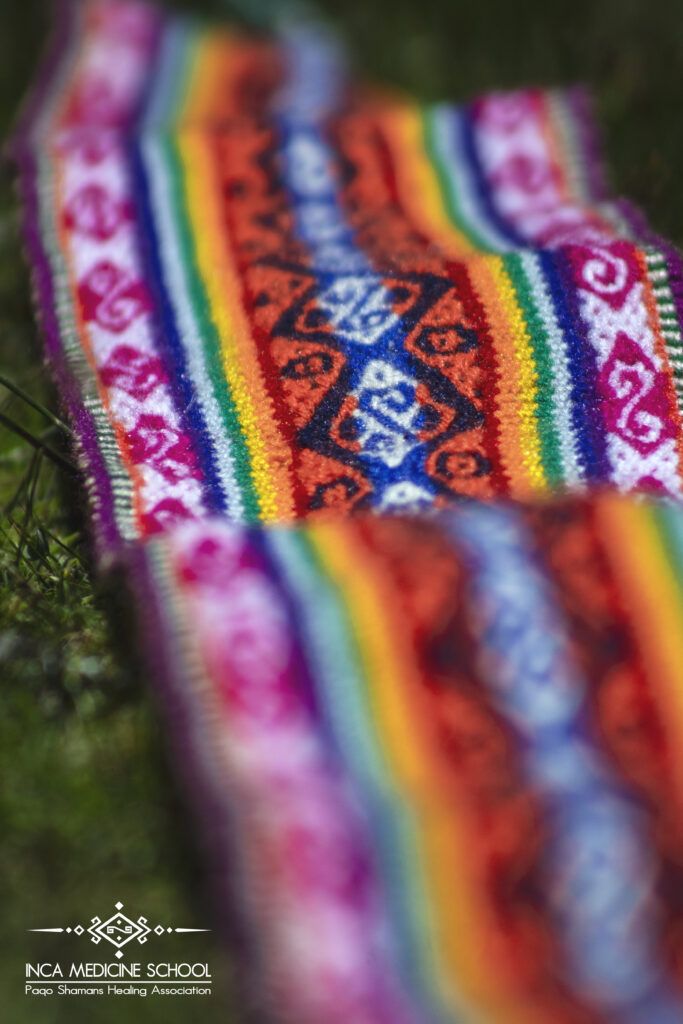
A master weaver sets up the backstrap loom (Awa K’iku) in late July with an explicit focus: binding raw density into protective order.
Unlike decorative tapestries, the Chusi utilizes thick, tightly twisted yarn packed down with intense physical force using the K’ichay (a smoothed llama bone tool).
This physical labor mirrors the essential therapeutic process of Suyu Kallpa, the reinforcement of your energetic boundaries.
In shamanic energy healing, emotional exhaustion and psychic vulnerability occur when your outer field becomes thin, porous, or overly reactive to external chaos.
Weaving the Chusi provides an active model for thickening your personal field. By packing down your intentions with relentless, daily discipline, you construct a dense spiritual cloak (Poq’po).
You cease to absorb every passing environmental stressor, relying instead on a heavy, insulated boundary that preserves your core warmth regardless of how hostile or freezing the external climate becomes.
The Sanctuary of the Night
When a family wraps themselves beneath a hand-woven Chusi during the biting late July frost, they enter a sacred, protected womb. The thick wool absorbs the body’s natural heat and traps it against the cold earth floor, transforming a simple bed into an impenetrable fortress of quiet insulation.
This nocturnal sanctuary allows the human nervous system to drop out of high-alert survival modes and enter deep restorative sleep. Tucked beneath the weight of ancestral wool, your spirit rests in total safety, knowing that the dense geometry of the textile stands guard against both the physical frost and any wandering heavy energies of the winter night.
“A thin blanket leaves your body to fight the night alone. A true Chusi carries the weight of the mountain; under its fold, the freezing wind speaks, but it cannot enter.”
The Vocabulary of Chusi
- Chusi: A heavy, thick woolen blanket woven specifically for bed covering and thermal protection against severe high-altitude frost.
- K’ichay: A traditional weaving tool carved from heavy llama bone, used to beat the horizontal weft threads tightly against one another.
- Suyu Kallpa: The intentional consolidation and strengthening of localized energetic boundaries to build spiritual immunity.
The Centers of the Heavy Thread
To experience how dense textiles anchor spiritual protection during late July, two renowned high-altitude weaving communities around Cusco offer a direct connection to this living art:
- The High Weaving Village of Mahuaypampa: Located on the cold plains near Maras, weavers here produce exceptionally heavy woolens designed to withstand the brutal valley winds. Observing their loom technique in late July reveals the raw physical power needed to pack yarn into a protective shield.
- The Textile Sanctuary of Ollantaytambo: Nestled at the base of monumental Incan stone fortresses, this living Incan town preserves ancient techniques for spinning coarse, weather-resistant carpet and blanket fibers that mirror the unyielding strength of the surrounding granite walls.
References
- Goodell, G. (1969). The Backstrap Loom Weaving of Peru. Economic Botany
- Frame, M. (1986). Visual Images on Ancient Peruvian Fabrics.
This article draws on both academic literature and oral, lineage-based Andean knowledge. Teachings that originate from living traditions are cited in recognition of their ongoing transmission within Andean communities, while scholarly sources are used to support contextual interpretation.