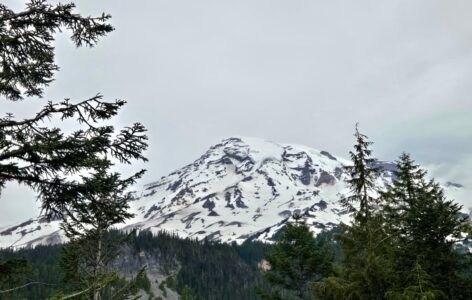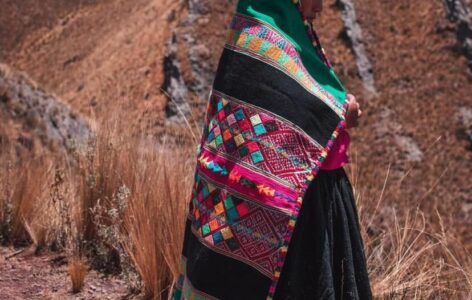
There comes a moment in the Andes when the sky begins to change, when the first Rains arrives. Clouds gather differently above the mountains. The scent of the earth shifts after the first drops touch the ground. Distant thunder may interrupt the afternoon silence, while darker skies suggest that the long dry rhythm is beginning to loosen its hold.
October often belongs to this threshold in the southern Peruvian Andes. The rainy season does not arrive everywhere at the same time, nor does it follow an identical pattern each year. Yet in many places, October brings increasingly visible signs of seasonal change. Rains begins to return to the landscape, sometimes gradually and sometimes with sudden intensity.
From an Andean perspective, this transition carries more than meteorological significance. Water sustains relationships among mountains, communities, animals, plants, and cultivated lands. Across different Andean traditions, people have developed ceremonies, stories, and practices around water and rain, recognizing them as forces upon which collective life depends.
The first rains therefore invite another kind of attention.
They ask us to listen to a landscape beginning to move again.
When the Sky Changes Its Voice
Before rains reaches the earth, the sky often announces its possibility.
Clouds gather around the mountains. Winds change direction. Thunder travels through valleys. The light itself can shift as shadows move across the highlands.
For generations, Andean communities have observed these transformations carefully. Environmental knowledge developed through sustained attention to weather, water, animals, celestial phenomena, and the behavior of the surrounding landscape. These observations helped communities respond to changing seasonal conditions while also becoming part of local cultural understandings of the world.
The sky, in this sense, becomes something people learn to read.
Yet reading the sky does not mean controlling it.
The Andes continually remind us that weather carries uncertainty. A cloud may promise rain and disappear. A storm may arrive unexpectedly. A season may begin earlier or later than people anticipated.
This uncertainty creates a powerful relationship between observation and humility.
People watch. They prepare. They remember previous seasons.
And then they wait.
Rains as Relationship
Water holds a profound place within many Andean traditions.
Ethnographic studies from different regions describe relationships among water, sacred mountains, irrigation systems, offerings, and communal responsibilities. These traditions vary considerably from one community to another, but they share an important insight: water rarely exists as an isolated resource.
It moves through relationships.
Water descends from the sky, gathers in mountains and lagoons, enters springs and rivers, passes through irrigation channels, and eventually reaches communities and fields. Human beings participate in this circulation, but they do not create it.
For this reason, rains can remind us of reciprocity.
Receiving water also creates responsibility.
Communities must care for channels, springs, and shared systems. People organize collective work around water. Ceremonial traditions may also express gratitude or petition the sacred powers associated with water and mountains.
Within these relationships, water connects practical life with spiritual meaning.
The rain that touches the earth also touches memory.
When the Earth Receives the Rains
There is something unmistakable about the first drops after a long dry period.
Dust darkens. Stones begin to shine. The scent of wet earth rises into the air. Small movements appear across a landscape that only moments earlier seemed still.
The transformation may begin quietly.
This encounter between rains and earth offers a powerful image for contemporary spiritual reflection. The earth does not rush toward the water. It receives what arrives and responds according to its own conditions.
Some places absorb the rain immediately. Others allow it to gather on the surface. Streams may slowly return, while plants respond according to rhythms that human beings cannot accelerate.
The landscape teaches patience without speaking a word.
Within an Andean relational perspective, such observations can encourage us to recognize that transformation rarely belongs to one element alone. Water changes the earth, but mountains guide water. Clouds carry moisture, while winds move the clouds.
Nothing acts entirely by itself.
The landscape emerges through relationship.
Asking the Mountains for Water
Across the central and southern Andes, researchers have documented ceremonies intended to call or request rain during periods when communities needed water.
These traditions reveal a remarkable diversity of ritual practices. Communities have approached mountains, lagoons, springs, and other sacred places through offerings and ceremonial petitions. Some traditions connect water with powerful mountain beings, while historical sources also describe deities associated with rain and storms.
Such practices should not be reduced to a single universal “Andean rain ritual.” Each community carries its own histories, sacred places, and ceremonial relationships.
Yet they reveal something important.
People did not always approach rain as something that simply happened to them.
They entered into relationship with the forces and places associated with water.
A petition for rain could therefore express dependence, respect, hope, and reciprocity at the same time. The ceremony acknowledged something that remains true even in the modern world: human life depends profoundly on forces that exceed human control.
The Sacred Moment Before the Storm
Before the rains falls, there is often a moment of suspension.
The air changes.
Clouds cover the mountains. The wind carries a different temperature. Distant thunder may travel across the valley before a single drop reaches the ground.
This moment contains its own kind of mystery.
Nothing has happened yet, and still, everything feels different.
Contemporary spiritual practice can approach this interval as a metaphor for the moments when change becomes perceptible before it becomes visible. We sometimes sense that a relationship, a place, or an inner process has shifted even when we cannot yet explain what has changed.
The Andean landscape offers no simple answer to that uncertainty.
Instead, it invites attention.
Listen to the wind.
Watch the clouds.
Notice what the earth is preparing to receive.
Not every threshold requires immediate action. Sometimes awareness itself becomes the practice.
Listening When the Rains Returns
The first rain does not erase the dry season.
The mountains still carry its memory. Dry grasses remain across the slopes. Dust may return between storms. The transition toward wetter months unfolds gradually and unevenly.
Perhaps this is what makes October such an evocative threshold.
The landscape does not transform all at once.
It responds little by little.
As rain begins to visit the mountains again, the Andes invite us to reconsider our own relationship with change. We do not need to force every transition into completion. We can observe what arrives, care for what sustains us, and remain attentive to the relationships that surround us.
Rain reminds us that receiving also carries responsibility.
It asks us to notice where water comes from, where it travels, and what becomes possible because of its presence.
And when the first drops finally reach the earth, the mountains seem to speak through water.
Not with words, but with movement.
Not with certainty, but with renewal.
And perhaps our task is simply to become quiet enough to hear them.
References
Gil García, F. M. (2012). Lloren las ranas, casen las aguas, conténganse los vientos. Rituales para llamar la lluvia en el centro y sur andino. Revista Española de Antropología Americana, 42(1), 145–168. https://doi.org/10.5209/rev_REAA.2012.v42.n1.38641
Robles Mendoza, R. (2010). Sistemas de riego y ritualidad andina en el valle del Colca. Revista Española de Antropología Americana, 40(1), 197–217. https://revistas.ucm.es/index.php/REAA/article/view/REAA1010120197A
Sedlmeier, K., Imfeld, N., Gubler, S., Spirig, C., Quevedo, K., Escajadillo Fernandez, Y., Rohrer, M., & Schwierz, C. (2023). The rainy season in the Southern Peruvian Andes: A climatological analysis based on the new Climandes index. International Journal of Climatology. https://doi.org/10.1002/joc.8013
Servicio Nacional de Meteorología e Hidrología del Perú. (n.d.). Normales climatológicas estándares y medias 1991–2020: Cusco. https://www.senamhi.gob.pe/main.php?dp=cusco&p=normales-estaciones