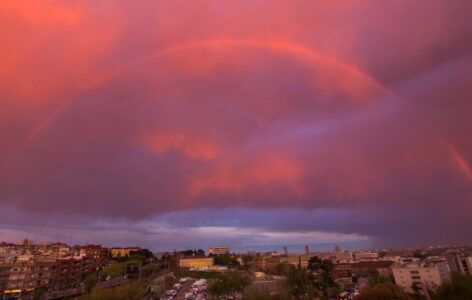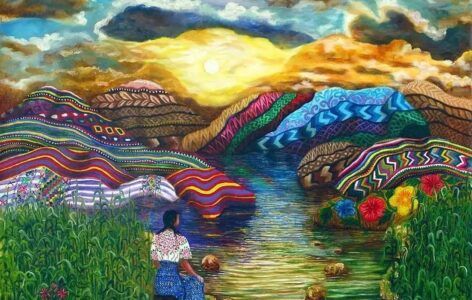
In the Andean world, the days surrounding October 31st to November 2nd are between the Living and the Dead. They are ceremonial thresholds. As the veil between worlds grows thin, Kay Pacha opens to Uku Pacha. These are the days when the living feed the dead with memory, music, and food. In return, the dead feed the living with wisdom and protection.

In the Andean calendar, this moment aligns with the turning of the seasons, when the Earth’s breath slows, and Mama Pacha prepares for renewal. It is believed that during these days, the three Pachas align perfectly, creating a portal of ayni. There, the living, the spirits, and the cosmic forces exchange energy.
🌌 The Opening of Dead in the Three Worlds
In Andean cosmology, existence is woven between three sacred realms:
Hanan Pacha, realm of light, stars, and divine consciousness. It is where Illapa, the lightning, and Inti.
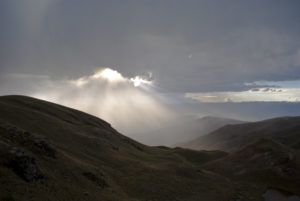
Kay Pacha, the domain of humans, animals, and daily life. It is where we walk, love, and create balance.
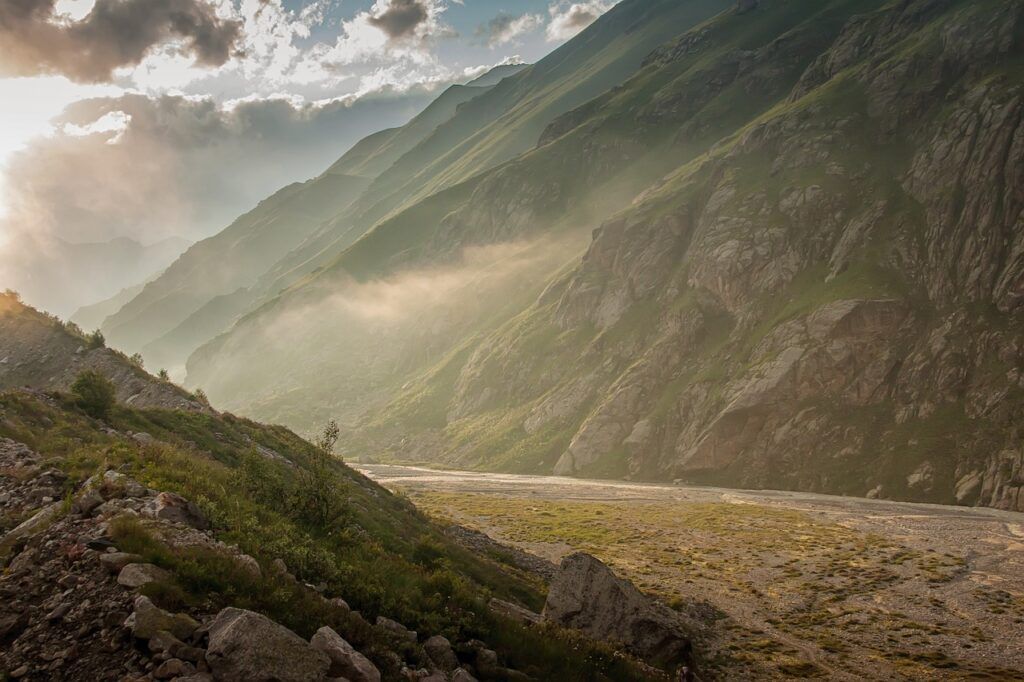
Uku Pacha, the womb of the Earth, home of ancestors, seeds, and the unseen forces of transformation.

During the first days of November, the three realms open and overlap, forming a bridge of energy that allows communication between dimensions.
In this living architecture of time, prayers, songs, and offerings become pathways of connection. Every candle lit, every loaf of t’antawawa baked, and every sip of chicha poured onto the ground is a gesture of ayni, a way of maintaining balance across worlds.
October 31: The Song of Life
While much of the modern world celebrates Halloween, Peru honors something older and more rooted: El Día de la Canción Criolla. Officially declared in 1944, this day honors Peruvian musical heritage: the vals, marinera, and festejo the blending of Spanish, African, and Indigenous rhythms.


In Cusco, the celebration carries a different tone. The people of the Andes, who live close to ritual time rather than the calendar, use this day to sing to the ancestors and to remember joy as a sacred offering. Even modern Halloween festivities, masks, music, and dance, echo ancient pre-Columbian rituals that honored the spirits through disguise and laughter, reminding us that life and death are eternal companions.
November 1: The Feast of All Saints
On November 1st, Catholic tradition honors all saints and blessed souls, but in the Andes, this merges with ancestral wisdom.
Families in Cusco prepare “T’antawawas”, bread effigies shaped like children, symbolizing rebirth. There is also “caballitos de pan”, bread horses that guide the souls in their journey between worlds.


Homes and cemeteries fill with flowers, coca leaves, and chicha. Tables are dressed with the favorite foods of the departed. To an Andean eye, these are not mere offerings but acts of ayni, sacred reciprocity between the living and the dead.
On this day, the ancestors return through the portals of Uku Pacha, traveling along the paths of smoke, aroma, and prayer. The wind moves the candles, the sun warms the skin, and the laughter of children carries their presence. They are not gone, only transformed.
November 2: The Day of the Dead
The following day is dedicated entirely to the souls of the departed. Families visit cemeteries carrying food, drink, music, and love, turning the burial ground into a living temple. There, they share a meal with the spirits, believing that as they feed the souls, the souls in turn nourish their hearts with strength and memory.

In many Quechua communities, this is a rite of renewal: a reminder that the line between life and death is a circle, not a wall.
When the sun reaches its zenith on November 2nd, it is said that the portals begin to close. The ancestors return once more to Uku Pacha, taking with them the warmth of their families’ love.
This cyclical journey keeps Kawsay, the living energy, flowing through generations, an endless conversation between the seen and the unseen.
✨ In Essence
- October 31 – The Song of Life: Music and joy as offerings to the ancestors.
- November 1 – The Return of the Blessed: Communion between saints, spirits, and family.
- November 2 – The Feast of the Dead: A celebration of love that transcends the grave.
In the Andean way, death is not an ending, it is a portal between worlds, a ceremony of ayni, and an invitation to live with consciousness.
References
- Bastien, J. (1985). Mountain of the Condor: Metaphor and Ritual in an Andean Ayllu. Waveland Press.
- Allen, C. J. (2002). The Hold Life Has: Coca and Cultural Identity in an Andean Community. Smithsonian Institution Press.
- Urton, G. (1981). At the Crossroads of the Earth and the Sky: An Andean Cosmology. University of Texas Press.
- Harris, O. (2000). To Make the Earth Bear Fruit: Ethnographic Essays on Fertility, Work, and Gender in Highland Bolivia.