logo im

Coca Leaf Reading

Posted on

In the Inca period, the coca leaf had an official character. The state was the absolute owner of all production, and its cultivation and distribution were its responsibilities.

Three very important elements forged, maintained, and expanded the Inca state: coca, labor, and food. Throughout the empire, people cultivated endless fields of coca. They stored the leaves in large tambos scattered across the empire, and managed them meticulously.

An administrative group for the coca leaf known as “cuca yupaj,” or leaf counters, existed.

Levels of consumption.

  • First. In its generalized form of “chaqchar,” it provides proteins and organic nutrients that no other plant or food can offer.
  • Second, its medicinal use.
  • Third, its metaphysical qualities, thanks to a focused and intentional consumption.

Its use as a divinatory instrument dates back thousands of years. The coca leaf has accompanied the Andean man since he emerged from the glacial caves of the Andes.

They have no pattern, do not obey any contingency, and are unique for both the consultant and the querent.

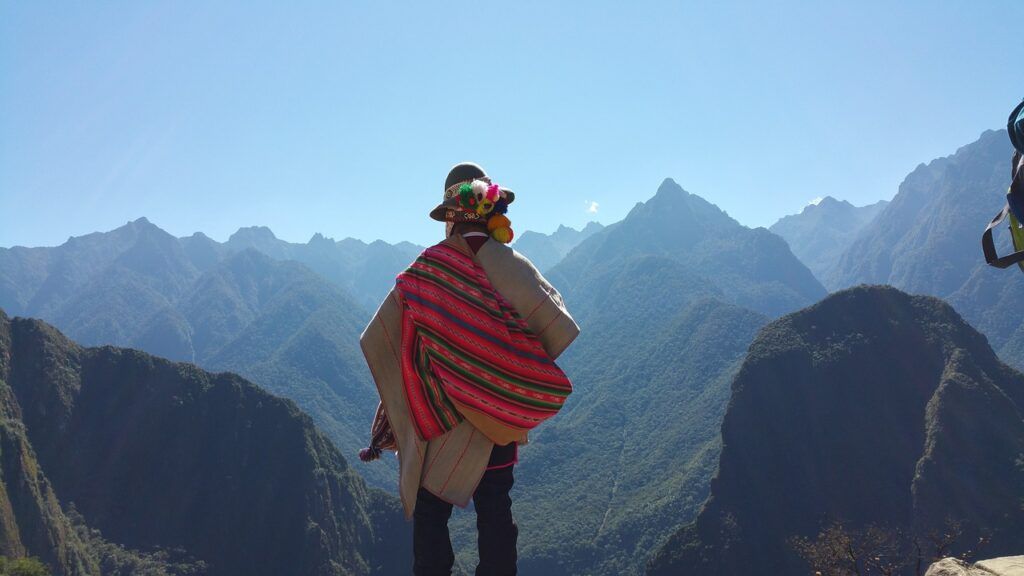
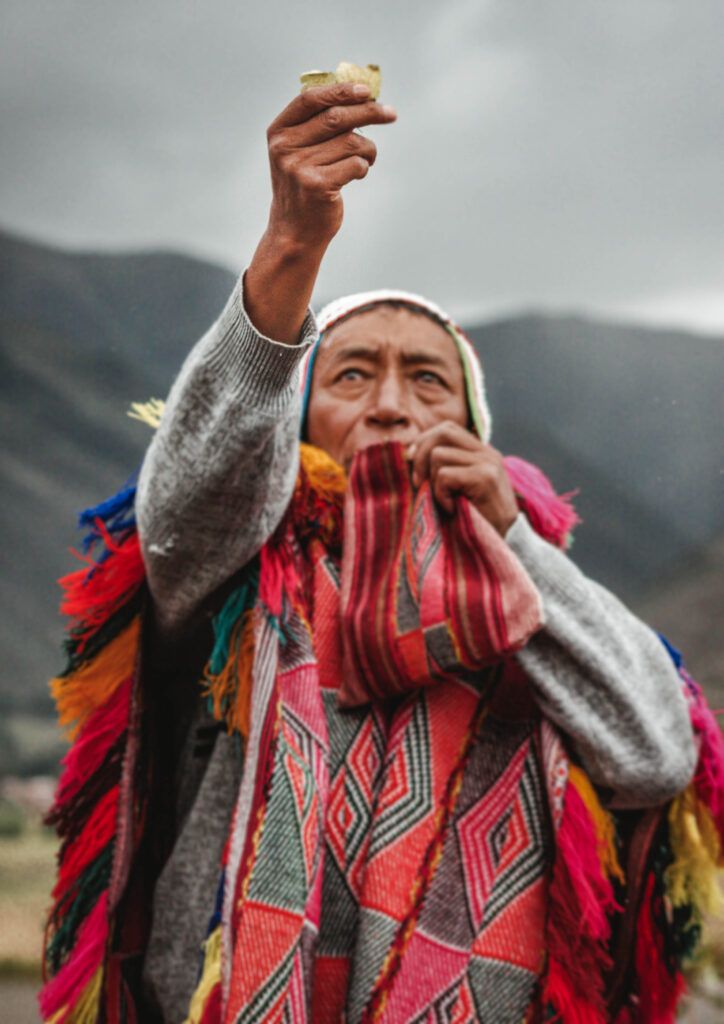
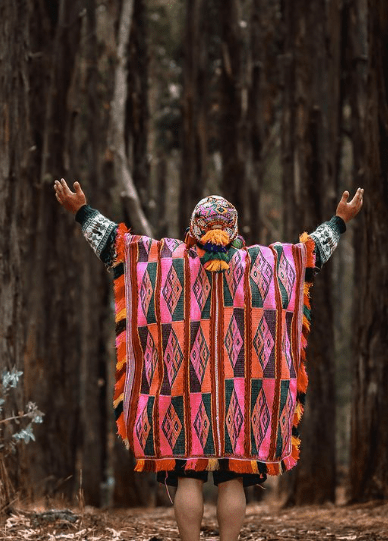
Paqo Qeros Shaman in a Coca leaf lecture online.

Who is a Huatoj, or coca reader? How does one obtain their hypersensitivity?

Hypersensitive individuals number in the thousands among all humans.

Researchers estimate that 3% of the entire population possesses such conditions. However, not everyone is aware of their sensory powers.

Some people even reject these abilities, while others consider them disturbing and undesirable.

Paqos Lecture

Paqo Altomesayoq

The paqos are the intermediaries of these souls, through whom they communicate with ordinary people.

Paqos are everyday individuals with great qualities. They are those who hear words and sounds that have no explanation. They dream of events that will come true or that have already happened.

There is diversity in the way each paqo performs their rituals.

There is no unique, clerical method. What exists is an authentic offering of a gift that they share generously.

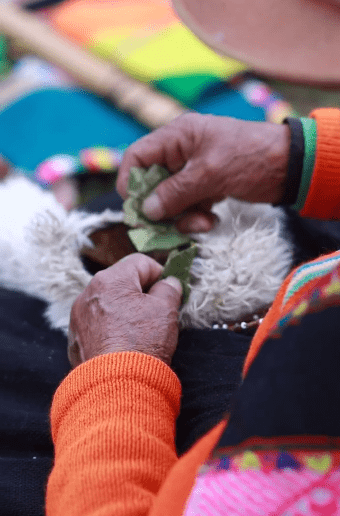
A considerable amount of fresh coca leaves is placed in a bundle made of natural llama wool. For this, the paqo must sit comfortably with the bundle either on the ground or on a table in front of them.

If you are curious of a coca leaf reading and want to experience it in front hand, please visit:

Coca Leaf Reading Consultation!

Andean Writing: Quipu

Posted on

Quipu means knot, tied, cords. It is a form of writing used by the planet’s oldest peoples.

It is primarily an exercise in memory that has a specific structure.

Quipu follows a meticulously ordered system of knots, shapes, and sequences, each with a particular meaning.

Quipu

By combining all these elements into cords, one could construct complete phrases, long sentences, and historical and mythological accounts. They endured through time and were recalled whenever needed by the quipucamayoq or readers of the quipu.

Quipu Inti Take

An enormous radial quipu, contained at its center a circle that represented the Sacred Valley of Qosqo, with the Temple of Qoricancha as the midpoint.

From this circle, 41 cords extended along the four rays corresponding to the cardinal directions.

Each of these 41 cords contained 350 temples or huacas, places of worship and locations of great significance.

The Inti Take is also a document of extensive information about Andean society.

It contains data on panacas, ayllus, and the towns of the Qosqo Valley. It gathered records of succession, lineage, social hierarchy, and correspondence.

Inti Take: Radial quipu

It is likewise a meticulous account of the history of each ruling Inca, serving as an effective informant on the eponymous events of Qosqo‘s history.

This transcendent quipu is reproduced in the chronicle of Cobo, and its reconstruction involved a meticulous, patient, and orderly systematization of all the information contained within.

The information stored in this quipu is vast. We will transcribe in detail the cited persons, named towns, ayllus, offerings, motives, historical events, and more.

The Origin

The origin of the Inti Take dates back to the ancient times of the empire. When quipus and huatanas were the primary means used by people of that era to store information.

These tools allowed them to record all the events of their lives and preserve them for generations.

Over time, the original Inti Take from the four suyus grew enriched with the genealogy of the Incas, adding new panacas and new huacas and mallquis.

It gathered tales of heroes and battles, conquests and celebrations, and extended into the period of conquest, becoming a symbol of a culture. The Inti Take contains the entire history, development, expansion, and civilization of the Incas.

Thousands of these records existed, and there was no place in the empire that had not been documented, censused, and organized. The quipus were, in the time of the Incas, what communication technology is for us today.

The knots ensured an everlasting history for the Incas; they are now the labyrinths we must solve to uncover the writing of the Incas.


References:

  • Candia, C. (2002). Cuadernos Andinos. Records of Inca writing.

Beautiful Saqsaywaman

Posted on

Origin of the word Saqsaywaman

SAQSAYWAMAN literally derives from the words “saqsay,” which means to be sated or satisfied. The phoneme “waman,” means falcon. It thus translates to “sate yourself, falcon; calm your hunger.”

In totemic times, when humans sought gods, it was common for peoples to identify with animals, attributing them supernatural powers.

Sate yourself, falcon; calm your hunger.

The emergence of fear gave rise to a glimpse of spirituality in humanity. People entrusted their lives to the care of the gods, leading to a subservience to the deity, followed by worship, and ultimately the establishment of priesthood and religion.

The last nomads who arrived in this valley and settled here permanently saw that the hill of Saqsaywaman and all its rocky outcrops were nests of falcons.

Hundreds of carnivorous birds posed a challenge for any human settlement. However, this was not the case when one is seeking gods.

The transhumant people made the falcons their idols, worshipping them and offering them food (satiating them). The falcons allowed them to forge the first village in this valley of our subcontinent—the mythical city of Accamama.

Accamama. The former name of Cusco

History

We call it this way to refer to the high hill that crowns the northern part of the Qosqo Valley.

This massive formation, rising from the Plaza de Armas of the Imperial city, is limestone from the geological formation “Yuncaypata“. At its summit and plateau, there are large and numerous outcrops of limestone rock.

These places have been occupied since time immemorial, first by nomads. Then by the initial sedentary families, culminating in the mythical city of Accamama.

The Saqsaywaman plateau is part of the great Andean plateau. It emerged at the end of the Mesozoic and with greater vigor in the Tertiary (150 million years ago).

Today, we can find fossils of ammonites and trilobites among the stones of Saqsaywaman. Remnants of contemporary insects from the great reptiles that inhabited the Earth during the Triassic period.

Location

The Saqsaywaman plateau is located north of the city of Cusco. At an average altitude of 3,490 m.a.s.l, at a latitude of 13°35’54” south and a longitude of 75°59’06” east.

Saqsaywaman

This steep promontory is the spur of a plateau with an irregular surface featuring flatlands, hollows, and hills.

Here, there are countless intrusions of limestone, a result of the movement of the planet’s tectonic plates. It raised the seabeds to the Andean peaks.

People have known the Saqsaywaman plateau for thousands of years. First by prehistoric nomadic hordes, it became one of the first places our migratory ancestors chose to settle down.

The Saqsaywaman plateau is a true forest of rocks, a windy and barren wasteland. It features a karst landscape typical of limestone outcrops.

These soluble rocks, due to the dissolution of calcium carbonate by the action of water.

They undergo internal seepage that transforms them into unusual shapes while also forming underground networks eroded by water. It creates internal channels that the mechanical action of circulating waters later enlarges.

This results in passages, cavities, and underground tunnels that connect various locations, such as the underground passage from the summit of Saqsaywaman to the Plaza de Armas of Cusco.

Plaza de Armas of Cusco

References:

  • Canoia, C. (2002) Cuadernos Andinos N°18. First human settlements in Saqsaywaman.

The Best Ancestral Ceremony – Part 2

Posted on

Cusco is magical, enigmatic, and historical, attracting thousands of visitors. Each year it becomes one of the country’s most popular tourist destinations. ¿Wich ceremony would you prefer to celebrate?

Rituals and festivities are part of the cultural legacy we have inherited. It is our responsibility to ensure they are not merely memories but remain alive for future generations.

Here are three of the most important festivals:

Qoyllur Riti’s Ceremony

Qoyllur Riti means “Star of Snow

It is a religious festival celebrated in Cusco a few days before Corpus Christi and 58 days after Easter.

The inhabitants of the Ocongate district in the Cusco department, perform a rite whose external symbol is the image of Christ. But its deeper purpose is the integration of man with nature.

The people in this area are devotees of Taytacha Qoyllur Rit’i (the Lord of the Bright Snow). This is an ancient religious custom practiced only by the inhabitants of the Andes.

For this celebration, faithful participants and delegations of dancers from various places in Cusco gather in Mahuayani to embark on an 8.5 km pilgrimage through the Sinakara Valley to the Sanctuary of the Lord of Qoyllur Riti.

This ritual is linked to the fertility of the earth and the worship of the Apus (mountains and tutelary gods).

The main ceremony occurs at the foot of the snowy Ausangate. Shepherds, merchants, and curious visitors converge at the Sinakara sanctuary, located 4,600 meters above sea level.

Andean New Year

The Andean New Year, known as “Pacha Kuti Ceremony

Every June 21, coinciding with the winter solstice in the Southern Hemisphere, is celebrated by the inhabitants of Lake Titicaca.

This day signals the end of the harvest season and the beginning of a rest period for the earth, leading to revitalization in August.

It marks a new phase in nature, favorable for planting and new beginnings in people’s lives.

The ceremony begins with a prayer to the Qh’antati Ururi (dawn star) to guide the sun. Followed by offerings to the fertilizing gods of Pachamama for renewal and prosperity.

Communities perform various rituals and cultural activities, prominently featuring offerings to the sun at dawn. As they await the first rays to express gratitude for the earth’s fertility and to seek a prosperous year.

The community leader presents a large breakfast of traditional Andean foods, including:

potatoes, chuño, fava beans, and quinoa

Afterward, a procession leads to Yunguyo for farewell rituals, marking the transition between old and new time with offerings and traditional dances.

Throughout these ceremonies, the inhabitants ask Pachamama for renewal and reciprocity. They recognize her as the most important deity in their worldview.

Kasarakuy’s Ceremony

Kasarakuy means “to marry

This festival takes place exclusively in August (also known as “the month of spirituality”) coinciding with major festivities like the previusly Pachamama Raymi, Blog part 1.

One of the peculiarities of this celebration is that the entire community participates in the formal union of these couples. They dance to the rhythm of huaynos and weare typical clothing of Andean cultures.

Tradition dictates that this ritual takes place after the religious ceremony.

An essential part of the ceremony is the coca leaf ritual to give thanks to Pachamama.

The organization of the celebration is in the hands of the couples’ families, the godparents, and the co-godparents, who prepare the food, decorations, and drinks in their respective homes.

The Best Ancestral Ceremony – Part 1

Posted on

Cusco is magical, enigmatic, and historical, attracting thousands of visitors. Each year and becoming one of the country’s most popular tourist destinations. ¿Wich ceremony would you prefer to celebrate?

Rituals and festivities are part of the cultural legacy we have inherited. It is our responsibility to ensure they are not merely memories but remain alive for future generations.

Here are two of the most important festivals:

Pachamama’s Day Ceremony

Pachamama Raymi means “Festival of Mother Earth

Each year during the first week of August, farmers celebrate by not working the land to allow it to rest and to initiate the payment ritual.

The people of Cusco pay homage to Mother Earth as a thank you for the good harvests that sustain families throughout the year.

The essence of the ritual is based on the principle of reciprocity, which is the core of the Andean worldview.

In this ceremony called “haywasqa” (payment to the earth). The Andean priest known as a “Paqo” leads the use of foods worked and produced by Mother Earth.

The main ritual involves digging a hole in the ground and placing a clay pot with food inside it:

huayruro seeds, coca leaves, chicha de jora, and other beverages.

All provisions must be cooked as a sign of respect for the earth. After which a hole is dug to place all the offerings, feeding Pachamama.

Afterward, they bury the offerings and place a mound of stones and flowers on the ground. It’ll becomes the ceremonial center.

Inti Raymi

Inti Raymi means Festival of the Sun

This is one of the most important festivals in Cusco, gathering thousands of people each year for its celebration.

In a privileged location in the sacred capital, Inca Pachakuteq ordered the construction of the Qorikancha, a magnificent temple dedicated to revering the Sun, which the Incas called Apu Inti.

In honor of this deity, the impressive festival of Inti Raymi was consecrated, and the most important chroniclers described it as characterized by solemnity and splendor.

It is celebrated in the winter solstice on June 24.

The ceremony begins at the Qorikancha Temple with a greeting to the Sun.

After this, the Inca and the mayor of Cusco meet at Haucaypata and finally carry out the central ceremony north of the city on the esplanade of the Sacsayhuaman fortress, over 3,600 meters above sea level.

Today, about a hundred actors dressed in typical Inca clothing gather at this archaeological complex to reenact what was originally the Inca‘s invocation of the Sun.

“Shaman” and Paqos

Posted on

Due to the colonization process of the Russian Empire, in Siberia during the 18th century, the term “shaman” emerged to describe specialists in indigenous rituals and ceremonies.

20th Century

“Shaman” in Europe

In the 20th century, “shaman” spread beyond Russian territory, reaching America and gaining global popularity. Consequently, discussions about shamanism often carried imperial and exoticizing undertones (Alberts, 2015). Various European researchers traveled to Siberia, producing drawings and writings about “shaman“. However, some dismissed them as charlatans or individuals with mental disorders.

At the beginning of the 20th century, some anthropologists began to study shamanism more objectively. They compared shamans to psychoanalysts (Levi-Strauss, 1977) and individuals who find wisdom in solitude (Narby and Huxley, 2005).

This led to anthropological studies of shamanism in different regions, including Africa, Australia, the Amazon, and the Andes. Today, the globalization of the term “shamanism” has given rise to a new religious framework known as shamanic religion.

“Shaman” in the Andes

Archaeological evidence indicates that the phenomenon of Andean priests dates back to ancient times. Even before the pre-Inca cultures, where they played crucial roles as guides and leaders in the socio-political development of their communities (Alva, 2000).

However, it was thanks to Spanish chroniclers in 1532 that we have written references to these figures, who were known by various names in Quechua and Aymara. Such as hampicamayoc, amauta, and huachachic.

The Spanish chroniclers, influenced by their notions of sorcery and witchcraft in opposition to the Catholic faith, accused Andean officiants of working with the devil, leading to their persecution and stigmatization (Brosseder, 2018).

Since then, Andean priests have had to adapt their rituals and symbolic objects to align with the new Catholic religion.

Andean priests primarily focus on healing and divination, utilizing tools such as stones, tallow (fat), corn, coca, feathers, and plants.

These objects are collectively referred to as the mesa. The use of sacred geography and invocations are also essential elements in their various rituals and ceremonies.

The highest-ranking specialist, the altomisayoq, is believed to be chosen by lightning or natural forces. Other healers recognize them and they maintain direct communication with the spirits of the mountains, known as the Apus.

In contrast, the Paqos or pampamisayoq enter the ritual world through dreams, and their role is to perform healing, divination, and protection. “Paqo” means “the one who works on behalf of another” (Hurtado, 2000).

It is crucial to understand the specific work of Andean priests, as they have progressively learned the art of ritual. As guardians of the worlds, they continue to adapt to modernity, embodying a characteristic movement that allows them to navigate between this world and the spiritual realm. Now with the mission of serving the greater good and maintaining cosmic order.