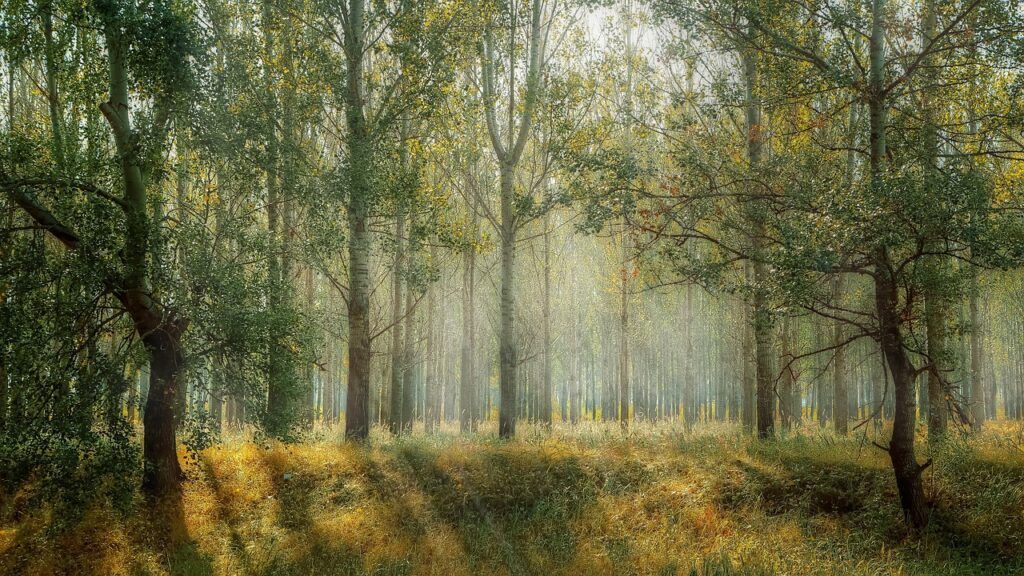
At the strike of midnight on August 1st, a profound vibrational shift sweeps across the Andean highlands. The dark, inward latency of July snaps open as Pachamama, Mother Earth, wakes from her deep winter sleep.
In the tradition of Andean shamanic rituals, this moment marks the beginning of Pachamama Raymi. This is the month dedicated to honoring, feeding, and restoring the living balance of the earth before the spring agricultural cycle begins.
Having cleared our heavy energy (Hucha) throughout July, we now stand with an open vessel. We are ready to engage in Haywarikuy, the sacred act of offering.
The Hunger of Mother Earth
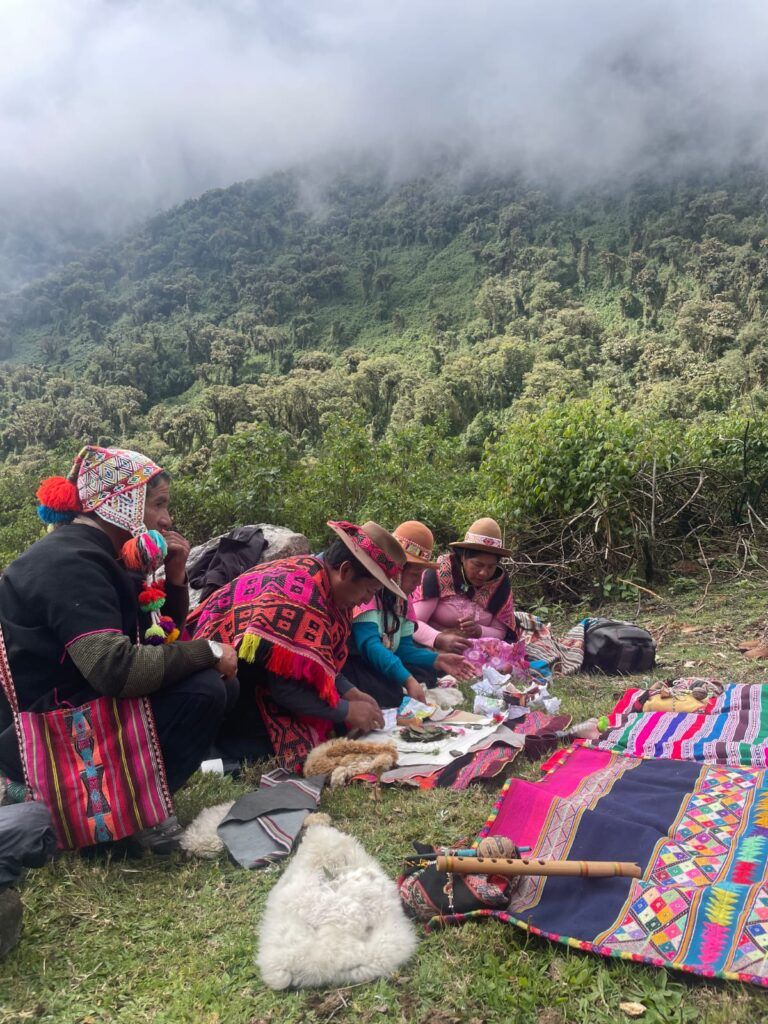
In high-altitude cosmology, the earth is not a passive resource. She is a living, conscious mother who hungers for both physical and spiritual nourishment after her long hibernation. During August, her surface pores open completely, making her exceptionally receptive to human intent, gratitude, and prayer.
This receptivity forms the foundation of Ayni, the eternal law of sacred reciprocity.
Participating in Andean shamanic rituals on August 1st teaches us that we cannot expect to harvest abundance from life without first giving back to the source. The earth does not ask for complex dogma; she asks for relationship.
When we feed her with love, respect, and tangible gifts, we align our personal vibration with her raw. We rise life force (Kawsay), ensuring that whatever seeds of intention we plant this month will take deep, unbreakable root.
AUGUST 1st THRESHOLD
Pachamama opens her mouth, Earth demands reciprocity.

HAYWARIKUY OFFERING
Feeding the soil with coca,
sweets, and gratitude.
ALIGNED ABUNDANCE
Your personal intentions
take root in fertile ground.

The Architecture of the Despacho
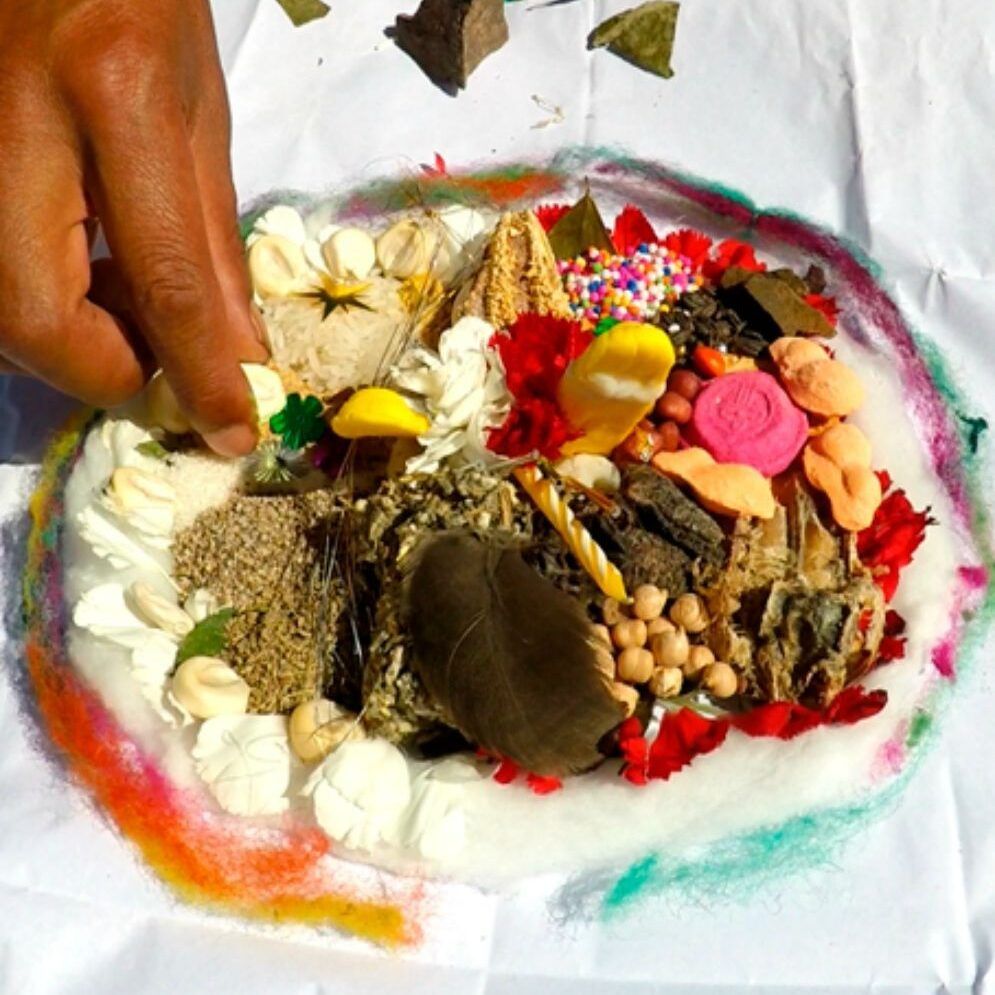
The central ritual of this day is the creation of the Despacho, an intricate, mandala-like offering bundle built upon a sheet of white paper. Every ingredient placed inside carries a precise energetic code:
- K’intu (Coca Leaves): Three pristine leaves held in a fan shape, carrying our highest prayers for mind, heart, and body.
- Mama Sara (Corn): Yellow and white maize to nourish the physical body and honor our daily sustenance.
- Sweets & Sugar Stars: To bring sweetness, joy, and harmony to our relationships and projects.
- Unspun Wool Threads: Dyed in vibrant colors to represent the rainbow bridge (K’uychi) connecting earth and sky.
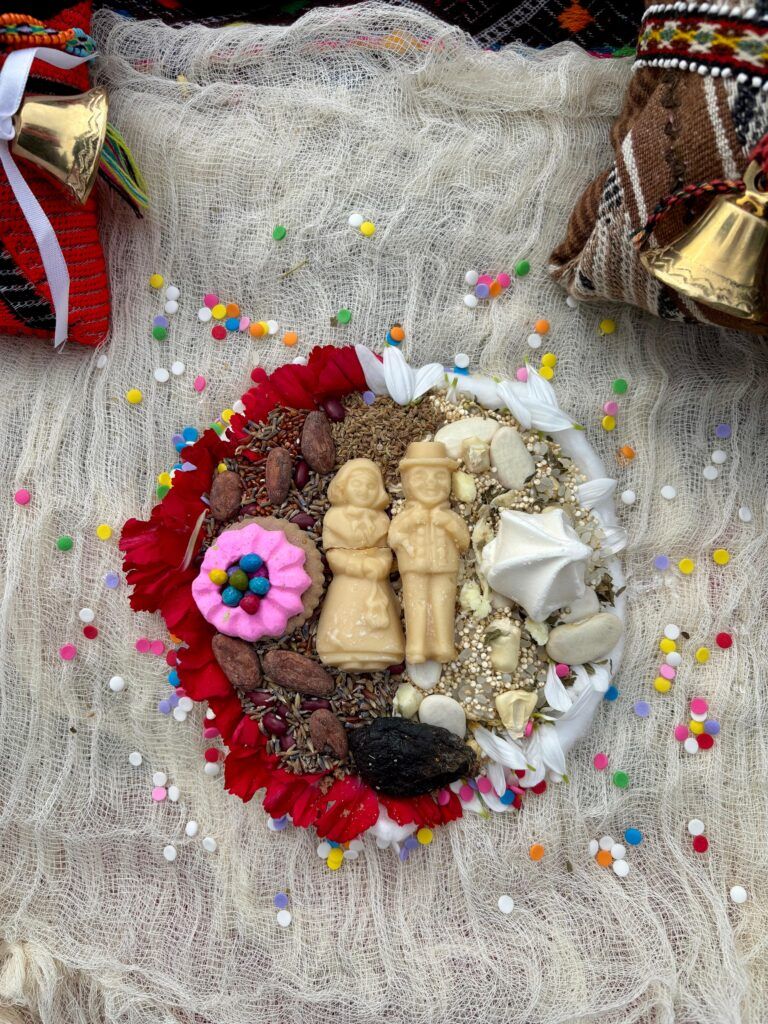
Once assembled, the bundle is wrapped like a gift, blessed over the practitioner’s energy centers, and delivered into the mouth of the earth through sacred fire or burial. As the flames consume the paper, our prayers rise as pure smoke (Sami), entering the energetic bloodstream of the mountain spirits (Apus).
“Do not walk upon the earth in August as a stranger. She has awakened hungry; feed her your gratitude before you ask her for your dreams.”
The Vocabulary of Mother Earth
- Pachamama Raymi: The month-long festival of Mother Earth, beginning August 1st, dedicated to offerings, soil preparation, and energetic renewal.
- Despacho: A sacred, hand-crafted offering bundle used in Andean rituals to restore harmony, express gratitude, and petition the spirits.
- K’intu: A sacred configuration of three unblemished coca leaves held between the thumb and forefinger, used to transmit prayers and breath (Phukuy).
The Portals of the First Offering
To experience the raw power of August 1st around Cusco, two ancient ceremonial grounds serve as primary nodes for global earth offerings:
- The Heights of Pachatusan: Known as the “Axis of the Earth,” this towering mountain sanctuary east of Cusco gathers master Paqos on August 1st to burn massive, collective Despachos for global healing.
- The Sacred Rock of Q’enqo: Located just outside the city, the labyrinthine stone channels of this ancient Incan temple act as a direct amplifier for channelling midnight libations (Chicha) into the bedrock.
References
- Gow, D. D. (1976). The Gods and the Social Order: The Cosmology of an Andean Village.
- Greene, S. (1998). The Shaman’s Needle: Development, Identity, and Indigenous Medicine in the Peruvian Andes. Cultural Anthropology.
This article draws on both academic literature and oral, lineage-based Andean knowledge. Teachings that originate from living traditions are cited in recognition of their ongoing transmission within Andean communities, while scholarly sources are used to support contextual interpretation.