
January completes itself through integration rather than resolution, as saturated emotional and energetic states gradually settle into coherence (Bastien, 1985).
In Andean cosmology, completion does not imply finality. January does not “end” in the way linear calendars suggest; instead, it settles, allowing what has been stirred to find coherence.

Andean traditions understand completion as integration, not resolution.
This distinction matters. During January, rain, emotion, and uncertainty activate processes that need time to settle before action can appear.
Integration as a Sacred Phase
Andean temporal frameworks emphasize process over outcome. After periods of movement and disruption, there is a necessary phase in which energies reorganize internally. This phase is quiet, subtle, and often mistaken for stagnation.
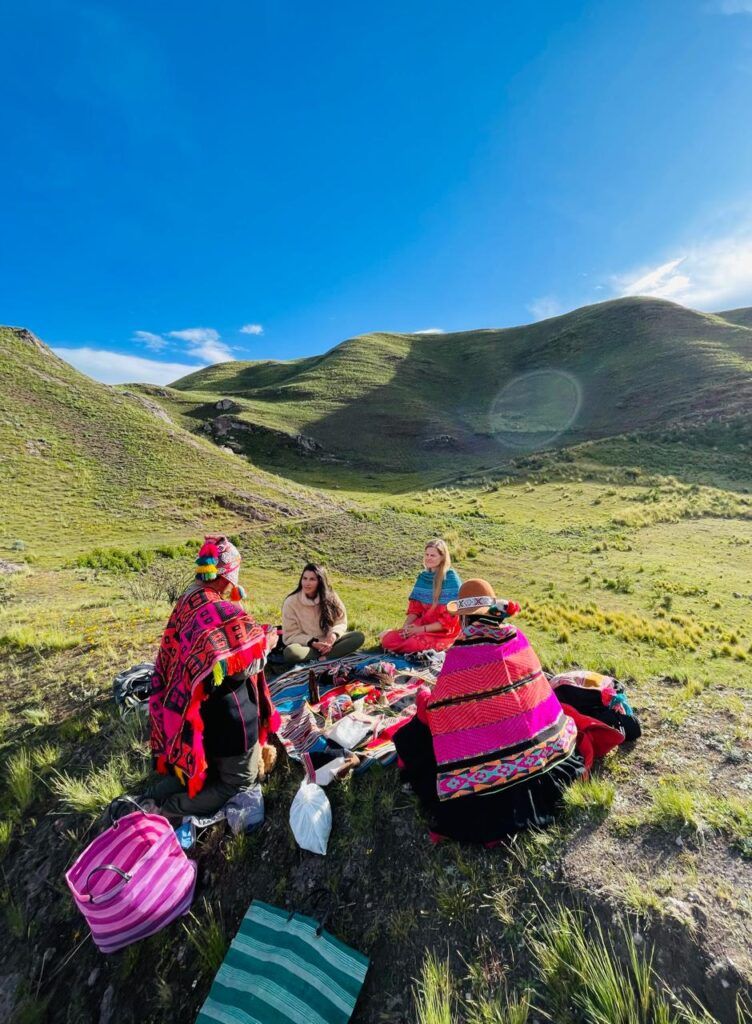
Integration unfolds as emotional, spiritual, and relational experiences are gradually assimilated within the body, the community, and the living environment, without force or immediacy. In Andean thought, life processes follow cyclical rhythms in which what has been sown, whether in the soil or in human experience, must be held, accompanied, and allowed to mature before any visible emergence occurs (Jiménez Sardón, 2003).
To rush expression is to fragment what seeks coherence.
The Body as a Site of Integration
In Andean traditions, the body is not separate from cosmology.
Sensations of fatigue, introspection, or emotional neutrality toward the end of January are not signs of depletion, but of energetic digestion.
What we felt, released, or destabilized earlier in the month now reorganizes internally.

Dreams may become less vivid, emotions less volatile, not because kawsay has diminished, but because it is settling into form.
Integration is invisible work.
From Chaos to Coherence
Sacred disorder prepares the ground for meaning, but meaning does not appear instantly. The movement from chaos to coherence requires containment, often provided through silence, routine, and simplicity.

This is why many Andean communities emphasize restraint during this time, less ritual, fewer declarations, minimal interference. Life is consolidating itself, and intervention risks scattering what is forming (Abercrombie, 1998).
Completion honors what no longer needs stimulation.
Energetic Readiness for Transition
As January completes its cycle, energy becomes available rather than active. This availability is what allows February to carry forward emerging intentions with clarity and direction.

Rather than setting new goals, this moment asks:
- What has changed beneath the surface?
- What no longer needs repetition?
- What feels quietly aligned
Integration prepares action by reducing excess.
Completion as Reciprocity
In Andean thought, endings are acts of ayni. Life gives experience; humans respond by honoring it through presence rather than demand. January’s completion invites gratitude, not for outcomes, but for the process itself.
By acknowledging what has been integrated, one participates ethically in the cycle of becoming.
The Quiet Threshold
January closes not with certainty, but with readiness. What has been activated now settles and stabilizes, preparing to move in a new form.
Energetic integration is not visible.
It is felt as quiet coherence.
It is known by its steadiness.
References
- Abercrombie, T. A. (1998). Pathways of memory and power: Ethnography and history among an Andean people. University of Wisconsin.
- Jiménez Sardón, G. (2003). Rituales de vida en la cosmovisión andina. Plural Editores, La Paz, Bolivia.