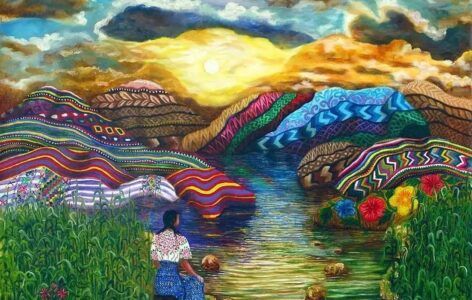
Kawsay refers to the living, circulating energy that animates all beings and landscapes, responding dynamically to water, movement, and attention (Bastien, 1985).
In Andean thought, kawsay is not an abstract “energy” detached from the world.
It is life-in-relation, a dynamic force that exists only through interaction between humans, land, waters, ancestors, and non-human beings.

Its movement, rainfall, river flow, underground springs, activates relational life across ecological, emotional, and spiritual dimensions.
Water as an Animate Being
In Andean ontologies, water is not a resource but a living presence.
Rivers, lakes, and rain are treated as beings with agency, capable of nourishing or withdrawing depending on how relationships are maintained.
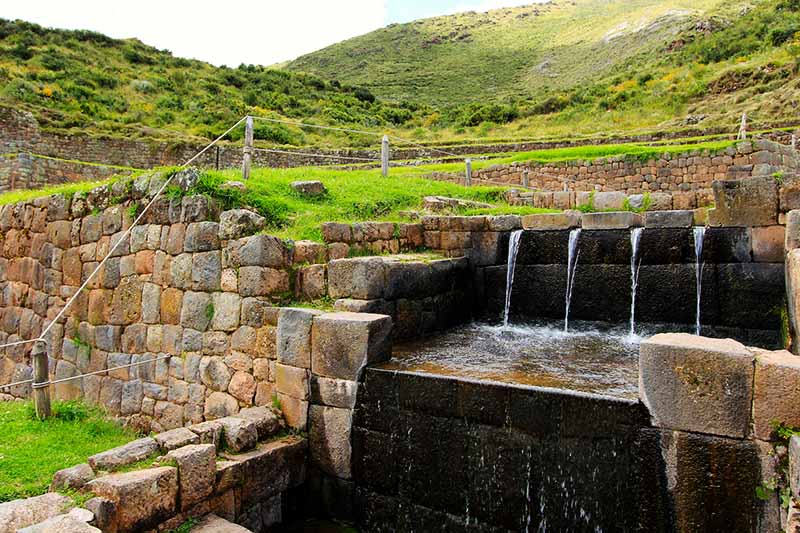
This understanding aligns with broader Indigenous relational ontologies, where elements of the environment are considered active participants in social life (Santos-Granero, 2009).
During the rainy season, water awakens not only crops but also emotional and spiritual sensitivity, signaling an intensification of kawsay rather than instability or disorder.
Rain, Emotion, and Inner Movement
January, marked by persistent rain, is understood as a time when internal processes mirror ecological ones. Just as the soil softens and absorbs water, people become more permeable, emotionally, spiritually, and psychologically.
Rather than viewing heightened emotion as something to control, Andean traditions understand this sensitivity as a necessary condition for transformation.
Emotional flow allows kawsay to circulate, preventing stagnation and the accumulation of hucha, or dense, unresolved energy (Rivera Cusicanqui, 2010).
To feel deeply during this time is not a personal failure, it is an act of attunement.

Rivers as Pathways of Connection
Rivers hold a unique position in Andean cosmology as connective corridors between visible and invisible realms. Flowing water is understood to carry prayers, memory, and intention, linking ancestral presence with present life.

Kawsay, in this sense, is not guided, it guides.
Ethnographic studies from the southern Andes describe rivers as spaces of listening rather than speaking, places where humans approach with humility, allowing themselves to be reordered by movement rather than control (Mannheim & Salas Carreño, 2015).
Movement, Ayni, and Ethical Flow
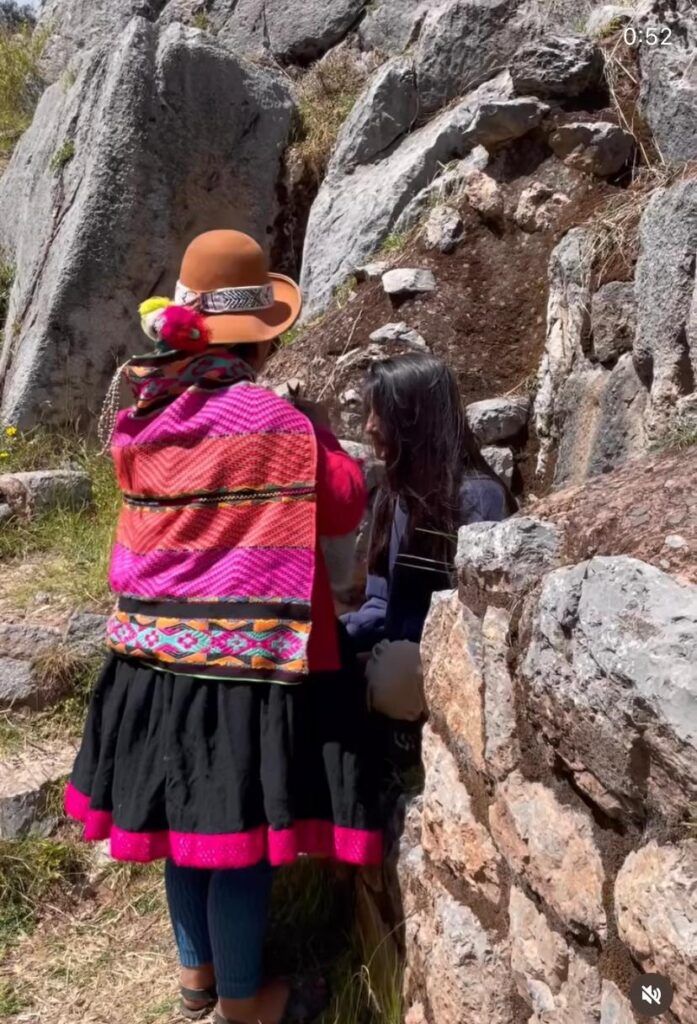
Living in ayni with water means allowing energy, emotion, and care to move through us, rather than attempting to dominate or fix outcomes. Balance emerges not from control, but from participation in movement.
January as Energetic Awakening
January is not a beginning in the linear sense. It is a period of activation without visibility, when life is reorganizing beneath the surface. Seeds swell, roots expand, and intentions take form long before growth appears.
This time calls for:
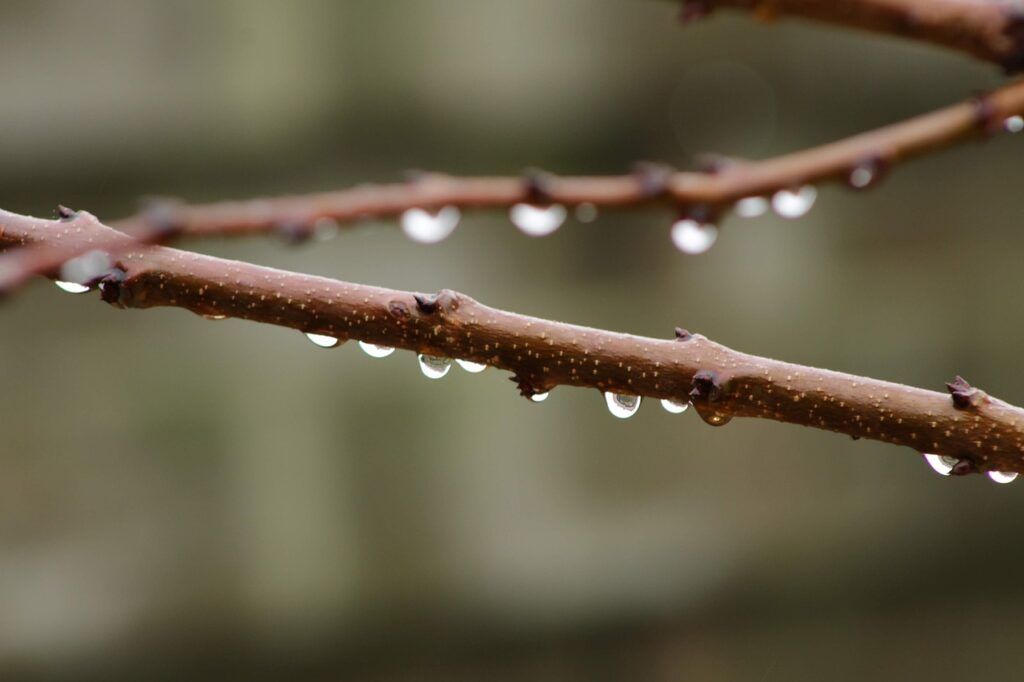
- Trust instead of urgency
- Sensitivity instead of certainty
- Participation instead of direction
Honoring Water, Honoring Life
To honor water is to honor the intelligence of movement. Andean spirituality teaches that healing does not always arrive through clarity, but through allowing oneself to be reshaped by flow.
When water moves, kawsay responds.
When resistance softens, life reorganizes.
References
- de la Cadena, M. (2015). Earth beings: Ecologies of practice across Andean worlds. Duke University Press.
- Mannheim, B., & Salas Carreño, G. (2015). Wak’as: Entifications of the Andean sacred. American Anthropologist, 117(1), 3–23.
- Rivera Cusicanqui, S. (2018). Ch’ixinakax utxiwa: Una reflexión sobre prácticas y discursos descolonizadores. Tinta Limón Ediciones.
- Santos-Granero, F. (2009). Vital Enemies: Slavery, Predation, and the Amerindian Political Economy of Life. University of Texas Press.