
By the third week of August, as agricultural work across the terraces reaches a fever pitch, the environmental energy (Kawsay) across the highlands becomes dense and fast-moving. To prevent sensory overload and spiritual fatigue during this intense period, traditional practitioners turn to Chumpi Khuyay. This is the ancient art of stone point activation and energetic sealing of the seven Belts.
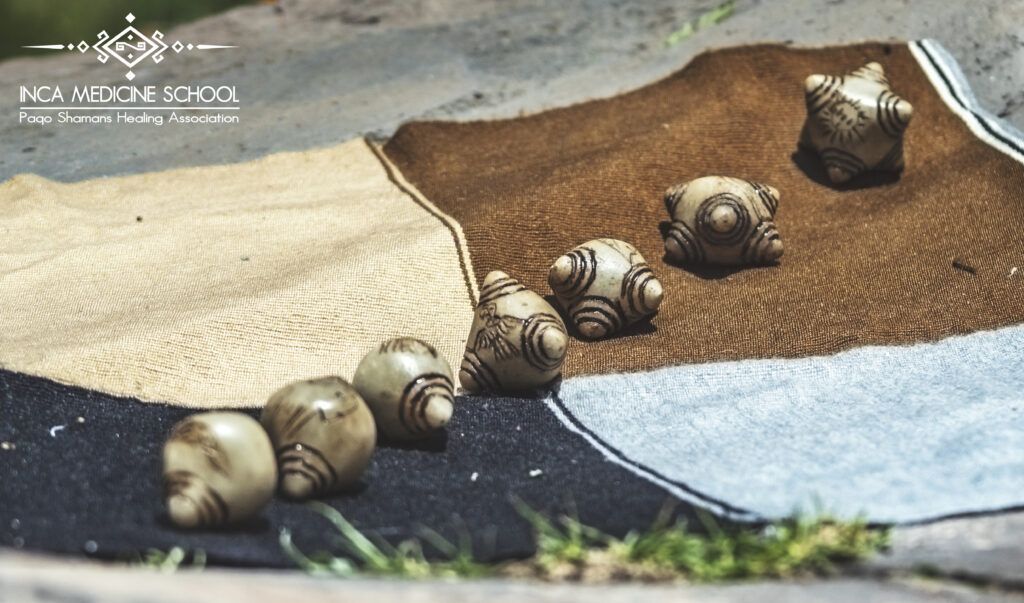
A set of heavy, hand-carved alabaster or serpentine stones (Chumpis). The healer works along the central axis of the human body, ensuring that each subtle energy center remains clear, grounded, and protected.
The Architecture of the Sacred Belts
In Andean tradition, the human body is surrounded and supported by five energetic belts and seven vital energy eyes (Ñawis).

Unlike systems that focus solely on internal meditation, the Chumpi technique treats these centers as dynamic physical and energetic gates that interact directly with the environment.
When stress, environmental chaos, or heavy emotions accumulate, these centers can become congested or overly porous.
During late August, the practitioner uses the pointed facets of the Chumpi stones to perform Ñawi Kichay. It clears away stagnation and opening each eye to fresh cosmic light (Sami).
Following this clearance, the practitioner uses the smooth stone surfaces to “weave” an unbreakable protective belt around the patient’s torso.
This process locks in personal vitality while filtering out external friction. It allows the individual to remain calm, centered, and fully energized amidst the bustling late-August environment.
The Anatomy of the Seven Spirits
Each stone within a traditional Chumpi set carries a specific number of carved points or rings, connecting directly to the distinct energetic layers of the human body and cosmology:
- 1-Point Stone (Siku): Connects to the base center (Pucha Ñawi), anchoring root stability and physical endurance directly into Pachamama.
- 2-Point Stone (Iskay): Harmonizes the belly center (Qosqo Ñawi), balancing raw emotions, digestion, and instinctual power.
- 3-Point Stone (Kinsa): Activates the heart center (Sonqo Ñawi), opening unshakeable love, compassion, and relational warmth (Munay).
- 4-Point Stone (Tawa): Clears the throat center (Kunka Ñawi), empowering authentic expression, truth, and spoken intent.
- 5-Point Stone (Pisaq): Awakens the third eye center (Lloq’e / Paña Ñawi), refining spiritual vision, intuition, and clarity.
- 6 & 7-Point Stones: Connect to the crown (Uma Ñawi) and cosmic transcendent points, linking human awareness to the high mountain spirits.

“A house without doors invites the storm inside. The Chumpi stones do not lock you away from the world; they teach your energy body how to close its doors when the cold winds blow.”
The Vocabulary of the Belts
- Chumpi: A carved ceremonial stone, traditionally made of alabaster (Huamanga) or serpentine. It is use to open energy points and weave protective belts around the body.
- Ñawi: “Eye” or energetic center in the body through which human consciousness exchanges energy with the surrounding cosmos.
- Chumpi Khuyay: The therapeutic practice of applying Chumpi stones with loving intent to heal, align, and fortify an individual’s energy field.
The Quarries of the Sacred Alabaster
- The Alabaster Quarries of Huamanga (Ayacucho): Renowned for centuries as the primary source of fine, translucent white alabaster used by Andean artisans to carve delicate Chumpi sets that carry pure, luminous energy.
- The Serpentinite Deposits of Cusco Valley: Local stone carvers near the sacred city utilize deep green serpentine stone, rich in iron and magnesium, to craft heavy, grounding Chumpis aligned with the subterranean power of Uku Pacha.
References
- Nuñez del Prado, J. (1990). The Andean Mystical Tradition: Energy, Consciousness, and Sacred Geography. University of San Antonio Abad of Cusco.
- Jenkins, E. (1997). Return of the Inka: Discovering the Wisdom of the Andean Path. Jeremy P. Tarcher / Putnam.
This article draws on both academic literature and oral, lineage-based Andean knowledge. Teachings that originate from living traditions are cited in recognition of their ongoing transmission within Andean communities, while scholarly sources are used to support contextual interpretation.