
The Quechua word pukllay translates as to play, but in the Andes it carries layers of meaning that reach far beyond recreation. Pukllay is joy embodied, a medicine of movement, laughter, and creativity that heals both individuals and communities.
During traditional Andean festivals, especially the Pukllay Carnival in Ayacucho, play becomes a sacred practice. People splash water, dance in circles, sing ancient songs, and engage in playful mock battles with flowers or colored powders. These acts are not frivolous — they are rituals of renewal, where communities release heavy energies and welcome fertility for the agricultural cycle.

The Cosmology of Play

In the Andean worldview, heaviness (hucha) accumulates when energy does not flow freely. Ritual play allows communities to shake loose the density of daily life, transforming it into laughter and dance.
Pukllay is a reminder that the universe itself is playful — stars spin, rivers dance, wind sings. By joining in joy, humans realign themselves with the vitality of kawsay (living energy).
The Healing Power of Joy
Scientific studies now affirm what Andean wisdom has long known:

In this sense, pukllay is both ancient ritual and modern therapy — an ancestral psychology of joy.
Practicing Pukllay in Everyday Life
You don’t need a festival or a crowd to embrace this medicine. You can:
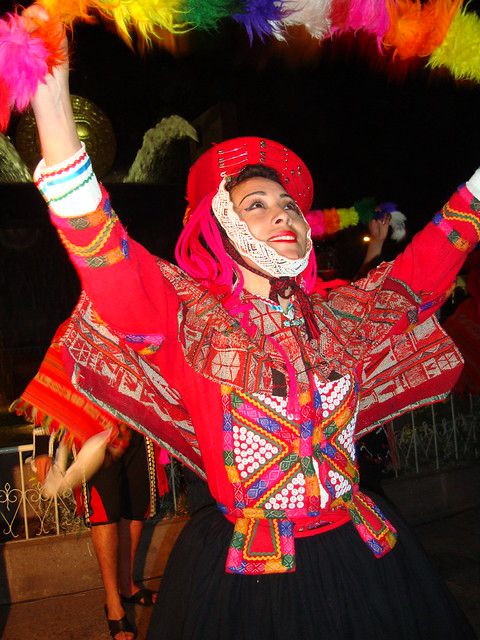
- Dance alone in your living room, connecting with your body’s freedom.
- Playfully sing or drum, letting sound shake loose stagnant energy.
- Laugh with children, learning from their natural joy.
- Allow yourself moments of silliness — unburdened by judgment.
Each act of play is a micro-ritual of liberation, loosening the grip of heaviness and inviting balance.
Celebration as Medicine
For the Andes, healing is not only solemn but also celebratory. If despacho teaches reverence through offering, pukllay teaches renewal through laughter. Both are essential: one grounds us, the other lifts us.
Together, they remind us that the path of wholeness is woven not only through prayer, but also through joy.
Suggested Reading
- Flores Ochoa, J. (1979). El mundo mágico de los incas. Editorial Universo.
- Abercrombie, T. (1998). Pathways of Memory and Power: Ethnography and History Among an Andean People. University of Wisconsin Press.
- Allen, C. (1988). The Hold Life Has: Coca and Cultural Identity in an Andean Community. Smithsonian Institution Press.