
February unfolds in Kay Pacha, the realm of lived, embodied life where energy becomes visible and relational. After January’s deep saturation, when water, emotions, and inner processes dissolve old rigidity, February marks a moment of nascent emergence: what has been gestating begins to surface.
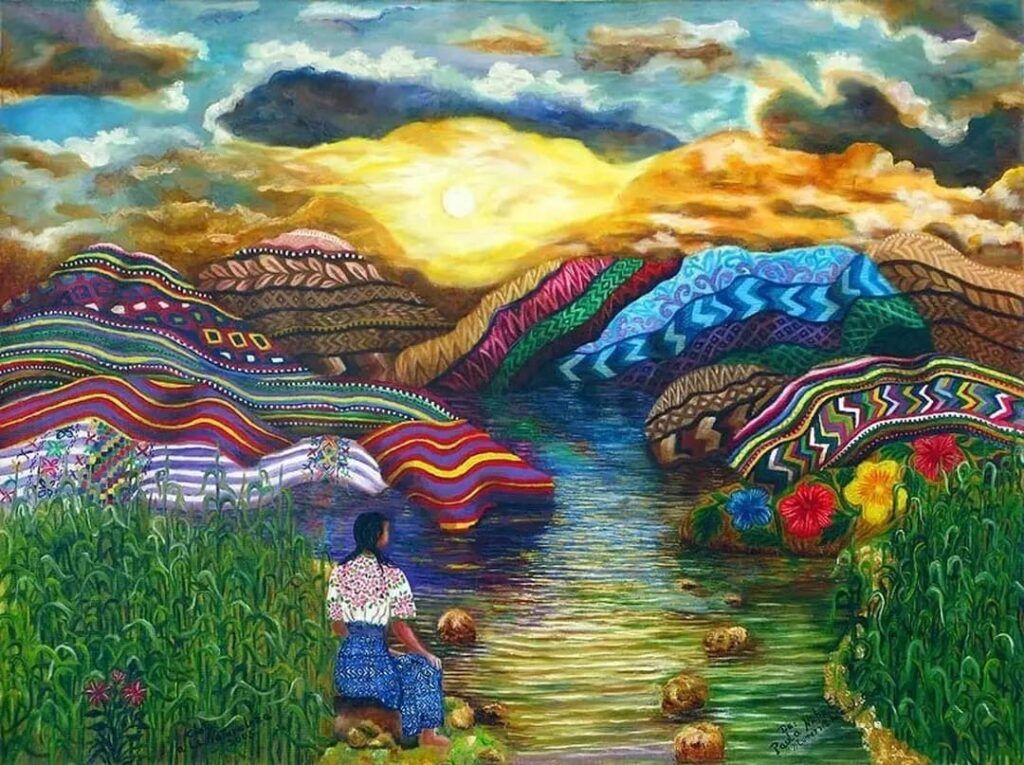
This surfacing is not an eruption of sudden clarity, but a subtle appearance of life forms and intentions that remain delicate and relational.
Kay Pacha as the Realm of Relationship
Kay Pacha is the world of human–earth interaction, where bodies, waters, plants, ancestors, and spirits negotiate balance.

It is not a static scenery but a living, relational domain in which everything affects everything else.
What emerges into Kay Pacha is not just a physical sprout, but a relational response to months of inner preparation.
Life in Kay Pacha depends on maintaining balance with land and water. This balance, as described by scholars studying Andean water politics, follows patterns of reciprocity and social negotiation rather than unilateral control (Boelens, 2014).
In this view, water is not a resource to dominate but a participant in social and ecological life.
February Emergence After Saturation
In many Andean regions, February remains a rainy month. Rain is not merely precipitation; it is an active agent that redistributes life, memory, and potential across landscape and body.

Rain softens the earth, allowing subterranean processes to continue their work of transformation.
Human experience during this time often mirrors the landscape: emotional sensitivity, unclear direction, and quiet stirring are not signs of disorientation, but of life reorganizing itself.
Just as seeds need moist soil before they sprout, human intentions need relational space before they take firm form.
February teaches that visibility is not immediate; clarity emerges as a process of alignment over time.
Fertility as Relational Responsibility
In the Andean worldview, fertility is not about productivity or output, but about care and reciprocity.
What begins to surface must be nurtured, protected, and approached with humility. To recognize emergence without pushing it prematurely is to practice ayni, the principle of reciprocity that governs life in Kay Pacha.

Emerging life, whether a crop shoot, an intention, or a shift in feeling, requires ethical responsiveness before it can fully integrate.
Embodied Knowledge in Early February Emergence
Andean cosmology does not separate body from spirit. What emerges in February often presents first through the body as sensation, an intuition, a quiet drive, or a shift in presence, before it becomes a concept in the mind.
This pattern is not confusion; it is embodied relational knowledge. The body feels what the mind has not yet defined.
February teaches that life surfaces before language, and meaning follows experience, not precedes it.
Living the Threshold of Becoming

To live February well is to remain attentive, responsive, and gentle. Kay Pacha does not ask for bold assertions or rushed decisions. It invites presence, listening, and reciprocity with water, land, and community.
Emergence in Kay Pacha is neither beginning nor completion. It is relationship in motion, an invitation to welcome what is forming without forcing it.
References
- Boelens, R. (2014). Cultural politics and the hydrosocial cycle: Water, power and identity in the Andean highlands. Geoforum, 57, 234–247.
- Apaza family. Oral tradition on seasonal cycles, rain, emergence, and Kay Pacha. Andean Highlands, Peru.
This article draws on both academic literature and oral, lineage-based Andean knowledge. Teachings that originate from living traditions are cited in recognition of their ongoing transmission within Andean communities, while scholarly sources are used to support contextual interpretation.