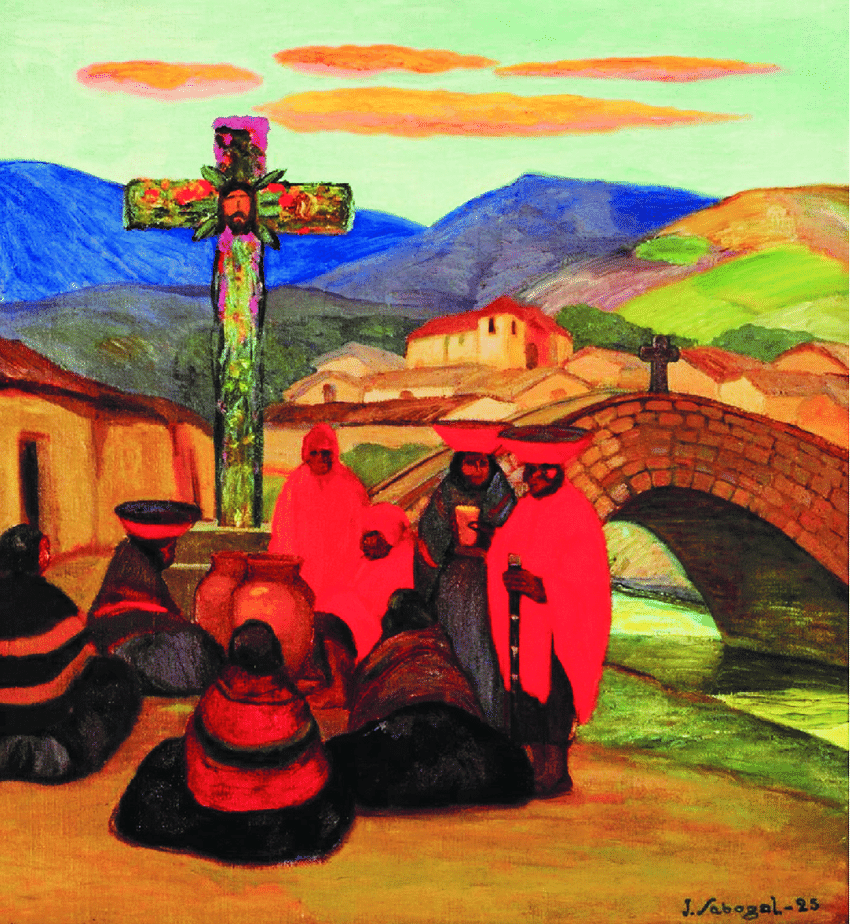
The festival of Cruz Velacuy or The Veiling of the Cross.
In the first week of May there is a sensory explosion: the scent of incense (palosanto), the rhythmic clashing of bronze bells, and the sight of massive wooden crosses being carried down precarious mountain paths.
The Alchemical Marriage: Wood, Stone, and Spirit
While the outward symbols are Christian, the internal logic is purely Andean.
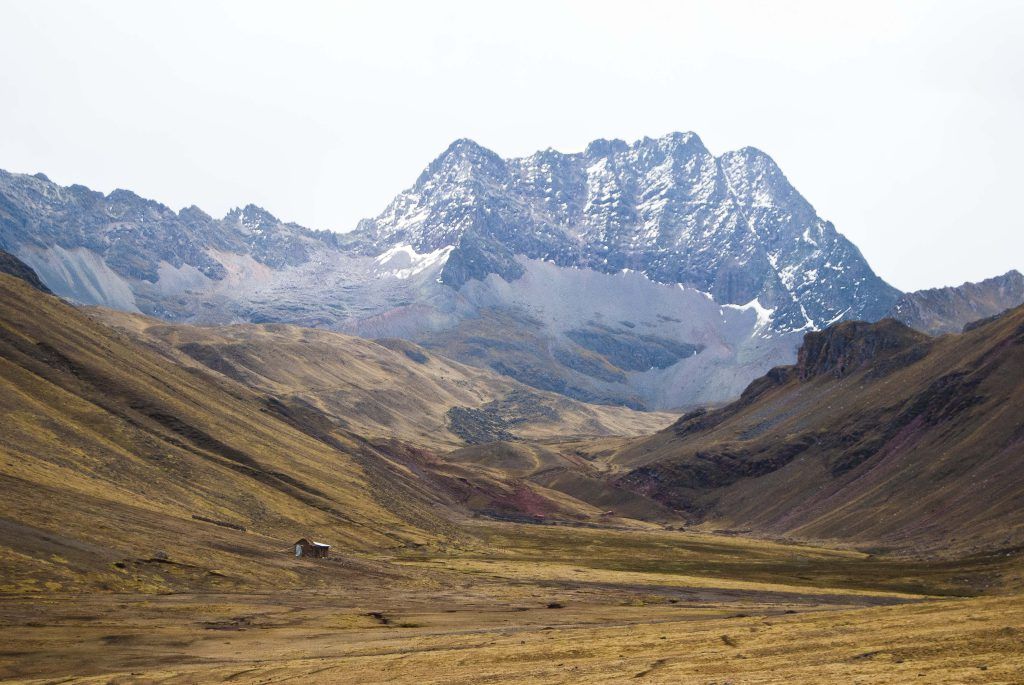
In the pre-Columbian mind, the Huaca (sacred object or place) held a specific density of energy. When the Spanish replaced Huacas with crosses, the Andean people did not abandon their gods; they transferred the protection of the Apu (Mountain Spirit) into the wood of the cross.
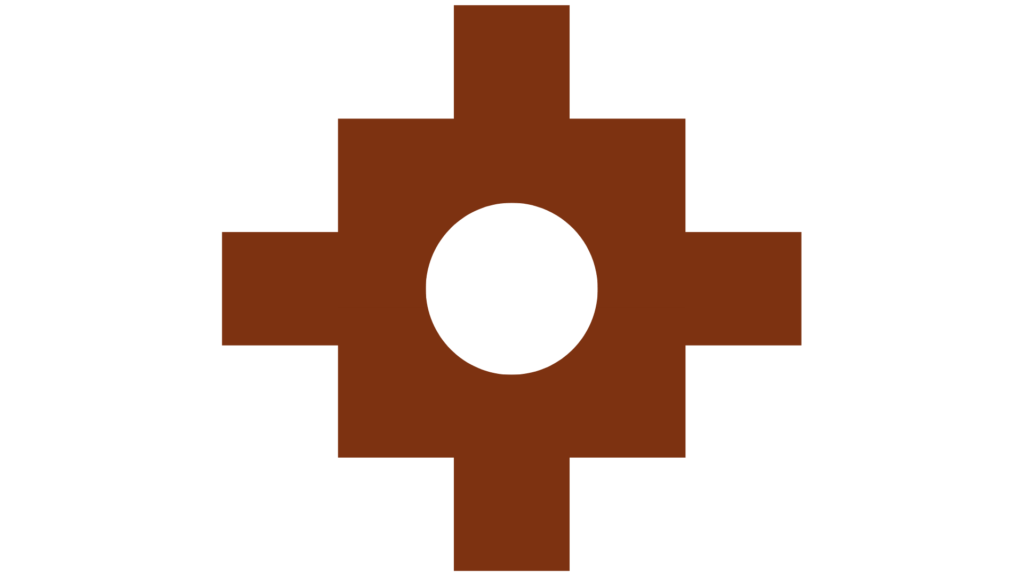
“The cross in the Andes is not merely a symbol of crucifixion, but a ‘Chacana‘ in disguise, a bridge or ladder that connects the Kay Pacha (this world) with the Hanan Pacha (the upper world). Veiling the cross is an act of maintaining the energetic ‘heat’ of the community during the transition to the cold season.”
The Power of the ‘Despacho’
During May, the ritual of the Despacho (offering) becomes more rigorous. As the harvest ends, the Pachamama is considered “open” and hungry.
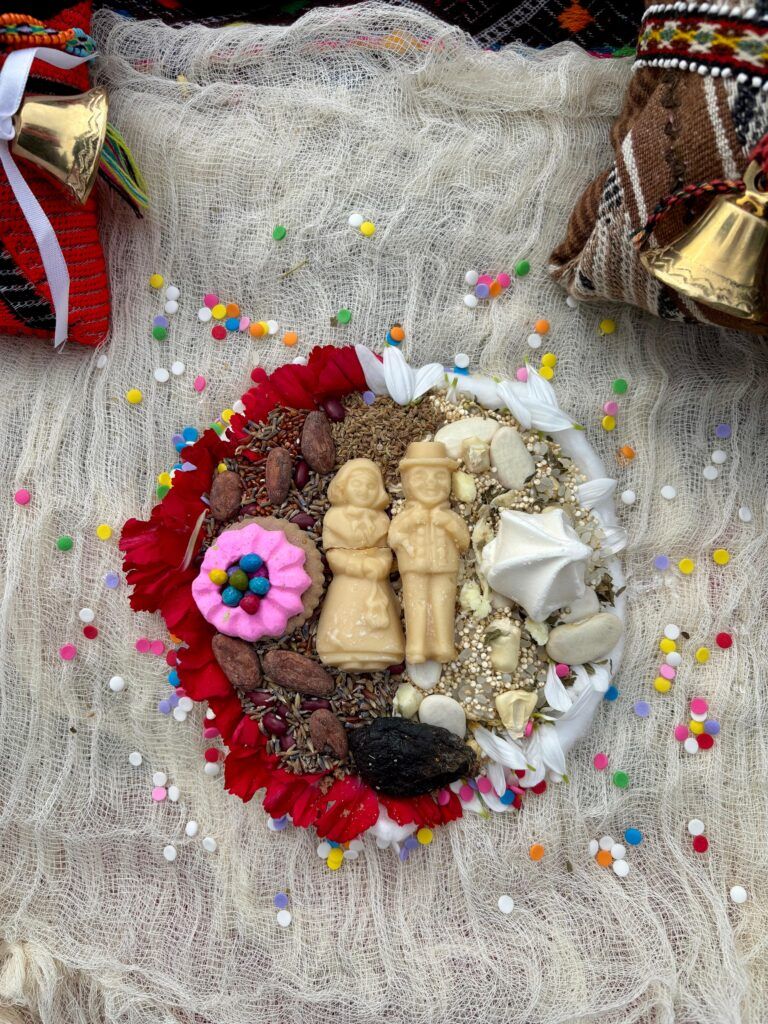
The Ritual Act: Practitioners offer K’intu (three perfect coca leaves) to the crosses.
The Goal: People do this to ensure that the Ispallas (the spirits of the seeds) remain safely stored in the Qollqas (granaries) and protected from the malevolent winds known as Supay Wayra.
Linguistic Portal: Words of Power of Cruz Velacuy
- Velacuy: To keep watch or stay awake. In a mystical sense, it refers to maintaining “Consciousness” while the rest of nature begins its winter sleep.
- Mallki: This refers to both an ancestor’s mummy and a living tree. In May, people treat the Cross as a Mallki, a living ancestor that protects the crops.
- Tinkuy: The ritual encounter. May is a month of Tinkuy between the community and the sacred peaks.
Sacred Geography: The Cruz Velacuy Portals of Cusco
“The Andean landscape is a ritual stage where the movement of the human body across altitudinal zones is a form of prayer. In May, as we move toward the glaciers, we literally walk back toward the origin of water and life, seeking the “Ispalla,” the soul-essence of existence before winter freezes it into silence.
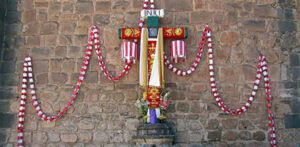
- San Cristóbal (Qasqaparo): Overlooking the city of Cusco, this site sits atop what was once an important Inca palace. The “velación” here offers a panoramic connection to the city’s ceque lines (energetic pathways).
- The Heights of Pisac: Here, people often keep the crosses in small niches carved directly into the ancient Inca masonry, representing the literal union of the old stone and the new faith.
References
- Sallnow, M. J. (1987). Pilgrims of the Andes: Regional Cults in Cusco. Smithsonian Institution Press.
- MacCormack, S. (1991). Religion in the Andes: Vision and Imagination in Early Colonial Peru. Princeton University Press.
- Gade, D. W. (1999). Nature and Culture in the Andes. University of Wisconsin Press.
This article draws on both academic literature and oral, lineage-based Andean knowledge. Teachings that originate from living traditions are cited in recognition of their ongoing transmission within Andean communities, while scholarly sources are used to support contextual interpretation.