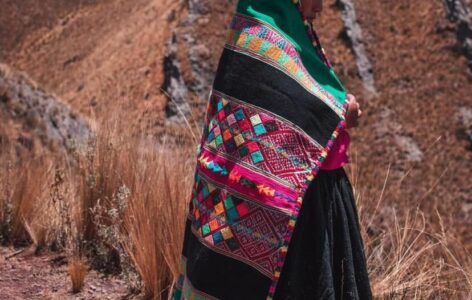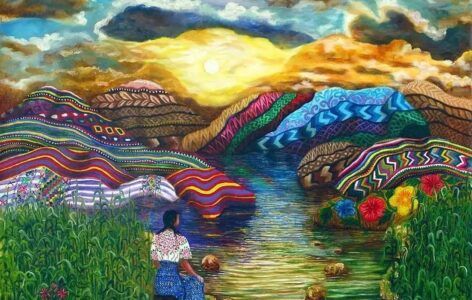
In many modern spiritual spaces, Pachamama is translated simply as Mother Earth (Estermann, 2013). While this translation is convenient, it is deeply incomplete. In the Andean worldview, Pachamama is not merely the ground beneath our feet, nor a symbolic goddess of nature. She is a living field of intelligence, a relational being, and a temporal-spatial matrix that sustains all life.
To reduce Pachamama to “earth” is to strip her of her cosmic, psychological, and energetic dimensions.
Pacha: Time, Space, and Consciousness
The word Pacha does not mean earth (Estermann, 2013; Arnold & Yapita, 2006).

It refers to time-space reality, the living container in which existence unfolds. Pacha holds memory, cycles, trauma, fertility, decay, and rebirth. It is both linear and non-linear, personal and collective.
Within this understanding, Pachamama is not something we stand upon, we exist within her.
She is the womb of becoming.
Mama Earth: Not a Metaphor, but a Relationship
The term Mama signifies more than motherhood (Bastien, 1985).

It expresses relational responsibility. Pachamama is Mama because she responds, nourishes, corrects, and remembers. Relationship with her is not devotional abstraction; it is reciprocity (Ayni).
In Andean culture, illness, imbalance, and misfortune often arise when reciprocity is broken, when humans take without listening, consume without gratitude, or forget their place within the web of life.
Mother Earth as Mirror and Memory
Pachamama holds ancestral memory (Gose, 1994; Rengifo Vásquez, 2003).

Trauma is not only psychological; it is ecological and collective. Land remembers colonization, extraction, displacement, and ritual neglect. Humans, as extensions of Pachamama, carry these imprints in their bodies.
This is why Andean healing does not separate personal pain from collective history.
To heal the self is to re-enter right relationship with Pachamama.
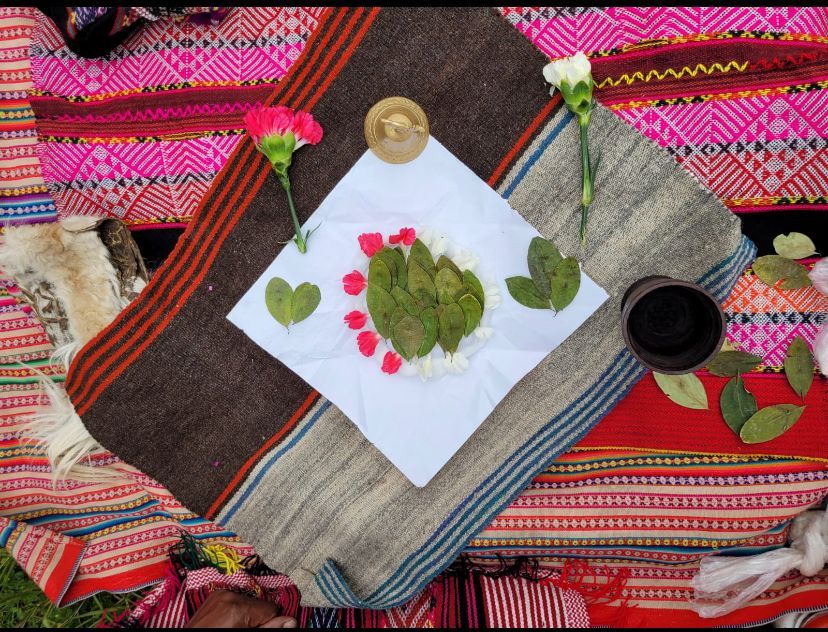
Offerings as Dialogue, Not Worship
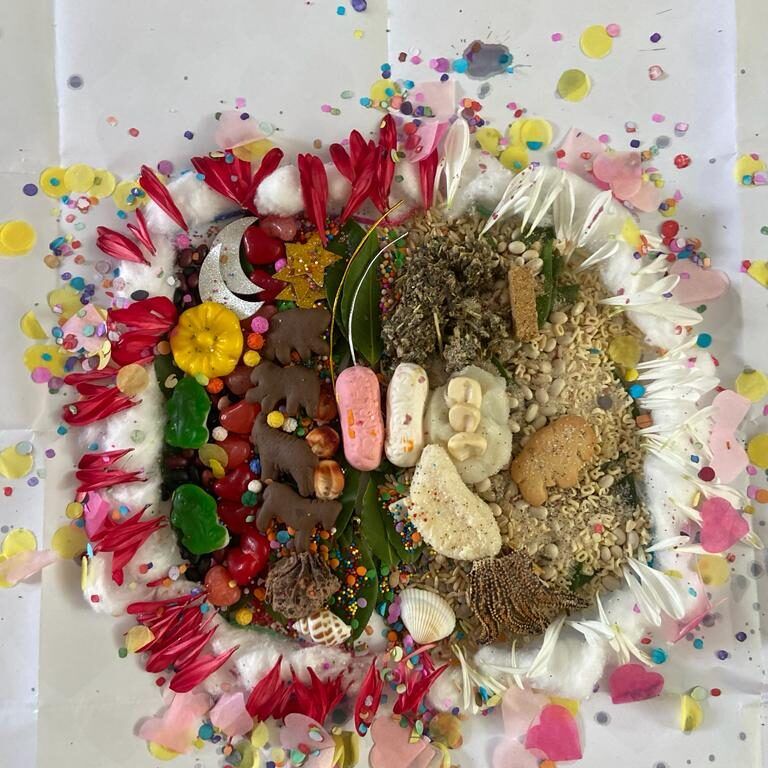
The offering is not payment. It is acknowledgment.
Beyond Romanticization
Pachamama is not always gentle (Bastien, 1985; Gose, 1994). She is fertile and destructive, nurturing and consuming. Earthquakes, droughts, and decay are not punishments; they are expressions of balance correcting imbalance.
True Andean wisdom does not romanticize nature, it respects her power.
To understand Pachamama beyond “Mother Earth” is to accept a humbling truth:
We are not owners.
We are participants.
When we remember Pachamama as living time-space consciousness, healing becomes less about fixing ourselves and more about remembering how to belong.
References
- Allen, C. J. (2002). The hold life has: Coca and cultural identity in an Andean community. Smithsonian Institution Press.
- Arnold, D. Y., & Yapita, J. de D. (2006). The metamorphosis of heads: Textual struggles, education, and land in the Andes. University of Pittsburgh Press.
- Bastien, J. W. (1985). Mountain of the condor: Metaphor and ritual in an Andean ayllu. Waveland Press.
- Estermann, J. (2013). Andean philosophy: A reader. University of New Mexico Press.
- Gose, P. (1994). Deathly waters and hungry mountains: Agrarian ritual and class formation in an Andean town. University of Toronto Press.
- Rengifo Vásquez, G. (2003). La crianza de la chacra en los Andes. PRATEC.