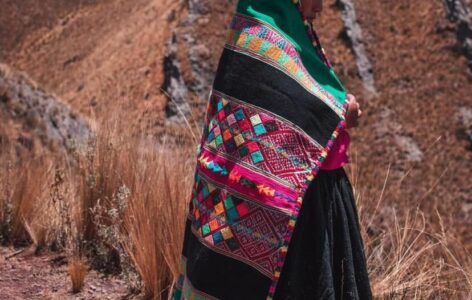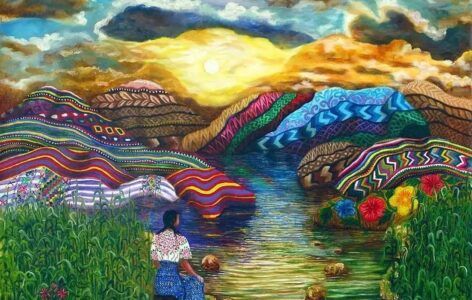
In Western psychology, the body is often treated as a container for symptoms. In Andean wisdom, the body is something far more profound: it is an altar. A living ceremonial space where memory, energy, ancestry, and consciousness converge.
From this perspective, pain is not random, illness is not merely mechanical, and healing is never only cognitive. The body remembers, not only personal experience, but ancestral and territorial history (Gose, 1994).
The Body as Living Pacha
In Andean cosmology, the human body is a microcosmic Pacha, a time-space field where past, present, and future coexist (Estermann, 2013). Trauma is not stored in linear narratives alone; it is embedded in tissues, breath, posture, and energetic flow.
What Western science now calls somatic memory, Andean cultures have long understood as embodied remembrance.
Ancestral Memory in Flesh and Bone
Many emotional patterns do not originate in individual biography. Fear, hypervigilance, scarcity, and disconnection often reflect ancestral survival strategies encoded through generations (Rengifo Vásquez, 2003).
Colonization, forced displacement, and ritual rupture did not vanish with time. They became hucha dense, unprocessed energy, carried in the body.
The Nervous System as Sacred Messenger
The nervous system is not an enemy to regulate or override. From an Andean lens, it is a messenger between worlds, translating environmental, emotional, and spiritual information into bodily sensation.
States of anxiety, collapse, or numbness are not failures. They are signals of imbalance, calling for restoration of reciprocity (Ayni) within the self and with the surrounding world (Bastien, 1985).
Ritual, Touch, and Regulation
Healing in Andean traditions does not rely solely on verbal processing. Ritual, breath, touch, rhythm, and offering recalibrate the body’s relationship with Pacha.
When the body is treated as an altar, healing becomes an act of reverence rather than correction.
From Symptom to Meaning
To ask “What is wrong with my body?” is a Western question.
The Andean question is different:
What is my body asking me to remember?
Symptoms become messages. Sensations become language. Healing becomes listening.
Restoring the Body
To restore the body as altar is not to erase pain, but to reestablish sacred order. It is to return dignity to the body as teacher, not obstacle.
In remembering the body as altar, we reclaim our place within living Pacha, not as broken beings to be fixed, but as ceremonial participants in the web of life.
References
- Bastien, J. W. (1985). Mountain of the condor: Metaphor and ritual in an Andean ayllu. Waveland Press.
- Estermann, J. (2013). Andean philosophy: A reader. University of New Mexico Press.
- Gose, P. (1994). Deathly waters and hungry mountains: Agrarian ritual and class formation in an Andean town. University of Toronto Press.
- Rengifo Vásquez, G. (2003). La crianza de la chacra en los Andes. PRATEC.