
In Andean cosmology, not all moments are meant to offer orientation, we navigate the Not-knowing. February, in particular, unfolds as a time when pathways soften and certainty dissolves.

Crops have not yet emerged, rains remain unpredictable, and the future resists definition.
Rather than signaling error or loss, this lack of clarity carries meaning.
To walk without a clearly visible path is not understood as failure. It is understood as a necessary phase of becoming.
Sacred Not-Knowing as a Form of Intelligence
Western epistemologies often frame uncertainty as a problem to be solved.

In contrast, Andean wisdom recognizes not-knowing as an active and relational state. It is a pause that allows forces beyond the individual, land, water, ancestors, time, to participate in what is forming.
This form of intelligence does not rush toward answers. It listens.
Uncertainty becomes sacred when it is held with respect rather than resisted.
Disorientation as a Threshold
Periods of disorientation frequently accompany moments of deep transformation. Old structures, internal and external, dissolve before new ones take shape.
February holds this tension openly.
In Andean traditions, such thresholds are not crossed through force, but through endurance, patience, and attunement. One remains present even when meaning has not yet organized itself.
Disorientation is not the opposite of wisdom. It is often its beginning.
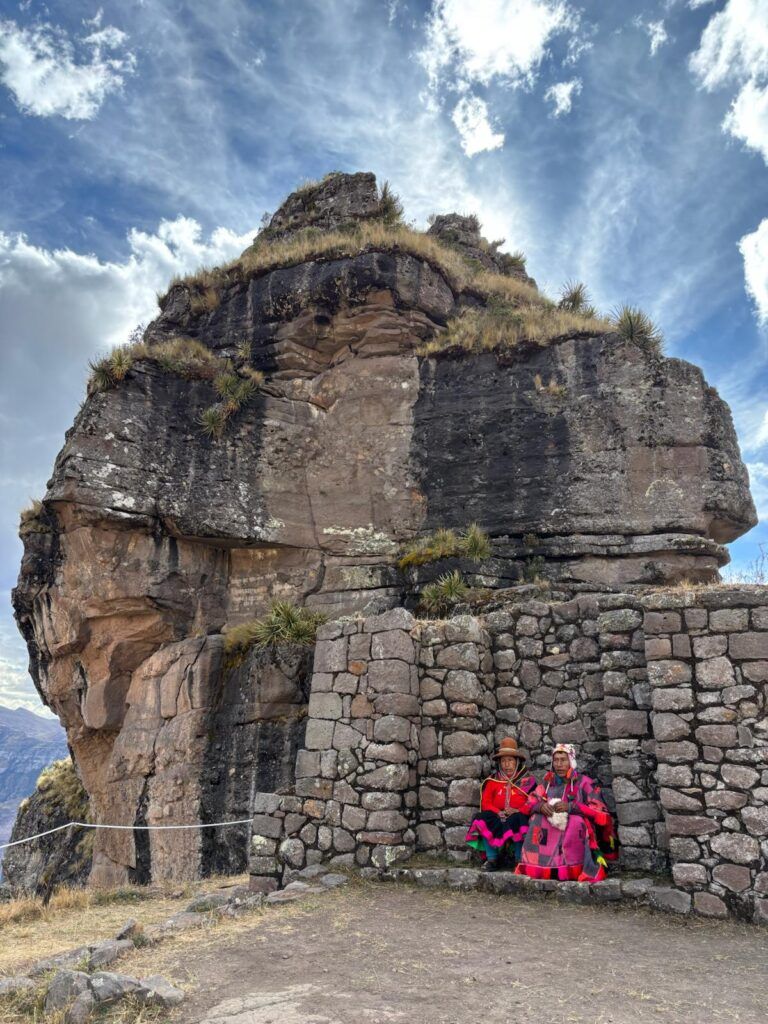
Walking With Not-Knowing Direction
The Andean concept of ayni, reciprocal relationship, extends to time itself. One does not demand clarity from the future; one enters into relationship with it.

Trusting the Interval
This season teaches that clarity emerges through timing, not insistence. What is forming requires darkness, moisture, and uncertainty.
To remain within sacred not-knowing is to trust that life continues its work even when direction is temporarily withdrawn.
The path will return, but not before its absence has taught what certainty cannot.

References
- Allen, C. J. (2002). The hold life has: Coca and cultural identity in an Andean community. Smithsonian Institution Press.
- Boelens, R. (2014). Cultural politics and the hydrosocial cycle: Water, power and identity in the Andean highlands. Geoforum, 57, 234–247.
This article draws on both academic literature and oral, lineage-based Andean knowledge. Teachings that originate from living traditions are cited in recognition of their ongoing transmission within Andean communities, while scholarly sources are used to support contextual interpretation.