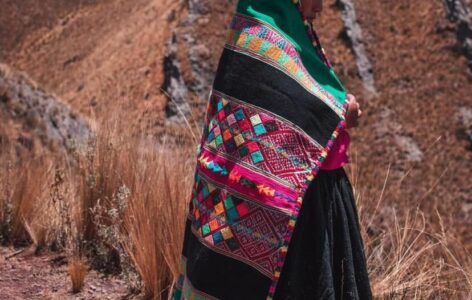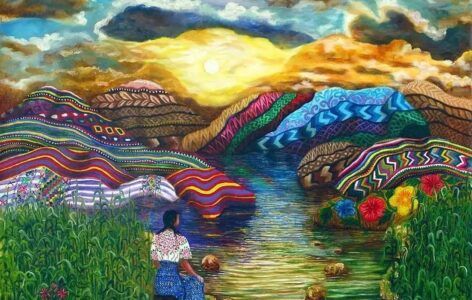
Within Andean cosmology, movement does not define life more than stillness does. February unfolds as a period when visible action slows, yet internal activity intensifies.
Rather than marking an absence of progress, this pause reflects a moment when life reorganizes itself beyond immediate visibility.
Pause as Relational Intelligence
In many modern frameworks, action signals productivity while stillness suggests stagnation.

Andean wisdom challenges this binary. A pause can be an intentional act of relational intelligence, allowing the body, the land, and unseen forces to realign.
Stillness creates space for listening. It prevents premature decisions that could disrupt processes still unfolding.
In this sense, pausing becomes an active commitment to timing rather than hesitation.
The Body Learns Through Stillness
The human body mirrors the seasonal logic of the land.
Fatigue, introspection, emotional sensitivity, or withdrawal often arise during periods of intense internal processing.

Andean traditions do not pathologize these states.
They understand them as signals of integration.
When the body slows down, it does not stop learning. It absorbs experience, settles emotional movement, and prepares for the next phase of expression.
Stillness as Protection
Stillness also functions as protection. What is forming remains vulnerable.
Exposure, explanation, or action taken too early can weaken emerging structures, whether emotional, spiritual, or communal.
By honoring stillness, one protects what has not yet developed the strength to stand in the open.

February teaches that not everything needs to be seen in order to be alive.
Action Rooted in Timing
From an Andean perspective, effective action arises from alignment rather than urgency. Stillness ensures that movement, when it comes, carries coherence.

To pause is not to withdraw from life.
It is to stay in right relationship with becoming.
Stillness, in this sense, acts as medicine, not by curing, but by allowing life to complete its own preparation.
References
- Allen, C. J. (2002). The hold life has: Coca and cultural identity in an Andean community. Smithsonian Institution Press.
- Gose, P. (1994). Deathly waters and hungry mountains: Agrarian ritual and class formation in an Andean town. University of Toronto Press.
This article draws on both academic literature and oral, lineage-based Andean knowledge. Teachings that originate from living traditions are cited in recognition of their ongoing transmission within Andean communities, while scholarly sources are used to support contextual interpretation.