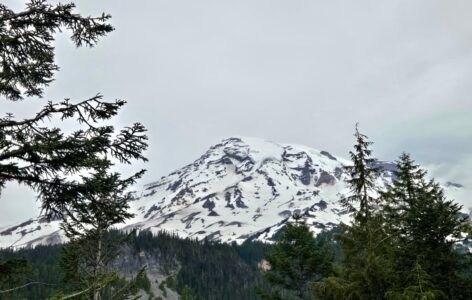
As February nears its end, Andean cosmology recognizes a subtle shift. Life remains largely unseen, yet something begins to waking.
The rains continue, the soil stays heavy, and seeds still rest underground, but the quality of time changes.

This is not the moment of action.
It is the moment of holding.
Late February occupies a threshold where gestation persists, even as movement quietly announces itself from within.
The Body as a Threshold Space
In Andean wisdom, the body does not stand apart from seasonal processes.
It participates in them.

Emotional sensitivity, quiet anticipation, and heightened perception often arise during this phase, not as signs of readiness to act, but as indications that something internal has begun to organize.
The body becomes a sacred threshold, a space where what is waking must be protected rather than pushed forward.
What is alive does not require acceleration. It requires right relationship.
Why What Is Waking Must Be Held
Forcing clarity or direction during this stage is believed to weaken what is emerging and generate imbalance.
Late February teaches restraint, not as suppression, but as care.
In Andean cosmology, thresholds demand patience. Crossing too quickly risks breaking continuity with what has been forming in darkness.
To hold is an act of responsibility.
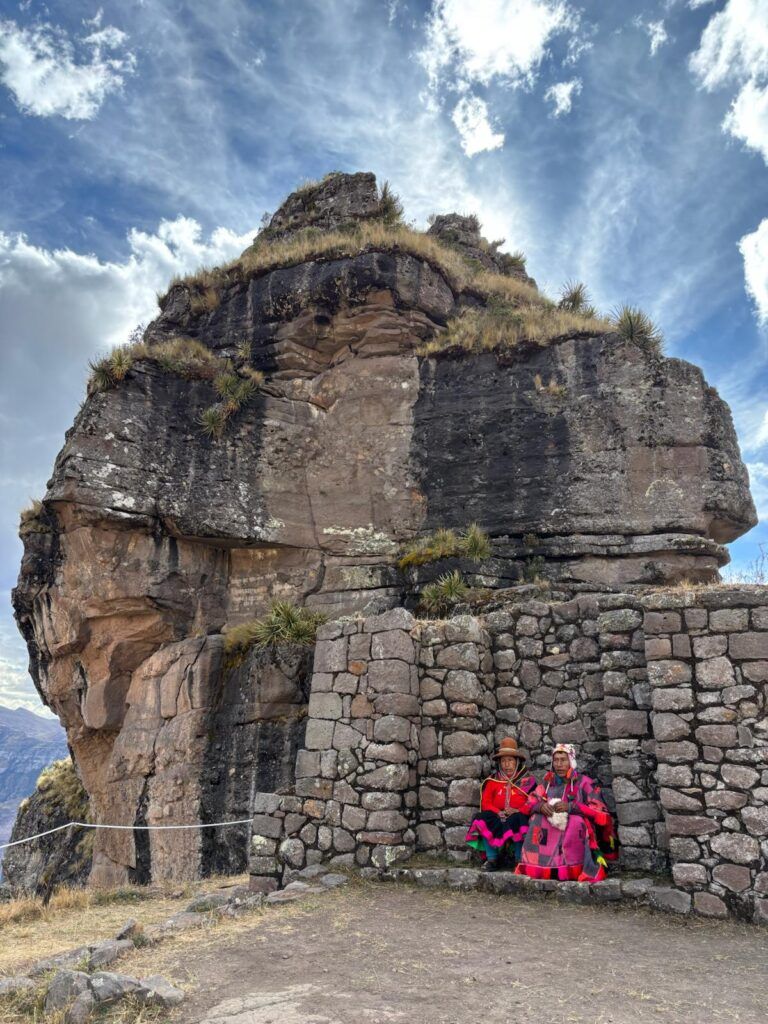
From Containment to Readiness of Waking
Holding does not delay life; it prepares it. Just as the land gathers strength before visible growth, the human body and psyche need time to stabilize what has shifted internally during the earlier months.
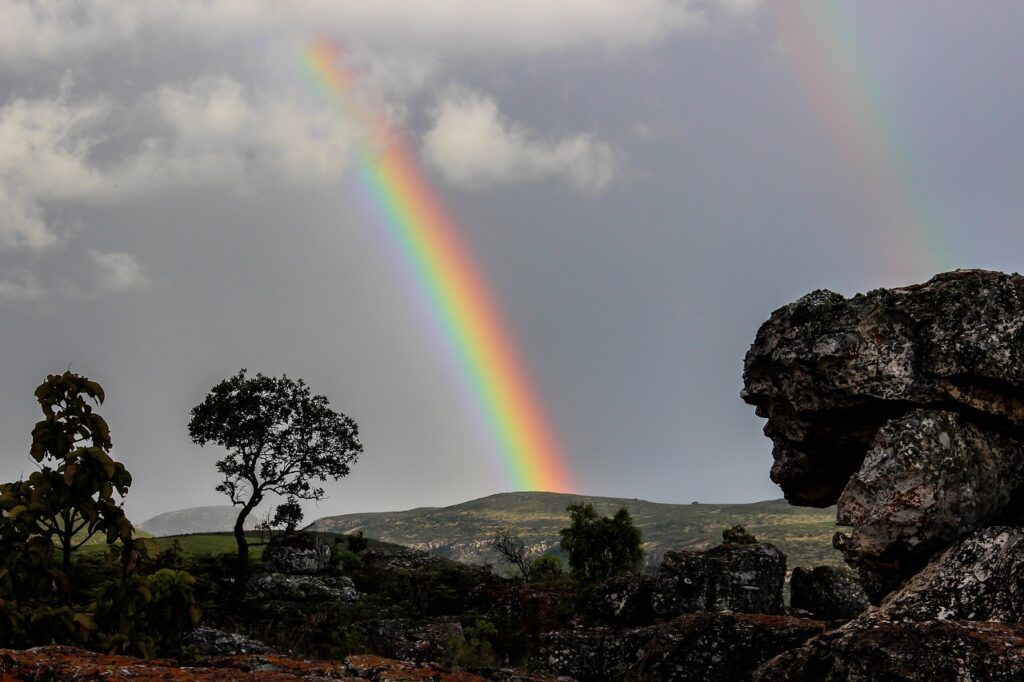
This is a period of quiet alignment, when experience settles and reorganizes itself without demand.
Action will come, but only after integrity has formed.
The Ethics of Waiting
Waiting, in Andean traditions, is not passive. It is ethical. It honors cycles, protects vulnerability, and respects timing as a living force.
To enter the end of February consciously is to recognize that life is still inside the womb, even when its presence can already be felt.
What matters now is not what will emerge,
but how it is being held.
References
- Allen, C. J. (2002). The hold life has: Coca and cultural identity in an Andean community. Smithsonian Institution Press.
- Gose, P. (1994). Deathly waters and hungry mountains: Agrarian ritual and class formation in an Andean town. University of Toronto Press.
- Isbell, B. J. (1978). To defend ourselves: Ecology and ritual in an Andean village. Waveland Press.
This article draws on both academic literature and oral, lineage-based Andean knowledge. Teachings that originate from living traditions are cited in recognition of their ongoing transmission within Andean communities, while scholarly sources are used to support contextual interpretation.