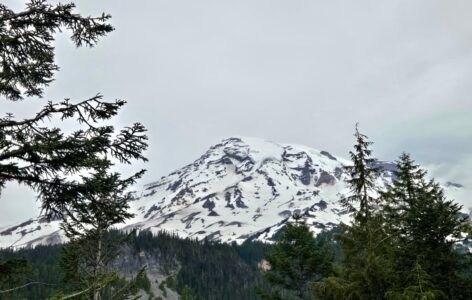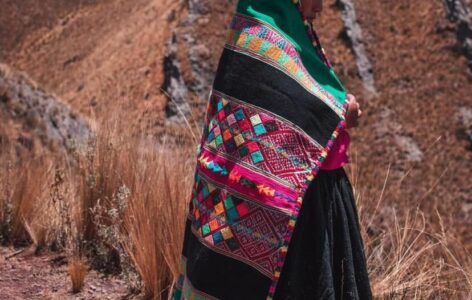
High above the valleys, the wind moves through the Andes like an invisible traveler. It crosses ancient mountain passes, bends the golden grasses, and carries the whispers of distant landscapes. Although we cannot see its form, we recognize its presence in every movement it creates.

In the Andean world, wayra, the Quechua word for wind, can evoke more than an atmospheric phenomenon. Historical accounts and ethnographic research reveal how different Andean communities have connected the wind with sacred places, powerful spiritual beings, and the mysteries of the natural world.
The wind embodies a fascinating paradox: it remains invisible, yet its presence transforms everything it touches. Through this relationship between the visible and the unseen, the Andean landscape invites us to explore the spiritual significance of movement, perception, and respect.
Wayra Wasi: Where the Wind Finds Its Home
Deep within the historical landscape of the southern Inca realm, a remarkable sacred place once stood near present-day Angostura de Paine, Chile.
The sixteenth-century chronicler Jerónimo de Bibar described a cave from which powerful winds emerged. His account associated the site with Inca veneration, suggesting that its extraordinary natural characteristics inspired profound religious significance.
The place became known as Wayra Wasi, or the House of the Wind.
Centuries later, historical and ethnographic research revisited this remarkable location. Although the cave no longer survives, local memories and historical records continue to illuminate its significance.
The site offers a glimpse into an Andean understanding of sacred geography. Mountains and caves could represent more than physical formations. Their distinctive characteristics sometimes inspired ceremonies, stories, and relationships with spiritual powers.
Wayra Wasi reminds us that the natural world can inspire sacred meaning through its extraordinary presence.

The Wind and the Powers of the Living Cosmos
Across the Andes, communities have developed diverse spiritual interpretations of atmospheric phenomena.
Some historical traditions associate storms and powerful winds with Illapa, a significant deity connected with thunder, lightning, and rain. Other regional traditions describe spiritual beings whose powers extend into the movement of the atmosphere.
These traditions reveal a complex relationship between humanity and the forces of nature.
The wind does not always symbolize peace or benevolence. Certain Andean ethnomedical traditions also associate particular winds with illness and vulnerability. Such beliefs reflect culturally specific understandings of health and the environment rather than established medical explanations.
This complexity gives the wind a distinctive spiritual significance.
It can inspire reverence, caution, curiosity, and wonder. Its unpredictable movements remind us that the natural world possesses rhythms and forces beyond human control.
Within this understanding, respect begins when people recognize the limits of their power over the landscape.
The Invisible Language of Movement

The wind reveals itself through movement. It bends the grasses, shapes the clouds, and carries sounds across immense mountain valleys. Every movement reveals an invisible presence that connects distant elements of the landscape.
In contemporary spiritual reflection, this natural phenomenon offers a powerful metaphor for the subtle dimensions of human experience.
We often recognize meaningful changes through their effects before we fully understand their origins. A familiar landscape awakens a memory. A moment of silence reveals an overlooked emotion. A conversation changes how we perceive a relationship.
Like the wind, these experiences leave traces without always revealing their source.
Andean traditions offer diverse ways of understanding the relationship between visible landscapes and unseen spiritual presences. We can draw inspiration from these perspectives while respecting the distinct beliefs and practices of individual communities.
The wind invites us to approach the invisible with curiosity rather than certainty.
Listening to the Breath of the Mountains
The apus, or sacred mountain beings, occupy an important place in the spiritual traditions of various Andean communities.
Their presence connects particular mountains with local histories, relationships, and ceremonial practices. Communities may approach these sacred places through offerings, prayers, and expressions of respect.
The wind adds another dimension to the experience of the mountain landscape.
It travels through narrow passes, moves across exposed summits, and creates distinctive sounds as it encounters rocks and vegetation.

These natural movements can inspire contemplation. Rather than interpreting every gust as a supernatural message, we can listen to the landscape with greater attention and recognize the cultural significance that particular places hold for the communities around them.
The mountains do not need to reveal all their mysteries for us to appreciate their presence.
Sometimes, attentive listening becomes an expression of respect.
When the Wind Invites Us to Be Still

The wind never follows a single rhythm. Sometimes it moves gently through the valleys; at other times, it sweeps across the mountains with extraordinary force.
Its changing nature offers a contemplative image of life’s transitions.
We cannot control every movement around us, but we can cultivate greater awareness of how we respond. We can recognize moments that call for action and others that invite patience.
This reflection does not represent a universal ancient Andean teaching. Rather, it offers a contemporary spiritual interpretation inspired by the natural landscape and its cultural significance.
The wind encourages us to notice the relationship between movement and stillness.
As September reaches its final days, we can carry this awareness into the coming season. We can approach change without demanding certainty and remain attentive to the relationships that give our experiences meaning.
The wind continues its journey through the Andes, crossing valleys and mountains without revealing its final destination.
Perhaps its deepest invitation lies in this mystery: we do not need to see everything to recognize its presence, and we do not need to understand every movement to appreciate the living world.
References
- Echeverría, J. F. (2021). Wayra Wasi: La casa del viento. Memorias y significados de una cueva al extremo sur del dominio Inka (Chada-Culitrín, Región Metropolitana, Chile). Antropologías del Sur, 8(15), 59–83.
- Larme, A. C. (1998). Environment, vulnerability, and gender in Andean ethnomedicine. Social Science & Medicine, 47(8), 1005–1015.
This article draws on both academic literature and oral, lineage-based Andean knowledge. Teachings that originate from living traditions are cited in recognition of their ongoing transmission within Andean communities, while scholarly sources are used to support contextual interpretation.