logo im

Love: Andean Cosmovision

Posted on
The most profound and mystical force

Love transcends time and space, weaving together souls with threads of pure passion and boundless energy.

It is an all-encompassing enchantment that defies logic. It’s a fierce yet tender force that binds hearts in a dance of profound connection.

True love is a sanctuary where we strive not to harm or change one another but to embrace each other’s essence with a spirit of genuine understanding and mutual respect.

Love, in its truest form, is a delicate balance of growth and steadfast support. It is not a barrier to self-improvement or personal dreams but a catalyst that propels us to evolve together.

It’s about being honest and sharing dreams, working hand in hand towards common goals while cherishing the journey.

Here, in Cusco, Peru, love takes on a celestial dimension, resonating with the rhythm of the earth.

Cusco-Perú

A Sacred Love Union

The Andean wedding is not merely a union of two individuals but a mystical convergence of spirits, deeply rooted in the reverence for Pachamama (Mother Earth) and the Apus.

Andean culture sees the formation of a couple as a profound redefinition of individual identity through mutual relationship.

In the Aymara language, the term for marriage jaqichasiña, translates to “becoming a person,” emphasizing that relational unity is fundamental to personal identity.

This holistic perspective, expressed through the concept of pacha, envisions all existence as an interrelated whole, where the cosmos and human life are reflections of each other.

This sacred ceremony is a profound journey into the soul of tradition. It is where ancient rituals and offerings to Pachamama create a tapestry of spiritual connection.

The exchange of the chumpi, the woolen sash, becomes a powerful symbol of unity and mutual commitment.

The Andean wedding ceremony captures this sacred essence of love.

Chumpi, the woolen sash

This ritual, steeped in ancestral significance, binds the couple together in a shared path, signifying their intertwined destinies.

The Enchantment of Love Andean Ceremonies

As we embrace love and its enchanting manifestations, let us remember that it is a force to be cherished, nurtured, and celebrated with reverence and joy.

The Andean worldview, guided by principles of reciprocity and complementarity, underscores the importance of balance and harmony.

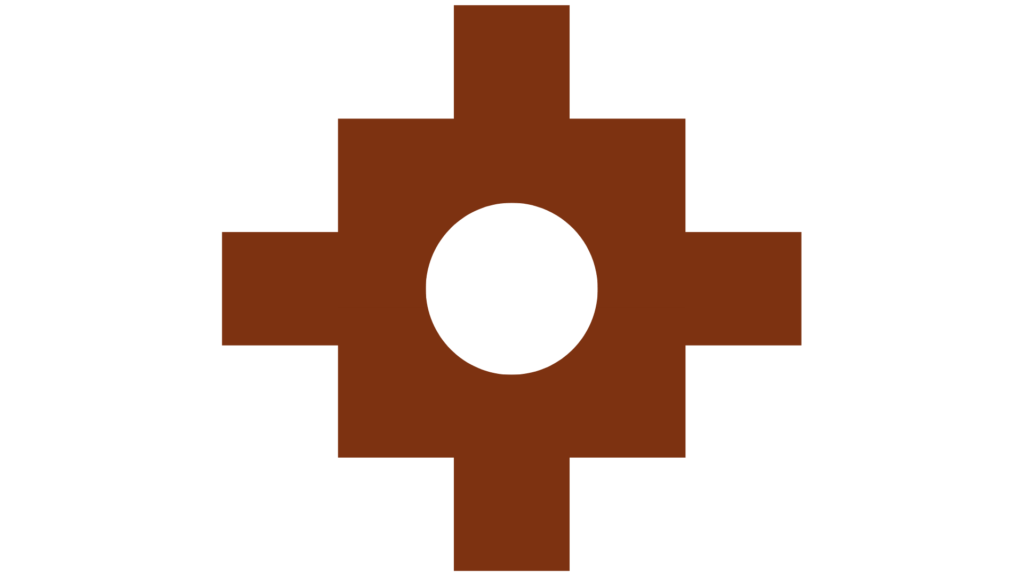
The Andean Cross, or Chakana, represents the integration of various realms of existence, linking the upper (Hanaq Pacha) and lower (Ukhu Pacha) planes, as well as the feminine and masculine energies.

This sacred geometry mirrors the relational and complementary principles that govern life, emphasizing the interconnectedness of all things.

Chacana is an Inca symbol

As the couple embarks on this sacred journey, they offer a traditional toast to the sacred mountains. They invoke the blessings as an act of reverence to the Apus to protect and guide their union.

The Andean wedding ceremony becomes a magical celebration where the spiritual and the earthly unite.

It is a vivid reminder that love, in all its splendor, is both a sacred gift and a profound responsibility—a journey of mutual growth, shared dreams, and enduring commitment, blessed by the ancient spirits of the Andes.

In every sacred ritual and heartfelt connection, love shines as the reason for life, guiding us through the timeless dance of union and harmony.

Inti: Father Sun

Posted on

“Father Sun, my Father,” the Inca shouts during the Inti Raymi ceremony, honoring Inti, the Sun God.

The sun’s radiance has fascinated cultures worldwide, illuminating days and symbolizing divinity across epochs.

Father Sun, revered as the source of all wealth and the ruler of the heavens, plants, and the universe, occupies a central place in the Inca pantheon.

As the sun god, Inti was closely linked to agriculture, providing the essential light and warmth for crop growth.

In this blog, we will explore Inti’s significance, his influence on Inca society, and his enduring legacy.

Inti, the sun itself, was their primary deity.

Who Was Inti Father Sun?

Inti was believed to be the son of Wiracocha, the creator deity, and Mama Cocha, the goddess of the sea.

According to Inca legends, Inti had two sisters: Pachamama, goddess of the earth, and Mama Killa, goddess of the moon.

Mama Killa was considered Inti’s wife in some versions of the myth. Father sun’s influence on Inca life was profound, as he controlled agricultural activities crucial for their survival.

While generally benevolent, Inti could show his displeasure through solar eclipses, necessitating sacrifices to restore his favor.

Inti Family Tree

Inti in the Sky: Astronomical Basis and Iconography

The Incas, residing in regions like the Sacred Valley, were keen observers of the sky.

The sun’s movements dictated their calendar and agricultural practices, making Inti a guiding celestial force.

For example, Machu Picchu’s structures align with specific solar patterns, reflecting the Incas’ sophisticated understanding of the sun’s path.

Solar observations influenced Inti’s iconography, which commonly featured a golden disk with a human face.

Golden disk with a human face.

Gold, associated with Father Sun due to its brilliant sheen, symbolized the “sweat of the sun.”

Inti is often depicted alongside the crescent moon, representing balance and harmony between day and night, male and female. This duality underscored the astronomical observations embedded in Inca culture.

This divine lineage allowed them to rule with unquestionable authority. Inti’s celestial presence was felt throughout the empire, from Cusco’s sacred sites to Machu Picchu’s high terraces.

His role illuminated both the physical and spiritual realms of Inca life.

Inti on Earth: Social and Cultural Impact

Inti’s influence extended beyond the celestial sphere into the social and cultural fabric of the Inca Empire.

It played a crucial role in agriculture. As the giver of warmth and light, he controlled crop growth and harvests.

This celebration highlighted the sun’s importance in sustaining the Inca way of life.

The temple’s walls of Qoricancha were once lined with gold, symbolizing the sun’s radiance.

Ritual offerings to Father Sun, including gold and silver figurines, were common, aiming to maintain harmony and receive his blessings.

Gold and Silver

Artistic depictions of Inti, found on pottery, textiles, and architectural designs, further illustrate his cultural significance.

His imagery adorned royal clothing and was a testament to the intertwined nature of religion and daily life in Inca society.

Inti Raymi

The Inti Raymi festival, held annually during the winter solstice, honored Father Sun and marked the start of the agricultural season.

This major Inca event continues today, drawing thousands of locals and tourists and showcasing the enduring veneration of Father Sun.

The festival begins before dawn with a solemn procession in Cusco’s main square to celebrate the rising sun.

Inti Raymi festival

The Inca offers chicha to Father Sun and rekindles sacred fires at the Coricancha, accompanied by dances and sacrifices of grain, flowers, and animals.

Celebrated in June, the festival involves animal sacrifices, including white llamas, and remains a vibrant tradition across the Andean region. Visiting Machu Picchu after the festival is highly recommended for a complete experience.

Modern Celebrations and Alternatives

During Inti Raymi, Cusco’s center is closed to regular traffic, with only tourist vehicles allowed to transport visitors.

If you can’t attend on June 24, you can still experience Inca culture through folk dances and traditional performances in Plaza de Armas during the two weeks leading up to the festival.

Inti Raymi in Plaza de Armas – Cusco

Inca Altar Of The Qoricancha – Part 6

Posted on

Welcome to the sixth section of our exploration of the elements of the Inca altar at Qoricancha! A representation of the Andean cosmovision.

It shows us the hierarchies of the Inca criteria; moreover, it explores the reasons for correspondence and equality, presenting a symbol that is still being studied.

If you haven’t seen Part 1, Part 2, Part 3, Part 4 or Part 5 yet, we remind you to read them first and then come back here.


High Inca Altar of Qoricancha

Inca Mallquis

The Andean people believed that after this life, or Kay Pacha, the souls of the dead lived a new existence, either in Hanan Pacha or heaven, or in Ukhu Pacha or hell.

They also believed that the souls would return to life and that for this, they would need their bodies, which is why they preserved their deceased mummified.

Mummies were not exclusive to the imperial caste.

The people themselves maintained this tradition and custom; each of the Ayllus had its own Mallqui, the corpse of the oldest patriarch, who was always accompanied by the mummy of his wife.

The “mallquis” are the ancestors, the mummies, or their representations.

Others joined these Mallquis; people kept their corpses because of their deeds, whether they were great warriors or very devoted priests.

Common people also underwent a preservation process, were buried on high ledges and difficult-to-access hills, and covered with mud. Today, there are no fewer than 10 cemeteries between Ollantaytambo and Calca, and in the surroundings of Qosqo, there are numerous collective tombs.

People buried many bodies in trees by digging deep into the tree’s roots, placing the deceased there, and then reburying and covering everything.

At other times, people placed the bodies inside the trunk.

Many mummies remained preserved in perpetual snow, while others rested on mountain peaks.

The Andes people deeply rooted their cult of the dead. They had very diligent customs and a profound cult.

The Tree

The following drawing of the cosmogonic retablo is the tree, which represents life emerging from the earth and reaching toward the infinite.

  • Hanan Pacha is the crown of the tree suspended in space, in direct communication with the wind and sunlight; it is the part that connects with the infinite beings.
  • Kay Pacha is the strong, rugged trunk, representing humanity and its labor. It shows that life can twist like the trunk of some trees or stay straight like others, and that life can be either long-lived or short-lived.
  • Ukhu Pacha is the root, connected subterraneously to the deep center of the earth. It symbolizes rooting and gregariousness. It shows that the root is the final support for anything to exist on earth; without it, nothing can survive.
The tree symbolizes the link that connects the three worlds.

The root is nourishing, seeking the sources of the bodies of all ancestors.

Through the root come the fruits of the earth, and the condition of the tree reflects the condition of those who cared for it. The tree represents all of plant nature.

It lives like humans, fulfilling a specific task, not being aggressive; on the contrary, it shelters and is not selfish but extends its branches full of fruit.

Nature offers itself to humans, and humans should reciprocate in the same manner.

Mama Ccocha

Mama Ccocha, the elemental water, represents the principle and rebirth. It symbolizes relativity, the eternal becoming, and teaches that everything is a cycle, coming and going like human life.

People made expensive offerings to the water and valued it in different colors, each with a very special meaning.

The first gesture of hospitality for a traveler is to offer water, and then to give more of it in a gifted pitcher.

Water is the second most important element for the existence of life.

It flows like human life, occupies the Three Worlds, and thus knows and advises.

People consider it a huaca of utmost importance and worship it in all its manifestations:

  • Sea
  • Lake
  • Lagoon
  • River
  • Spring
  • Rain
  • Beverage
  • Irrigation
  • Absence
  • Deluge

For the Incas, the importance of things lies in the teachings they offer. The Incas believed in the existence of water spirits and associated them closely with the Moon.

Water cures many diseases, and Andean priests and doctors heal ailments with water from springs that have not received sunlight.


Reference

Collasuyo Part 2

Posted on

Ceques and Huacas

The path of Collasuyo, which we explore in this issue, encompasses 9 ceques or demarcations and 84 huacas or landmarks; these form a meticulously organized distribution of lands within the Sacred Valley of Qosqo.

If you haven’t read Part 1 of our blog yet, we invite you to read it first and then come back here.


Starting with the fourth huaca and continuing through to the ninth and final huaca of the first ceque:

Collasuyo Fourth Huaca

People associated this huaca with ceremonial and religious activities, potentially linking it to water and fertility.

Related to Water and Fertility

It was a large plain called ‘Caripampa,’ located on the current grounds of the Kayra farm.

All at the foothills of the Socllac’asa and Pucac’asa hills, an area primarily dedicated to agriculture.

It has water year-round and is home to several rural communities.

Collasuyo Fifth Huaca

This huaca was significant for its religious and cultural importance, possibly associated with community and ceremonial events.

Associated with Community and Ceremonial Events

It is a spring located on the slope of Mount Huanacauri, in a corner of the former plain.

It is a significant flow of water that continuously nourishes the fertile plain.

Collasuyo Sixth Huaca

They were certain stones located in a ravine, which were said to be the children of a mountain.

Because they disobeyed their father, they consequently turned into stones.

To reach this huaca, one must first follow the right bank of the Huatanay River. Then, upon finding a ravine, one should climb about 399 meters until reaching a ledge on the mountain.

It is a possible location of these stones that received a similar fate.

Related to Natural Features or Sacred Landscapes.

This site was likely related to mountains or valleys, playing a role in rituals connected to these features.

Collasuyo Seventh huaca

People venerated this huaca on the right side of Angostura, on the Llupacturun hill, at an elevation of 600 meters from the right bank of the Huatanay River.

You can find pyramid-shaped terraces subtly rising from the ground, encircled by well-defined fields that evoke a sense of timelessness. Moreover, the site rests gracefully next to a seasonal spring, adding a serene and mystical touch to the surroundings.

Relatives of the Inca would come to this huaca to pray for the well-being of the reigning sovereign.

As a ‘payment’ for the favors they sought, they offered the huaca small garments, gold, and silver.

This huaca may have had connections to local community traditions and rituals, integrating local deities or spirits into the broader Inca religious system.

Collasuyo Eighth Huaca

It was called Guayra, the wind deity.

People burned herbs and aromatic essences in large stone braziers to make offerings to him, praying loudly for the fierce gales to cease and for the wind to be contained and calmed.

The offerings were made to him by burning herbs and aromatic essences.

People performed this ceremony at the upper part of the ravine, on some rugged rocks at its end.

Collasuyo Ninth Huaca

People revered the river that flows through the Angostura, the great collector of the waters from the Qosqo Valley, by offering red conchas (ceramic vessels) and throwing dyed wool of various colors into its waters.

They strategically placed these sites to create a network of sacred geography, connecting the spiritual and material aspects of Inca society.


Reference

Candia M, C; Del Solar, M y Iwaki O, R. (1994). Los ceques y las huacas, caminos del Contisuyo. Cuadernos Andinos Nº6.

Collasuyo Part 1

Posted on

Ceques and Huacas

The path of Collasuyo, which we explore in this issue, encompasses 9 ceques or demarcations and 84 huacas or landmarks; these form a meticulously organized distribution of lands within the Sacred Valley of Qosqo.

Each ceque route provides us with deeper and varied insights into the origins of the Inca people, who established in this valley the most formidable culture of integration with nature.

The path of Collasuyo is a unique and original repository of Andean religious thought and cosmogony. It presents, in a detailed succession of gods, apus, mallquis, and heroes, a mythology unmatched anywhere else in the world.

The ceques and huacas are also a vast document of information about Inca society, containing data on Panacas, Ayllus, and the communities of Qosqo; it compiles records of succession and lineage, details of social hierarchy and correspondence, and is, in sum, a valuable archive that warrants extensive study.

Andean priests held a prominent place in the ritual and worship of the huacas.

The Incas, unlike any other civilization, employed the order they received from and learned from nature for their own rational organization.

This path also brings us the magic of the Apus, living spirits residing in the mountains who preside over the Altomisayoc’s ceremonies.

An eminently religious people, the Incas possessed grand ceremonial practices, a splendorous display, and a church of the highest order.

The ceques and huacas are, moreover, meticulous accounts of the history of each Inca ruler, serving as effective informants on the eponymous events in the history of Qosqo.


Here are the first, second, and third ceques:

Collasuyo First Huaca:


In the Inticancha palace, Manco Capac, the founder of Qosqo, was venerated, and it later served as a monastery for the Sun priests.

Manco Capac, the founder of Qosqo

This site is integral to the First Ceque, known as Hurin Huaca, which defines the southern boundary of the Sacred Valley.

It includes significant landmarks such as the Saqsayhuaman fortress and the Puca Pucara complex.

The stones of the Pururaucas evoke the myth of stones transforming into soldiers of the Inca Pachacutec. They symbolize the rise and zenith of the Tawantinsuyu Empire.

This ceque embodies the spiritual and ceremonial essence of the valley. It reflect the deep connection between the Inca‘s sacred geography and their cosmological beliefs.

Collasuyo Second Huaca:


The water spring, originating from the Qoricancha temple and attributed with special qualities, was situated to the south of the temple, marking the beginning of the journey to Collasuyo.

The Qoricancha temple

The Second Ceque, also known as Qollasuyu Huaca, extends into the southeastern regions of the Sacred Valley.

The spring was offered small shells, with the hope that the water it carried would be beneficial and bring blessings to its users.

This ceque includes significant landmarks such as the Tambomachay water shrine and the Qenqo ritual site. The deep reverence the Incas had for water sources as sacred elements linked to their spiritual and ceremonial practices.

Collasuyo Third Huaca:


They called it Churucana, a small, round hill near San Lázaro, where three stones served as idols.

People made ordinary sacrifices, including offerings of children, to ensure the sun retained its strength.

Recent airport expansion has destroyed this huaca, which was part of the Third Ceque, also known as Pachacamac Huaca.

Machu Picchu

Once a highly revered site, it offered an extraordinary vantage point for observing the sun’s movement from the heart of the Qosqo Valley.

The Third Ceque, covering the northeastern regions of the Sacred Valley, includes significant huacas like Huchuy Qosqo and Machu Picchu.


Reference

Candia M, C; Del Solar, M y Iwaki O, R. (1994). Los ceques y las huacas, caminos del Contisuyo. Cuadernos Andinos Nº6.

Inca Altar Of The Qoricancha – Part 5

Posted on

Welcome to the fifth section of our exploration of the elements of the Inca altar at Qoricancha! A representation of the Andean cosmovision.

It shows us the hierarchies of the Inca criteria; moreover, it explores the reasons for correspondence and equality, presenting a symbol that is still being studied.

If you haven’t seen Part 1, Part 2, Part 3 or Part 4 yet, we remind you to read them first and then come back here.


High Altar of Qoricancha

Symbols Description

Ñawi

The next symbol is the eyes.

Ñawi, a Quechua word that means “eyes”

Ymaymana Ñauraycuna” represents the inhabitants of the inner world or “Ukhu Pacha.”

In this realm, inhabited by spirits of darkness, the dominant figure is “supay” or demon, a bloodthirsty and murderous being who tempts humans to disrespect the supreme creator.

Supay is accompanied by other infernal demons such as “Ccañajhuay,” “Ñaqac,” “Saqra,” “muqui,” “Achaq’alla,” “Yscay Uya,” “Ñaupa Runa,” and “socca.”

Alongside these malevolent beings, other spirits reside here, confined to these places due to the harm they have caused to humans or nature.

“Inca” Ccari

The following drawing represents a man.

Entrusted with the task of the future, he is the privileged being of creation. He possesses energy and vitality, along with the gift of knowledge, love, and wisdom. He holds the messages of the past and must find his spirituality.

The Ccari is on the right side.

Man is responsible for discovering methods for social coexistence, seeking the development of work techniques, and creating a harmonious society among all living beings, in harmony with nature and in close connection with the entire universe.

During the time of the Incas, man held more than any other being in the world, knowledge inherited from prehistoric times.

His expertise in natural and folkloric medicine, his grasp of natural selection, and his command of hydraulics and land treatment, especially his philosophy and metaphysics, rendered him a privileged being and earned him recognition as a divine creation.

“Inca” Warmi

The following drawing corresponds to that of a woman. The woman shares all knowledge with the man.

There was no inequality or gender dominance among the Incas.

The Warmi is on the left side.

However, within harmony and correspondence, women performed much more diverse roles than men.

Almost all tasks, including warfare, were also carried out by women.

Like men, women also knew how to spin and weave.

The only task inherently associated with the female gender was domestic service.

This egalitarian and natural treatment fostered a harmonious society during the time of the Incas, but the intrusive attitude of a Western society, which neither feared nor respected the supreme values of humanity, disrupted it.

Tambo

The lower drawing of the cosmogonic retable is the Collca, which means granary, storage, or depot. It is also known by the name Tambo.

The Andeans covered this drawing on the altar of Qoricancha with plates of gold and silver, reflecting the importance they attributed to storage.

Storing is part of a philosophy of life.

The food, clothing, tools, decorations, weapons, gifts, and everything that filled the Inca Collcas were instruments for interacting with other communities.

During the Inca period, there were numerous towns on the coast, in the jungle, and in the highlands that had not yet emerged from prehistory.

Educating those peoples and integrating them into Inca civilization was the greatest achievement in the entire history of the Tahuantinsuyo. The Collcas were filled with food, so diverse that we can only recognize about 10% of it.

Here is a list from Felipe Guaman Poma:They had provisions of food in this way: potatoes, tubers, oca, mashua, radish, quinoa, tarhui, chuño, caui, caya, tamos, llama, vicuña, alpaca, paco, guanaco, taruca, partridge, chichi, ants, mosquitoes, mushrooms, lakes, ducks, herbs, llachoc, onquena, ocoroto, eacacha, mauca, amaca, suya, squash, thousands of fruits, peppers, uchu, rocoto, and other small items.”


  • Candia M, C; Del Solar, M y Iwaki O, R. (1994). Altar Inka del Ccorik’ancha. Cuadernos Andinos Nº10.
  • Estermann, J. (1998) Filosofía Andina. Un estudio intercultural de la sabiduría autóctona andina. Biblioteca Seminario San Antonio Abad, Cusco.