logo im

Chacana Part 2

Posted on

Let’s continue with the second part of our blog about the chacana, the Inca symbol that represents a part of Andean cosmology.

If you haven’t read the first part yet, we invite you to read it first: Chacana Part 1.

Chacana is an Inca symbol

In the lower left side of Chacana

We call it “kausanapac” or rule of conduct, is the third tier of three levels, which descend internally representing bodily life; these are the basic rules of ethics and morality.

The first tier

It is occupied by honesty, “Ama Llulla.”

Honesty was applied from the observance of fasts and penances to the assurance of others’ honesty.

There was a straightforward interaction where abuse of trust, negligence, or rude acts were inconceivable.

The second level

Corresponds to integrity, “Ama Sua,” which is the behavioral norm within the community.

In the time of the Incas, integrity also meant not committing errors against others or their interests.

Integrity was not limited to material possessions but encompassed all forms of social interaction, sharing work and obligations with others.

The third level

It is occupied by the norm “Ama Quella,” which means “diligence, conscious and constant work” for the enhancement of the Empire, resulting in more food, work, and festivals for the entire people.

It signifies the obligation to produce to share, collaborate to acquire, and participate in common endeavors, known as Ayni, in the task of enlarging the Tahuantinsuyu.

The last tier corresponds to the lower

Known as “yayaypac” or unchangeability.

The first tier

It’s occupied by the lands of the sun, symbolizing the sanctity of labor.

These lands were a powerful economic force, and the goods obtained from them supported 6,000 solar priests for the worship of the huacas and for celebrations.

The second level

It is occupied by the lands of the Inca, which were the largest and located on the best soils.

The people worked these lands to produce vast resources like food, clothing, utensils, tools, and weapons, which they used to repay the service they provided to the empire.

They used this production to feed the populations they annexed each year and to assist populations affected by natural disasters.

The third tier

It was occupied by the lands of the people, which were resources for the sustenance of the population.

These lands were generously distributed and used to serve the people during major festivals.

They provided the population with housing, clothing, food, and familial support.


Reference:

Candia Muriel, C e Iwaki Ordoñez, R (1994) El intitake y símbolos andinos. Cuadernos Andinos Nº1.

Chacana Part 1

Posted on

Chacana is an Inca symbol, represented by an Andean cross, formed by four steps of three rungs each.

The two upper steps correspond to the ‘ideal’ world.

The right ladder encompasses the cosmogonic theory, while the left ladder explains the theory of the three worlds.

Chacana is an Inca symbol

The lower and inner steps correspond to the ‘real’ world.

The left steps encompass norms of conduct and the basic principles of human relations, while the right steps signify the unalterable hierarchical order of political, social, and religious relationships.

Upper right side of Chacana

Upper right side of Chacana

First Step

Explains the conception of the universe.

For the Incas, the supreme creator of all things is Illa Tecse Wiracocha Pachayachachic, and the first step is reserved for him.

He is the creator god of the sky and the earth, the Omnipotent Lord who created the entire universe from his ‘chuspa’ (bag).

Second Step

The sun occupies the second step; he is a living and daily god who rewards and punishes directly. He is the god of nature, and humans rely on him for the timing of planting and harvesting, for festivals and love, and also for death.

Third Step

The third step is occupied by the ‘Mallquis,’ tutelary deities specific to each individual, such as the Huacas and Apus, rivers, mountains, and trees. These gods are the sources of life and are the origin of the ayllus and the runas (people).

The upper left side of Chacana

We call it ‘puriy,’ and explains the theory of the three lives or the three worlds.

Hanaq Pacha

The ‘upper world,’ is before life and occupies the first step. In this realm, the tutelary deities, the apus, live.

In this first world full of mythology, the gods of mountains, rivers, and stones, along with trees, animals, and natural phenomena, coexist as animated beings with hunger, thirst, and desires.

These Andean gods inhabit a magical, real, and conscious universe.

This dreamlike world is also accessed by Andean people after their death.

Kay Pacha

This life, spans from birth to death.

It is an ordered and predetermined existence.

The Quechuas did not have a fatalistic outlook; they believed that upon entering the world, individuals must fulfill a specific role within the order and harmony of Inca society.

Uchu Pacha

The afterlife, is where it is believed that after death, a person integrates with nature, returning to their Paccarina (place of origin), buried beneath trees or in terraces, serving as nourishment for plants that sustain the life of the Andean people.


References:

Candia Muriel, C e Iwaki Ordoñez, R (1994) El intitake y símbolos andinos. Cuadernos Andinos Nº1.

Offering or Despacho

Posted on

The entire ceremony to Mamapacha, the Apus, the sun, and the moon is known by this name:

DESPACHO

The offering from one of our students.

However, each ritual is different from the others; different in intentions.

Many know the despacho by other names such as Despacho Hampi, mesa, offering, or payment.

The ceremony varies depending on:

  • The places where it takes place the ceremony.
  • The environment surrounding us.
  • The Paqo Qero
  • The position of the offering on the table.

The number of participants and the duration of the ceremony also vary the location and the ritual.

Mesa of our Students

The elements of Despacho

Elements of Despacho (Candia M, C; Del Solar, M y Iwaki O, R. (1994))

Procedure of the Ceremony

The first thing the Paqo Qero does is ask for the reason behind the request

If the intention is pure, people set a date, ideally the days immediately before or after the full moon.

As a reference, approximately 150 offerings are sold in our city in a week

Prior to this, the Paqo spends 24 hours in voluntary fasting at home, consecrating their work instruments and symbols of power.

They place these symbols in specific spots based on the participants’ importance or age, and cleanse the ritual area.

At the officiant’s request, everyone prepares kintus of coca leaves and hands them to the master. He arranges them on the unkuña in a specific shape and quantity as prescribed. They set traditional elements like the ara, ccocha, and holy cross on the table.

The table gradually becomes a sight of extraordinary beauty

The Paqo master begins blessing it and praying devoutly with all participants.

They unwrap the despacho hampi elements and place them on San Lorenzo paper covered with coca leaves. For an hour, participants remain silent as the Paqos meticulously prepare the despacho.

The Paqos light the Ninawillca and bless the sacred fire. Then share communion with the participants using wine or chicha, dipping the kintus into these beverages briefly. Invocations to regional, local, and communal Apus follow, accompanied by placing red and white carnations in the liquids as invitations.

After kneeling and sprinkling chicha or wine around the table, the Paqo master adds incense and aromatic plants to the fire. Liturgical chants begin as the master sprinkles wine or chicha over the table, praying for the success of the offering.

Finally, despacho is burned in the fire and covered with plants

The master informs participants that their service has ended, allowing them to stay or leave as they choose. They bid farewell as the master ascends a hill alone to burn or bury the payment.

If burned, he stays until it consumes completely, then covers the ashes with earth, sprinkles them with liquor and water while praying.

If buried, he burns it with icchu and other plants, asking Pachamama to accept the offering.

The ceremony concludes with the wrapping of the despacho in paper and other materials. The master offers a new lliclla or unk’uña for wrapping, then slowly and with blessings, clears the table.

Participants, now instructed not to remain silent, consume the remaining coca on the table. The master then asks them to step back and help clean up, leaving the place as they found it.


Candia M, C; Del Solar, M y Iwaki O, R. (1994). Despacho to Pachamama Cuadernos Andinos Nº15.

Evil influences & Death

Posted on

Since we are in Kay Pacha, Hanaq Pacha and Ukhu Pacha surrounds us with both good and evil energies. And even though the word ‘death‘ may bring us bad memories or chills, it is not one of the bad influences.

Endless cycle of life

Ill Wind

Machu Wayra refers to an intangible evil force or energy, an “ill wind“.

The Quechua describe this as a sudden and unpleasant sensation that individuals may experience either alone or in the presence of others. Moreover, sometimes it is a momentary feeling that passes; other times, it physically affects the victim

Sometimes it is a fleeting emotion that fades away; at other times, it physically afflicts the victim, necessitating measures to cleanse them of the “ill wind“.

A sudden and unpleasant sensation that individuals may experience either alone or in the presence of others.

According to their beliefs, the malevolent force originates from the fetus of a woman who has aborted intentionally or spontaneously.

When a woman aborts, she must call an Andean Paqo or curandero to hold a specific ritual to burn the fetus. The ashes of the fetus are capable of causing illness and even death to others if not disposed of carefully.

Some people purposefully send the Machu Wayra to others.

They call on the services of the yachak, who prepares an offering with the fetus of a hen or pig along with other items in order to send evil to another person. When the intention is to send evil, it’s black magic or sorcery.

Getting Rid of Machu Wayra

The quechua ask for protection from the Pachamama and make Her a haywarikuy. They may need to bring in a ritual specialist to assist them in ridding themselves of Machu Wayra. There are many ways to do this.

  • Garlic as Protector: It is commonly used as a condiment in the Andes. The more commonb types are large cloven yellow garlic or white garlic with small cloves. To counteract the intrusion of the negative energies of Machu Wayra and all evil spirits, people hang and conceal bunches of garlic in corners of their homes.
  • Ruda: The plant called ruda grows in all parts of Peru. They lightly rub a branch of this all over the head, body, and extremities of the affected person. Then they burn the branches or leaves, creating the sound of small firecrackers and releasing a strong odor. Within minutes of performing this ritual, the negative energy of the Machu Wayra will leave.
  • Souls of the living and the Dead: There are many beliefs concerning Machu Wayra and the souls of the living and the dead. People believe that Machu Wayra can capture souls, induce shock, decrease energy levels, and disrupt sleep patterns. Sometimes people beccome inconsscious or paralyzed.

Symbolic Death

Throughout the ancient sites in the Andes, one finds large, carved, flattish stones referred to by archaeologists as funenral or death stones. They believe they were used to prepare the bodies for burial.

Healers from all parts of Peru come to visit the ruins at Machu Picchu and conduct healing ceremonies at special sites. There is a large funeral stone at the highest point of the ruins, near to the original entrance. Three steps, symbolizing the three Andean worlds are caved into the side.7

Death

The Quechua believe that wañuy (death) is an ending only as concerns the body. But for the soul, physical death is the beginning of a new journey into the formless world, with transformation that leads to rebirth.

To die is to return to the womb of Pachamama.

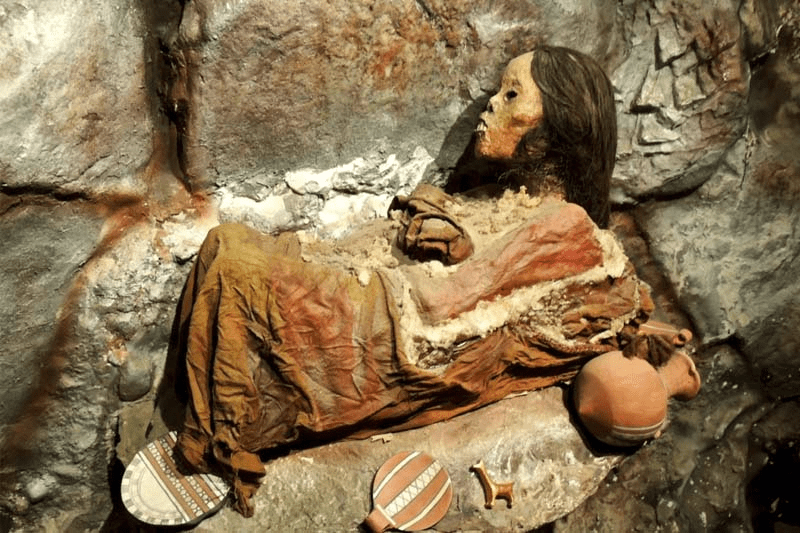
Ancient burial sites in Peru contained bodies wrapped in the fetal position, buried in communal caves along with friends and relatives who had gone before.

The Quechua venerate their dead out of love and respect for what they have given to the living. They believe that the ancestors lying within Pachamama‘s body transform into plants, rivers, mountains, and living creatures, maintaining contact with them.

They are a part of human beings as well. Death gives birth to new life as the seed sown into the bosom of Pachamama.

Quechua pakos believe that at death a person’s soul leaves the body and wanders for five nights in animal form. At the end of this period, the soul of the good person goes to Hanaq Pacha, the Andean heaven.

The soul returns to the cemetery each holiday and goes back to the house where he lived once a year. After five years, the soul disconnects from the family forever.

The soul of the bad person goes to Ukhu Pacha, where it is condemnes to wander to all the places where he or she committed sins in life.

Funerals in the Andes follow Christian traditions. A Catholic priest attends a burial service, which is followed by a period of mourning.


References:

Cumes, C and Lizárraga Valencia, R (1995) Pachamama’s Children. Mother Earth and her Children of the Andes in Peru. Llewellyn Publications.

Inca Altar Of The Qoricancha – Part 4

Posted on

Welcome to the fourth part of the description of the elements of the inca altar of the Qoricancha! A representation of the Andean cosmovision.

It shows us the hierarchies of the Andean criteria; moreover, it explores the reasons for correspondence and equality, presenting a symbol that is still being studied.

If you haven’t seen Part 1, Part 2 or Part 3 yet, we remind you to read them first and then come back here.


High Altar of Qoricancha

Symbols Description

Pachamama

It is the place where humans live, surrounded by all living beings, spiritual entities, ancestors, Huacas, timeless beings, and the spirits of Ukhu pacha or the inner world of the Earth.

The earth is alive, and with it live the hills, mountains, and stones.

Alongside them, humans live and share the created world with all creatures.

For the Andeans, they imagine the earth as a living being, a coiled serpent that sleeps deeply. Furthermore, within its depths, it harbors a strange red sun that once tried to dominate Ccorinti, the golden sun; however, the serpent swallowed it, and now it resides within her.

Amaru Mayu

The serpent river.

It is the symbol of the eternal journey; the river is movement and gives rhythm to the lives of men.

It is a path that people must travel, and therefore, the Incas knew all the South American rivers.

Many years after founding Cusco, Manco Capac heads to Paucartambo. From there, he follows the course of the Yavero River until it meets the Upper Urubamba very close to the Pongo de Mainique.

The Inca returns by ascending the Alto Urubamba to the Pampa de la Luna or Killapampa.

From there, he returns on foot to Cusco, passing through the Plain of the Gods or Villacapampa and through of the Old Mountains or Machu Picchu.

Willca Mayu

The sacred river.

It is an underground river that is traversed by beings from the inner world or Ukhu Pacha.

It symbolizes the spiritual journey, the inner quest, the discovery of the personal self.

Along this river, Andean priests travel to treat the souls of the dead or to converse with them.

According to Inca mythology, underground rivers were illuminated by thousands of precious stones and inhabited by Utis or elves, where the souls of children, known as “opas” or fools, would become lost.

The underground rivers were the path of the Apus or Soccas.

Apus

The Apus are the angels of the Andean religious cosmology.

God entrusts them to protect human beings and act as shepherds of people, known as “Runa Micheq,” guiding them through life by providing information about the past and present.

They are the spirits of the mountains and physically inhabit them.

The Apus individually protect each being, as well as communities, cities, entire nations, or the entire earth.

Among them, there are hierarchies:

  • A familiar Apu is called “Runa Micheq
  • The Apu of a community (ayllu) is called “Ayllu Apu
  • For a city (llacta) it is “Llacta Apu
  • For a region (suyo) it is “Suyuyoc Apu

The Apus have their feminine counterparts in the Ñustas, female spirits who care for animals and plants. They also live in mountains or in rocks with strange characteristics.


References:

  • Candia M, C; Del Solar, M y Iwaki O, R. (1994). Altar Inka del Ccorik’ancha. Cuadernos Andinos Nº10.
  • Estermann, J. (1998) Filosofía Andina. Un estudio intercultural de la sabiduría autóctona andina. Biblioteca Seminario San Antonio Abad, Cusco.

Andean Cosmology

Posted on

In this blog, we will address some topics of Andean cosmology, understood as a body of beliefs that people hold about the nature and origin of the universe.

The Andean Cosmovision refers to the doctrine of the Andean world. It is a vision of the whole cosmos or universe, all interconnected.

The whole cosmos or universe is interconnected.

Andean cosmology encompasses the general nature of the universe as a whole: what it was in the past, what it is now, and what it is likely to be in the future.

It is the totality of the spiritual world of the Quechua people living in the Cusco and Machu Picchu areas. It is a non-fixed, magical world and incorporates all of Nature.

Andean initiations and ceremonies differ from those of the jungle and desert regions.

The Andean Quechua have their own traditional healers, and they follow an ancient cosmology and way of life that has been practiced for thousands of years.

The profecy of Pachacuteq

The Quechua regard history as a sequence of worlds, or pacha, each governed by a set of assumptions about their order. A hero named Pachacuteq reorganized the Inca state.

If you wish to learn more about this prophecy, we invite you to read it beforehand.

The Three Worlds

According to Andean cosmology, the Andean universe arranges itself on three planes of existence.

The universe divides into three “worlds”:

Kay pacha

It is the world where runakuna (humans) live together with Pachamama, alongside the apukuna, wild and domesticated animals, plants, and all natural forces such as rain, thunder, and lightning.

It represents the world of the four elements.

The power of Kay pacha, this world, is symbolized by the puma or jaguar.

Hanaq Pacha

Hanaq pacha, the upper world of superior energy. The residence of Pachakamac, Pachacutec, Christian saints, and spirits of the ancestors.

Men or women in the roles of Altomisayoq serve as mediators between Hanaq pacha, the upper world, and Kay pacha.

We interpret this as a realm where beings of a higher state of consciousness or higher dimensional vibration exist.

From Hanaq pacha, celestial bodies such as the sun, moon, and stars shine their eternal light down upon Kay pacha.

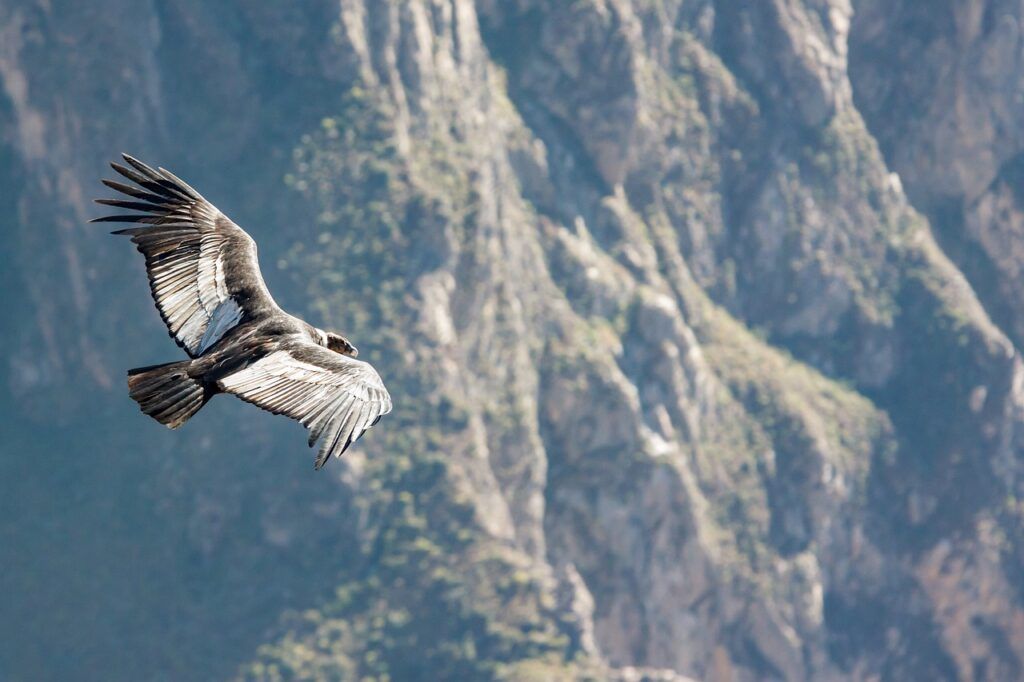
Symbolizing Hanaq pacha, the condor, one of the three Andean animal archetypes, surveys all worlds from the upper world.

Ukhu Pacha

The inner world of Pachamama or the Andean underworld, Ukhu Pacha, is inhabited by many types of supernatural spiritual beings in caves, rocks, and ravines.

Ukhu Pacha may also be known as the inner world of the runakuna.

Moreover, they may include the spirits of dead Incakuna and Spanish conquistadors.

Some of these beings are evil and negative characters; however, others are harmless and described as dwarf-like men.

The serpent ascends and descends through the three worlds by transmutting itself according to its relationship with each world.

The serpent personifies Ukhu Pacha, as rivers that run over the earth enter the inner world in the form of a snake.