logo im

Inca Altar Of The Qoricancha – Part 3

Posted on

Welcome to the third part of the description of the elements of the inca altar of the Qoricancha! A representation of the Andean cosmovision. It shows us the hierarchies of the Andean criteria; the reasons for correspondence and equality, a symbol that is still being studied.

If you haven’t seen Part 1 or Part 2 yet, we remind you to read them first and then come back here.


High Inca Altar of Qoricancha

Symbols Description

The Lightning

Below the Pleiades was ‘Chuqui Illapa’ or the Lightning.

They considered lightning to be the shepherd of the sun’s flocks, directing them with its great whip when they grazed in their fields in the Milky Way.

Lightning was believed to be the messenger of the sun.

Lightning announces the arrival of storms and precedes the rains. But sometimes it comes on sunny days; on these days, people say it chooses its priests who will serve it.

Lightning is an important deity and is attributed three identities:

  • The light, called ‘illapa
  • The sound, known as ‘Ccunno Illapa
  • The zigzagging flash ‘Inti Illapa‘.

It served to warn humans that these thunderous events came from the sky, to reward or punish them. There are significant accounts of Andean cities burned by lightning strikes.

Clouds

The clouds known as “Pocoy,” were also revered deities.

They imagined the clouds as elderly women who weave wool to clothe the Moon, and when they take woven fabrics to be washed and tend to them at the peaks of the hills, it surely means it will rain.

Clouds also serve to gauge wind speed and observe the behavior of storms.

The Incas had techniques to aggregate clouds and produce artificial rain through burning plants and mineral powders.

They also believed that clouds were the tears of the moon that gathered in large quantities when they argued with the sun. Clouds ward off frost and protect fields from snow and frost.

Clouds are also communicative vessels between the earth and the sky.

Andeans, originating from a pacarina, whether a spring or river, fulfill the water cycle and believe they transform their bodies into water, vapor, clouds, and dew.

Rainbow

People widely worshipped the rainbow or “Cuichi” as a celestial signal heralding good tidings.

When a rainbow appeared in the sky, it was seen as a sign of favorable times.

If two rainbows appeared, it symbolized a significant event (such as the birth of a royal infant or the conclusion of a military campaign).

During times when three rainbows foretold a string of calamities, people made offerings to the rainbow, such as bright flowers, dyed yarns, and exotic soils.

They sheltered young children to ward off the evil eye, and adorned their doors with crimson cloths. The Cuichi adorned the shields of almost all Inca royalty.

Manco Capac‘s shield depicted Cerro Huanacauri with the Qosqo founder shining like the sun itself, flanked by two rainbows above and below his figure.


We have completed the description of the celestial vault, which contains all celestial bodies, known as the Hanaq Pacha or world above, including the elements of fire and air.

References

  • Candia M, C; Del Solar, M y Iwaki O, R. (1994). Altar Inka del Ccorik’ancha. Cuadernos Andinos Nº10.
  • Estermann, J. (1998) Filosofía Andina. Un estudio intercultural de la sabiduría autóctona andina. Biblioteca Seminario San Antonio Abad, Cusco.

Pachamama: Mother Earth

Posted on

For more than 460 years of Christian indoctrination, all men and women have continued to adore:

The Goddess Mother Earth, Pachamama

Pachamama is a living planet, and without our care and love there will be no future for us.

As this millennium draws to a close, humanity is beginning to realize the importance of treating our planet with care and understanding.

The Goddess Mother Earth, Pachamama

Since the days os their pre colombian ancerstor, the Andean people have know that Mother Earth is of great importance. The Quechua word “Pacha” means “planet earth, world, universe that we inhabit”.

Our relationship with Pachamama is so intimate that we consider her an extension of ourselves:

A being requiring care, nourishment, and protection to prevent her from perishing.

Traditions of Pachamama

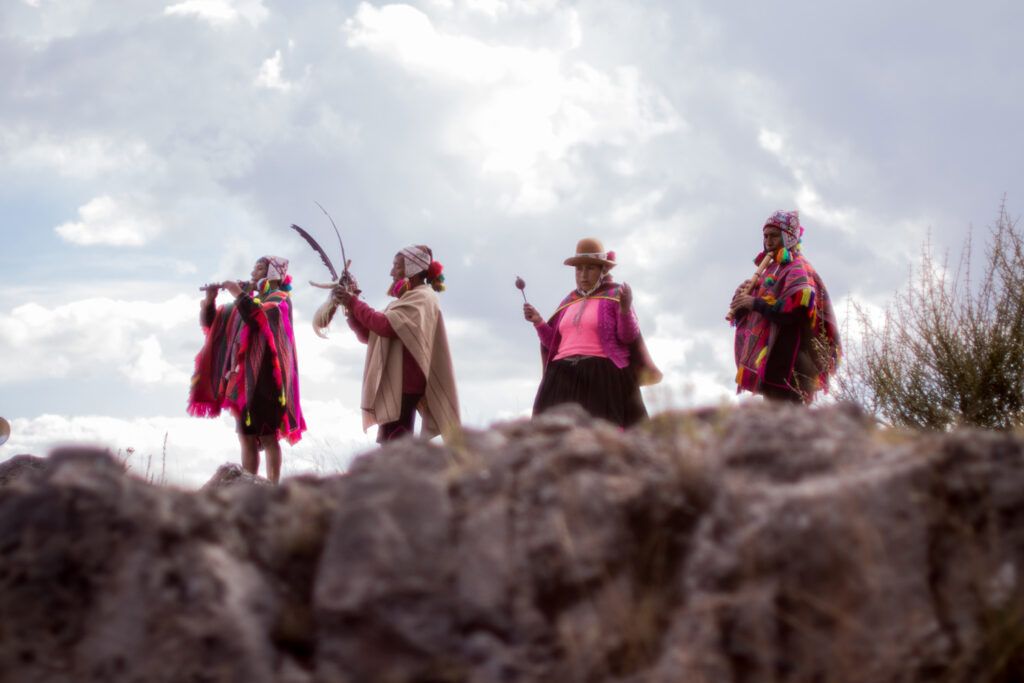
Because of her importance to a community that is primarily agricultural, the quechua share the food and drink they love with Pachamama.

  • Before consuming any alcohol or drink: We spill a few drops on the earth as an offering to Mother Earth. They also offer her small portions of food before consuming it.
  • Before consume any kind of food: We offer her small portions by burying them in the earth.

Pachamama loves to receive offerings of flowers, food, and coca leaves from her children.

They summon Pachamama on all special occasions and seek her permission before any activities commence in the community.

  • Before constructing a house: We perform a special ritual to ensure Pachamama’s goodwill towards the new residents and her protection.

Pachamama is kind and tolerant, but she may also turn vengeful to those who forget her.

If they do not perform the rituals with integrity, she may manifest as an aggressor and require offerings for matters of importance, known as “Haywarikuy“.

Since ancient times the quechua have believed Pachamama is the biological mother of children. She is connected to everything, and all things are a part of her.

Some Quechua believe that deities leave pre-human children in places such as caves, rocks, and rivers before the elements guide them into a woman’s womb.

They believe that the deity’s union with Pachamama, the mother, transmits the miracle of life with intelligence and love.

The Pachamama affirms her maternity by assuming the role of protector of the children, the weak and the sick.

We are tied to Mother Earth by an umbilicus or life cord that connects us to her womb of creation. If part of Mother Earth is suffering, then the world suffers too.

We see her in everything:

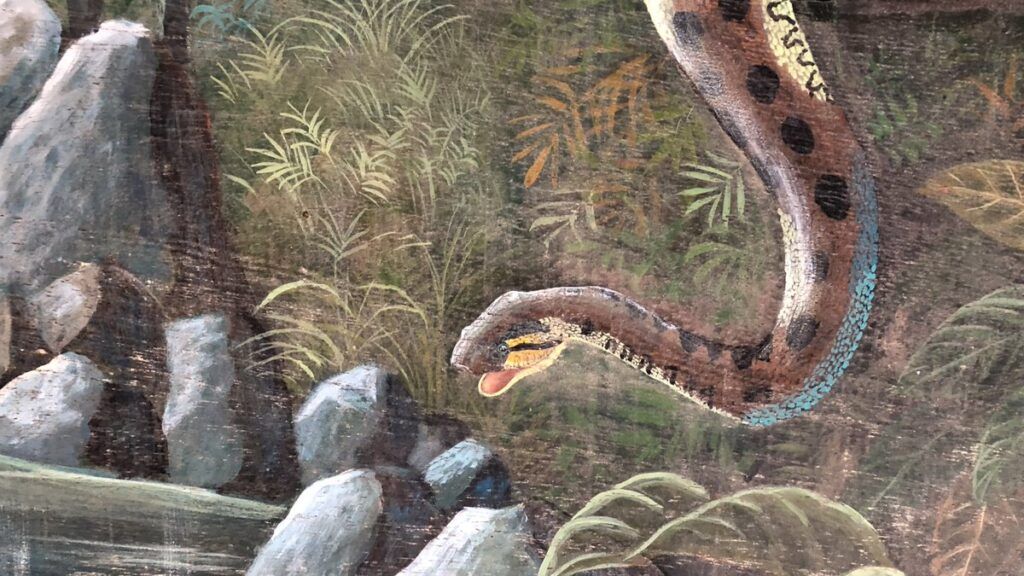
In the wind, the clouds, the rain, the sacred rivers, the lands, the eyes of pumas, condors and serpents.

The Earth is suffering, so we suffer.

We acknowledge the birth and death present in every moment, understanding that Mother Earth has the power to give and take.


References:

Cumes, C and Lizárraga Valencia, R (1995) Pachamama’s Children. Mother Earth and her Children of the Andes in Peru. Llewellyn Publications.

Inca Altar Of The Qoricancha – Part 2

Posted on

Welcome to the second part of the description of the elements of the inca altar of the Qoricancha! A representation of the Andean cosmovision. It shows us the hierarchies of the Andean criteria; the reasons for correspondence and equality, a symbol that is still being studied.

If you haven’t seen Part 1 yet, we remind you to read it first and then come back here.


High Altar of Qoricancha

Symbols Description

Venus

Below the sun shines the morning star, also known as “chasca,” “coyllor,” or the bright star.

Inca comunity honored this drawing because it represented the planet Venus, which served as the sun’s page.

At times, Venus led ahead to guide its lord along the path, and at other times, it followed behind, retrieving what the sun absentmindedly overlooked.

Venus possessed its own temple in the Qoricancha and was revered as a mediator between the sun and the moon, alternating its presence between the two luminaries.

Venus Temple – Qoricancha

Mars

Below the moon is the evening star, also known as “Apachi Orori.”

This drawing represents Mars, the red planet, which is also visible in the evenings. It was also called the walker or púreq.

They said it carried all the missions entrusted by the gods of the sky. It’s not known if it had its own temple, but in any case, it held a special place in the cosmogonic altar.

Pleiades

Nine stars of Pleiades- Qoricancha

Below the sun, immediately after Venus, there is a cluster of stars called Huchu, which corresponds to the Pleiades and consists of 9 stars:

Alcyone, Electra, Maia, Merope, Taygeta, Atlas, Pleione, Celaeno, and Asterope

The Incas also referred to these stars as “las cabrillas” and named them “collqas,” meaning granary.

The collqas can be observed in Cusco with the naked eye during the sunsets of May and June, coinciding with the festivals of Inti Raymi.

The best ears of corn were separated for the chica harvest, potatoes, oca, and olluco were harvested.

Also during this month, quinoa is harvested, villages are cleaned, ditches are repaired, and pairs are prepared to marry Huarmi Ccocuc.

Venus, Mars and Pleyades

References:

  • Candia M, C; Del Solar, M y Iwaki O, R. (1994). Altar Inka del Ccorik’ancha. Cuadernos Andinos Nº10.
  • Estermann, J. (1998) Filosofía Andina. Un estudio intercultural de la sabiduría autóctona andina. Biblioteca Seminario San Antonio Abad, Cusco.

Mama Killa – Mother Moon

Posted on

After the sun, in the cosmic order of the Incas, there was the Moon – Killa.

We have no information about the knowledge our ancestors might have had to determine whether they knew that the Moon – Killa was a satellite of our planet.

What is very clear is that they saw it as the wife and companion of the sun. They also believed that it was the progenitor of all the stars and that they were at its service.

This second level in the celestial order was due to the fact that the Moon Killa, which does not have the same brightness as the sun, only governed the night.

Mother Moon is the wife and companion of the sun.

In the world of the Incas, the sun was represented with gold, and the moon corresponded to the second precious metal: SILVER. This corresponded with the sunlight and the bright white of the moon.

However, the most valuable aspect of this cosmology is that the Moon – Killa was the personification of Mother Earth Pachamama (A reminder that you can take a look at the blog where we explain a bit more about “What is Pacha“), the soil that provides us with the elements through which agriculture thrives.

Therefore, the presentation of phases in its constant movement across the celestial sphere served to create a primordial calendar that guided their agricultural activities.

In the Andean world, an agricultural schedule that does not reference the lunar phases for both planting and harvesting is inconceivable. Despite its precision, the solar calendar alone does not determine agricultural tasks.

Farmers must consider the moon’s phase to decide whether it is favorable or adverse. Only then can they begin planting to harness the moon’s influence.

For example, if llamas mated during a new moon, the offspring would be female, whereas mating during a full moon would result in male offspring. This practice remains common today.

The lunar calendar is more precise than the solar calendar.

To complement other aspects related to the importance of the Moon – Killa, it is important to know that during the time of the Incas, it was prohibited to perform manual or productive activities at night. The Incas reserved the night for resting after the intense daily work.

Even in warfare, they halted combat actions at night and resumed them the next day out of respect for Mama Killa.

Phases of Mama Killa

The lunar phases have many names, depending on how the Moon-Killa gradually reveals a larger visible surface.

Phases of Mother Killa

Waxing moon

It goes from the appearance of the moon on the western horizon to 7 days after the New Moon phase.

They call it: K’ata Killa, Musuq Killa, and Llullu Killa.

Three names for three specific moments of the lunar figure’s growth in the sky.

First quarter

It has two names: Chaupi Killa and Killa Wiñariy.

Farmers favor this stage and find it suitable for planting all crops, particularly corn, vegetables, and any plant that grows above ground.

Full moon

There are three names for it: Hunt’a Killa, Killa Pura, or Paqas Killa.

During these days, potatoes are not planted because tradition dictates that they would produce small and tasteless potatoes.

Waning moon:

It also has three names: Qhasqakuy Killa, Allaq Killa, and Wañumariq Killa.

During this period, farmers favor planting tubers and harvesting, but only until the moon is visible as a thin crescent. It is believed that this time is suitable for planting all plants that produce their fruits underground, such as potatoes, sweet potatoes, yams, and others.

In Inca times, Martín de Murúa chronicled that the waning moon held special importance because people conducted sacrifices in Cusco at the Temple of the Sun, dedicating them to three sacred entities associated with thunder, lightning, and the sun.

New moon

It is called Wañuq Killa or dead moon.

These are the days when its proximity to the sun makes it invisible. During these days, nothing is planted because it is believed that any seed will either die in the ground or fail to produce any fruit.

In the ritual calendar, the moon plays an important role.

Nowadays, people celebrate the Qoyllurit’i festival on the full moon, and during the Sun Salutation ceremony the following day, the two Andean deities must be in the sky, occupying their positions at the eastern and western extremes of the sky.

The Incas reserved the night for resting after the intense daily work.


References:

  • Candia M, C; Del Solar, M y Iwaki O, R. (1994). Altar Inka del Ccorik’ancha. Cuadernos Andinos Nº10.
  • Salazar Garcés, E. (2014). Astronomía Inka. Arqueoastronomía & Etnoastronomía. Colección Enigmas dl Antiguo Perú. Museo Andrés del Castillo.

Natural Medicine & Healing Knowledge of the Incas

Posted on

The Inca culture inherits knowledge never achieved by any other culture throughout the geographical scope of the new continent. Their knowledge served to prevent diseases, cure them, and above all, to understand their causes, origins, and how they affected people all in natural ways.

The Empire protected and sponsored Inca medicine, directing and fostering the medical school through its religious establishment. It was not a private activity, but a health service that aimed to have a number of “Hampej” or healers for a specific territorial area.

In Inca times, medicine was highly specialized with general medicine healers, women attending to childbirth, dream doctors treating mental illnesses, surgeons, trepanners, and more.

They considered illness to originate from an imbalance between humans and nature, their social environment, or supernatural causes. Instead of treating it directly, they rigorously observed it: using divination with coca leaves, maize, ashes, examining objects extracted from the body, organic or inorganic, conversing with the sick, relatives, acquaintances, and studying cosmic forces.

Pain manifesting illness

Common illnesses that Paqo Masters often discuss:

  • Sustois an illness caused by supernatural beings that steal the soul or spiritual strength of the patient. The fright caused by an accident was called “phahuac,” was less important, and was cured with what was called “jampuy.”
  • Kaik’arefers to illnesses caused by the harmful and penetrating influence of deceased relatives, who drain the energy of the sick person.
  • Laik’ais the result of harmful actions by one person against another, leading to the most serious illnesses.
  • Mal de ojois the involuntary or deliberate action of an “eye-catcher” that causes nausea, sadness, insomnia, and even death.
  • Aya huayrais a sudden gust of wind that causes facial paralysis, pneumonia, hemiplegia, etc.
  • Mal de aguais a serious illness that originates from contact with or prolonged exposure to water. It causes pleurisy, dropsy, and dehydration.
  • Chucaqueis a disease that occurs in states of high tension or extreme embarrassment. It manifests with headaches, nausea, vomiting, lack of energy, and irritability. The patient’s scalp sticks to the skull, causing sharp pains. It also leads to loss of moisture in the belly’s skin, which sticks to the internal organs.
  • Ira” is an exacerbated mental and psychological reaction that produces feelings of disgust and rage, nausea, jaundice, and fever.
  • T’irayrefers to abruptly turning a child, causing internal organ disturbances such as displacement of the heart or some viscera.
  • K’echois physical overexertion that inflames the joints and causes severe pain.

Natural healers

  • Altomesayoq” translates to “authentic Hampej.” They are indigenous and have counterparts in the Shaman of the coast and the Yatiri of the jungle.
  • Adivino” or “Huatoc” is a person with divination powers who can predict certain events using various instruments such as coca leaves, seashells, maize, etc. They can uncover thefts and find missing persons.
  • Herbolarios” are the majority who treat minor illnesses using herbs, whether through infusions, poultices, diets, purges, etc. It’s worth noting that herbalists also use other natural elements such as animals, soils, and minerals.
  • Huesero,” also known as “Sirkaq,” heals through poultices, massages, and bandages. They can heal anything from a sprain to the most severe fracture.
  • Pampamesayoq” practices their craft typically in rural centers, performs offerings to Pachamama (Mother Earth), and is knowledgeable about the protective hills and sacred sites of the area.

Hot and cold illnesses

Natural philosophy and medicine seek balance between opposing influences that can harm well-being and cause illnesses. These extremes can originate from natural, emotional, or supernatural sources. Warm medicine heals cold illnesses and vice versa.

Warm illnesses

  • Conjunctivitis or any eye disease
  • Fever, general inflammations
  • Skin infections
  • Kidney pain
  • Tuberculosis
  • Liver and heart pain
  • Liver inflammation

Cold illnesses

  • Bronchitis
  • Cough and whooping cough
  • Cold and flu
  • Pneumonia
  • Rheumatism
  • Back pain
  • Indigestion
  • Diarrhea

Healing Warm Plants

  • Chachacomo
  • Eucalyptus
  • Garlic
  • Coca Leaves
  • Rue
  • Chamomile
  • Muña

Cold Healing Plants

  • Horsetail
  • Lemon
  • Mallow
  • Parsley
  • Flaxseed
  • Airampo
  • Turnip
  • Plantain

In Andean medicine, there is no incurable illness. What the earth takes away, the earth gives back. However, the confidence of the “Hampej” relies on the transmission of conviction between the paqo and the patient, in their methods and resources.


References:

Candia Muriel, C e Iwaki Ordoñez, R (1994) Magic and Natural Medicine. Cuadernos Andinos Nº13.

Inca Altar of the Qoricancha – Part 1

Posted on

In this blog we’ll talk a little about a possible interpretation of the High Altar of the Qoricancha, a design staged in the Temple of the Sun that reflects the cosmogonic conception of the Incas.

It shows us the hierarchies of the Andean criteria; the reasons for correspondence and equality, a symbol that is still being studied.

Altar Qoricancha Museum in Cusco

After excavation work carried out at the archaeological site of Qoricancha, a site museum was established showcasing the objects found during the excavations. The museum consists of five rooms displaying various ceramic pieces, tools, and even bone remains. It also features informational panels explaining the Inca way of life from its beginnings to its conquest.

This is the continuation of the previous blog, “What is Pacha.” If you haven’t read it, we invite you to check it out first.


Symbols Description

Universe as a House

The graphic representation of the universe takes the form of a house, indicating the Andean conviction that everyone and everything belongs to a single family under one roof.

Outside the universe or pacha, there is nothing, and inside it, everything is related through the spatial axes of up-down and right-left.

The house symbolizes the cosmic reality (pacha).

Chacana

The chacana is an instrument of utmost value in the cosmogonic conception of the Andeans, used to provide explanation and correlation to the history of peoples, and serves to support lineage.

It has in turn a celestial counterpart in the Southern Cross, a constellation of the southern pole formed by the stars Alpha, Beta, Gamma, and Delta.

The chacana or cross, besides meaning “bridge”, is also “transfer” and “passage”, formed by two lines, vertical and horizontal.

Vertical Line | As Above is Below

The vertical line corresponds to Man, that is, to everything masculine in the Andean conception; it also corresponds to spiritual creation, inheritance, and succession.

The chacana shows us the relationship between Man and Woman, masculine and feminine. It represents the sky and earth, Hanan and Urin.

Emphasizing that this is not about hierarchy but complementarity.

Horizontal Line | Left and Right

The horizontal line corresponds to Woman, that is, to everything feminine; it corresponds to the created, matter, Pachamama, permanence.

This represents day and night, the sun and the moon, and also man and woman. It symbolizes relationality.

When these two lines, marking the levels on the vertical, not exactly at the center, but at heart level, form the chacana.

Tahuan

Tahuan” besides meaning “4” in Quechua, also signifies complementarity, correspondence, mutual help, and interrelation.

Qoricancha: Chacana, Mother Killa and Father Sun

The Sun

The sun, also called Father Inti, is for us the king star, an object of worship and adoration. But not as a god, rather as the motor of all life on earth.

Its rays evaporate the waters that form clouds; the different heating of the earth caused by the sun creates winds that carry these clouds, which then release as rain and snow. These waters irrigate the plants of forests and fields, which adorn themselves with leaves and flowers, producing crops and fruits.

The Incas dedicated coca and maize fields to the sun so that it could enjoy both fruits; they treated the sun as if it were a man like themselves.

Father Inti

The Moon

The moon is the queen star. It is called “Killa” and was revered as the mother of the Incas.

The moon ruled over the nights and was the main goddess, protector, and guardian of women. The Incas considered the moon a healer of many illnesses, and in its light and presence, they performed healings and ceremonies, especially for childbirth.

Like the sun, the moon had its own calendar and governed the timing of planting, irrigation, and harvest. It organized agricultural seasons. Coca leaves read in the moonlight provided information about the deceased and announced the passing of individuals.

Check our Mother Killa blog!

Mother Killa

We will continue with the description of the symbols in the future, as you may have noticed it is quite extensive and interesting. Stay tuned!

References:

  • Candia M, C; Del Solar, M y Iwaki O, R. (1994). Altar Inka del Ccorik’ancha. Cuadernos Andinos Nº10.
  • Estermann, J. (1998) Filosofía Andina. Un estudio intercultural de la sabiduría autóctona andina. Biblioteca Seminario San Antonio Abad, Cusco.
  • Salazar Garcés, E. (2014). Astronomía Inka. Arqueoastronomía & Etnoastronomía. Colección Enigmas dl Antiguo Perú. Museo Andrés del Castillo.