logo im

Mama Killa – Mother Moon

Posted on

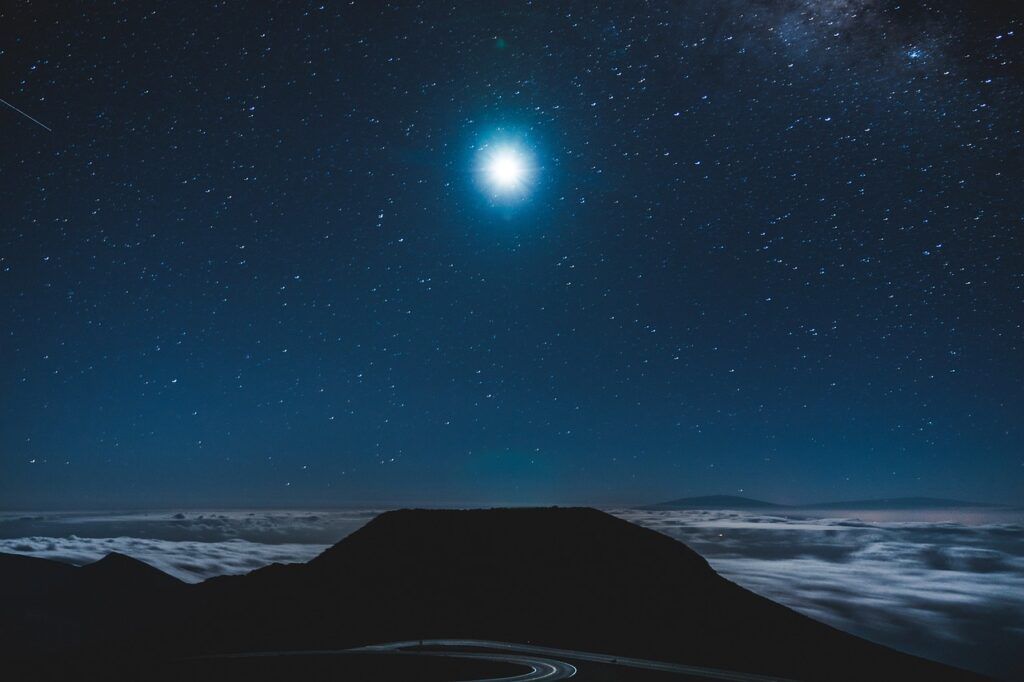
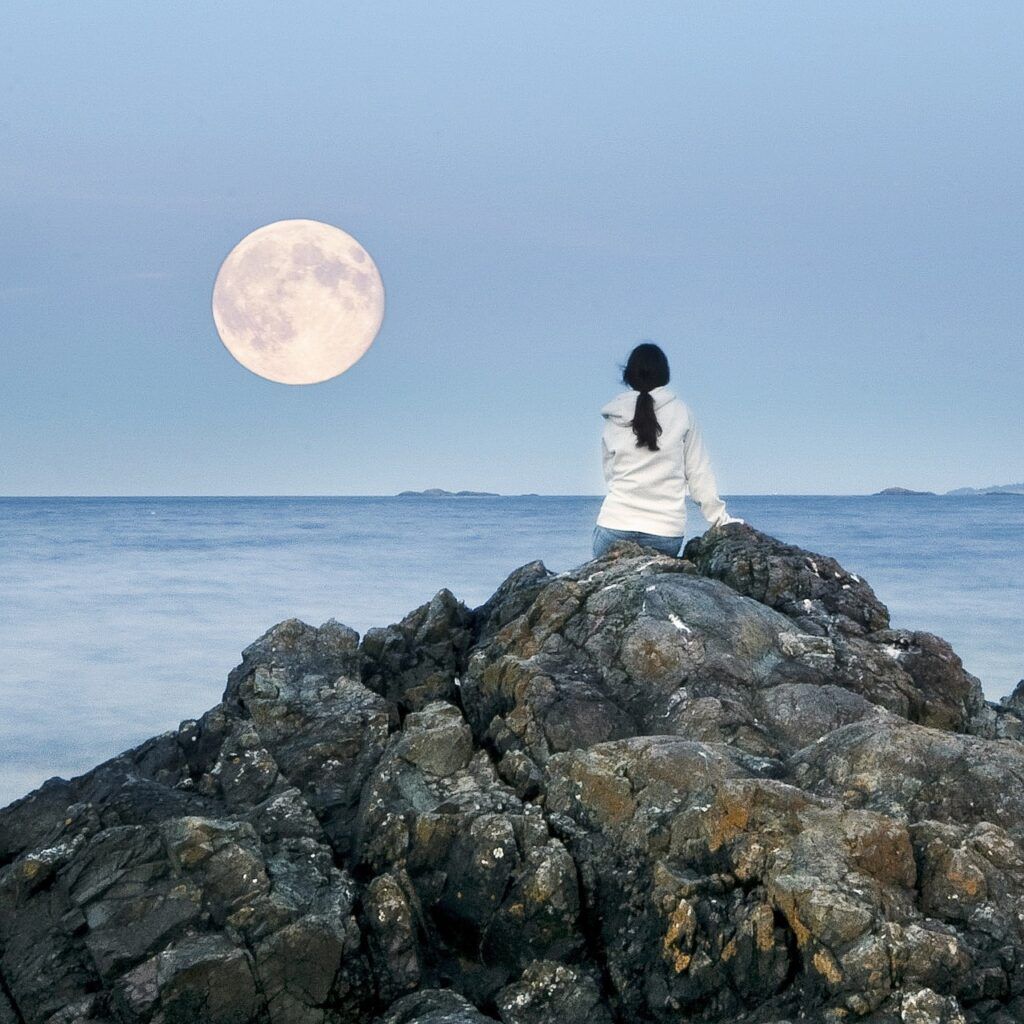
After the sun, in the cosmic order of the Incas, there was the Moon – Killa.

We have no information about the knowledge our ancestors might have had to determine whether they knew that the Moon – Killa was a satellite of our planet.

What is very clear is that they saw it as the wife and companion of the sun. They also believed that it was the progenitor of all the stars and that they were at its service.

This second level in the celestial order was due to the fact that the Moon Killa, which does not have the same brightness as the sun, only governed the night.

Mother Moon is the wife and companion of the sun.

In the world of the Incas, the sun was represented with gold, and the moon corresponded to the second precious metal: SILVER. This corresponded with the sunlight and the bright white of the moon.

However, the most valuable aspect of this cosmology is that the Moon – Killa was the personification of Mother Earth Pachamama (A reminder that you can take a look at the blog where we explain a bit more about “What is Pacha“), the soil that provides us with the elements through which agriculture thrives.

Therefore, the presentation of phases in its constant movement across the celestial sphere served to create a primordial calendar that guided their agricultural activities.

In the Andean world, an agricultural schedule that does not reference the lunar phases for both planting and harvesting is inconceivable. Despite its precision, the solar calendar alone does not determine agricultural tasks.

Farmers must consider the moon’s phase to decide whether it is favorable or adverse. Only then can they begin planting to harness the moon’s influence.

For example, if llamas mated during a new moon, the offspring would be female, whereas mating during a full moon would result in male offspring. This practice remains common today.

The lunar calendar is more precise than the solar calendar.

To complement other aspects related to the importance of the Moon – Killa, it is important to know that during the time of the Incas, it was prohibited to perform manual or productive activities at night. The Incas reserved the night for resting after the intense daily work.

Even in warfare, they halted combat actions at night and resumed them the next day out of respect for Mama Killa.

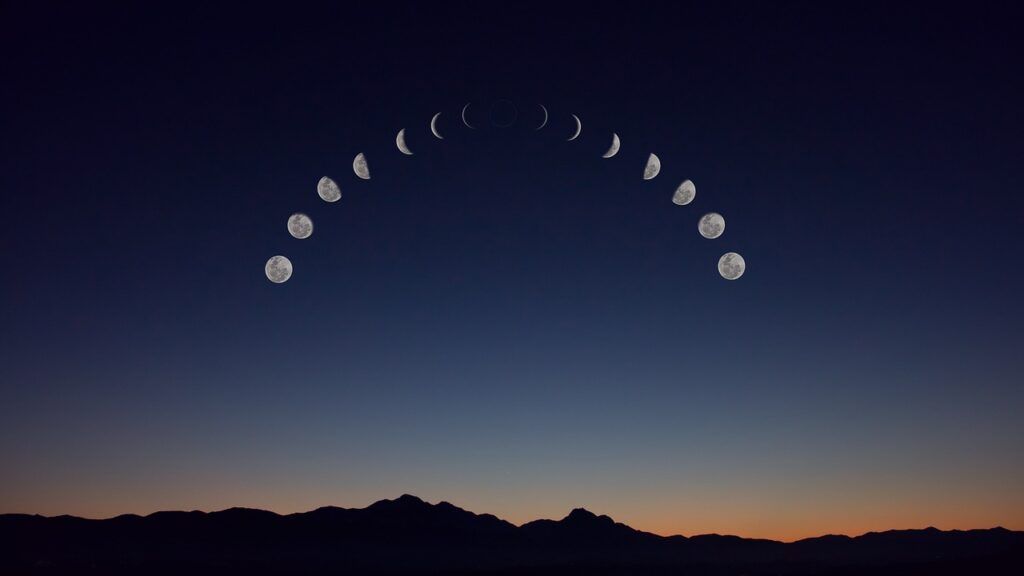
Phases of Mama Killa

The lunar phases have many names, depending on how the Moon-Killa gradually reveals a larger visible surface.

Phases of Mother Killa

Waxing moon

It goes from the appearance of the moon on the western horizon to 7 days after the New Moon phase.

They call it: K’ata Killa, Musuq Killa, and Llullu Killa.

Three names for three specific moments of the lunar figure’s growth in the sky.

First quarter

It has two names: Chaupi Killa and Killa Wiñariy.

Farmers favor this stage and find it suitable for planting all crops, particularly corn, vegetables, and any plant that grows above ground.

Full moon

There are three names for it: Hunt’a Killa, Killa Pura, or Paqas Killa.

During these days, potatoes are not planted because tradition dictates that they would produce small and tasteless potatoes.

Waning moon:

It also has three names: Qhasqakuy Killa, Allaq Killa, and Wañumariq Killa.

During this period, farmers favor planting tubers and harvesting, but only until the moon is visible as a thin crescent. It is believed that this time is suitable for planting all plants that produce their fruits underground, such as potatoes, sweet potatoes, yams, and others.

In Inca times, Martín de Murúa chronicled that the waning moon held special importance because people conducted sacrifices in Cusco at the Temple of the Sun, dedicating them to three sacred entities associated with thunder, lightning, and the sun.

New moon

It is called Wañuq Killa or dead moon.

These are the days when its proximity to the sun makes it invisible. During these days, nothing is planted because it is believed that any seed will either die in the ground or fail to produce any fruit.

In the ritual calendar, the moon plays an important role.

Nowadays, people celebrate the Qoyllurit’i festival on the full moon, and during the Sun Salutation ceremony the following day, the two Andean deities must be in the sky, occupying their positions at the eastern and western extremes of the sky.

The Incas reserved the night for resting after the intense daily work.


References:

  • Candia M, C; Del Solar, M y Iwaki O, R. (1994). Altar Inka del Ccorik’ancha. Cuadernos Andinos Nº10.
  • Salazar Garcés, E. (2014). Astronomía Inka. Arqueoastronomía & Etnoastronomía. Colección Enigmas dl Antiguo Perú. Museo Andrés del Castillo.

Natural Medicine & Healing Knowledge of the Incas

Posted on

The Inca culture inherits knowledge never achieved by any other culture throughout the geographical scope of the new continent. Their knowledge served to prevent diseases, cure them, and above all, to understand their causes, origins, and how they affected people all in natural ways.

The Empire protected and sponsored Inca medicine, directing and fostering the medical school through its religious establishment. It was not a private activity, but a health service that aimed to have a number of “Hampej” or healers for a specific territorial area.

In Inca times, medicine was highly specialized with general medicine healers, women attending to childbirth, dream doctors treating mental illnesses, surgeons, trepanners, and more.

They considered illness to originate from an imbalance between humans and nature, their social environment, or supernatural causes. Instead of treating it directly, they rigorously observed it: using divination with coca leaves, maize, ashes, examining objects extracted from the body, organic or inorganic, conversing with the sick, relatives, acquaintances, and studying cosmic forces.

Pain manifesting illness

Common illnesses that Paqo Masters often discuss:

  • Sustois an illness caused by supernatural beings that steal the soul or spiritual strength of the patient. The fright caused by an accident was called “phahuac,” was less important, and was cured with what was called “jampuy.”
  • Kaik’arefers to illnesses caused by the harmful and penetrating influence of deceased relatives, who drain the energy of the sick person.
  • Laik’ais the result of harmful actions by one person against another, leading to the most serious illnesses.
  • Mal de ojois the involuntary or deliberate action of an “eye-catcher” that causes nausea, sadness, insomnia, and even death.
  • Aya huayrais a sudden gust of wind that causes facial paralysis, pneumonia, hemiplegia, etc.
  • Mal de aguais a serious illness that originates from contact with or prolonged exposure to water. It causes pleurisy, dropsy, and dehydration.
  • Chucaqueis a disease that occurs in states of high tension or extreme embarrassment. It manifests with headaches, nausea, vomiting, lack of energy, and irritability. The patient’s scalp sticks to the skull, causing sharp pains. It also leads to loss of moisture in the belly’s skin, which sticks to the internal organs.
  • Ira” is an exacerbated mental and psychological reaction that produces feelings of disgust and rage, nausea, jaundice, and fever.
  • T’irayrefers to abruptly turning a child, causing internal organ disturbances such as displacement of the heart or some viscera.
  • K’echois physical overexertion that inflames the joints and causes severe pain.

Natural healers

  • Altomesayoq” translates to “authentic Hampej.” They are indigenous and have counterparts in the Shaman of the coast and the Yatiri of the jungle.
  • Adivino” or “Huatoc” is a person with divination powers who can predict certain events using various instruments such as coca leaves, seashells, maize, etc. They can uncover thefts and find missing persons.
  • Herbolarios” are the majority who treat minor illnesses using herbs, whether through infusions, poultices, diets, purges, etc. It’s worth noting that herbalists also use other natural elements such as animals, soils, and minerals.
  • Huesero,” also known as “Sirkaq,” heals through poultices, massages, and bandages. They can heal anything from a sprain to the most severe fracture.
  • Pampamesayoq” practices their craft typically in rural centers, performs offerings to Pachamama (Mother Earth), and is knowledgeable about the protective hills and sacred sites of the area.

Hot and cold illnesses

Natural philosophy and medicine seek balance between opposing influences that can harm well-being and cause illnesses. These extremes can originate from natural, emotional, or supernatural sources. Warm medicine heals cold illnesses and vice versa.

Warm illnesses

  • Conjunctivitis or any eye disease
  • Fever, general inflammations
  • Skin infections
  • Kidney pain
  • Tuberculosis
  • Liver and heart pain
  • Liver inflammation

Cold illnesses

  • Bronchitis
  • Cough and whooping cough
  • Cold and flu
  • Pneumonia
  • Rheumatism
  • Back pain
  • Indigestion
  • Diarrhea

Healing Warm Plants

  • Chachacomo
  • Eucalyptus
  • Garlic
  • Coca Leaves
  • Rue
  • Chamomile
  • Muña

Cold Healing Plants

  • Horsetail
  • Lemon
  • Mallow
  • Parsley
  • Flaxseed
  • Airampo
  • Turnip
  • Plantain

In Andean medicine, there is no incurable illness. What the earth takes away, the earth gives back. However, the confidence of the “Hampej” relies on the transmission of conviction between the paqo and the patient, in their methods and resources.


References:

Candia Muriel, C e Iwaki Ordoñez, R (1994) Magic and Natural Medicine. Cuadernos Andinos Nº13.

Inca Altar of the Qoricancha – Part 1

Posted on

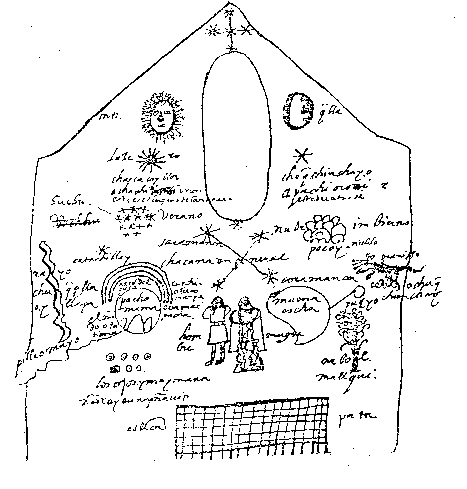
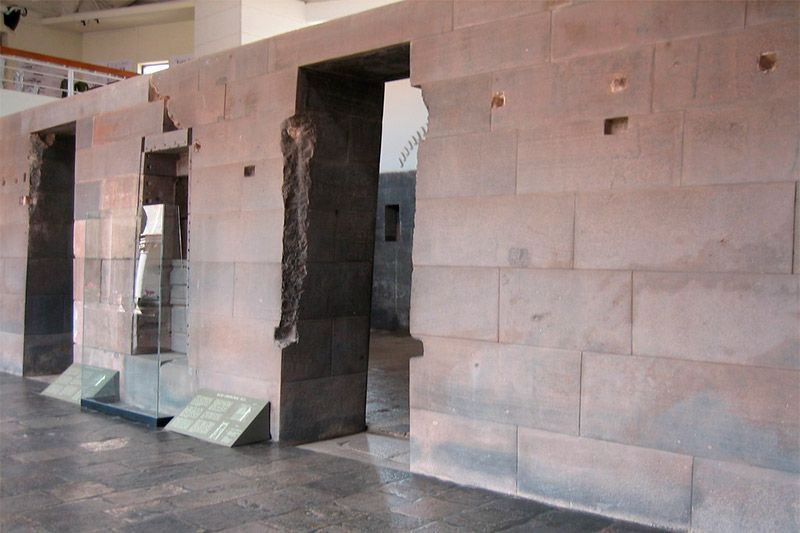
In this blog we’ll talk a little about a possible interpretation of the High Altar of the Qoricancha, a design staged in the Temple of the Sun that reflects the cosmogonic conception of the Incas.

It shows us the hierarchies of the Andean criteria; the reasons for correspondence and equality, a symbol that is still being studied.

Altar Qoricancha Museum in Cusco

After excavation work carried out at the archaeological site of Qoricancha, a site museum was established showcasing the objects found during the excavations. The museum consists of five rooms displaying various ceramic pieces, tools, and even bone remains. It also features informational panels explaining the Inca way of life from its beginnings to its conquest.

This is the continuation of the previous blog, “What is Pacha.” If you haven’t read it, we invite you to check it out first.


Symbols Description

Universe as a House

The graphic representation of the universe takes the form of a house, indicating the Andean conviction that everyone and everything belongs to a single family under one roof.

Outside the universe or pacha, there is nothing, and inside it, everything is related through the spatial axes of up-down and right-left.

The house symbolizes the cosmic reality (pacha).

Chacana

The chacana is an instrument of utmost value in the cosmogonic conception of the Andeans, used to provide explanation and correlation to the history of peoples, and serves to support lineage.

It has in turn a celestial counterpart in the Southern Cross, a constellation of the southern pole formed by the stars Alpha, Beta, Gamma, and Delta.

The chacana or cross, besides meaning “bridge”, is also “transfer” and “passage”, formed by two lines, vertical and horizontal.

Vertical Line | As Above is Below

The vertical line corresponds to Man, that is, to everything masculine in the Andean conception; it also corresponds to spiritual creation, inheritance, and succession.

The chacana shows us the relationship between Man and Woman, masculine and feminine. It represents the sky and earth, Hanan and Urin.

Emphasizing that this is not about hierarchy but complementarity.

Horizontal Line | Left and Right

The horizontal line corresponds to Woman, that is, to everything feminine; it corresponds to the created, matter, Pachamama, permanence.

This represents day and night, the sun and the moon, and also man and woman. It symbolizes relationality.

When these two lines, marking the levels on the vertical, not exactly at the center, but at heart level, form the chacana.

Tahuan

Tahuan” besides meaning “4” in Quechua, also signifies complementarity, correspondence, mutual help, and interrelation.

Qoricancha: Chacana, Mother Killa and Father Sun

The Sun

The sun, also called Father Inti, is for us the king star, an object of worship and adoration. But not as a god, rather as the motor of all life on earth.

Its rays evaporate the waters that form clouds; the different heating of the earth caused by the sun creates winds that carry these clouds, which then release as rain and snow. These waters irrigate the plants of forests and fields, which adorn themselves with leaves and flowers, producing crops and fruits.

The Incas dedicated coca and maize fields to the sun so that it could enjoy both fruits; they treated the sun as if it were a man like themselves.

Father Inti

The Moon

The moon is the queen star. It is called “Killa” and was revered as the mother of the Incas.

The moon ruled over the nights and was the main goddess, protector, and guardian of women. The Incas considered the moon a healer of many illnesses, and in its light and presence, they performed healings and ceremonies, especially for childbirth.

Like the sun, the moon had its own calendar and governed the timing of planting, irrigation, and harvest. It organized agricultural seasons. Coca leaves read in the moonlight provided information about the deceased and announced the passing of individuals.

Check our Mother Killa blog!

Mother Killa

We will continue with the description of the symbols in the future, as you may have noticed it is quite extensive and interesting. Stay tuned!

References:

  • Candia M, C; Del Solar, M y Iwaki O, R. (1994). Altar Inka del Ccorik’ancha. Cuadernos Andinos Nº10.
  • Estermann, J. (1998) Filosofía Andina. Un estudio intercultural de la sabiduría autóctona andina. Biblioteca Seminario San Antonio Abad, Cusco.
  • Salazar Garcés, E. (2014). Astronomía Inka. Arqueoastronomía & Etnoastronomía. Colección Enigmas dl Antiguo Perú. Museo Andrés del Castillo.

How to success in Distance Healing

Posted on

Energy healing is a centuries-old practice aimed at enhancing physical, emotional, and spiritual well-being. Distance Healing is comparable to in-person healing, as it utilizes the universal life force to balance energy flow throughout the body, mind, and spirit, revitalizing health.

Distance Healing

Despite the physical separation, distance healing has shown to be effective and transformative. By using intention, focused energy, and different techniques, Paqo Masters can facilitate remote healing, promoting balance and harmony.

Muscle pain, headaches, anxiety, and low energy levels can all be treated remotely via the internet.

Although it has gained popularity only in recent years, nonetheless it presents significant potential. If you have been considering integrating this modality into your natural therapy business, this guide will assist you in getting started.


How Distance Healing Works

First and foremost, grasping the fundamentals of energy healing is essential.

This practice operates on the belief that the human body is composed of energy, and any disruptions in this energy can cause physical or emotional distress. Paqo Qeros Healers strive to harmonize this energy through a variety of techniques: Cleansings and Soul Retrieval, Chumpi Stones Healing, ceremonies involving the Four Elements, and more! all of which incorporate the energy of nature.

Healing Prayer

Distance healing is another form of energy healing where Paqo Masters transmit healing energy to the recipient, utilizing methods such as prayer, visualization, or focused intention. What’s more, this approach can be remarkably effective regardless of the physical distance involved.

In the Andean cosmovision, everything in the universe is interconnected.

Additionally, quantum physics explores the behavior of particles at the subatomic level. This field of science posits that the entire universe is composed of energy and that this energy is intrinsically linked. The principles of quantum physics provide a framework for understanding the mechanisms behind distance healing.

What are the Benefits of Distance Healing

Consistent support over time:

Not constrained by physical proximity or time limitations, it enables us to conduct ongoing sessions or regular check-ins as necessary.

This sustained approach supports our students in their healing journey, fostering profound and enduring transformation.

Power to transcend geographical boundaries:

This remarkable approach enables individuals to receive healing support from practitioners situated in different cities, countries, or even continents.

Such accessibility significantly expands the reach of healing modalities, offering vital support to those who might lack access to local healers or specialized treatments.

Sessions can be scheduled at times that suit everyone’s availability:

Distance healing offers unparalleled convenience and flexibility for both Paqo Masters and students.

By eliminating the need for travel or in-person appointments, our brothers and sisters can receive healing support from the comfort of their own homes, seamlessly fitting into their busy schedules.

Individualized support :

Paqo Masters are very focused on addressing physical, emotional, or energetic imbalances, adapting the healing approach accordingly to your own needs.

That’s why before we do any ceremony, we begin with a coca leaf reading so we can know exactly what kind of support you need for your unique healing journey.

Energy transcends physical barriers:

Healers establish a profound energetic connection with students in the absence of direct physical contact. This connection enables the flow of healing energy through various techniques, promoting healing on multiple levels.

Emotional Comfort and Privacy:

For those who prefer receiving healing support remotely, this offers privacy and emotional comfort.

It allows students to relax, open up, and fully receive the healing energy by eliminating potential feelings of self-consciousness or vulnerability that might arise in face-to-face sessions.

The Importance of Intention

Intention plays a pivotal role in distance healing. It is the Paqo Master’s conscious choice to direct their energy towards our students, channeling healing energy with precision and purpose. This alignment of energy ensures clarity and direction, amplifying the overall healing effect and making the process profoundly effective.

Effective and Successful Distance Healing

In today’s digital age, technology has become an invaluable tool for connecting people across vast distances. It opens up a world of possibilities, enhancing the effectiveness and reach of healing sessions in remarkable ways.

Steps for an Effective Distance Healing Session:

  • Keep Your Tools at Hand: Whether it’s chumpis, coca leaves, your mesa or any other materials, having your tools ready and accessible can enhance the healing process.
  • Set up a Computer and an Internet Connection: Ensure a stable and reliable connection to avoid any interruptions during the session. A good setup can significantly enhance the quality of interaction.
  • Find a Quiet Place: Create a serene and distraction-free environment to foster focus, relaxation, and a deeper connection during the healing session. Usually, we recommend a place near water.
  • Install a Reliable Communication Tool: Platforms like Zoom or Skype can facilitate seamless video or audio interactions, making the experience smoother and more immersive.
  • Employ Visualization Techniques: Use mental imagery to strengthen the connection and flow of healing energy. Visualization can amplify the impact and effectiveness of the session.

We will accompany you every step of the way for long-term healing. You will not feel alone or abandoned. If you have any questions, please do not hesitate to contact us via WhatsApp or e-mail.

We’ll will be happy to guide and assist you with any issues that may arise. If you’re up for it, here’s our invitation to the Distance Healing Ceremony, enjoy your journey!

What is “Pacha”?

Posted on

The exact determination of the meaning of the Quechua word “Pacha” presents many difficulties for us because it is a pan-Andean and polysemic word with a very deep and broad meaning.

It is a word rich in meanings and connotations, much like the word “logos” in Greek or “esse” in Latin. This word can function as an adjective, adverb, suffix and even as a noun.

  • As an adjective, means “low,” “short,” and also “interior.”
  • As an adverb, its meaning is “under,” “instantly,” “immediately,” carrying a space-time connotation.
  • As a suffix, it combines the verbal suffix “-pa,” meaning “again,” with the diminutive suffix “-cha,” which denotes smallness but also conveys affection or disdain towards the indicated object or person.
  • As a noun and figuratively, means “earth,” “globe,” “world,” “planet,” and also “universe” and “stratification of the cosmos.”

Andean Philosophy

Philosophically, it means “the universe ordered into space-time categories”.

However, it is not simply a physical and astronomical concept; it transcends the duality of visible and invisible, material and immaterial, earthly and heavenly.

Pacha” is the common base of the different strata of reality, which are essentially three:

However, these are not separate worlds or strata but rather aspects of the same interconnected reality. An important characteristic of Andean philosophy is relationality.

Pacha” can be translated as “interrelated cosmos” or “cosmic relationality.”

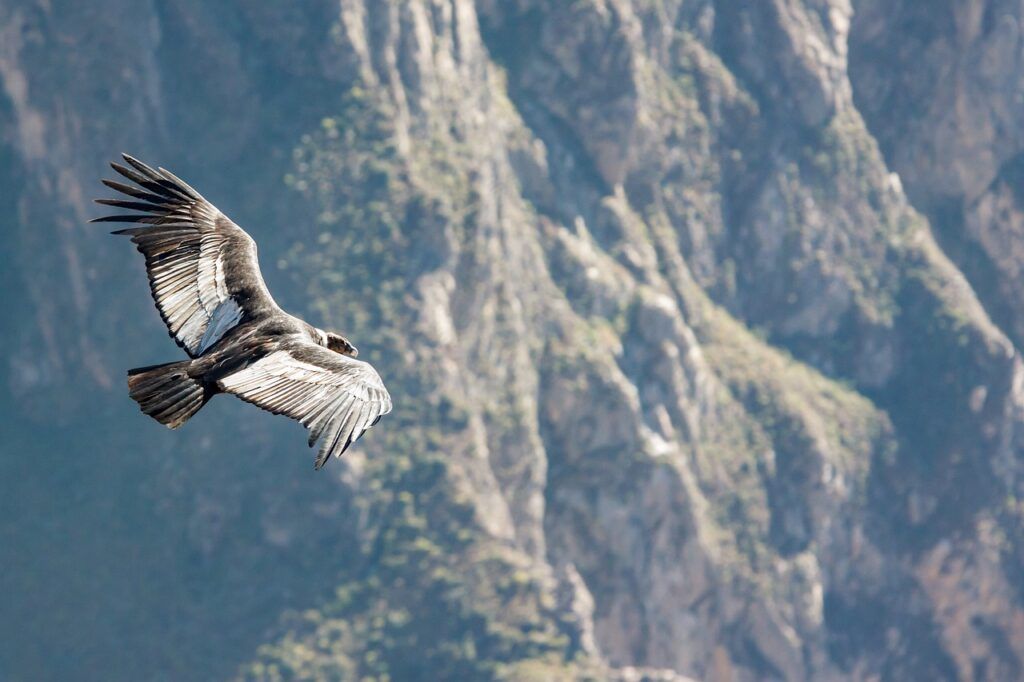
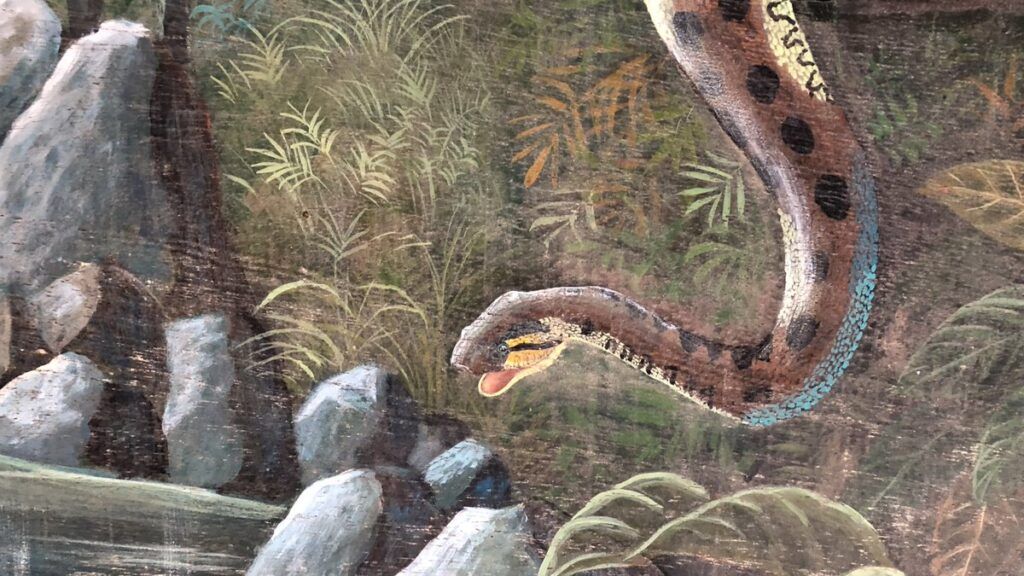
We invite you to take the three transmissions related of Hanaq Pacha with a Condor Initiation, Kay Pacha with a Jaguar Initiation and Ukhu Pacha The Serpent Inititaton.

Pachamama

There are three ways to refer to the earth:

  • When referring to the earth as a planet, it is called Kay Pacha (this world) or simply Teqsimuyu (round foundation).
  • When referring to the earth as inorganic matter, the word Allpa is used.
  • When referring to the earth as the basis for life, we use Pachamama, Mother Earth. (If you want to know more about the meaning of Earth in Andean Cosmovision, please check our “Four Elements Meaning”.

We distinguish between the cyclical change inherent in constant mutation processes: day and night, summer and winter; and the change that refers to more significant transformations. This perspective broadens to focus on changes of eras, understood as the ending and rebirth, called Pachacuti.

If you want to know more about Pachacuti we recomend you to read Pachacuti profechy!

Pacha invites us to see personal and collective life as a unity within a context of proportional dual complementarity. It emphasizes the constant challenge of maintaining just relationships between polarities.

It is a scenario where the evolution of ideas/forms is subject to the laws of Pacha space-time.

Talking about Pacha remains an interesting and extensive topic. We already update The Inca Altar of Qoricancha to better understand its elements and characteristics.


References:

Arriagada Peters, L. (2019). Avatars of Form in the Space-time Pacha. Benemérita Universidad Autónoma de Puebla, Seminario de Estudios de la Significación

Estermann, J. (1998). Andean Philosophy: An Intercultural Study of Indigenous Andean Wisdom. First edition. Biblioteca Seminario San Antonio Abad. Cusco.

Four Elements Meaning

Posted on

In our cosmovision, the four elements are fundamental and sacred.

Pachamama is composed by Hananpacha (the upper world) , Kaypacha (the world we know), and Ukupacha (the world beyond), as well as the convergence of the four elements: water, air, fire, and earth.


Element : Water / Yaku

The relationship between humans and water has shaped the level of cultural development throughout history. Today, the era of global warming, water not only continues to play a crucial role in people’s quality of life, but the entire world has been facing the problems of its scarcity for several decades.

The Quechua phrase “Yaku-Unu Mama,” also called “Mother Water”, appears to speak to us through stories, songs, and oral traditions. Yaku Mama has been identified by the Anaconda, along with frogs and snakes. It’s also represented by divinities as Illapa, the god rain.

In our communities, water is perceived as a living entity, a “person”, a woman (mother), who shares life in this world. She can listen to us, feel happiness, sadness, anger, bless us, and even punish.

Yaku-Unu Mama possesses the unique ability to give birth, which leads us to the concept of nurturing water. Water is not just an element or a resource, but is a being that accompanies humans from birth to death.

Element : Fire / Nina

Nina is one of the most essential elements to work with.

It represents our passion, our mobility towards the future while letting go of the past, our resilience, and our courage. It also represents our emotions.

The word “emotion” comes from the latin word “emovere,” which means “the impulse that induces action”. Fire represents our emotions in their most heightened state; therefore, it is an energy that requires a lot of control and responsibility.

We must be able to control these emotions to make better choices; we have to connect with our inner fire, and that’s how we connect with the external element.

The sun, Father Inti, is the representation of fire. His power can be both helpful and bring us joy, but it can also be problematic and destructive.

When we open our hearts to this energy, we can access limitless power.

It is powerful to bring families, friends and the community closer together as well as for strengthening one’s own energy, so that’s why we offer the Fire ceremony also separately.

Element : Earth / Jallpa

Pachamama, our Mother Earth, Mama Jallpa. Powerful mountains, very beautiful valleys, and lovely lands. She reminds us of the blessing of creation and her support.

Pachamama cleanses us from our heavy and dense energy. It is verified that just the contact with earth can significantly help us with harmful mental states. Pachamama will give you back your strength.

She also represents material possessions and abundance. You can thank her for all the good things in your life through Pachamama offerings, talking with her while sitting on the grass or touching a tree. You’ll find the response immediately in your heart.

You’ll feel free and lighter, a very effective and powerful connection.

Element : Wind / Wayra

Mama Wayra is a purifying element that balances thought and intellect.

Wayra represents the whisper of the Apu mountain spirits, who give us blessings and Kausay to all living beings.

Let the Apus fill your lungs as you inhale deeply. Breathing brings you to the present moment and clears your mind.

Many studies reveal that breathing and meditation are the best practices to build a happy life, make good decisions, serve as mental health prevention, and connect us with all living beings.

Wayra is represented by birds and their ability to travel between worlds, connecting us with Hannan Pacha.

In our ceremonies, Paqo Quero masters will also whistle and make sounds that emulate the wind. That’s how they call the Apu spirits and give the energy of clarity and higher vision to the participating sisters and brothers.


Please handle all these elements with respect and consciousness.

Here’s an invitation for you: Join a Four Elements Ceremony. Maestros from the Apaza family lineage kindly suggest to receive all the blessings from the most important ceremonies in one morning session to be in a healthy and balanced state.