logo im

Evil influences & Death

Posted on

Since we are in Kay Pacha, Hanaq Pacha and Ukhu Pacha surrounds us with both good and evil energies. And even though the word ‘death‘ may bring us bad memories or chills, it is not one of the bad influences.

Endless cycle of life

Ill Wind

Machu Wayra refers to an intangible evil force or energy, an “ill wind“.

The Quechua describe this as a sudden and unpleasant sensation that individuals may experience either alone or in the presence of others. Moreover, sometimes it is a momentary feeling that passes; other times, it physically affects the victim

Sometimes it is a fleeting emotion that fades away; at other times, it physically afflicts the victim, necessitating measures to cleanse them of the “ill wind“.

A sudden and unpleasant sensation that individuals may experience either alone or in the presence of others.

According to their beliefs, the malevolent force originates from the fetus of a woman who has aborted intentionally or spontaneously.

When a woman aborts, she must call an Andean Paqo or curandero to hold a specific ritual to burn the fetus. The ashes of the fetus are capable of causing illness and even death to others if not disposed of carefully.

Some people purposefully send the Machu Wayra to others.

They call on the services of the yachak, who prepares an offering with the fetus of a hen or pig along with other items in order to send evil to another person. When the intention is to send evil, it’s black magic or sorcery.

Getting Rid of Machu Wayra

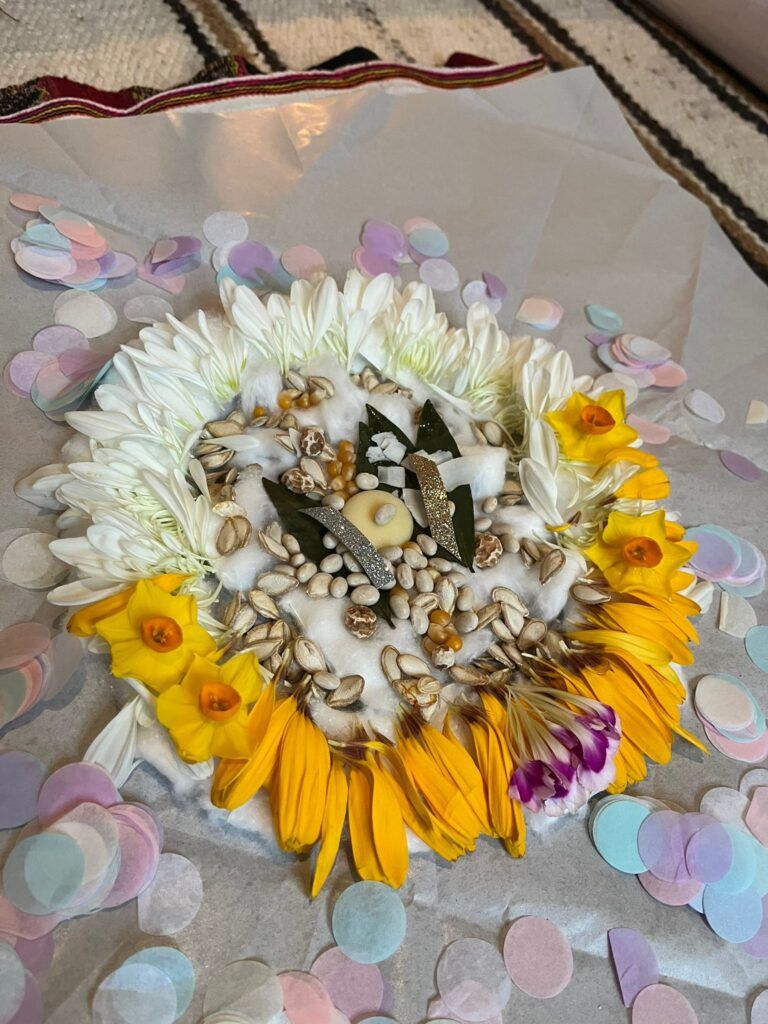
The quechua ask for protection from the Pachamama and make Her a haywarikuy. They may need to bring in a ritual specialist to assist them in ridding themselves of Machu Wayra. There are many ways to do this.

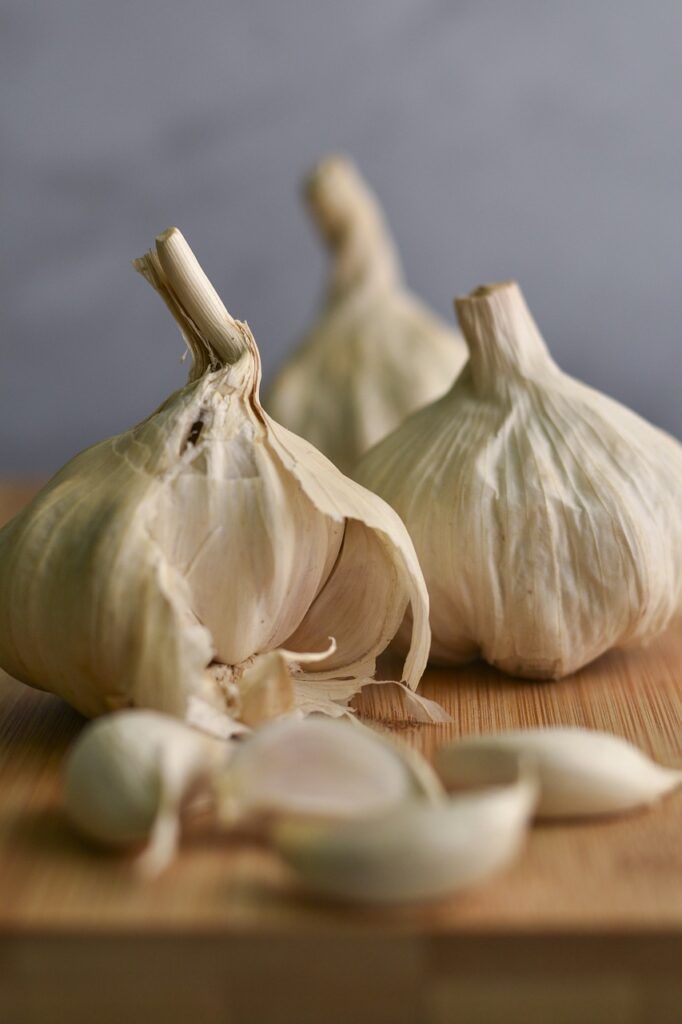
  • Garlic as Protector: It is commonly used as a condiment in the Andes. The more commonb types are large cloven yellow garlic or white garlic with small cloves. To counteract the intrusion of the negative energies of Machu Wayra and all evil spirits, people hang and conceal bunches of garlic in corners of their homes.
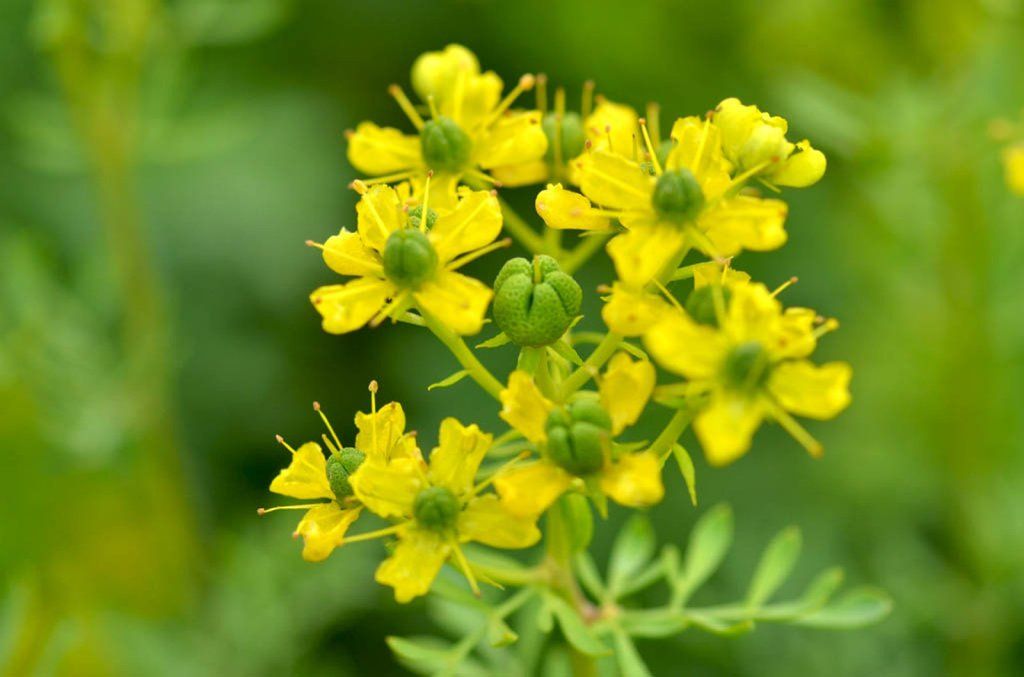
  • Ruda: The plant called ruda grows in all parts of Peru. They lightly rub a branch of this all over the head, body, and extremities of the affected person. Then they burn the branches or leaves, creating the sound of small firecrackers and releasing a strong odor. Within minutes of performing this ritual, the negative energy of the Machu Wayra will leave.
  • Souls of the living and the Dead: There are many beliefs concerning Machu Wayra and the souls of the living and the dead. People believe that Machu Wayra can capture souls, induce shock, decrease energy levels, and disrupt sleep patterns. Sometimes people beccome inconsscious or paralyzed.

Symbolic Death

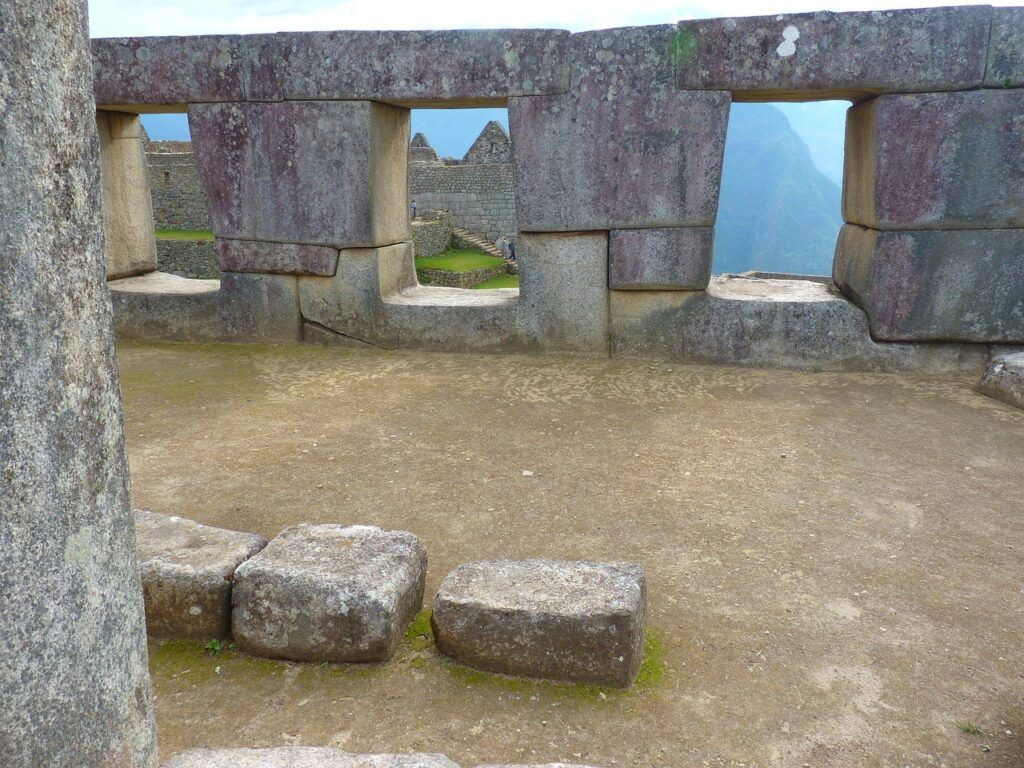
Throughout the ancient sites in the Andes, one finds large, carved, flattish stones referred to by archaeologists as funenral or death stones. They believe they were used to prepare the bodies for burial.

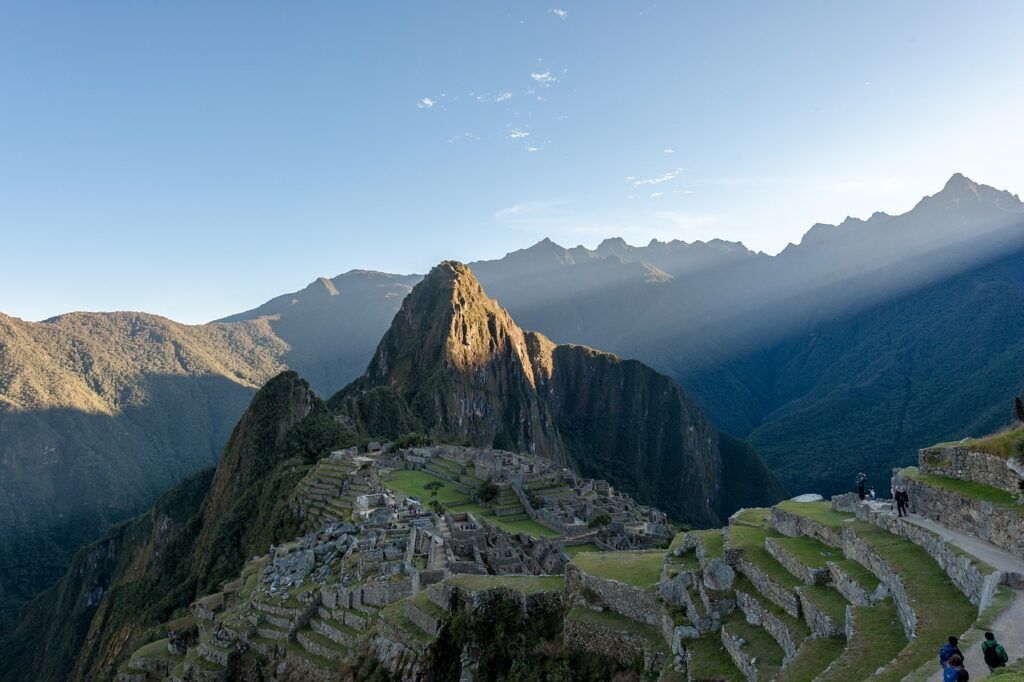
Healers from all parts of Peru come to visit the ruins at Machu Picchu and conduct healing ceremonies at special sites. There is a large funeral stone at the highest point of the ruins, near to the original entrance. Three steps, symbolizing the three Andean worlds are caved into the side.7

Death

The Quechua believe that wañuy (death) is an ending only as concerns the body. But for the soul, physical death is the beginning of a new journey into the formless world, with transformation that leads to rebirth.

To die is to return to the womb of Pachamama.

Ancient burial sites in Peru contained bodies wrapped in the fetal position, buried in communal caves along with friends and relatives who had gone before.

The Quechua venerate their dead out of love and respect for what they have given to the living. They believe that the ancestors lying within Pachamama‘s body transform into plants, rivers, mountains, and living creatures, maintaining contact with them.

They are a part of human beings as well. Death gives birth to new life as the seed sown into the bosom of Pachamama.

Quechua pakos believe that at death a person’s soul leaves the body and wanders for five nights in animal form. At the end of this period, the soul of the good person goes to Hanaq Pacha, the Andean heaven.

The soul returns to the cemetery each holiday and goes back to the house where he lived once a year. After five years, the soul disconnects from the family forever.

The soul of the bad person goes to Ukhu Pacha, where it is condemnes to wander to all the places where he or she committed sins in life.

Funerals in the Andes follow Christian traditions. A Catholic priest attends a burial service, which is followed by a period of mourning.


References:

Cumes, C and Lizárraga Valencia, R (1995) Pachamama’s Children. Mother Earth and her Children of the Andes in Peru. Llewellyn Publications.

Inca Altar Of The Qoricancha – Part 4

Posted on

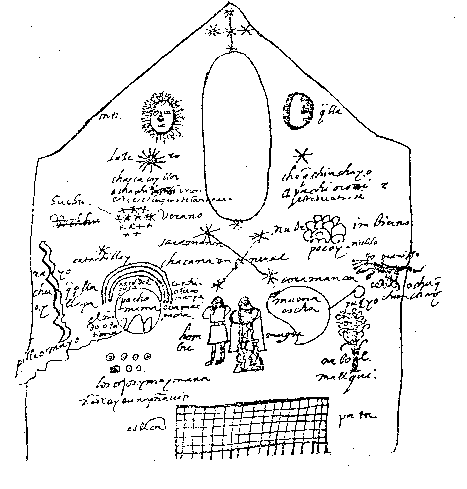
Welcome to the fourth part of the description of the elements of the inca altar of the Qoricancha! A representation of the Andean cosmovision.

It shows us the hierarchies of the Andean criteria; moreover, it explores the reasons for correspondence and equality, presenting a symbol that is still being studied.

If you haven’t seen Part 1, Part 2 or Part 3 yet, we remind you to read them first and then come back here.


High Altar of Qoricancha

Symbols Description

Pachamama

It is the place where humans live, surrounded by all living beings, spiritual entities, ancestors, Huacas, timeless beings, and the spirits of Ukhu pacha or the inner world of the Earth.

The earth is alive, and with it live the hills, mountains, and stones.

Alongside them, humans live and share the created world with all creatures.

For the Andeans, they imagine the earth as a living being, a coiled serpent that sleeps deeply. Furthermore, within its depths, it harbors a strange red sun that once tried to dominate Ccorinti, the golden sun; however, the serpent swallowed it, and now it resides within her.

Amaru Mayu

The serpent river.

It is the symbol of the eternal journey; the river is movement and gives rhythm to the lives of men.

It is a path that people must travel, and therefore, the Incas knew all the South American rivers.

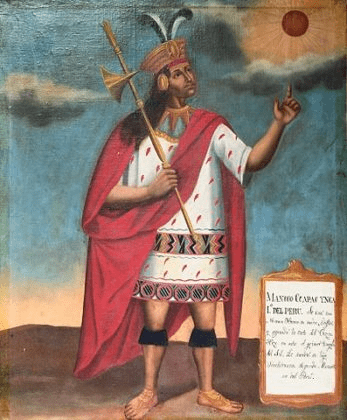
Many years after founding Cusco, Manco Capac heads to Paucartambo. From there, he follows the course of the Yavero River until it meets the Upper Urubamba very close to the Pongo de Mainique.

The Inca returns by ascending the Alto Urubamba to the Pampa de la Luna or Killapampa.

From there, he returns on foot to Cusco, passing through the Plain of the Gods or Villacapampa and through of the Old Mountains or Machu Picchu.

Willca Mayu

The sacred river.

It is an underground river that is traversed by beings from the inner world or Ukhu Pacha.

It symbolizes the spiritual journey, the inner quest, the discovery of the personal self.

Along this river, Andean priests travel to treat the souls of the dead or to converse with them.

According to Inca mythology, underground rivers were illuminated by thousands of precious stones and inhabited by Utis or elves, where the souls of children, known as “opas” or fools, would become lost.

The underground rivers were the path of the Apus or Soccas.

Apus

The Apus are the angels of the Andean religious cosmology.

God entrusts them to protect human beings and act as shepherds of people, known as “Runa Micheq,” guiding them through life by providing information about the past and present.

They are the spirits of the mountains and physically inhabit them.

The Apus individually protect each being, as well as communities, cities, entire nations, or the entire earth.

Among them, there are hierarchies:

  • A familiar Apu is called “Runa Micheq
  • The Apu of a community (ayllu) is called “Ayllu Apu
  • For a city (llacta) it is “Llacta Apu
  • For a region (suyo) it is “Suyuyoc Apu

The Apus have their feminine counterparts in the Ñustas, female spirits who care for animals and plants. They also live in mountains or in rocks with strange characteristics.


References:

  • Candia M, C; Del Solar, M y Iwaki O, R. (1994). Altar Inka del Ccorik’ancha. Cuadernos Andinos Nº10.
  • Estermann, J. (1998) Filosofía Andina. Un estudio intercultural de la sabiduría autóctona andina. Biblioteca Seminario San Antonio Abad, Cusco.

Andean Cosmology

Posted on

In this blog, we will address some topics of Andean cosmology, understood as a body of beliefs that people hold about the nature and origin of the universe.

The Andean Cosmovision refers to the doctrine of the Andean world. It is a vision of the whole cosmos or universe, all interconnected.

The whole cosmos or universe is interconnected.

Andean cosmology encompasses the general nature of the universe as a whole: what it was in the past, what it is now, and what it is likely to be in the future.

It is the totality of the spiritual world of the Quechua people living in the Cusco and Machu Picchu areas. It is a non-fixed, magical world and incorporates all of Nature.

Andean initiations and ceremonies differ from those of the jungle and desert regions.

The Andean Quechua have their own traditional healers, and they follow an ancient cosmology and way of life that has been practiced for thousands of years.

The profecy of Pachacuteq

The Quechua regard history as a sequence of worlds, or pacha, each governed by a set of assumptions about their order. A hero named Pachacuteq reorganized the Inca state.

If you wish to learn more about this prophecy, we invite you to read it beforehand.

The Three Worlds

According to Andean cosmology, the Andean universe arranges itself on three planes of existence.

The universe divides into three “worlds”:

Kay pacha

It is the world where runakuna (humans) live together with Pachamama, alongside the apukuna, wild and domesticated animals, plants, and all natural forces such as rain, thunder, and lightning.

It represents the world of the four elements.

The power of Kay pacha, this world, is symbolized by the puma or jaguar.

Hanaq Pacha

Hanaq pacha, the upper world of superior energy. The residence of Pachakamac, Pachacutec, Christian saints, and spirits of the ancestors.

Men or women in the roles of Altomisayoq serve as mediators between Hanaq pacha, the upper world, and Kay pacha.

We interpret this as a realm where beings of a higher state of consciousness or higher dimensional vibration exist.

From Hanaq pacha, celestial bodies such as the sun, moon, and stars shine their eternal light down upon Kay pacha.

Symbolizing Hanaq pacha, the condor, one of the three Andean animal archetypes, surveys all worlds from the upper world.

Ukhu Pacha

The inner world of Pachamama or the Andean underworld, Ukhu Pacha, is inhabited by many types of supernatural spiritual beings in caves, rocks, and ravines.

Ukhu Pacha may also be known as the inner world of the runakuna.

Moreover, they may include the spirits of dead Incakuna and Spanish conquistadors.

Some of these beings are evil and negative characters; however, others are harmless and described as dwarf-like men.

The serpent ascends and descends through the three worlds by transmutting itself according to its relationship with each world.

The serpent personifies Ukhu Pacha, as rivers that run over the earth enter the inner world in the form of a snake.

Inca Altar Of The Qoricancha – Part 3

Posted on

Welcome to the third part of the description of the elements of the inca altar of the Qoricancha! A representation of the Andean cosmovision. It shows us the hierarchies of the Andean criteria; the reasons for correspondence and equality, a symbol that is still being studied.

If you haven’t seen Part 1 or Part 2 yet, we remind you to read them first and then come back here.


High Inca Altar of Qoricancha

Symbols Description

The Lightning

Below the Pleiades was ‘Chuqui Illapa’ or the Lightning.

They considered lightning to be the shepherd of the sun’s flocks, directing them with its great whip when they grazed in their fields in the Milky Way.

Lightning was believed to be the messenger of the sun.

Lightning announces the arrival of storms and precedes the rains. But sometimes it comes on sunny days; on these days, people say it chooses its priests who will serve it.

Lightning is an important deity and is attributed three identities:

  • The light, called ‘illapa
  • The sound, known as ‘Ccunno Illapa
  • The zigzagging flash ‘Inti Illapa‘.

It served to warn humans that these thunderous events came from the sky, to reward or punish them. There are significant accounts of Andean cities burned by lightning strikes.

Clouds

The clouds known as “Pocoy,” were also revered deities.

They imagined the clouds as elderly women who weave wool to clothe the Moon, and when they take woven fabrics to be washed and tend to them at the peaks of the hills, it surely means it will rain.

Clouds also serve to gauge wind speed and observe the behavior of storms.

The Incas had techniques to aggregate clouds and produce artificial rain through burning plants and mineral powders.

They also believed that clouds were the tears of the moon that gathered in large quantities when they argued with the sun. Clouds ward off frost and protect fields from snow and frost.

Clouds are also communicative vessels between the earth and the sky.

Andeans, originating from a pacarina, whether a spring or river, fulfill the water cycle and believe they transform their bodies into water, vapor, clouds, and dew.

Rainbow

People widely worshipped the rainbow or “Cuichi” as a celestial signal heralding good tidings.

When a rainbow appeared in the sky, it was seen as a sign of favorable times.

If two rainbows appeared, it symbolized a significant event (such as the birth of a royal infant or the conclusion of a military campaign).

During times when three rainbows foretold a string of calamities, people made offerings to the rainbow, such as bright flowers, dyed yarns, and exotic soils.

They sheltered young children to ward off the evil eye, and adorned their doors with crimson cloths. The Cuichi adorned the shields of almost all Inca royalty.

Manco Capac‘s shield depicted Cerro Huanacauri with the Qosqo founder shining like the sun itself, flanked by two rainbows above and below his figure.


We have completed the description of the celestial vault, which contains all celestial bodies, known as the Hanaq Pacha or world above, including the elements of fire and air.

References

  • Candia M, C; Del Solar, M y Iwaki O, R. (1994). Altar Inka del Ccorik’ancha. Cuadernos Andinos Nº10.
  • Estermann, J. (1998) Filosofía Andina. Un estudio intercultural de la sabiduría autóctona andina. Biblioteca Seminario San Antonio Abad, Cusco.

Pachamama: Mother Earth

Posted on

For more than 460 years of Christian indoctrination, all men and women have continued to adore:

The Goddess Mother Earth, Pachamama

Pachamama is a living planet, and without our care and love there will be no future for us.

As this millennium draws to a close, humanity is beginning to realize the importance of treating our planet with care and understanding.

The Goddess Mother Earth, Pachamama

Since the days os their pre colombian ancerstor, the Andean people have know that Mother Earth is of great importance. The Quechua word “Pacha” means “planet earth, world, universe that we inhabit”.

Our relationship with Pachamama is so intimate that we consider her an extension of ourselves:

A being requiring care, nourishment, and protection to prevent her from perishing.

Traditions of Pachamama

Because of her importance to a community that is primarily agricultural, the quechua share the food and drink they love with Pachamama.

  • Before consuming any alcohol or drink: We spill a few drops on the earth as an offering to Mother Earth. They also offer her small portions of food before consuming it.
  • Before consume any kind of food: We offer her small portions by burying them in the earth.

Pachamama loves to receive offerings of flowers, food, and coca leaves from her children.

They summon Pachamama on all special occasions and seek her permission before any activities commence in the community.

  • Before constructing a house: We perform a special ritual to ensure Pachamama’s goodwill towards the new residents and her protection.

Pachamama is kind and tolerant, but she may also turn vengeful to those who forget her.

If they do not perform the rituals with integrity, she may manifest as an aggressor and require offerings for matters of importance, known as “Haywarikuy“.

Since ancient times the quechua have believed Pachamama is the biological mother of children. She is connected to everything, and all things are a part of her.

Some Quechua believe that deities leave pre-human children in places such as caves, rocks, and rivers before the elements guide them into a woman’s womb.

They believe that the deity’s union with Pachamama, the mother, transmits the miracle of life with intelligence and love.

The Pachamama affirms her maternity by assuming the role of protector of the children, the weak and the sick.

We are tied to Mother Earth by an umbilicus or life cord that connects us to her womb of creation. If part of Mother Earth is suffering, then the world suffers too.

We see her in everything:

In the wind, the clouds, the rain, the sacred rivers, the lands, the eyes of pumas, condors and serpents.

The Earth is suffering, so we suffer.

We acknowledge the birth and death present in every moment, understanding that Mother Earth has the power to give and take.


References:

Cumes, C and Lizárraga Valencia, R (1995) Pachamama’s Children. Mother Earth and her Children of the Andes in Peru. Llewellyn Publications.

Inca Altar Of The Qoricancha – Part 2

Posted on

Welcome to the second part of the description of the elements of the inca altar of the Qoricancha! A representation of the Andean cosmovision. It shows us the hierarchies of the Andean criteria; the reasons for correspondence and equality, a symbol that is still being studied.

If you haven’t seen Part 1 yet, we remind you to read it first and then come back here.


High Altar of Qoricancha

Symbols Description

Venus

Below the sun shines the morning star, also known as “chasca,” “coyllor,” or the bright star.

Inca comunity honored this drawing because it represented the planet Venus, which served as the sun’s page.

At times, Venus led ahead to guide its lord along the path, and at other times, it followed behind, retrieving what the sun absentmindedly overlooked.

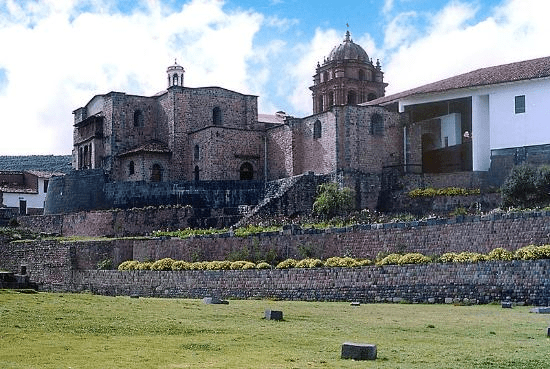
Venus possessed its own temple in the Qoricancha and was revered as a mediator between the sun and the moon, alternating its presence between the two luminaries.

Venus Temple – Qoricancha

Mars

Below the moon is the evening star, also known as “Apachi Orori.”

This drawing represents Mars, the red planet, which is also visible in the evenings. It was also called the walker or púreq.

They said it carried all the missions entrusted by the gods of the sky. It’s not known if it had its own temple, but in any case, it held a special place in the cosmogonic altar.

Pleiades

Nine stars of Pleiades- Qoricancha

Below the sun, immediately after Venus, there is a cluster of stars called Huchu, which corresponds to the Pleiades and consists of 9 stars:

Alcyone, Electra, Maia, Merope, Taygeta, Atlas, Pleione, Celaeno, and Asterope

The Incas also referred to these stars as “las cabrillas” and named them “collqas,” meaning granary.

The collqas can be observed in Cusco with the naked eye during the sunsets of May and June, coinciding with the festivals of Inti Raymi.

The best ears of corn were separated for the chica harvest, potatoes, oca, and olluco were harvested.

Also during this month, quinoa is harvested, villages are cleaned, ditches are repaired, and pairs are prepared to marry Huarmi Ccocuc.

Venus, Mars and Pleyades

References:

  • Candia M, C; Del Solar, M y Iwaki O, R. (1994). Altar Inka del Ccorik’ancha. Cuadernos Andinos Nº10.
  • Estermann, J. (1998) Filosofía Andina. Un estudio intercultural de la sabiduría autóctona andina. Biblioteca Seminario San Antonio Abad, Cusco.