logo im

Collasuyo Part 2

Posted on

Ceques and Huacas

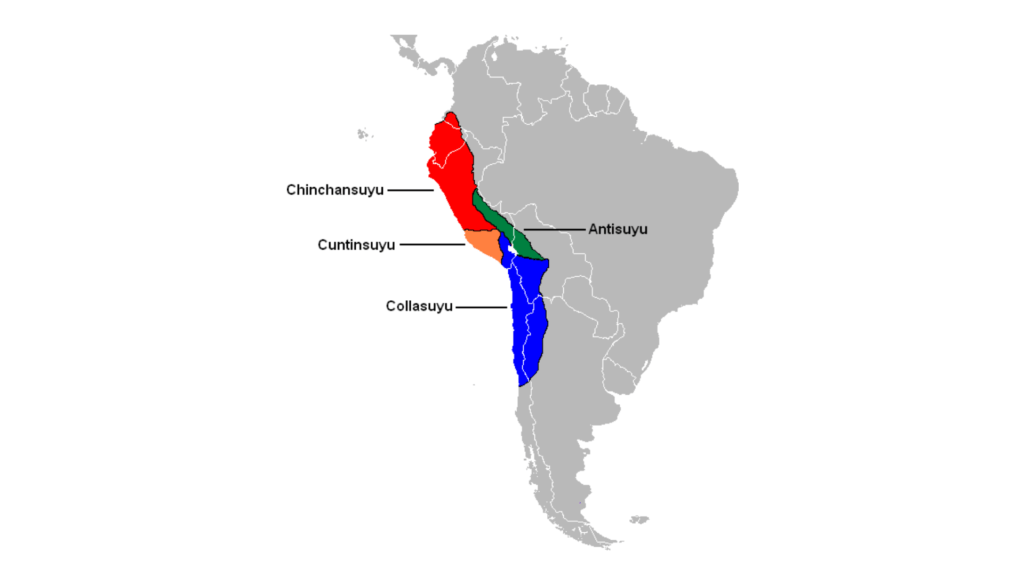
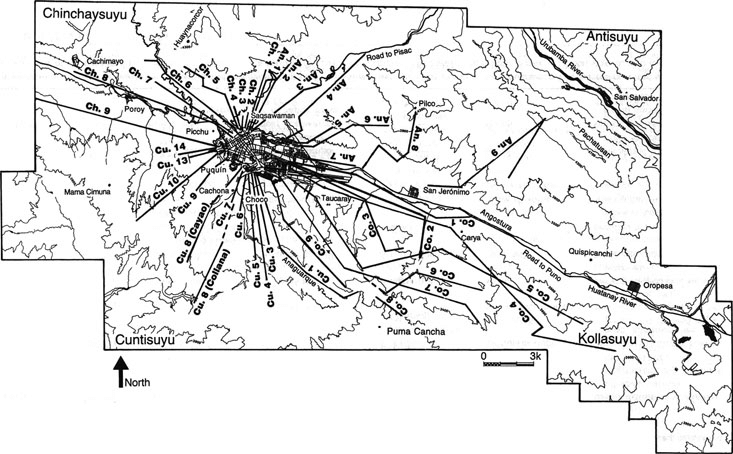
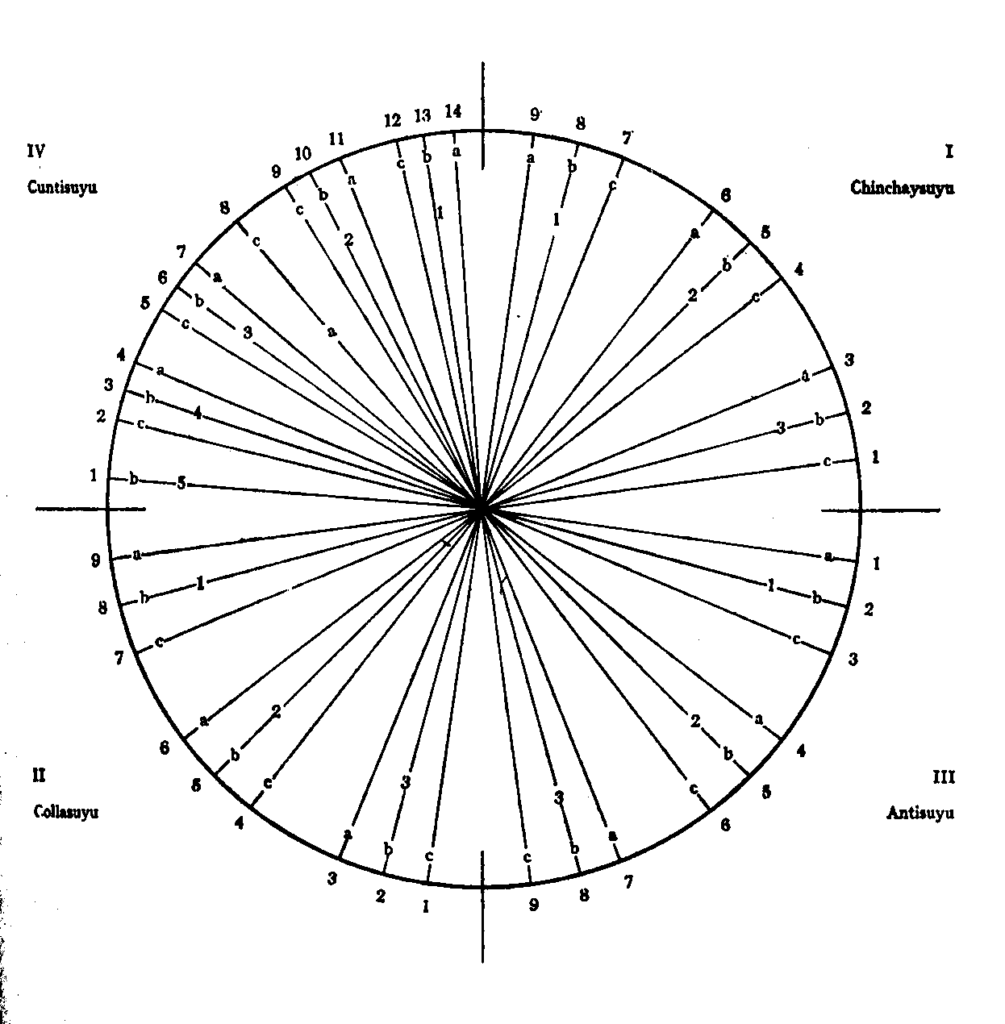
The path of Collasuyo, which we explore in this issue, encompasses 9 ceques or demarcations and 84 huacas or landmarks; these form a meticulously organized distribution of lands within the Sacred Valley of Qosqo.

If you haven’t read Part 1 of our blog yet, we invite you to read it first and then come back here.


Starting with the fourth huaca and continuing through to the ninth and final huaca of the first ceque:

Collasuyo Fourth Huaca

People associated this huaca with ceremonial and religious activities, potentially linking it to water and fertility.

Related to Water and Fertility

It was a large plain called ‘Caripampa,’ located on the current grounds of the Kayra farm.

All at the foothills of the Socllac’asa and Pucac’asa hills, an area primarily dedicated to agriculture.

It has water year-round and is home to several rural communities.

Collasuyo Fifth Huaca

This huaca was significant for its religious and cultural importance, possibly associated with community and ceremonial events.

Associated with Community and Ceremonial Events

It is a spring located on the slope of Mount Huanacauri, in a corner of the former plain.

It is a significant flow of water that continuously nourishes the fertile plain.

Collasuyo Sixth Huaca

They were certain stones located in a ravine, which were said to be the children of a mountain.

Because they disobeyed their father, they consequently turned into stones.

To reach this huaca, one must first follow the right bank of the Huatanay River. Then, upon finding a ravine, one should climb about 399 meters until reaching a ledge on the mountain.

It is a possible location of these stones that received a similar fate.

Related to Natural Features or Sacred Landscapes.

This site was likely related to mountains or valleys, playing a role in rituals connected to these features.

Collasuyo Seventh huaca

People venerated this huaca on the right side of Angostura, on the Llupacturun hill, at an elevation of 600 meters from the right bank of the Huatanay River.

You can find pyramid-shaped terraces subtly rising from the ground, encircled by well-defined fields that evoke a sense of timelessness. Moreover, the site rests gracefully next to a seasonal spring, adding a serene and mystical touch to the surroundings.

Relatives of the Inca would come to this huaca to pray for the well-being of the reigning sovereign.

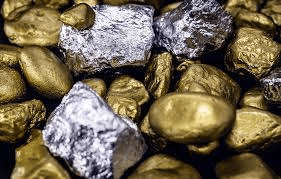
As a ‘payment’ for the favors they sought, they offered the huaca small garments, gold, and silver.

This huaca may have had connections to local community traditions and rituals, integrating local deities or spirits into the broader Inca religious system.

Collasuyo Eighth Huaca

It was called Guayra, the wind deity.

People burned herbs and aromatic essences in large stone braziers to make offerings to him, praying loudly for the fierce gales to cease and for the wind to be contained and calmed.

The offerings were made to him by burning herbs and aromatic essences.

People performed this ceremony at the upper part of the ravine, on some rugged rocks at its end.

Collasuyo Ninth Huaca

People revered the river that flows through the Angostura, the great collector of the waters from the Qosqo Valley, by offering red conchas (ceramic vessels) and throwing dyed wool of various colors into its waters.

They strategically placed these sites to create a network of sacred geography, connecting the spiritual and material aspects of Inca society.


Reference

Candia M, C; Del Solar, M y Iwaki O, R. (1994). Los ceques y las huacas, caminos del Contisuyo. Cuadernos Andinos Nº6.

Collasuyo Part 1

Posted on

Ceques and Huacas

The path of Collasuyo, which we explore in this issue, encompasses 9 ceques or demarcations and 84 huacas or landmarks; these form a meticulously organized distribution of lands within the Sacred Valley of Qosqo.

Each ceque route provides us with deeper and varied insights into the origins of the Inca people, who established in this valley the most formidable culture of integration with nature.

The path of Collasuyo is a unique and original repository of Andean religious thought and cosmogony. It presents, in a detailed succession of gods, apus, mallquis, and heroes, a mythology unmatched anywhere else in the world.

The ceques and huacas are also a vast document of information about Inca society, containing data on Panacas, Ayllus, and the communities of Qosqo; it compiles records of succession and lineage, details of social hierarchy and correspondence, and is, in sum, a valuable archive that warrants extensive study.

Andean priests held a prominent place in the ritual and worship of the huacas.

The Incas, unlike any other civilization, employed the order they received from and learned from nature for their own rational organization.

This path also brings us the magic of the Apus, living spirits residing in the mountains who preside over the Altomisayoc’s ceremonies.

An eminently religious people, the Incas possessed grand ceremonial practices, a splendorous display, and a church of the highest order.

The ceques and huacas are, moreover, meticulous accounts of the history of each Inca ruler, serving as effective informants on the eponymous events in the history of Qosqo.


Here are the first, second, and third ceques:

Collasuyo First Huaca:


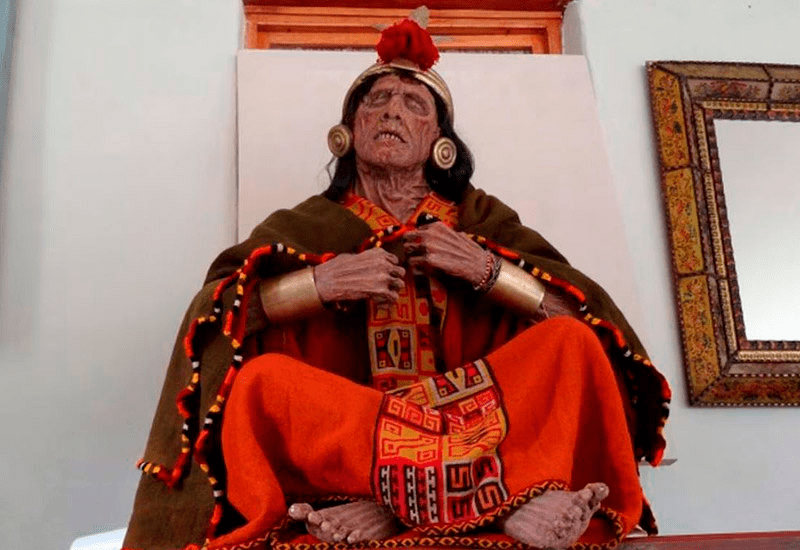
In the Inticancha palace, Manco Capac, the founder of Qosqo, was venerated, and it later served as a monastery for the Sun priests.

Manco Capac, the founder of Qosqo

This site is integral to the First Ceque, known as Hurin Huaca, which defines the southern boundary of the Sacred Valley.

It includes significant landmarks such as the Saqsayhuaman fortress and the Puca Pucara complex.

The stones of the Pururaucas evoke the myth of stones transforming into soldiers of the Inca Pachacutec. They symbolize the rise and zenith of the Tawantinsuyu Empire.

This ceque embodies the spiritual and ceremonial essence of the valley. It reflect the deep connection between the Inca‘s sacred geography and their cosmological beliefs.

Collasuyo Second Huaca:


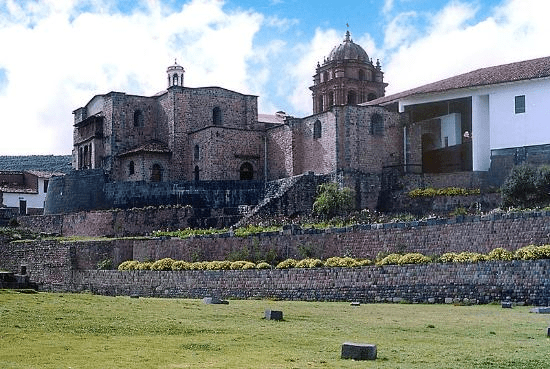
The water spring, originating from the Qoricancha temple and attributed with special qualities, was situated to the south of the temple, marking the beginning of the journey to Collasuyo.

The Qoricancha temple

The Second Ceque, also known as Qollasuyu Huaca, extends into the southeastern regions of the Sacred Valley.

The spring was offered small shells, with the hope that the water it carried would be beneficial and bring blessings to its users.

This ceque includes significant landmarks such as the Tambomachay water shrine and the Qenqo ritual site. The deep reverence the Incas had for water sources as sacred elements linked to their spiritual and ceremonial practices.

Collasuyo Third Huaca:


They called it Churucana, a small, round hill near San Lázaro, where three stones served as idols.

People made ordinary sacrifices, including offerings of children, to ensure the sun retained its strength.

Recent airport expansion has destroyed this huaca, which was part of the Third Ceque, also known as Pachacamac Huaca.

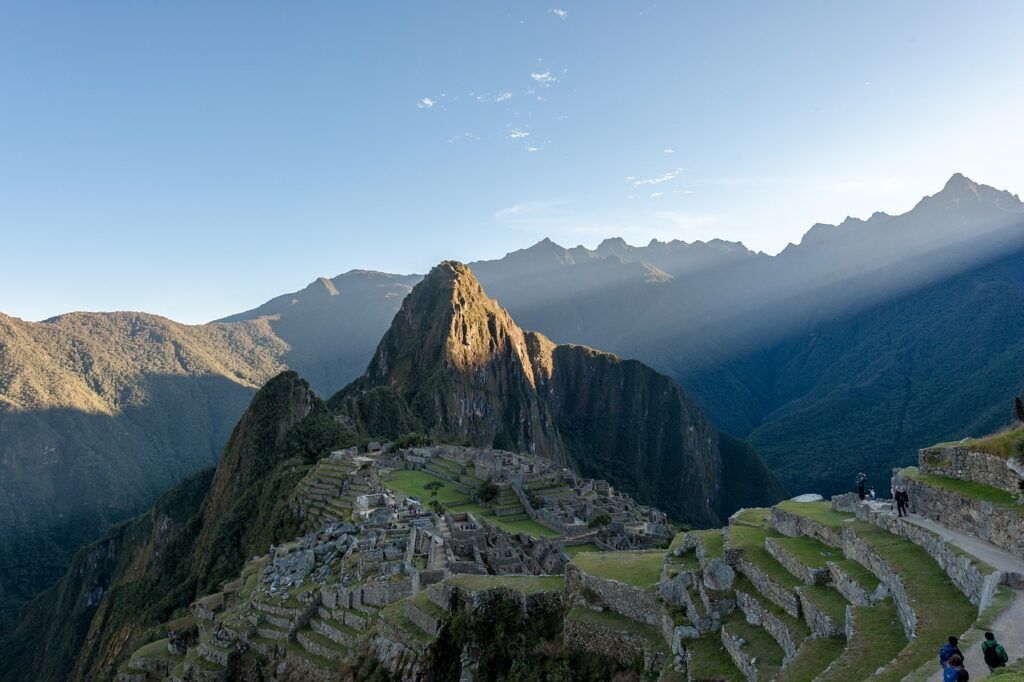
Machu Picchu

Once a highly revered site, it offered an extraordinary vantage point for observing the sun’s movement from the heart of the Qosqo Valley.

The Third Ceque, covering the northeastern regions of the Sacred Valley, includes significant huacas like Huchuy Qosqo and Machu Picchu.


Reference

Candia M, C; Del Solar, M y Iwaki O, R. (1994). Los ceques y las huacas, caminos del Contisuyo. Cuadernos Andinos Nº6.

Inca Altar Of The Qoricancha – Part 5

Posted on

Welcome to the fifth section of our exploration of the elements of the Inca altar at Qoricancha! A representation of the Andean cosmovision.

It shows us the hierarchies of the Inca criteria; moreover, it explores the reasons for correspondence and equality, presenting a symbol that is still being studied.

If you haven’t seen Part 1, Part 2, Part 3 or Part 4 yet, we remind you to read them first and then come back here.


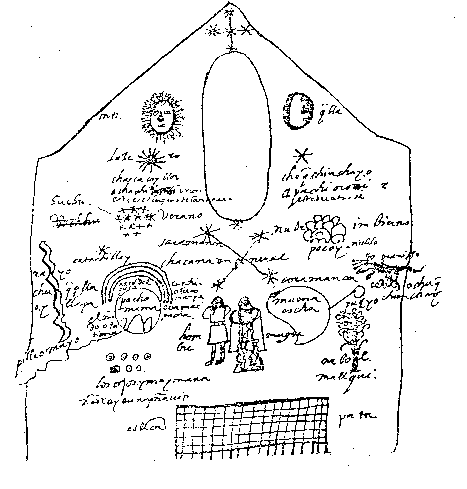
High Altar of Qoricancha

Symbols Description

Ñawi

The next symbol is the eyes.

Ñawi, a Quechua word that means “eyes”

Ymaymana Ñauraycuna” represents the inhabitants of the inner world or “Ukhu Pacha.”

In this realm, inhabited by spirits of darkness, the dominant figure is “supay” or demon, a bloodthirsty and murderous being who tempts humans to disrespect the supreme creator.

Supay is accompanied by other infernal demons such as “Ccañajhuay,” “Ñaqac,” “Saqra,” “muqui,” “Achaq’alla,” “Yscay Uya,” “Ñaupa Runa,” and “socca.”

Alongside these malevolent beings, other spirits reside here, confined to these places due to the harm they have caused to humans or nature.

“Inca” Ccari

The following drawing represents a man.

Entrusted with the task of the future, he is the privileged being of creation. He possesses energy and vitality, along with the gift of knowledge, love, and wisdom. He holds the messages of the past and must find his spirituality.

The Ccari is on the right side.

Man is responsible for discovering methods for social coexistence, seeking the development of work techniques, and creating a harmonious society among all living beings, in harmony with nature and in close connection with the entire universe.

During the time of the Incas, man held more than any other being in the world, knowledge inherited from prehistoric times.

His expertise in natural and folkloric medicine, his grasp of natural selection, and his command of hydraulics and land treatment, especially his philosophy and metaphysics, rendered him a privileged being and earned him recognition as a divine creation.

“Inca” Warmi

The following drawing corresponds to that of a woman. The woman shares all knowledge with the man.

There was no inequality or gender dominance among the Incas.

The Warmi is on the left side.

However, within harmony and correspondence, women performed much more diverse roles than men.

Almost all tasks, including warfare, were also carried out by women.

Like men, women also knew how to spin and weave.

The only task inherently associated with the female gender was domestic service.

This egalitarian and natural treatment fostered a harmonious society during the time of the Incas, but the intrusive attitude of a Western society, which neither feared nor respected the supreme values of humanity, disrupted it.

Tambo

The lower drawing of the cosmogonic retable is the Collca, which means granary, storage, or depot. It is also known by the name Tambo.

The Andeans covered this drawing on the altar of Qoricancha with plates of gold and silver, reflecting the importance they attributed to storage.

Storing is part of a philosophy of life.

The food, clothing, tools, decorations, weapons, gifts, and everything that filled the Inca Collcas were instruments for interacting with other communities.

During the Inca period, there were numerous towns on the coast, in the jungle, and in the highlands that had not yet emerged from prehistory.

Educating those peoples and integrating them into Inca civilization was the greatest achievement in the entire history of the Tahuantinsuyo. The Collcas were filled with food, so diverse that we can only recognize about 10% of it.

Here is a list from Felipe Guaman Poma:They had provisions of food in this way: potatoes, tubers, oca, mashua, radish, quinoa, tarhui, chuño, caui, caya, tamos, llama, vicuña, alpaca, paco, guanaco, taruca, partridge, chichi, ants, mosquitoes, mushrooms, lakes, ducks, herbs, llachoc, onquena, ocoroto, eacacha, mauca, amaca, suya, squash, thousands of fruits, peppers, uchu, rocoto, and other small items.”


  • Candia M, C; Del Solar, M y Iwaki O, R. (1994). Altar Inka del Ccorik’ancha. Cuadernos Andinos Nº10.
  • Estermann, J. (1998) Filosofía Andina. Un estudio intercultural de la sabiduría autóctona andina. Biblioteca Seminario San Antonio Abad, Cusco.

Chacana Part 2

Posted on

Let’s continue with the second part of our blog about the chacana, the Inca symbol that represents a part of Andean cosmology.

If you haven’t read the first part yet, we invite you to read it first: Chacana Part 1.

Chacana is an Inca symbol

In the lower left side of Chacana

We call it “kausanapac” or rule of conduct, is the third tier of three levels, which descend internally representing bodily life; these are the basic rules of ethics and morality.

The first tier

It is occupied by honesty, “Ama Llulla.”

Honesty was applied from the observance of fasts and penances to the assurance of others’ honesty.

There was a straightforward interaction where abuse of trust, negligence, or rude acts were inconceivable.

The second level

Corresponds to integrity, “Ama Sua,” which is the behavioral norm within the community.

In the time of the Incas, integrity also meant not committing errors against others or their interests.

Integrity was not limited to material possessions but encompassed all forms of social interaction, sharing work and obligations with others.

The third level

It is occupied by the norm “Ama Quella,” which means “diligence, conscious and constant work” for the enhancement of the Empire, resulting in more food, work, and festivals for the entire people.

It signifies the obligation to produce to share, collaborate to acquire, and participate in common endeavors, known as Ayni, in the task of enlarging the Tahuantinsuyu.

The last tier corresponds to the lower

Known as “yayaypac” or unchangeability.

The first tier

It’s occupied by the lands of the sun, symbolizing the sanctity of labor.

These lands were a powerful economic force, and the goods obtained from them supported 6,000 solar priests for the worship of the huacas and for celebrations.

The second level

It is occupied by the lands of the Inca, which were the largest and located on the best soils.

The people worked these lands to produce vast resources like food, clothing, utensils, tools, and weapons, which they used to repay the service they provided to the empire.

They used this production to feed the populations they annexed each year and to assist populations affected by natural disasters.

The third tier

It was occupied by the lands of the people, which were resources for the sustenance of the population.

These lands were generously distributed and used to serve the people during major festivals.

They provided the population with housing, clothing, food, and familial support.


Reference:

Candia Muriel, C e Iwaki Ordoñez, R (1994) El intitake y símbolos andinos. Cuadernos Andinos Nº1.

Chacana Part 1

Posted on

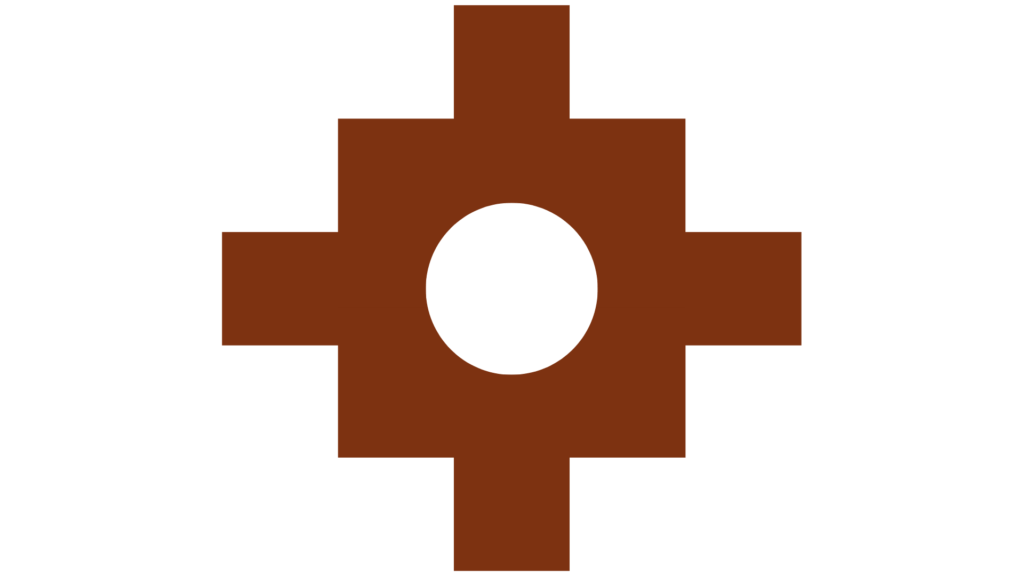
Chacana is an Inca symbol, represented by an Andean cross, formed by four steps of three rungs each.

The two upper steps correspond to the ‘ideal’ world.

The right ladder encompasses the cosmogonic theory, while the left ladder explains the theory of the three worlds.

Chacana is an Inca symbol

The lower and inner steps correspond to the ‘real’ world.

The left steps encompass norms of conduct and the basic principles of human relations, while the right steps signify the unalterable hierarchical order of political, social, and religious relationships.

Upper right side of Chacana

Upper right side of Chacana

First Step

Explains the conception of the universe.

For the Incas, the supreme creator of all things is Illa Tecse Wiracocha Pachayachachic, and the first step is reserved for him.

He is the creator god of the sky and the earth, the Omnipotent Lord who created the entire universe from his ‘chuspa’ (bag).

Second Step

The sun occupies the second step; he is a living and daily god who rewards and punishes directly. He is the god of nature, and humans rely on him for the timing of planting and harvesting, for festivals and love, and also for death.

Third Step

The third step is occupied by the ‘Mallquis,’ tutelary deities specific to each individual, such as the Huacas and Apus, rivers, mountains, and trees. These gods are the sources of life and are the origin of the ayllus and the runas (people).

The upper left side of Chacana

We call it ‘puriy,’ and explains the theory of the three lives or the three worlds.

Hanaq Pacha

The ‘upper world,’ is before life and occupies the first step. In this realm, the tutelary deities, the apus, live.

In this first world full of mythology, the gods of mountains, rivers, and stones, along with trees, animals, and natural phenomena, coexist as animated beings with hunger, thirst, and desires.

These Andean gods inhabit a magical, real, and conscious universe.

This dreamlike world is also accessed by Andean people after their death.

Kay Pacha

This life, spans from birth to death.

It is an ordered and predetermined existence.

The Quechuas did not have a fatalistic outlook; they believed that upon entering the world, individuals must fulfill a specific role within the order and harmony of Inca society.

Uchu Pacha

The afterlife, is where it is believed that after death, a person integrates with nature, returning to their Paccarina (place of origin), buried beneath trees or in terraces, serving as nourishment for plants that sustain the life of the Andean people.


References:

Candia Muriel, C e Iwaki Ordoñez, R (1994) El intitake y símbolos andinos. Cuadernos Andinos Nº1.

Offering or Despacho

Posted on

The entire ceremony to Mamapacha, the Apus, the sun, and the moon is known by this name:

DESPACHO

The offering from one of our students.

However, each ritual is different from the others; different in intentions.

Many know the despacho by other names such as Despacho Hampi, mesa, offering, or payment.

The ceremony varies depending on:

  • The places where it takes place the ceremony.
  • The environment surrounding us.
  • The Paqo Qero
  • The position of the offering on the table.

The number of participants and the duration of the ceremony also vary the location and the ritual.

Mesa of our Students

The elements of Despacho

Elements of Despacho (Candia M, C; Del Solar, M y Iwaki O, R. (1994))

Procedure of the Ceremony

The first thing the Paqo Qero does is ask for the reason behind the request

If the intention is pure, people set a date, ideally the days immediately before or after the full moon.

As a reference, approximately 150 offerings are sold in our city in a week

Prior to this, the Paqo spends 24 hours in voluntary fasting at home, consecrating their work instruments and symbols of power.

They place these symbols in specific spots based on the participants’ importance or age, and cleanse the ritual area.

At the officiant’s request, everyone prepares kintus of coca leaves and hands them to the master. He arranges them on the unkuña in a specific shape and quantity as prescribed. They set traditional elements like the ara, ccocha, and holy cross on the table.

The table gradually becomes a sight of extraordinary beauty

The Paqo master begins blessing it and praying devoutly with all participants.

They unwrap the despacho hampi elements and place them on San Lorenzo paper covered with coca leaves. For an hour, participants remain silent as the Paqos meticulously prepare the despacho.

The Paqos light the Ninawillca and bless the sacred fire. Then share communion with the participants using wine or chicha, dipping the kintus into these beverages briefly. Invocations to regional, local, and communal Apus follow, accompanied by placing red and white carnations in the liquids as invitations.

After kneeling and sprinkling chicha or wine around the table, the Paqo master adds incense and aromatic plants to the fire. Liturgical chants begin as the master sprinkles wine or chicha over the table, praying for the success of the offering.

Finally, despacho is burned in the fire and covered with plants

The master informs participants that their service has ended, allowing them to stay or leave as they choose. They bid farewell as the master ascends a hill alone to burn or bury the payment.

If burned, he stays until it consumes completely, then covers the ashes with earth, sprinkles them with liquor and water while praying.

If buried, he burns it with icchu and other plants, asking Pachamama to accept the offering.

The ceremony concludes with the wrapping of the despacho in paper and other materials. The master offers a new lliclla or unk’uña for wrapping, then slowly and with blessings, clears the table.

Participants, now instructed not to remain silent, consume the remaining coca on the table. The master then asks them to step back and help clean up, leaving the place as they found it.


Candia M, C; Del Solar, M y Iwaki O, R. (1994). Despacho to Pachamama Cuadernos Andinos Nº15.