
As April deepens, processes that began as movement and later found stabilization now begin to express a different quality: presence.
This phase does not emphasize expansion or change, but the capacity to remain.
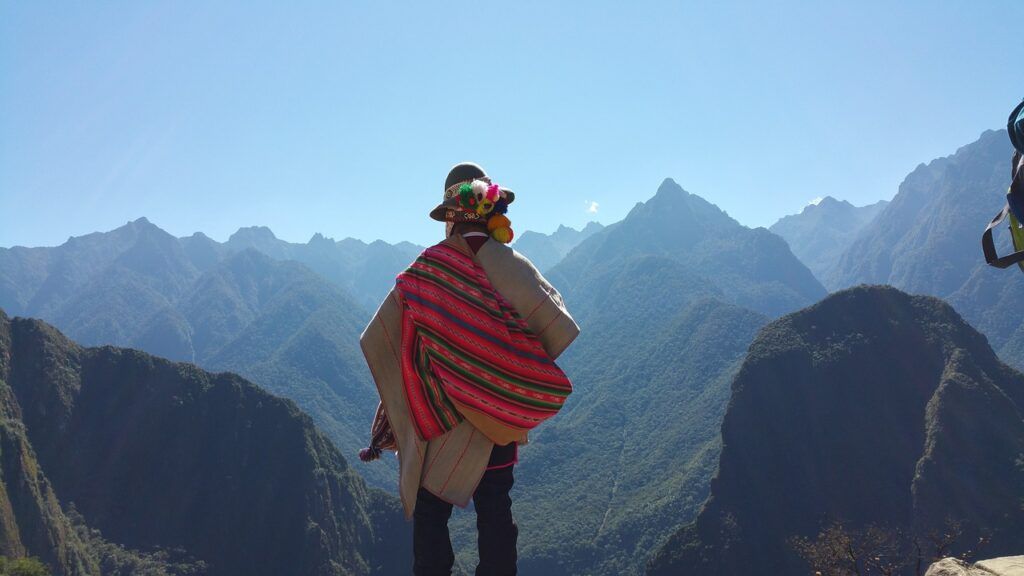
In Andean cosmology, presence is not passive. It is an active state of awareness in which attention, body, and environment align. What has been activated and stabilized now requires the ability to be held without dispersion.
It becomes the condition that sustains coherence.
Presence as Relational Awareness
It does not occur in isolation. It emerges through relationship.
To be present means to remain attentive to what is unfolding, within the body, within the environment, and within the relational field that connects both. This attentiveness does not seek to control or modify experience. It allows experience to reveal itself.

In this sense, presence becomes a form of knowledge.
Rather than analyzing from a distance, it engages directly with what is happening, maintaining continuity between perception and participation.
Stabilizing Attention
The development of presence requires the stabilization of attention. Without this stability, awareness disperses, and coherence weakens.
April represents a moment when attention can begin to settle.
Earlier phases may have involved intensity, uncertainty, or constant adjustment. Now, the task shifts toward maintaining awareness without fragmentation.
It allows attention to remain steady even as conditions continue to change.
Embodiment and Presence
In Andean thought, knowledge is not purely cognitive. It is embodied.
Presence emerges through the body’s capacity to sense, respond, and remain connected. Physical stillness, breath, and sensory awareness all contribute to the stabilization of it.
This embodied dimension grounds experience.

Through presence, the body becomes a site of alignment where internal and external processes meet. What has been lived no longer remains abstract; it becomes integrated into felt experience.
Presence as Continuity
Presence sustains continuity across time. It allows processes to remain connected rather than fragmented into isolated moments.
To remain present is to maintain relationship with what has already been lived while staying open to what is unfolding.
In this way, presence bridges past and present without creating separation.
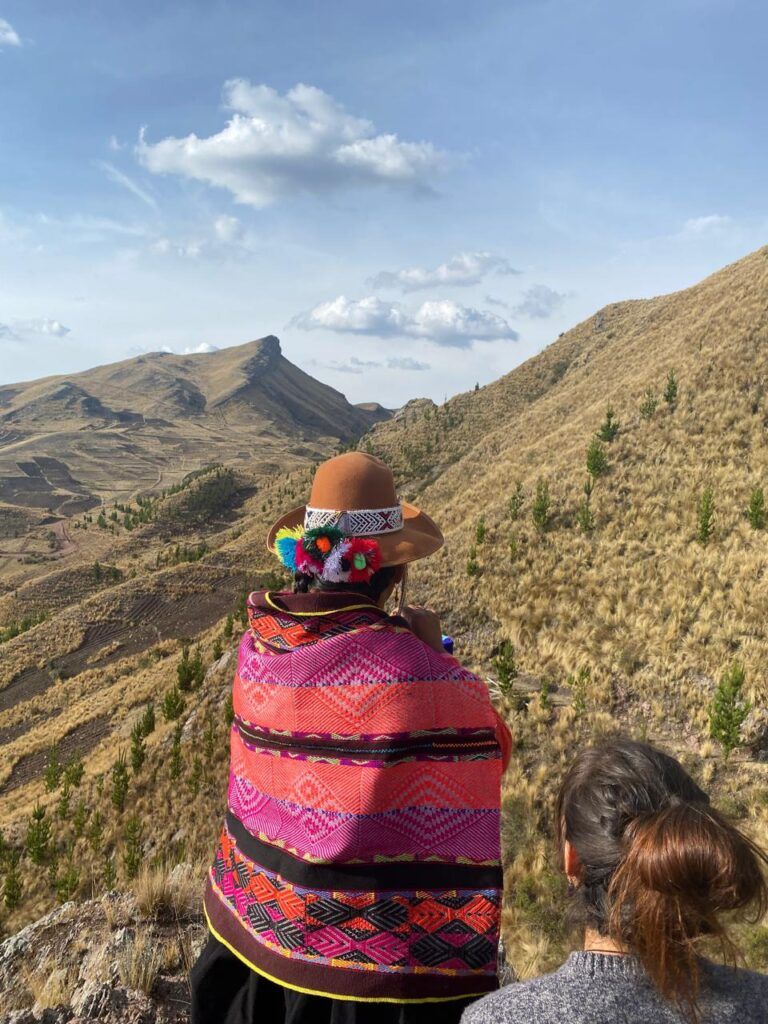


It holds experience within a continuous field of awareness.
April teaches that presence is not something to achieve once, but something to practice continuously.
It is the capacity to remain aligned within changing conditions, to hold awareness without losing coherence, and to participate in life without fragmentation.
Through presence, experience stabilizes.
References
- Allen, C. J. (2002). The hold life has: Coca and cultural identity in an Andean community. Smithsonian Institution Press.
- Urton, G. (1981). At the crossroads of the earth and the sky: An Andean cosmology. University of Texas Press.
- Ingold, T. (2000). The perception of the environment: Essays on livelihood, dwelling and skill. Routledge.
This article draws on both academic literature and oral, lineage-based Andean knowledge. Teachings that originate from living traditions are cited in recognition of their ongoing transmission within Andean communities, while scholarly sources are used to support contextual interpretation.