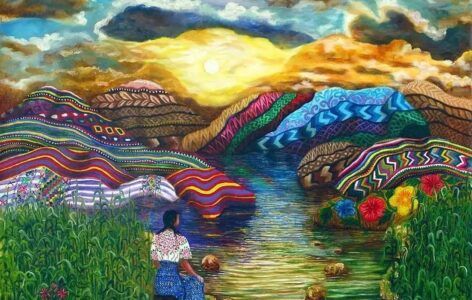
Protection becomes an important principle during this period of the seasonal cycle.
At this stage, however, life remains delicate. What has recently emerged is still adapting to changing conditions. Rainfall, temperature, and soil moisture continue to influence whether young plants will strengthen or struggle.

Protection as a Form of Care
In Andean agricultural traditions, farmers recognize that early growth requires careful protection. Young plants must be shielded from animals, strong winds, or excessive water that could damage their fragile stems.
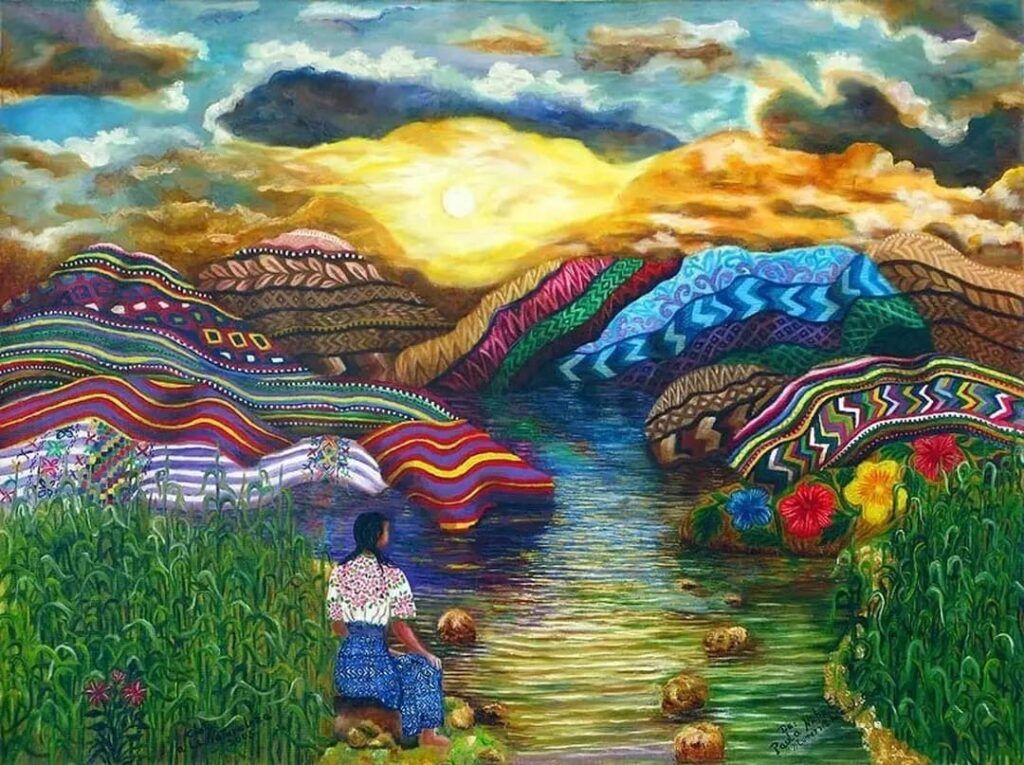
This protection does not mean isolating the plants from their environment. Instead, it involves maintaining the balance that allows them to continue developing within the living landscape.
Through attentive observation and simple actions, such as reinforcing soil around seedlings or maintaining natural barriers, farmers practice a form of protection that supports life without interrupting its natural rhythm.
Community and Shared Protection
Protection in the Andes rarely belongs to a single individual. Fields are often located near one another, and families share responsibility for observing how crops are developing across the landscape.
This collective awareness creates a broader network of protection.

Neighbors may alert one another when animals approach cultivated areas, or when sudden weather changes threaten young crops. Through cooperation, communities strengthen their ability to safeguard what has just begun to grow.
Protection therefore becomes a relational practice that connects people, land, and the wider environment.
Protecting More Than Crops
Although the idea of protection often appears in agricultural contexts, its meaning extends beyond the fields. Many forms of growth in human life begin quietly and remain fragile during their early stages.
New projects, ideas, or personal transformations often require a similar form of protection.

When something new begins to take shape, it benefits from supportive conditions that allow it to develop gradually. Excessive pressure, premature judgment, or constant disturbance may weaken processes that still require time to mature.
In this sense, protection becomes a way of respecting the early stages of transformation.
A Season for Careful Guardianship
March reminds us that emergence alone does not guarantee growth. What has appeared must still pass through a period of vulnerability before it becomes strong.
During this time, careful protection helps ensure that new life can continue its development.

By observing closely, responding thoughtfully, and maintaining supportive relationships with the land, people participate in the ongoing cycles that sustain the Andean landscape.
Through protection, the first signs of growth are given the opportunity to become the abundance of the coming season.
References
- Allen, C. J. (2002). The hold life has: Coca and cultural identity in an Andean community. Smithsonian Institution Press.
- Gose, P. (1994). Deathly waters and hungry mountains: Agrarian ritual and class formation in an Andean town. University of Toronto Press.
- Rengifo Vásquez, G. (2001). La crianza de la chacra en los Andes. PRATEC – Proyecto Andino de Tecnologías Campesinas.
This article draws on both academic literature and oral, lineage-based Andean knowledge. Teachings that originate from living traditions are cited in recognition of their ongoing transmission within Andean communities, while scholarly sources are used to support contextual interpretation.