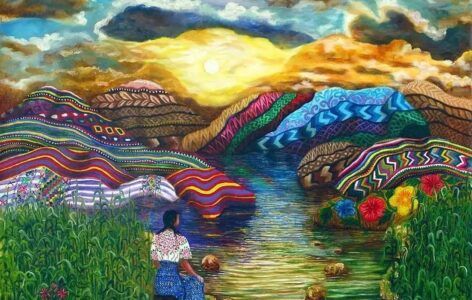
At this stage, growth requires more than favorable conditions. It requires attention.
Without it, even strong beginnings may weaken. Subtle changes in water, soil, or climate can affect development. For this reason, Andean traditions emphasize the importance of remaining present to what is growing.
It allows life to continue with stability.

A Form of Knowledge
In Andean cosmology, knowledge does not arise only from analysis.
It emerges through it to relationships. By observing carefully, people learn how the land communicates its needs.
Changes in color, texture, moisture, and rhythm provide information.
Through sustained attention, these signals become understandable. This form of knowing does not separate observation from participation.
To observe is already to engage with what is being observed.
Cultivating the Discipline of Attention
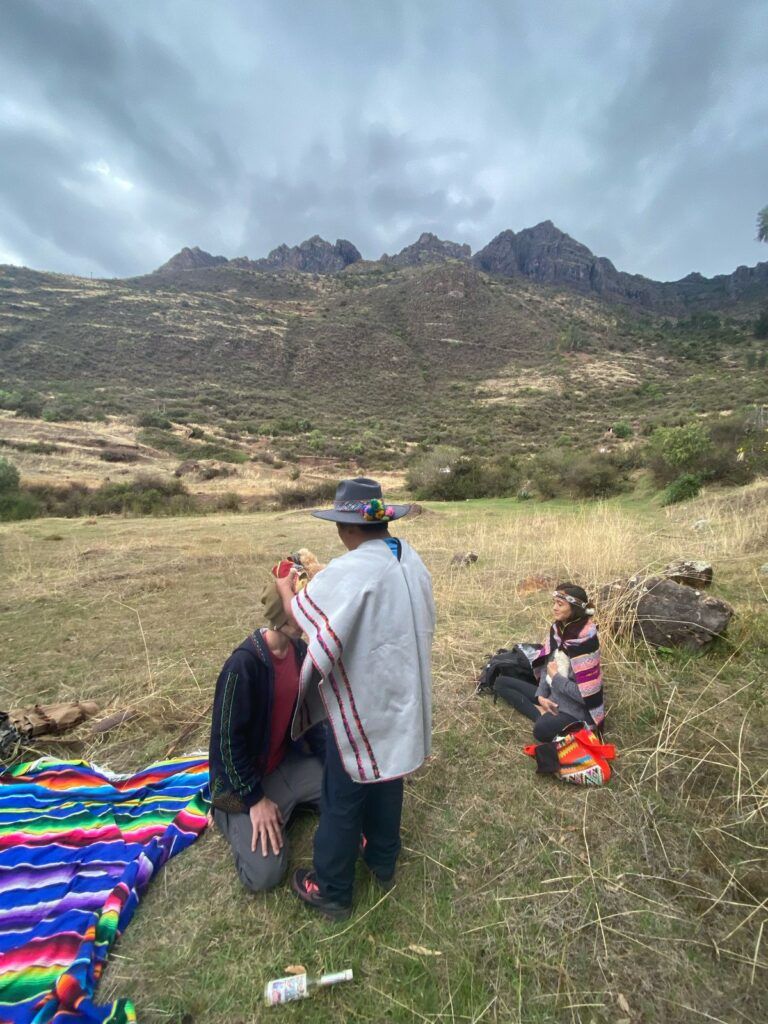
Attention is not passive. It requires discipline. Farmers walk through their fields regularly, returning to the same spaces to observe gradual changes over time.
By revisiting the same place, differences become visible. Growth patterns, irregularities, and subtle shifts can be recognized more easily.
This ongoing practice allows people to respond with precision rather than reaction.
Attention develops through consistency.
When Attention Guides Action

Action becomes more effective when it arises from attention.
Instead of acting based on assumption or urgency, people respond to what they have observed.
If soil becomes too compact, it can be loosened. If water accumulates excessively, it can be redirected. These actions do not impose change; they support existing processes.
Attention ensures that action remains aligned with what is actually happening.
Living With Attention
March teaches that growth is not sustained by movement alone, but by the quality of presence that accompanies it.
To live with attention means staying connected to the conditions that support life. It means recognizing that growth requires continuous awareness.
Through it, people remain in relationship with what is developing. They learn to see not only what is visible, but also what is changing.
In this way, attention becomes a form of care, a form of knowledge, and a way of sustaining life as it continues to grow.

References
- Allen, C. J. (2002). The hold life has: Coca and cultural identity in an Andean community. Smithsonian Institution Press.
- Urton, G. (1981). At the crossroads of the earth and the sky: An Andean cosmology. University of Texas Press.
- Rengifo Vásquez, G. (2001). La crianza de la chacra en los Andes. PRATEC – Proyecto Andino de Tecnologías Campesinas.
This article draws on both academic literature and oral, lineage-based Andean knowledge. Teachings that originate from living traditions are cited in recognition of their ongoing transmission within Andean communities, while scholarly sources are used to support contextual interpretation.