The Qhapaq Ñan, or the “Great Inca Road,” was more than a sophisticated network of stone-paved paths stretching across 30,000 kilometers of the Andes. For the Inca and their descendants, it remains a sacred artery connecting people, mountains, rivers, and the cosmos. To walk the Qhapaq Ñan was not merely an act of travel; it was a pilgrimage of healing, a path where the physical journey mirrored the inner journey of the soul.

The Sacred Spine of the Andes

The Qhapaq Ñan linked the four suyu (regions) of Tawantinsuyu: Chinchaysuyu, Antisuyu, Qollasuyu, and Kuntisuyu, converging in Cusco, the navel of the Inca world. Every route along this road connected not only communities but also huacas (sacred sites), apus (mountain spirits), and pachamama (the living earth). Walking it meant entering a dialogue with the land, honoring its power while receiving its medicine.
Pilgrims traveling the road often stopped at shrines, springs, and mountain passes, leaving offerings of coca leaves, chicha, or chicha morada. These acts symbolized reciprocity (ayni)—giving before receiving.
Pilgrimage as Healing Ritual
For the Andean people, healing was never separate from the journey. The physical challenge of altitude, weather, and terrain was a metaphor for inner obstacles: grief, illness, fear, or imbalance. Walking the Qhapaq Ñan demanded surrender, humility, and trust in Pachamama.

- Physical Healing: The body adapted to high altitudes, cleansing through sweat, breath, and endurance.
- Emotional Healing: The solitude of the road allowed pilgrims to release sorrow, supported by the vast silence of the Andes.
- Spiritual Healing: The encounter with sacred mountains (apus) offered blessings, guidance, and a sense of belonging to the cosmos.
Key Pilgrimage Routes of Qhapaq Ñan
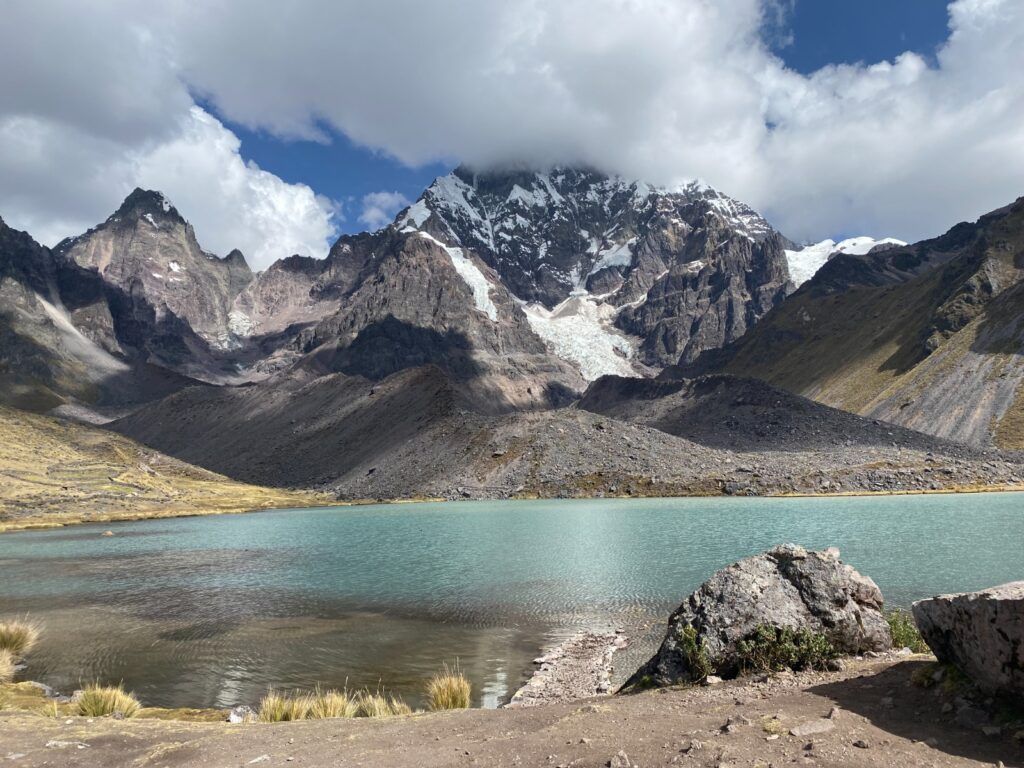
1. Cusco to Qollasuyu: The Path of the Apus
2. Cusco to Antisuyu: The Path of the Jungle
Leading into the lush Amazon basin, this road connected highland and lowland medicine traditions. Here, Andean healers exchanged knowledge with Amazonian shamans, bringing together mountain herbs and jungle plants, embodying the union of worlds.

3. The Qoyllur Rit’i Pilgrimage

Still practiced today, this pilgrimage honors El Señor de Qoyllur Rit’i, blending Catholic and Andean cosmologies. Thousands ascend to the Sinakara Glacier to dance, pray, and renew their connection with the apus. The ritual of climbing ice-covered peaks symbolizes the death of the old self and rebirth into new life.
The Symbolism of Walking
The act of walking the Qhapaq Ñan itself carried profound meaning:
- Each step was an offering to Pachamama.
- Breath aligned the pilgrim with the rhythm of the cosmos.
- Fatigue reminded the walker of humility and dependence on the land.
- Arrival at shrines signified transformation—no pilgrim returned as the same person who began the journey.
Walking was considered an embodied prayer, where the body became the temple and the road became the altar.
The Qhapaq Ñan Today: A Living Medicine
Though centuries have passed since the Inca Empire, the Qhapaq Ñan remains alive. Many Andean communities still walk these paths to honor their ancestors, perform rituals, and maintain connection with Pachamama. For modern seekers, retracing these routes can awaken deep memories of interconnectedness and healing.

Pilgrimage along the Qhapaq Ñan offers a profound reminder: healing is not only found in destinations, but in the sacred act of walking with intention.
The Qhapaq Ñan was never simply a road
It was a path of initiation.
Bibliography
- Bauer, B. S. (1998). The Sacred Landscape of the Inca: The Cusco Ceque System. University of Texas Press.
- D’Altroy, T. (2014). The Incas. Wiley-Blackwell.
- Hyslop, J. (1984). The Inka Road System. Academic Press.
- Reinhard, J. (1985). Sacred Mountains: An Ethno-archaeological Study of High Andean Ruins. Mountain Research and Development, 5(4), 299–317.
- Sherbondy, J. (1992). Water and Power: The Role of Irrigation Districts in the Transition from Inca to Spanish Cuzco. Society for American Archaeology.
- Allen, C. J. (2002). The Hold Life Has: Coca and Cultural Identity in an Andean Community. Smithsonian Institution Press.