
In Andean cosmology, fertility is not a biological event nor a metaphor for productivity. It is a sacred responsibility, held within the living body of Pacha Mama, the Earth understood not as land, but as a womb of continuous becoming.

February, still wet with rain and softened by saturation, is a moment when Pacha Mama is understood as actively gestating life. Nothing has fully arrived, yet everything is being prepared. Fertility at this stage does not demand visibility. It requires care, restraint, and ethical relationship.
Pacha Mama as a Living Womb
Pacha Mama is not a passive container of life. She is a sentient being, responsive to human behavior, seasonal rhythms, and ritual attention. Her fertility depends on reciprocity rather than extraction.

Andean cosmology teaches that what grows from Pacha Mama carries the imprint of how it was treated while forming. Seeds placed in the soil do not belong solely to those who plant them; they belong to a network of relationships that includes rain, mountains, ancestors, and time itself (Urton, 1981).
By entering February, we acknowledge that life still rests in the womb, even as it begins to make itself felt.
Fertility Beyond Productivity
In Western frameworks, fertility often implies output, growth, or measurable results. In Andean thought, fertility is relational and moral. It asks not what will emerge, but how we hold what is forming in relationship.
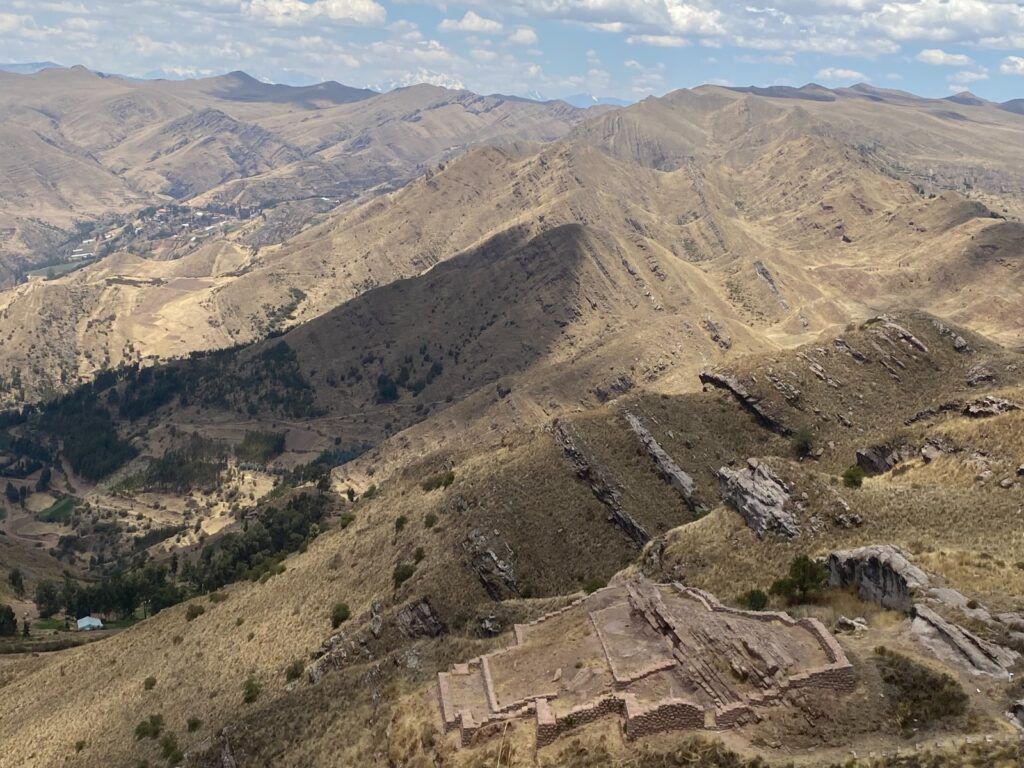
During February, Pacha Mama is not ready to release what she carries. She asks instead for:
- Respect for timing
- Protection of what is fragile
- Humility toward processes not yet visible
This understanding reframes fertility as custodianship, not control.
Rain as Gestational Force of Pacha Mama
Rain in February is not merely nourishing crops; it sustains the womb itself. Water maintains the softness necessary for life to continue forming without rupture. Excessive dryness or forced exposure is understood to damage fertility.
Human emotional life mirrors this process. Sensitivity, emotional fluidity, and vulnerability are not weaknesses during this time, they are signs that something is still gestating within the psyche and the body.

As Andean relational ontologies emphasize, humans do not stand outside these processes; they participate in them (de la Cadena, 2015).
Ethics of Care Toward What Is Becoming
To live February in alignment with Pacha Mama is to adopt an ethic of care toward what is forming:
- Not naming too early
- Not demanding certainty
- Not exposing what still needs darkness

When we force clarity or direction at this stage, we weaken what is emerging and invite imbalance. Fertility requires trust in invisibility.
This is why offerings, gratitude, and restraint are central during this time, not to accelerate life, but to protect it.
Becoming a Guardian of the Unseen
February asks humans to become guardians rather than actors. We support life not by pushing it forward, but by holding it in right relationship.
Pacha Mama’s womb teaches that life arrives when it is ready, not when it is demanded.
Fertility, in this sense, is not about beginnings.
It is about responsibility toward what has not yet emerged.

References
- Allen, C. J. (2002). The hold life has: Coca and cultural identity in an Andean community. Smithsonian Institution.
- de la Cadena, M. (2015). Earth beings: Ecologies of practice across Andean worlds. Duke University Press.
- Urton, G. (1981). At the crossroads of the earth and the sky: An Andean cosmology. University of Texas Press.
This article draws on both academic literature and oral, lineage-based Andean knowledge. This article cites teachings from living traditions to honor their ongoing transmission within Andean communities and uses scholarly sources to support contextual interpretation.