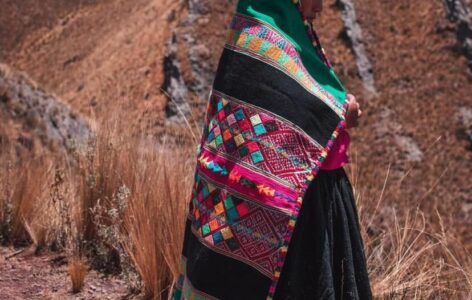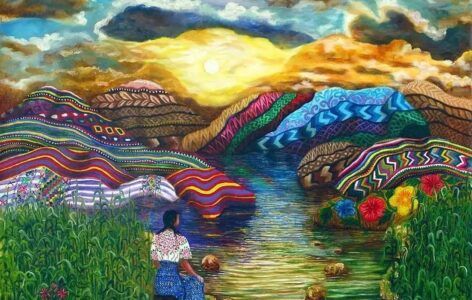
As March continues, the Andean landscape becomes increasingly active in balance. What first appeared as fragile emergence now expands, filling the fields with visible life. Plants grow taller, leaves widen, and the presence of life becomes undeniable.

Yet growth alone does not ensure continuity.
In Andean cosmology, sustained development depends on balance. Without it, growth can become unstable, vulnerable to disruption, or disconnected from the relationships that support it.
Balance allows life to continue without losing coherence.
Balance as Relationship
It is not understood as a fixed state. It is a dynamic relationship between multiple forces, rain and sun, soil and roots, human care and natural processes.
Each element contributes to maintaining equilibrium.

When rainfall becomes excessive, the soil may weaken. When it becomes scarce, growth may slow. Balance emerges through the constant interaction of these forces, adjusting over time.
In this way, balance is not something that is achieved once. It is something that must be continuously maintained.
Maintaining Balance Through Attention
Farmers in the Andes develop a careful awareness of how balance shifts throughout the season. They observe how plants respond to changing conditions and adjust their actions accordingly.
Small interventions, such as guiding water flow, protecting soil, or clearing space around plants, help maintain conditions that allow growth to continue. These actions do not dominate the land. They respond to it.
Balance, therefore, depends on the ability to notice subtle changes and respond with care.
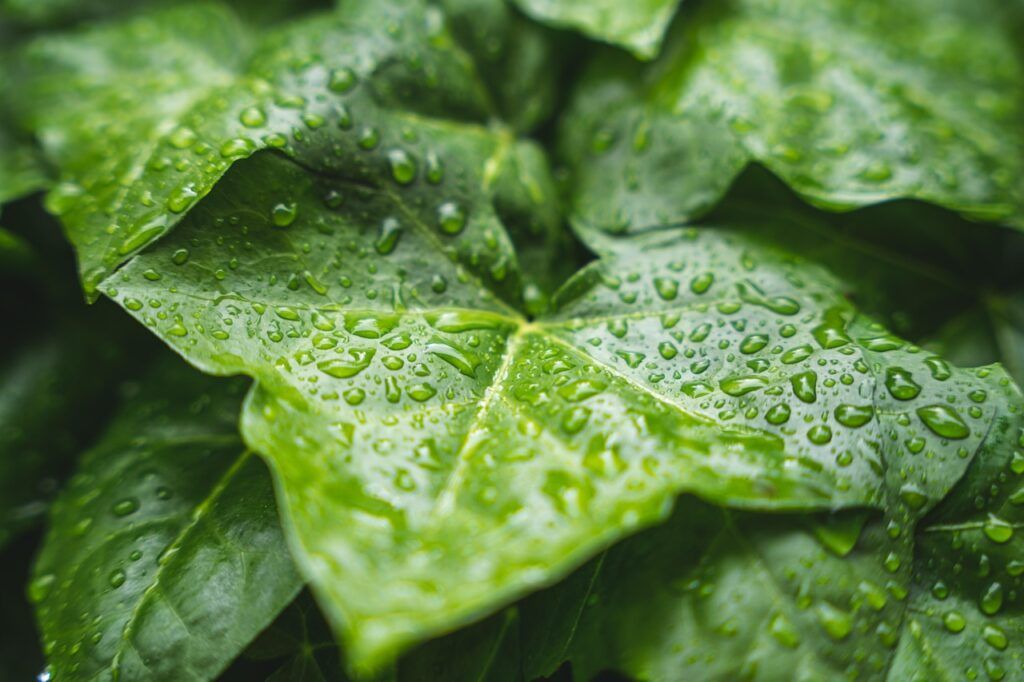
Imbalance as a Natural Signal
In this cosmology, imbalance is not necessarily seen as failure. It is often understood as a signal.
When plants weaken, when soil hardens, or when growth slows unexpectedly, these changes indicate that relationships require adjustment. Imbalance reveals where attention is needed.
Rather than reacting with urgency, Andean practices encourage observation. By understanding the source of imbalance, people can restore balance without creating further disruption.

Living Within Balance
March teaches that growth must remain connected to the conditions that sustain it. Expansion without balance may weaken what has been carefully cultivated.
To live within balance means staying aware of relationships at all times.
It means recognizing that growth depends not only on movement, but also on the harmony between all elements involved. Through this awareness, life continues to develop in a way that remains stable, resilient, and connected.
Balance, then, is not the absence of change.
It is the condition that allows change to continue.
References
- Allen, C. J. (2002). The hold life has: Coca and cultural identity in an Andean community. Smithsonian Institution Press.
- Gose, P. (1994). Deathly waters and hungry mountains: Agrarian ritual and class formation in an Andean town. University of Toronto Press.
- Rengifo Vásquez, G. (2001). La crianza de la chacra en los Andes. PRATEC – Proyecto Andino de Tecnologías Campesinas.
This article draws on both academic literature and oral, lineage-based Andean knowledge. Teachings that originate from living traditions are cited in recognition of their ongoing transmission within Andean communities, while scholarly sources are used to support contextual interpretation.