
In modern discourse, the nervous system is often framed as a mechanism to be controlled, regulated, or optimized.
From an Andean perspective, this view is incomplete.
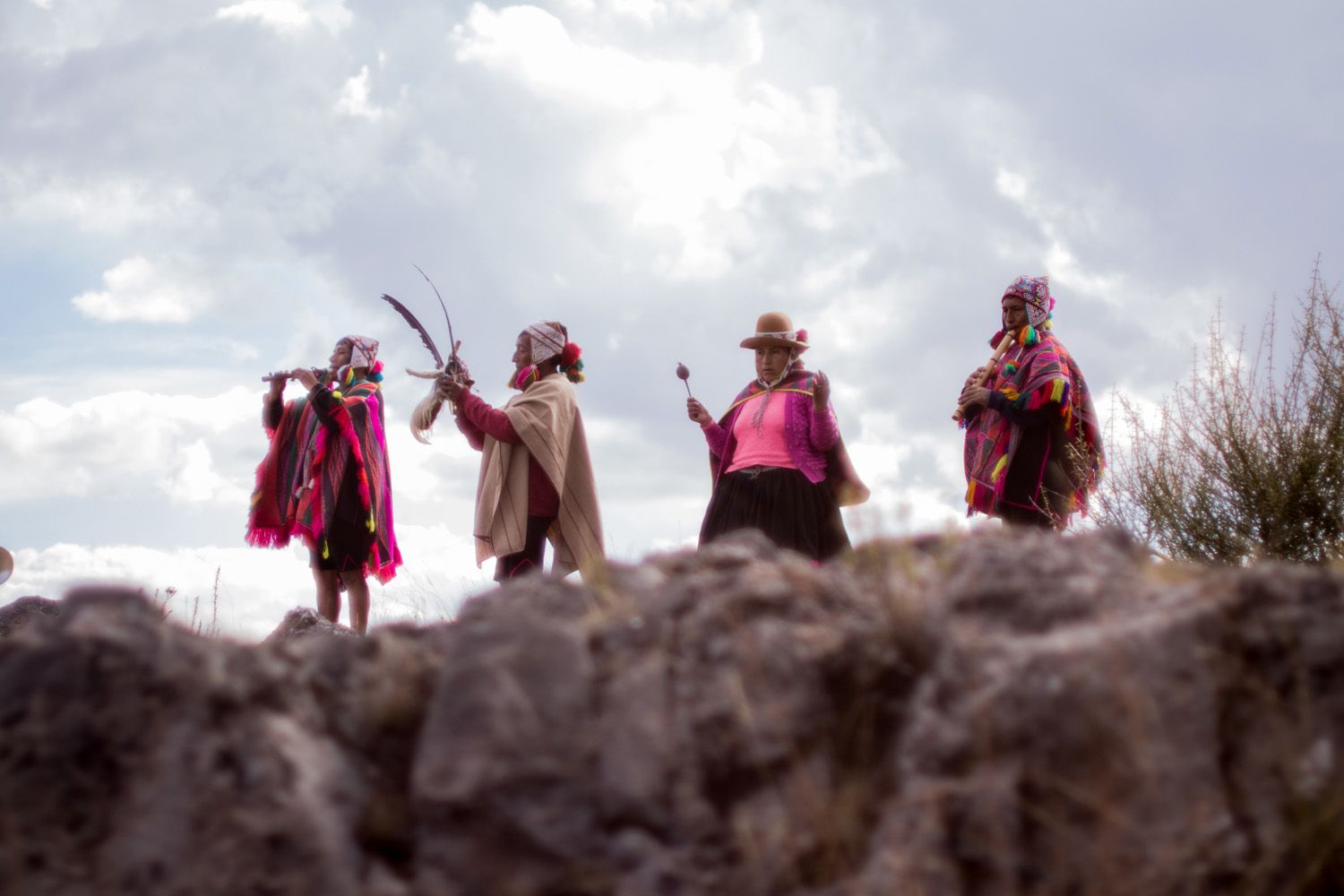
The nervous system is not merely biological circuitry it is a sacred landscape, a living terrain through which information, memory, spirit, and environment continuously flow.
Rather than asking how to calm the nervous system, Andean wisdom asks a deeper question: What is the nervous system responding to? (Estermann, 2013).
The Nervous System as Living Pacha
In Andean cosmology, all life unfolds within Pacha, a living field of time, space, and consciousness. This system functions as a micro‑Pacha, constantly interpreting and responding to relational cues from land, community, ancestry, and spirit.

States of activation or collapse are not errors. They are adaptive responses shaped by context and history (Gose, 1994).
Trauma as Disrupted Reciprocity
From an Andean lens, people understand trauma as more than an individual psychological wound. It is a rupture of Ayni, the principle of sacred reciprocity.

When violence, displacement, neglect, or chronic stress break reciprocity, this system reorganizes around survival. Hypervigilance, shutdown, and dissociation become strategies, not pathologies (Bastien, 1985).
Ancestral and Territorial Imprints
The nervous system does not develop in isolation. It is shaped by ancestral memory and territorial experience.
Colonization, extraction, and ritual deprivation dysregulate the bodies that inhabit the land. The body, as an extension of Pachamama, carries these imprints in neural patterning, muscle tone, and breath (Rengifo Vásquez, 2003).
Beyond Regulation: Restoring Relationship
Many modern approaches focus on regulating the nervous system back into a tolerable range. While useful, regulation alone is insufficient.
Andean healing seeks re‑relationship, restoring dialogue between this system and the living world. Ceremony, rhythm, prayer, movement, and offerings re‑establish safety through belonging rather than control.

Safety as Belonging
From this view, safety is not an internal state to be manufactured. It emerges naturally when the nervous system senses connection, meaning, and place.
The body settles not because it is forced to relax, but because it remembers it is held, by community, by land, by spirit.
The Nervous System as Teacher

When honored as a sacred landscape, the nervous system becomes a guide rather than an obstacle.
Its signals are not interruptions to spiritual practice; they are the practice itself.
Listening replaces overriding. Relationship replaces domination.
To walk the Andean path is to learn how to tend this inner landscape with humility and reverence.
Healing, then, is not the silencing of this system, it is the restoration of sacred dialogue.
References
- Bastien, J. W. (1985). Mountain of the condor: Metaphor and ritual in an Andean ayllu. Waveland Press.
- Estermann, J. (2013). Andean philosophy: A reader. University of New Mexico Press.
- Gose, P. (1994). Deathly waters and hungry mountains: Agrarian ritual and class formation in an Andean town. University of Toronto Press.
- Rengifo Vásquez, G. (2003). La crianza de la chacra en los Andes. PRATEC.