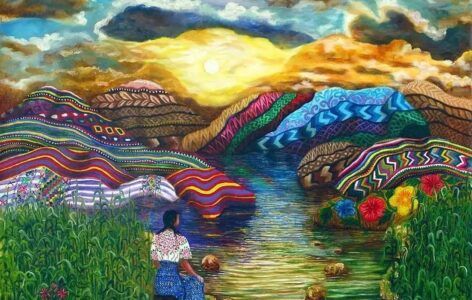
In the Andean calendar, January marks the moment when water reclaims its voice. The rains arrive not as background weather, but as presence active, relational, and alive. This is the time when Mama Cocha, the Great Mother of Waters, awakens the land and restores movement to what has grown dry or rigid.

In Andean cosmology, water is not an element to be managed. Unu is a being with memory, agency, and consciousness.
When the rains fall across the Andes from the highlands of Cusco to the terraces of the Sacred Valley they initiate a seasonal conversation between sky, earth, and human life.
Who Is Mama Cocha?
Mama Cocha embodies all waters: oceans, rivers, lakes, springs, rain, blood, tears, and amniotic fluid.

She governs:
- Emotional flow
- Fertility and gestation
- Memory carried through lineage and land
Unlike Western frameworks that separate emotion from knowledge, Andean tradition understands water as a carrier of intelligence. Every body of water holds stories of the mountains it touched, the prayers spoken nearby, and the ancestors who crossed it.
To relate to Mama Cocha is to recognize that feeling is a form of knowing.
January Rains as Ancestral Activation
When January rains saturate the land, they do more than nourish crops. They activate ancestral memory embedded in soil, stone, and seed. In Andean understanding, water awakens what rests in Uku Pacha, the inner and ancestral realm.
This activation often manifests through:
- Heightened emotional sensitivity
- Vivid or symbolic dreams
- Waves of grief or joy without clear cause

Rather than pathologizing these experiences, Andean wisdom interprets them as signs that memory is moving.
Water does not erase the past it brings it into motion so it can be integrated.
Mama cocha as a Bridge
In Andean cosmology, water travels freely between the Three Worlds:
- Uku Pacha – the inner, subterranean, and ancestral realm
- Kay Pacha – the world of embodied human experience
- Hanaq Pacha – the celestial and cosmic realm

During January, increased rainfall thins the boundaries between these realms. Water carries messages upward and downward, translating what words cannot.
This movement explains why January often feels liminal like standing between what has been and what has not yet taken form.
Emotional Release as Sacred Cleansing
In Andean tradition, people do not treat emotional release as weakness. They recognize it as cleansing.
Tears mirror rain. Both soften hardened ground.
Suppressing emotion during this season disrupts the natural flow of Unu and can generate hucha, heavy or stagnant energy that accumulates in the body and psyche. Allowing feeling, however, restores circulation and balance.

In this way, emotional honesty becomes a spiritual practice.
Relating to Mama Cocha in Daily Life
Honoring Mama Cocha in January does not require elaborate ceremony. Relationship grows through simple, intentional acts:
- Offering gratitude to rivers, lakes, or rain
- Bathing or washing hands with conscious presence
- Listening to water without distraction
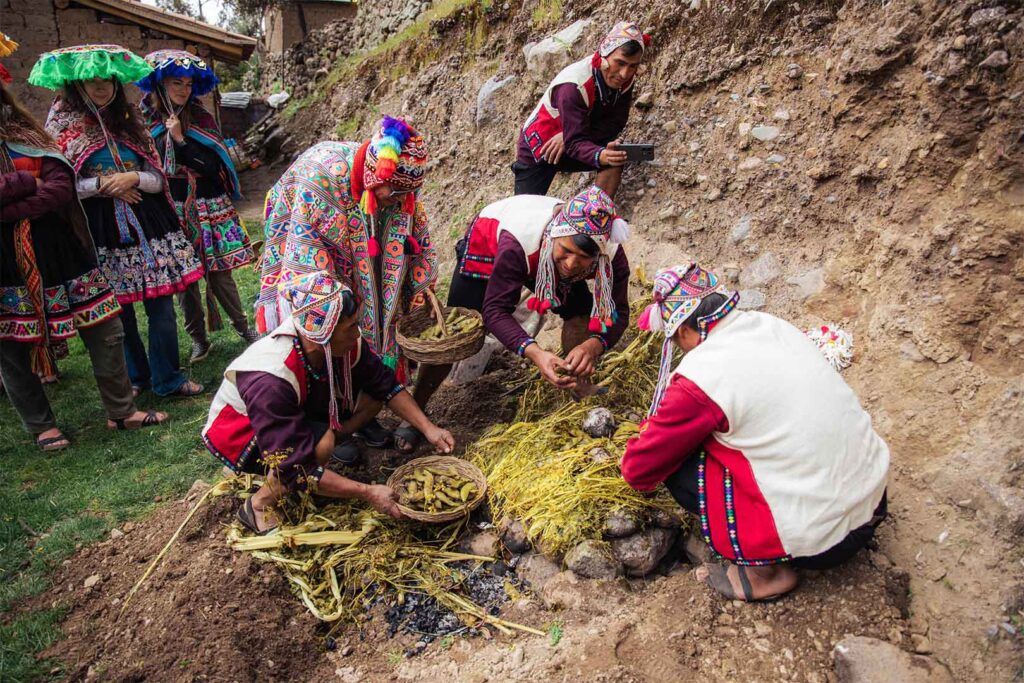
These gestures reestablish ayni, sacred reciprocity, with the waters that sustain all life.
When people restore relationship with water, they often find their emotional world reorganizing naturally.
January as a Month of Fluid Intelligence
January teaches that clarity does not always come through structure or effort. Sometimes clarity emerges through movement, feeling, and release.
Mama Cocha reminds us that water does not resist obstacles, it reshapes them.
To walk with January is to trust that what feels overwhelming may actually be repatterning, guided by a wisdom older than thought.
References
- Allen, C. J. (2002). The hold life has: Coca and cultural identity in an Andean community. Smithsonian Institution Press.
- Bastien, J. W. (1985). Mountain of the condor: Metaphor and ritual in an Andean ayllu. Waveland Press.
- Isbell, B. J. (1978). To defend ourselves: Ecology and ritual in an Andean village. University of Texas Press.
- Urton, G. (1981). At the crossroads of the earth and the sky: An Andean cosmology. University of Texas Press.