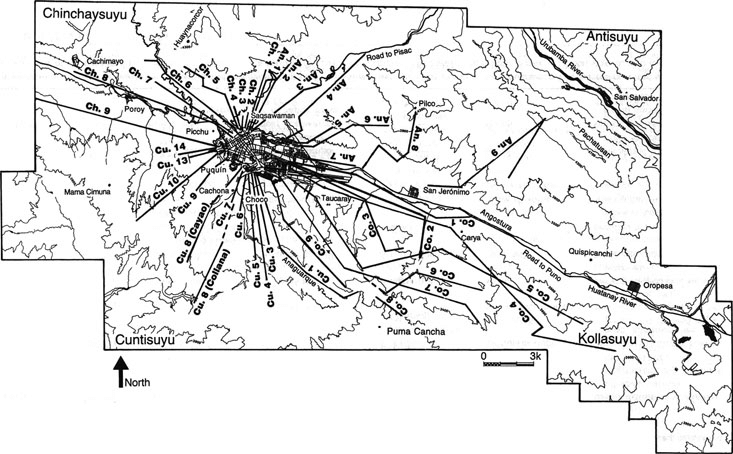
To walk through the historic streets of Cusco during late May is to walk inside a giant, stone-carved radio transmitter. In the Western paradigm, a city is organized for commerce, transport, and practical living. For the Incas, however, the capital served as the Navel of the World ,Qosqo. A sacred center from which 41 invisible lines of spiritual force, known as the Ceque System, radiated outward into the four quarters of the empire.
During the crisp, this energetic grid undergoes its most critical annual alignment, acting as a massive distribution network for the spiritual essence of the harvest.
The Geometry of Shared Vitality in Ceque System
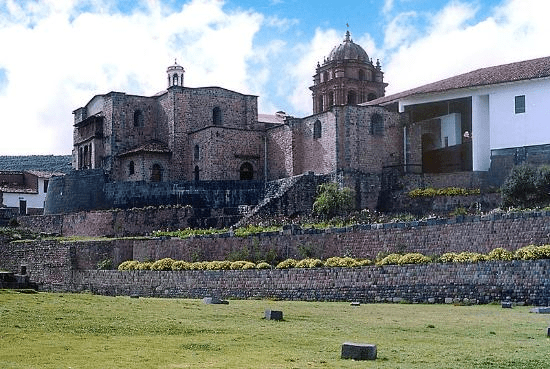
The heart of this system is the Coricancha (The Temple of the Sun). From this golden temple, the 41 ceques stretched out across the landscape like spokes on a wheel, connecting more than 328 huacas.
In late May, as individual communities finish collecting their corn and potatoes, they do not intend to keep the energy of these crops isolated.
Through the ceque lines, the physical and spiritual abundance of the outer provinces flows back into the central heart of Cusco. Here the Coricancha balances and radiates it back out to bless the sleeping earth.
In the Andean worldview, no community harvests for itself alone. A family working a plot of land in the Sacred Valley is energetically linked to the temples of the city and the highest Apus. The ceque lines are the energetic capillaries of a living. Ceque Lines are the breathing landscape, ensuring that the Sami flows smoothly without stagnant blocks.
The Spiritual Maintenance of the Grid
During May, specific families, Ayllus, hold the ancestral responsibility of maintaining and clearing the paths of their designated ceque lines. This involves performing small Haywarikuy at the huacas along the route.
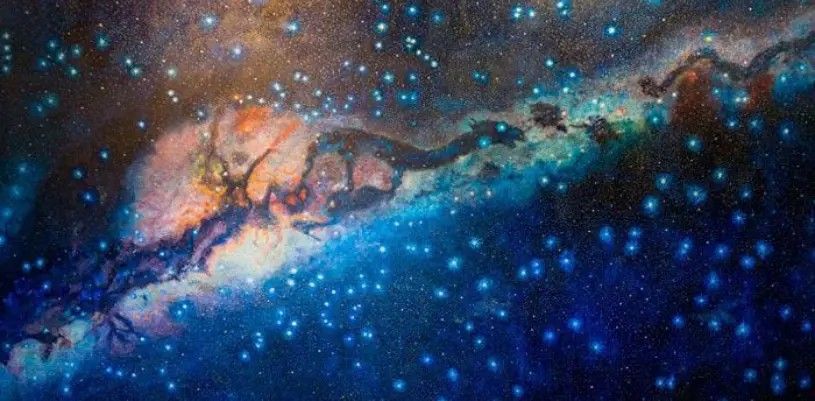
Under clear, early-setting May skies, practitioners use these lines to track the rising Pleiades (Qollqa) and the Milky Way, the celestial river (Mayu). By aligning the physical landscape with these stellar rivers, they synchronize human life with cosmic time.
“The Ceque System shows us that space is never empty. Every stone, every spring, and every mountain ridge is a node in a vast psychic web. To heal the self, one must understand their position within this living geography.”
— The Grid of the Sacred Capital
The Paths of Light
- Ceque: A line, path, or boundary. Mystically, it refers to the energetic ley lines that structure the sacred geography of the Andes.
- Huaca: Any object or location that holds a concentrated density of sacred energy: a rock, a spring, a tree, or an ancient wall.
- Chumpi: A belt or energetic band. Healers often use the concept of ceques to map the internal energetic belts (Chumpis) within the human body.
Mystical Geometry of Ceques:
To connect with the matrix of the ceques in late May, one must visit the primary terminals of this network:
- The Curved Wall of the Coricancha: The precision of the stonework here was designed to channel both seismic and spiritual vibrations. Standing near the exterior wall during a clear May morning allows one to experience the absolute anchoring power of the Incan center.
- The Megaliths of Sacsayhuaman: Serving as the northern crown of the city’s grid, the zigzag walls of this fortress represent the teeth of the Puma. In late May, the stones absorb the crisp daytime heat and radiate it into the cold evening, acting as physical batteries for the city’s protective energy.
References
- Bauer, B. S. (1998). The Sacred Landscape of the Inca: The Cusco Ceque System.
- Hyslop, J. (1990). Inka Settlement Planning.
- Zuidema, R. T. (1977). The Inca Calendar. In Native American Astronomy.
This article draws on both academic literature and oral, lineage-based Andean knowledge. Teachings that originate from living traditions are cited in recognition of their ongoing transmission within Andean communities, while scholarly sources are used to support contextual interpretation.