In the Andean world, sami refers to the light, refined, and harmonious form of living energy that nourishes body, spirit, and land. Quechua-speaking peoples distinguish between sami (subtle, luminous energy) and hucha (dense, heavy energy).
Unlike Western frameworks that often divide reality into body, mind, and spirit, the Andean perspective sees energy as a continuum of life, flowing through all beings. Sami sustains this flow, like sunlight permeating the fields and waters of the Andes.

Sami as a Gift of Pachamama and the Apus

Farmers receive sami when they offer coca leaves to the earth before planting; healers draw it from springs and mountains to restore balance in their communities. Sami is not simply “positive energy,” but a sacred vitality that aligns the individual with the larger cosmic order.
Practices to Cultivate Sami
Despacho Ceremonies

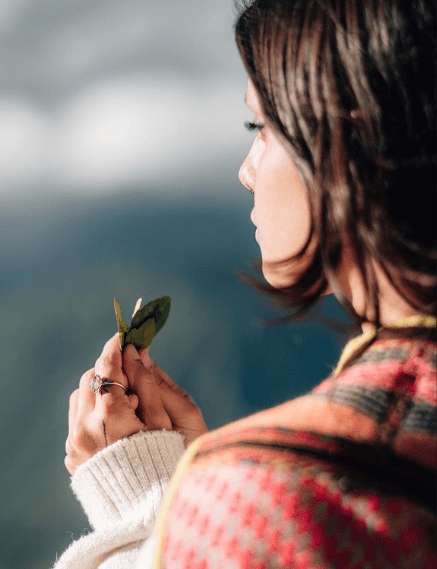
During a despacho, practitioners arrange offerings of coca leaves, flowers, silver, corn, and sweets in a ritual bundle. When they blow prayers into the coca leaves, they infuse the offering with it, sending gratitude to Pachamama and inviting reciprocity.
Breathwork and Qhaqoy
Healers also cultivate sami through Andean breathwork (samiy or qhaqoy). By breathing consciously with the land—exhaling dense energy and inhaling it from mountains, rivers, or the sky—participants realign their bodies with the flow of kawsay (living energy).
Sacred Landscapes as Sources
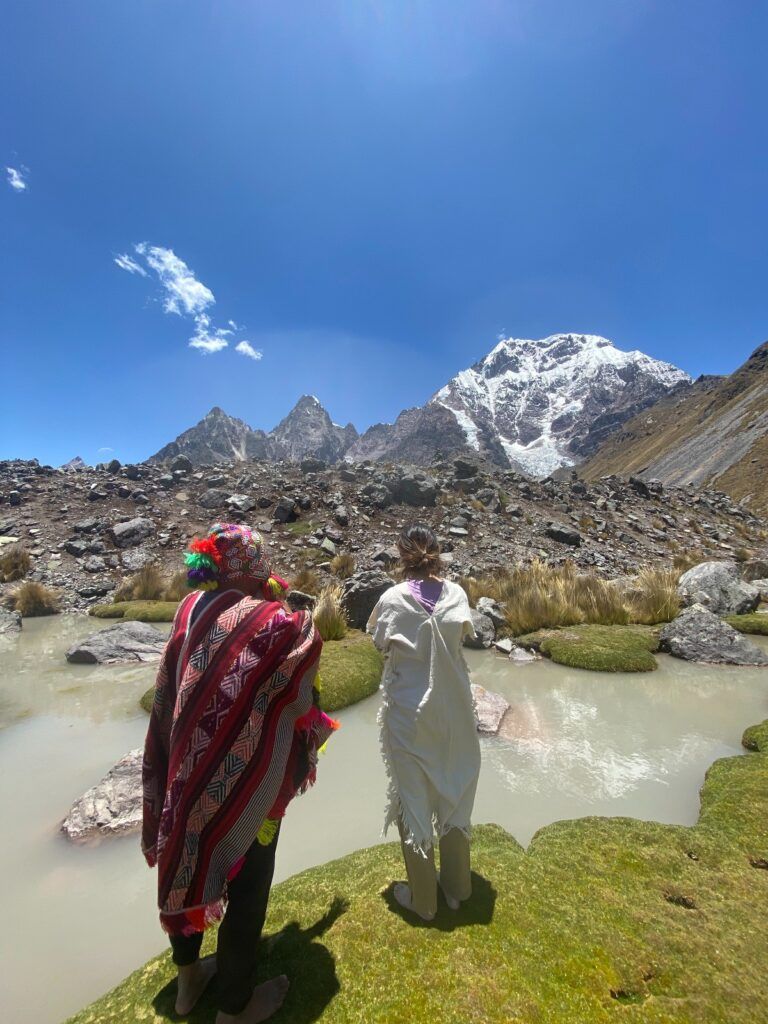
Pilgrimage sites such as Ausangate or Qoyllur Rit’i are revered as fountains of sami. Pilgrims ascend mountains not only for physical endurance but to bathe in the radiant energy of glaciers, stars, and sacred fire.
Sami and Healing
Andean healers view illness not as a purely biological dysfunction but as an energetic imbalance—an accumulation of hucha (dense energy). Healing involves transforming hucha into sami. For example, during a limpia (cleansing ritual), a healer may pass herbs, stones, or an egg over the body, asking Pachamama to absorb hucha and return it to the patient.

Women, especially, have been seen as carriers of it because of their connection to fertility, moon cycles, and the womb as a vessel of life force. In ceremonies, women often channel sami through song, weaving, and offerings, embodying the balance of receptivity and creative power.
Sami in Daily Life
The Andean approach reminds us that sami is not reserved for ceremonies alone. People cultivate it by living in ayni—sharing food with neighbors, caring for the land, honoring ancestors, and practicing gratitude. Every act of reciprocity strengthens the flow of it.
Why it Matters Today
In a world burdened by stress, disconnection, and exploitation of nature, sami offers an alternative vision of health and spirituality. It calls us to see energy not as abstract, but as a living thread binding us to Pachamama, our communities, and ourselves. To live with it is to live in balance—receiving, giving, and walking with lightness.
References
- Allen, C. J. (1988). The Hold Life Has: Coca and Cultural Identity in an Andean Community. Smithsonian Institution Press.
- Bastien, J. (1985). Mountain of the Condor: Metaphor and Ritual in an Andean Ayllu. Waveland Press.
- Classen, C. (1993). Inca Cosmology and the Human Body. University of Utah Press.
- Joralemon, D. (1990). The Selling of the Andean Soul: Shamanism and Global Commerce. Anthropological Quarterly, 63(2).
- Van den Berg, H. (1990). La cosmovisión andina y su vigencia. Cuzco: Centro Bartolomé de Las Casas.