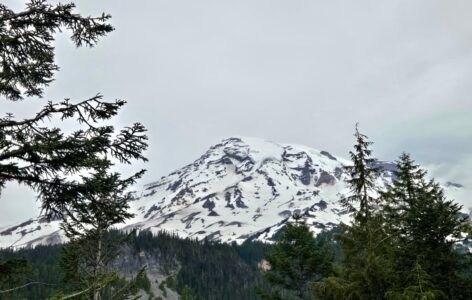
In the Western world, people often view an offering as a sacrifice or a superstition. In the Andean cosmovision, however, the Despacho is a highly sophisticated technological act of energetic realignment.
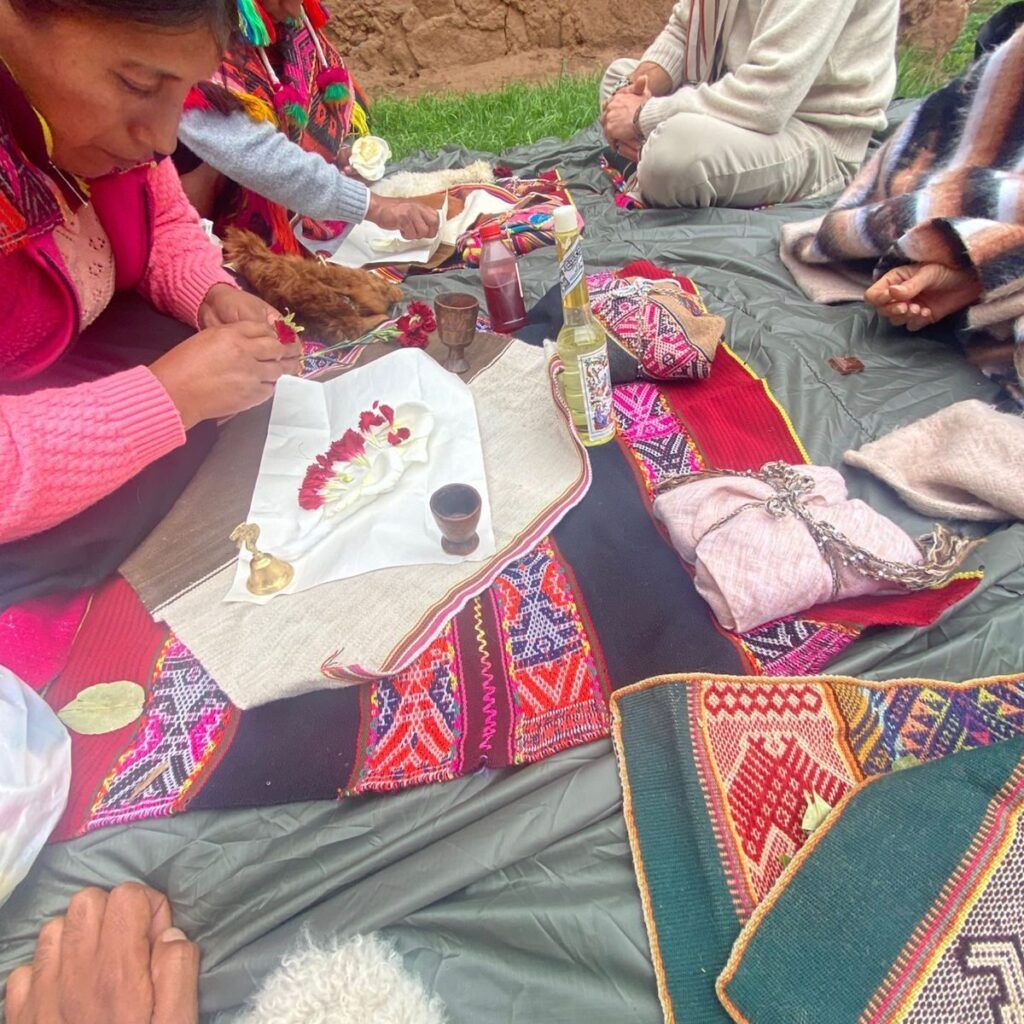
In late May, as the earth enters its winter rest, the Despacho becomes an essential tool to return Ayni (sacred reciprocity) to the land that has just provided a year’s worth of food.
The Unwritten Canvas of the Universe
When a Paqo (Andean priest) sits down to prepare an offering in May, they are acting as a divine architect. The boundaries of the paper represent the energetic limits of the community or the individual’s psyche.
Every Despacho begins on a plain white sheet of paper, known as the Q’entu. This white space represents the Hanaq Pacha, the unmanifested, pure potentiality of the cosmos before form is created.
Every element placed upon this canvas is a word in a silent language, spoken directly to the energetic fabric of reality (Kawsaypacha).
The Layering of Reality in the Despacho
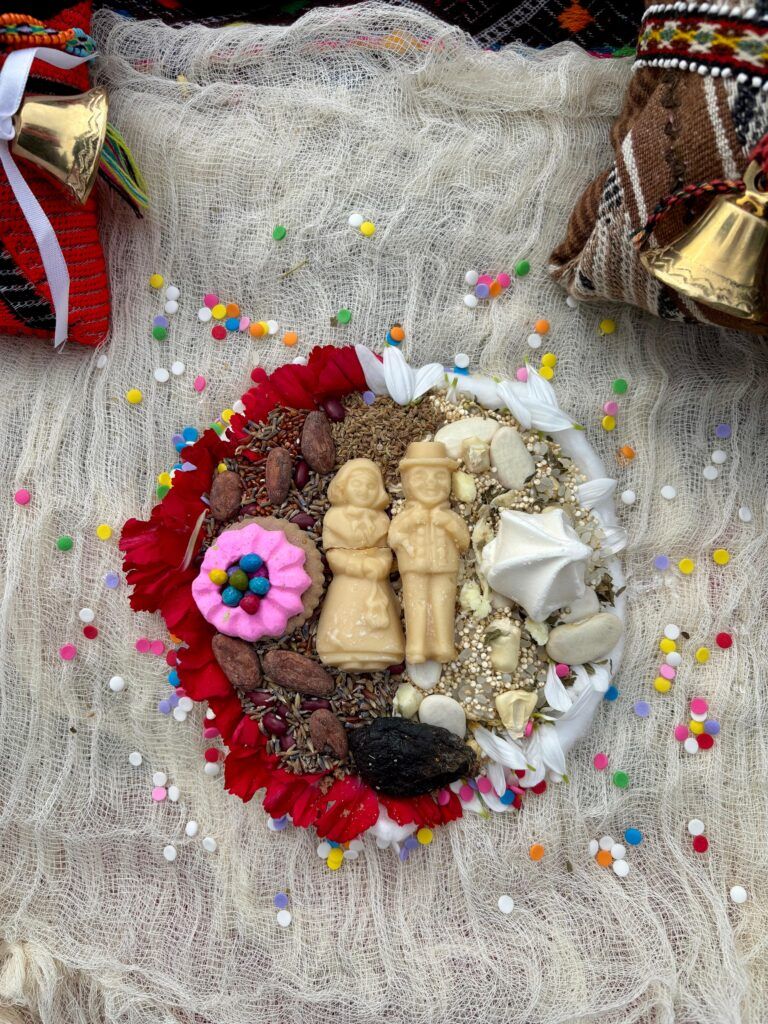
The construction of a May Despacho follows a strict, layered cosmology that mirrors the evolutionary journey of the human soul:

- The Foundation of Sweetness: First, we lay down a bed of sugar and sweet candies. This is an act of pure Allpa (nourishment). It is a direct gift to the Pachamama, soothing the earth after the heavy disruption of the harvest. It sends a message of gratitude: “You have fed us sweetness, and we return sweetness to you.”
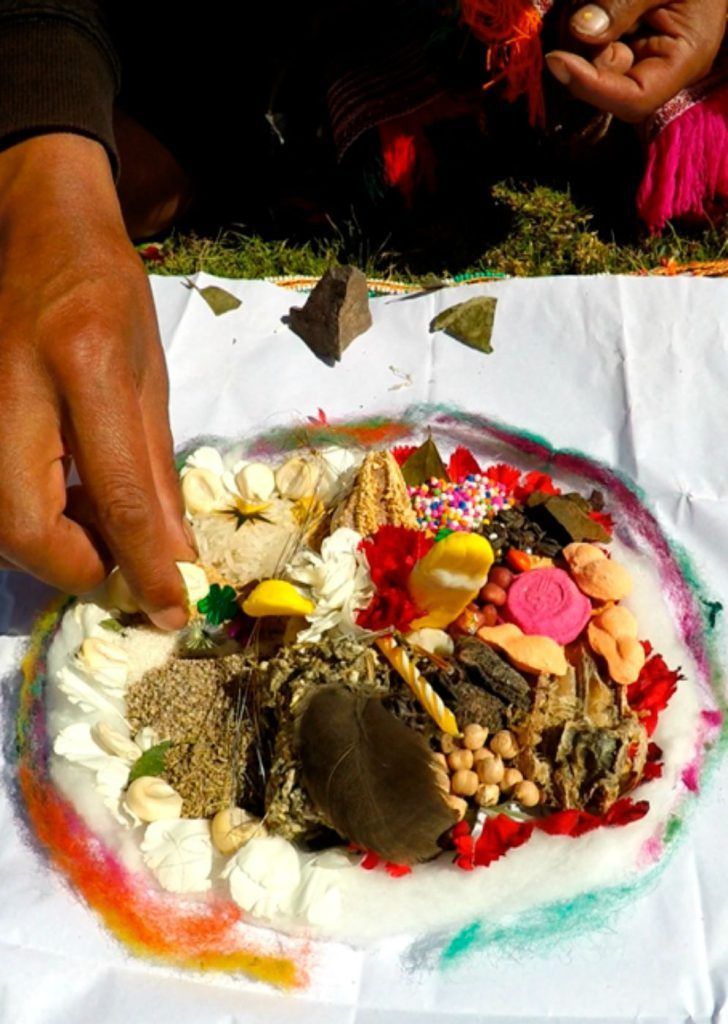
- The Quintu (The Trinity of Breath): At the heart of the offering are the K’intus—groups of three intact, pristine coca leaves held between the fingertips. The practitioner blows their Samay (ritual breath) into the leaves, infusing them with their Munay (love), Yachay (wisdom), and Llank’ay (action). These leaves act as data-storage units, holding the exact vibrational frequency of the practitioner’s prayers.
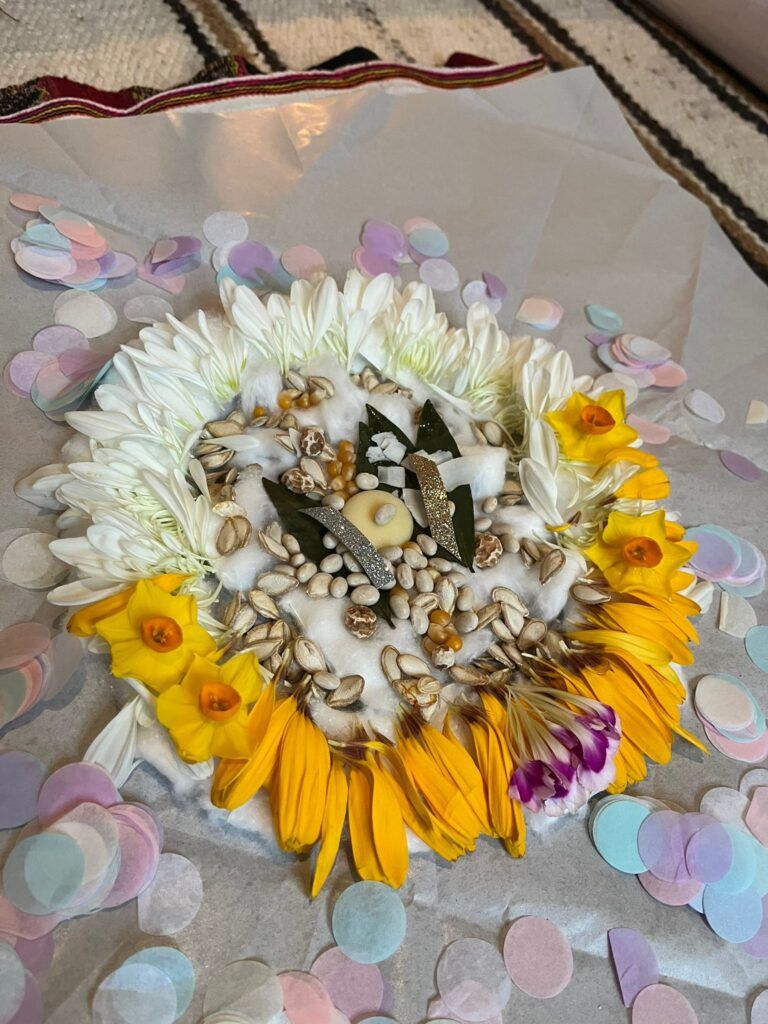
- The Elements of Abundance: Next, people place seeds of corn, quinoa, and beans on top as elements of abundance.In late May, these are not just food; they are Ispallas (the spirits of the seeds). By placing them in the Despacho, the practitioner physically manifests their hopes for future fertility, ensuring that the life force remains dormant but protected through the freezing winter nights.
The ritual culminates in the burning or burying of the offering. When the Despacho is consumed by fire (Nina), the physical elements are transmuted into pure Sami (refined, light energy), rising up to the Apus as a fragrant cloud of smoke, a direct, energetic conversation between the human heart and the mountain peaks.
“The Despacho is a mirror. If your mind is chaotic, your offering will be disorganized. If your intent is pure, the elements will weave together to create an energetic shield that protects the soul during the seasonal darkness of May.”
The Geometry of Prayer in the Despacho
- Haywarikuy: The correct, ancestral Quechua term for the act of presenting an offering (commonly called Despacho today).
- K’intu: A sacred configuration of three coca leaves, representing the union of the three Andean worlds (Uku, Kay, and Hanaq Pacha).
- Sami: Light, refined, and organizing energy. This is what the Despacho produces once it is ritually activated.
The Altar Spaces
In late May, specific locations in the Cusco region act as natural magnifying glasses for the energy of a Despacho:
- Tambomachay: Known as the Temple of Water, this site sits at the gateway to the high Punas. Performing an offering here in May allows the practitioner to give thanks to the subterranean waters that sustained the crops before they freeze over.
- The Base of Apu Mama Simona: Located on the outskirts of Cusco, this mountain represents maternal protection and feminine wisdom. Making a Haywarikuy here at the end of May helps in anchoring the nurturing energy needed to survive the emotional winter.
References
- Silverblatt, I. (1987). Moon, Sun, and Witches: Gender Ideologies and Class in Inca and Colonial Peru. Princeton University Press.
- Classen, C. (1993). Inca Cosmology and the Human Body. Academic Press.
- Isbell, B. J. (1978). To Defend Ourselves: Ecology and Ritual in an Andean Village. University of Texas Press.
This article draws on both academic literature and oral, lineage-based Andean knowledge. Teachings that originate from living traditions are cited in recognition of their ongoing transmission within Andean communities, while scholarly sources are used to support contextual interpretation.