
As June draws to a close, the freezing Andean nights achieve an almost supernatural transparency. With the solstice behind us, the sky transforms into a vast, glittering tapestry of light and dark. In the framework of Andean astral knowledge, this starry canopy is not a collection of random, distant gas spheres. It is the Astral Quipu, a cosmic record-keeping system. Here every star represents a knot of light holding a specific frequency of destiny and memory.
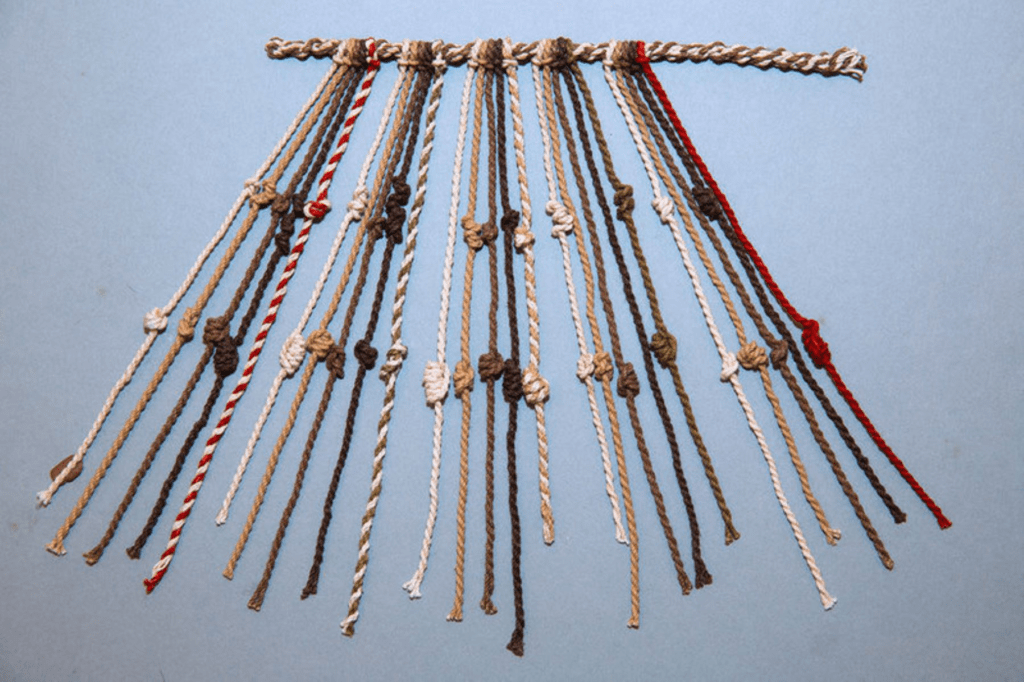
During these final nights of June, the Paqo reads these celestial knots to track the deep evolutionary currents of the human collective.
Reading the Astral Cloud Anchors
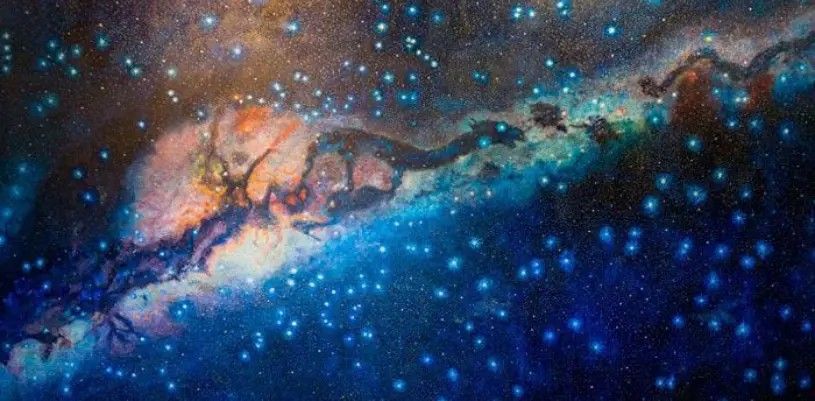
Unlike Western astrological systems that rely almost entirely on bright constellations.
Andean astral knowledge places profound spiritual emphasis on the Pachatira, the dark cloud constellations (Yana Phuyu) that sit inside the luminous bands of the Milky Way.
The ancestors realized that the void holds as much intelligence as the light.
During late June, these dark silhouettes reach their highest, most visible positions on the horizon. The great celestial Llama (Urcuchillay), the protective Toad (Hamp’atu), and the stealthy Puma (Uturunku) freeze in perfect clarity against the silver galactic backdrop.
To interact with these shapes is to practice Qonqay, the deliberate act of unlearning your small, personal narrative to remember your cosmic origin. By tracking the movement of these dark spaces across the midnight sky, the practitioner discovers where their own energy is congested and where it needs to flow freely to align with the universe.
The Return of the Creators
The absolute anchor of this stellar system in late June is the rising of the Qollqa.
Having emerged from their brief period of invisibility, the Pleiades now sit high and proud in the early morning sky.
The Incas viewed this cluster as the universal storehouse of creation:
The maternal womb that preserves the archetypal seeds of all things on earth.
When you look up at the Qollqa in late June, you are not just stargazing.
You are witnessing the re-opening of the cosmic vaults. The stars pour down a crisp, refreshing current of Sami that reorganizes our mental structures, shattering our self-imposed limitations and giving us the clear vision required to co-create our reality for the coming year.

“The stars do not force your path; they weave it. When you learn to read the dark knots of the sky, you stop fighting the wind and begin to ride the cosmic current.”
Astral Language of the Cosmos
- Yana Phuyu: The dark cloud constellations formed by interstellar dust lanes within the Milky Way. They represent the primal, unmanifested potential of nature.
- Qollqa: The Pleiades star cluster. It translates literally to “storehouse” or “granary,” symbolizing the preservation of spiritual and physical sustenance.
- Mayu: The celestial river (the Milky Way), viewed as the ultimate conduit of spiritual water that feeds the earth.
The Observatories of Stone
To engage deeply with Andean astral knowledge during the crisp nights of late June, two specific ancient observatories offer an unblocked connection to the stellar matrix:
- The Muyuqmarka of Sacsayhuamán: This circular stone tower foundation sits above Cusco. The concentric rings act as a physical lens, stabilizing your physical sight as you track the rotation of the Milky Way across the midnight sky.
- The Intimachay of Machu Picchu: A specialized cave sanctuary with a window that captures the solstice sun, this space also frames the precise early-morning rising of the Qollqa in late June, acting as a bridge between solar fire and stellar water.

References
- Urton, G. (1981). At the Crossroads of the Earth and the Sky: An Andean Cosmology.
- Zuidema, R. T. (1982). The Sidereal Lunar Calendar of the Incas. In Archaeoastronomy in the New World.
This article draws on both academic literature and oral, lineage-based Andean knowledge. Teachings that originate from living traditions are cited in recognition of their ongoing transmission within Andean communities, while scholarly sources are used to support contextual interpretation.