The Earth is not static, she breathes, feels, and moves. In the Andean world, Pachamama is a living, responsive being, and what we call “weather” is often understood as the emotional climate of the planet. Rain, wind, fog, and storms are expressions of the Earth’s shifting kawsay.
To understand the pulse of Pachamama is to learn how the Earth communicates her moods, warnings, and blessings.
Pachamama is kind and tolerant
Weather as Emotional Expression
Anthropologist Inge Bolin (1998) explains that Andean people perceive natural events as part of a “social relationship with the Earth.” Weather patterns are not random but messages — signs of harmony, imbalance, or transition.
This is not superstition but energetic attunement, the capacity to feel the field of the Earth as it changes.
Practices for Reading Earth’s Emotional Weather
1. Wind Listening (Wayra T’ikariy)
Stand facing the wind. Let it touch your palms and chest. Notice: Is it sharp? playful? warm? erratic? Each quality reflects a movement in Pachamama’s emotional field.
2. Rain Communion
Allow a few drops of rain on your hands. Ask internally: What are you giving? What are you asking? Rain often brings sami and emotional release.
3. Ground Pulse Meditation
Sit with your back against a tree or stone. Feel the subtle vibration of the Earth’s heartbeat.
In the high Andes, the sky is not empty space, it is a living field of consciousness, a vast expanse where humans, spirits, and celestial beings meet.
Among these sky-spirits, none is more revered than the kuntur, the Andean condor.
Known as the messenger of Hanan Pacha (the Upper World), the condor symbolizes expansion, clarity, and the ability to see life from a higher perspective.
To breathe like the condor is to awaken a spacious awareness that dissolves fear and connects you to your soul’s wider horizon.
Andean communities describe the condor not only as a bird, but as a guardian force that teaches humans how to rise above emotional density (hucha) and open to sami, the refined energy of the mountains (Bastien, 1985).
The condor’s enormous wings are understood as extensions of consciousness; its flight is a ritual in itself, a reminder that clarity requires altitude.
This is why many Andean initiations begin by facing the sky and “calling the condor.”
The Breath of the Condor
CondorBreathing (Kuntur Ñawi Samay) is an ancient technique used to elevate consciousness. It works by expanding the chest, diaphragm, and energetic field, mimicking the condor’s broad wings.
Practice
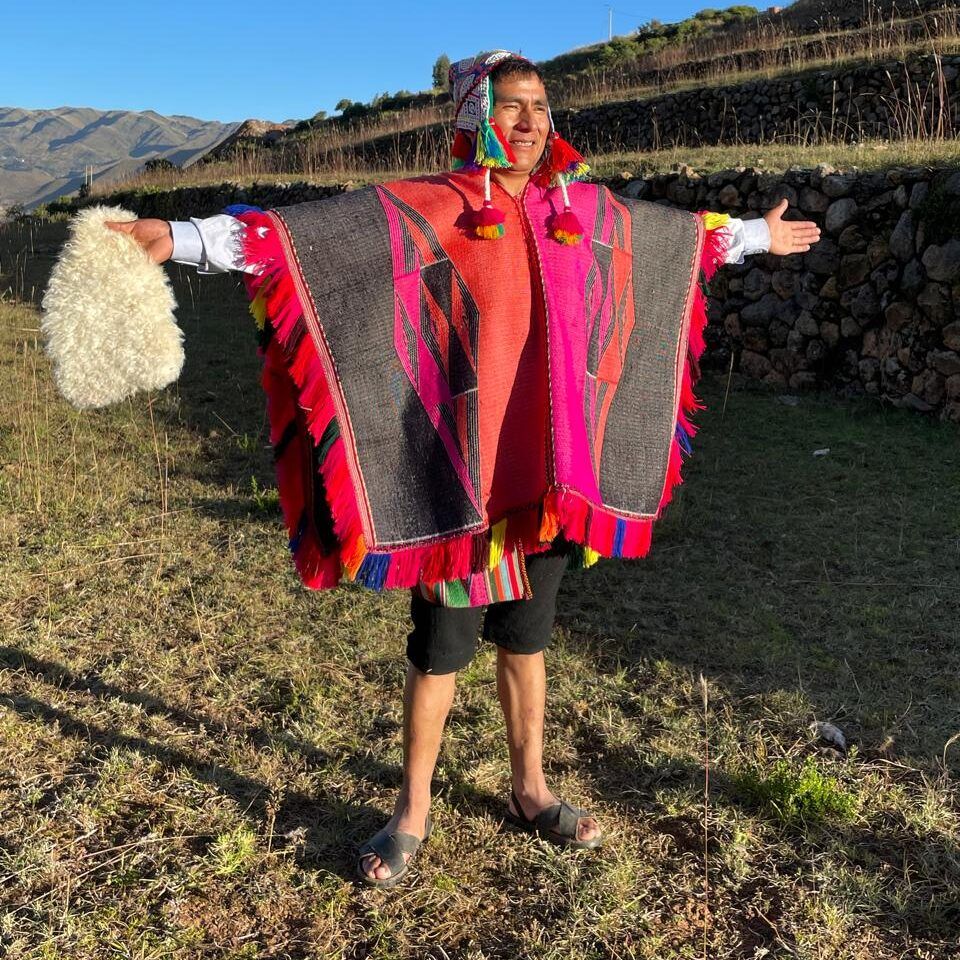
Stand facing Hanan Pacha, ideally at sunrise.
Open your arms wide like condor wings.
Inhale deeply through the nose while imagining air entering the crown and heart simultaneously.
Hold for three seconds while visualizing yourself rising above your life situation.
Exhale slowly through the mouth as your awareness expands outward.
Repeat 7 times.
This breath creates a sense of vertical expansion, clearing the mind and enhancing intuition.
Sky Gazing as Andean Consciousness
Unlike some meditation traditions that emphasize emptiness, Andean sky practices emphasize connection. The sky is perceived as a teacher. Anthropologist Catherine Allen (2002) writes that Andean people relate to the heavens as “sentient presence,” not abstraction.
This kind of heal does not speak, it listens. In Andean spirituality, silence is not emptiness but presence. It is known as ch’usaq, the fertile void, the open space where kawsay reorganizes itself. Silence is medicine because it clears hucha and amplifies sami without effort.
Silence as the Original Teacher
Before there were rituals, there was silence. Before there were prayers, there was breath. In the high Andes, silence is constant: in the snow, in the wind, in the space between footsteps.
This natural silence teaches a different kind of knowledge:
As Fernández (2018) notes, Andean healers value “the quiet gaze more than the spoken word,” recognizing that true transformation happens in the body, not through explanation.
Why Silence Heal us
Silence allows the nervous system to settle. It invites the mind to soften and the heart to open. In Andean energy work, silence is the state in which sami descends, because the person is finally receptive.
In silence:
The person becomes their own guide
Trauma unfolds without pressure
Emotions rise and transform
The healer listens to the energy, not the story
Silence reveals what language hides.
Practices of Healing Through Silence
Sami Bathing (Sami T’ikariy) Sit in silence with your palms on the earth or against your chest. Visualize sami flowing gently through your body.
Observation Without Interpretation Watch your emotions rise and fall without naming them. This shifts the energy from hucha to sami.
Quiet Ayni Offer gratitude to the land silently. Allow the reciprocity to happen energetically, not verbally.
Breathing with Pachamama Imagine the earth breathing with you. Inhale the stability of the mountains; exhale your heaviness.
The Power of Heal Without Words
Some wounds cannot be spoken. Some transformations require no explanation. Silence gives space for the soul to reorganize itself.
The Andean path teaches: When you stop speaking, your spirit begins to sing.
Bibliography
Fernández, Ó. (2018). Silencio Ritual en los Andes.
Mountains are not symbols in the Andes, they are beings. Known as Apus, these sacred mountains are protectors, teachers, and carriers of ancestral memory. But the deepest secret is this: every person has an inner Apu, a mountain spirit within the psyche that holds courage, vision, and grounding.
They are the spirits of the mountains and physically inhabit them.
To listen to the mountains is to listen to yourself.
The Apus as Living Consciousness
From Cusco to Ausangate, communities interact with mountains as elders. Anthropologists describe the Apu as a “sentient landscape” (Allen, 2002), but in lived Andean experience, the Apu is more than sentient, it is relational.
Your connection to an Apu is a relationship of ayni, a mutual exchange of protection and devotion.
Apus transmit:
Guidance
Stability
Strength during transitions
The remembrance of who you are
Hearing the Apus Within
Silence is the language of the mountains. To listen to your inner Apu, you must slow your breath and feel your bones. In Andean teachings, the bones are where ancestral memory sleeps. Through stillness, these memories awaken.
The mountain within speaks in intuition, not analysis.
Ritual Practices
Sitting with a Mountain You don’t need to climb. Simply sit in its presence, offer a small despacho of gratitude, and listen.
Stone Meditation Hold a stone (called rumi) and breathe your question into it. Ask the Apu to answer through sensation or silence.
Walking as Prayer Walk slowly, allowing each step to be a conversation with the earth.
Why Mountains Heal
The mountains reflect our deepest truths. Their stillness reminds us that some answers cannot be rushed. Their presence teaches us what it means to stand tall, to endure, and to remain in integrity.
When you learn to listen to the Apu within, you become unshakeable.
The sacred heart is known as Kuyay Sonqo, the Heart of Loving Kindness, and it represents the purest form of munay. In Andean spirituality, the heart is not merely an organ of emotion, it is an energetic center, a small sun, and the source of our deepest wisdom.
The Heart as an Energetic Portal
In the Andean cosmovision, energy flows through kawsay, the living field that connects all things. The heart is the organ that best translates this living energy into human experience. When your heart is open, you naturally move into harmony with the ayni, the sacred law of reciprocity that governs the universe (Bolin, 1998).
This is why healers say:
“If you listen to your heart, the Apus will listen to you.”
The heart becomes a translator, a bridge, between our inner world and the world of the spirits.
Healing Through Kuyay Sonqo
Healing through Kuyay Sonqo requires no elaborate ritual; it requires presence. When the heart radiates munay, it dissolves hucha and restores the natural flow ofsami. Andean healers often describe this process as feeding the heart:
Through gratitude
Through service
Through beauty
Through right relationship
Kuyay is not passive love, it is active ethical love, a force that heals because it transforms the way we see ourselves and others.
Practices to Awaken Kuyay Sonqo
Heart-Breath Alignment Breathe into the center of your chest and visualize Inti, the inner sun, glowing there. With every exhale, release hucha into the earth, trusting Pachamama to compost it.
Munay Circles Sit with others in silence, holding the intention of mutual compassion. This shared heart-field creates a powerful collective sami.
Offering Gratitude to Pachamama Simple acts of thanks, food placed on the ground, a whispered prayer, a moment of stillness, strengthen the heart’s energy.
Why Kuyay Sonqo Heals
Because love is a frequency that organizes, clarifies, and harmonizes. When the heart returns to its natural state of loving presence, the whole being reorganizes around that energetic truth.
Bibliography
Bolin, I. (1998). Rituals of Respect: The Secret of Survival in the High Peruvian Andes.
In the Andean world, there is no true division between atom and spirit. The mountains breathe, rivers speak, and stones remember.
The world is kawsay pacha, a living cosmos infused with vital energy that flows through everything. This vision invites us to awaken from the illusion of separation and to perceive matter as sacred, as light condensed into form.
The Atom of Life
In Andean philosophy, Kawsay is the essence that animates all existence. It is the vibrational energy that moves between worlds, connecting the visible and invisible.
The Andean peoples never viewed the material world as inert or profane; instead, they saw it as spirit crystallized. Every atom, every rock, and every leaf contains intelligence, for all participate in the great dance of life-force.
This understanding dissolves the dualism that Western thought often sustains between “spiritual” and “material.” In the Andes, the sacred is not found beyond the Earth, but within her.
The Pachamama herself is a conscious being, not a metaphor or symbol, but a living presence whose body we inhabit and with whom we exchange energy through ayni, sacred reciprocity.
When Light Becomes Matter
Modern physics tells us that all matter is composed of energy vibrating at different frequencies.
This insight mirrors the ancient Andean knowing that light and form are inseparable. To the Inca mystics, the world we see is light slowed down, spirit clothed in texture and color. The visible and invisible are two sides of the same current of Kawsay.
The Andean priest-healers, or paqos, perceive this directly. During ceremonies, they communicate with mountains, stars, and stones not as symbolic archetypes but as beings of consciousness. Their luminous perception allows them to see the energy body of the world, where every material element emits its own radiance. What seems like solid matter is in truth a woven fabric of light.
The Conscious Atom
Living in alignment with this vision requires reverent attention. The Andean path invites practitioners to see the divine not as distant but as immanent, present in every gesture, relationship, and object. The act of drinking water becomes a communion with Yaku Mama. Walking the mountains becomes a dialogue with the Apus, and breathing becomes an offering of Sami, refined energy.
This way of perceiving transforms how one moves through life. When the healer greets a stone or a plant, it is not a poetic act, it is an exchange of consciousness. Through such practices, one learns to sense the luminous essence of all beings and to recognize the hidden harmony that binds all forms of existence.
Healing Through the Light of Matter
The Andean path of healing is not about escaping matter but illuminating it. When a person feels heavy, burdened, or disconnected, the paqo does not see them as “sick,” but as out of harmony with the flow of Kawsay. Healing means re-establishing the current of energy between the individual and the cosmos. The goal is not transcendence, but integration, allowing the light within the body and the light within the Earth to resonate again.
Through despacho offerings, samibreathing, and connection to the four directions, practitioners participate in the process of returning energy to balance. In doing so, they help matter remember its luminosity, for even the densest stone carries the seed of light within it.
The Awakened Atom
To see spirit in every atom is to return to right relationship with the world. It is to remember that our bodies are made of the same elements as stars, rivers, and mountains. The Andean path teaches that we are not separate observers of creation; we are threads in its living tapestry.
When perception is purified, the material world becomes transparent, revealing the divine light that pulses through all forms. This is the true meaning of illumination, not the escape from matter, but the revelation of its holiness.
References
Apaza, J. (2018). Kawsay: The Living Energy of the Andes. Cusco: Q’ero Foundation.
Herrera, M. (2016). Andean Cosmology and the Luminous Worldview. Lima: Editorial Pachatusan.
Allen, C. (2002). The Hold Life Has: Coca and Cultural Identity in an Andean Community. Smithsonian Institution Press.
Maclean, K. (2019). The Ayni Way: Reciprocity and Energy in Andean Spiritual Practice. Inca Medicine School Archives.