logo im

The Seven Layers of the Andean Soul

Posted on

The Andean Soul is not a single entity hidden within the body. It is a living landscape, an energetic being that stretches across time, space, and memory.

The ancient wisdom keepers of the Andes teach that the Andean Soul exists in layers, each carrying a unique vibration, function, and connection to the three worlds (Hanaq Pacha, Kay Pacha and Ukhu Pacha)

These seven layers form the Andean Soul, guiding us through healing, initiation, and deep remembrance of who we are.


The First Layer of the Andean Soul: The Body

Llankay Qocha

The first layer anchors the soul in the physical world. It resides in the muscles, blood, and bones and expresses itself through Llankay—sacred action and service. This layer holds both personal and ancestral memory, and we must heal it through movement, earth work, and deep connection with Pachamama.

“Your soul begins with your body—your first temple and your oldest ally.”
(MacLean, 2012)


The second Layer of the Andean Soul: The Breath

Wayra Ñawi

This is the energetic breath layer, linking the inner winds with Wayra, the spirit of air. It houses emotion, voice, and transmission of intention. When blocked, this layer causes emotional stagnation. We restore it through conscious breath, whistling, and prayers spoken into the wind.

“When you speak from the heart, Wayra carries your truth to the mountains.”
(Núñez del Prado, 2009)


The third Layer: The Heart

Munay Wasi

The third layer resides in the Munay center—the spiritual heart. Here lives our capacity to feel beauty, love without conditions, and live with grace. This layer holds wounds from heartbreak, abandonment, and disconnection. Healing happens through ceremony, k’intus, and time in communion with Apus and Ñustas.


The fourth layer of Andean Soul: The Perception

Yachay Ñawi

This is the layer of Yachay—wisdom and awareness. It governs perception, intuition, and clarity. It also contains limiting beliefs, ancestral programs, and spiritual vows. Cleansing this layer often requires coca divination (kuka qhawarina) or mesa work with a Paqo to realign personal truth with cosmic truth.


The fifth layer of Andean Soul: The Luminous Body

Poq’po Kanchay

This radiant field surrounds and penetrates the body, known as Poq’po—your energetic cocoon. It’s a layer of protection, light, and resonance. Trauma or hucha weakens this field. We nourish it through sami, ritual cleansing, flower baths, and alignment with nature.

“Your Poq’po is the signature of your soul in light.”
(Wilcox, 2004)


The sixth layer of Andean Soul: The Soul-Memory Field

Ñawi Pakarina

This deeper layer connects us to Pakarina—our place of origin, where the soul first emerged. It holds memory from past lives, lineages, and original contracts. In dreams or vision journeys, we may glimpse this layer. It responds to offerings made to sacred lagoons, rocks, or mountain altars.


The seventh layer of Andean Soul: The Star Layer

Hanan Sonqo

This is the highest vibrational soul layer, linking us to Hanaq Pacha—the upper world and stellar beings. It contains our destiny, gifts, and sacred blueprint. This layer activates through Karpay (energy transmissions), visionary dreaming, and service to collective healing. The more we align our life with Ayni, the brighter this layer shines.


Practices to Nourish the Seven Layers

  • Work with coca leaves and breath to align your centers
  • Make despachos to Pachamama, Apus, and your Pakarina
  • Receive a Karpay from a trained Paqo
  • Visit a sacred site and offer your Munay in silence
  • Sleep with intention to receive dream messages
  • Clean your Poq’po with flowers and spoken prayers
  • Walk in Ayni with your community and the natural world

Bibliography

  • MacLean, K. (2012). The Shape of the Inka Heart: Wisdom from the Q’ero Masters. UK: Heart of the Andes Press.
  • Núñez del Prado, J. (2009). The Andean Cosmovision. Cusco: Willka Nina Press.
  • Wilcox, J. (2004). Keepers of the Ancient Knowledge: The Q’ero Mystics of Peru. Vermont: Inner Traditions.
  • Miro-Quesada, O. (2010). Lessons in Courage: Peruvian Shamanic Wisdom for Everyday Life. Boulder: Sounds True.
  • Tola, F. & Dragonetti, C. (1997). Pensamiento Mítico Andino. Buenos Aires: Biblos.

Andean Breathwork: Awakening the Inner Winds

Posted on

In many spiritual traditions, Breathwork is sacred. In the Andean cosmovision, breath is not just life—it is spirit in motion. Known in Quechua as Wayra, breath is both a force of transformation and communication between humans and the unseen world.

Andean breathwork is not about control or performance. It’s about receiving, cleansing, and reconnecting with the elements, especially the wind, the mountains, and the sacred center of the heart.


What Is Wayra?

Wayra means wind, but in the Andes it also refers to the breath of life—a subtle energy that connects the inner and outer worlds. Wayra is the invisible force behind:

  • Intuition and movement
  • Speech and sacred song
  • The transmission of energy in ritual

When you blow into a k’intu (coca leaf trio) or into the fire, you are sending your intention through Wayra. This is the Andean form of prayer—not spoken, but breathed.

“In the Andes, the wind is a messenger. When you breathe with the Apus, they hear you.”
(Wilcox, 2004)


The Breathwork as a Portal

Unlike other breathwork systems that aim for catharsis, Andean breath practices are often subtle and intuitive. The goal is to become a hollow bone—a vessel through which energy can flow freely.

Andean breathwork is used to:

  • Cleanse hucha (heavy energy)
  • Absorb sami (light, refined energy)
  • Connect with the Apus and Ñustas
  • Enter altered states for vision or healing
  • Realign the three Andean centers:

    “When you breathe with the Earth, she breathes back. This is the meaning of reciprocity.”
    (MacLean, 2012)


    Wayra Ñawi Breathwork

    This practice aligns and clears your energetic field using the power of breath and visualization.

    How to do it:

    1. Sit or stand with your feet flat on the ground. Breathe naturally for a moment.
    2. With your inhalation, visualize white light coming from the mountains (Apus) into your crown.
    3. With your exhalation, release your hucha down through your body and into Pachamama.
    4. After several rounds, begin breathing into your three centers
    5. On each breath, whisper a word of intention. Exhale gently through the mouth.

    Repeat for 5–10 minutes.


    Breathing into Ritual: How Wayra Enters Ceremony

    Every despacho, every Karpay, every offering in the Andean tradition is carried on the breath. Whether blowing into a stone, water, coca leaves, or the fire, Wayra becomes the bridge between your intention and the sacred realms.

    This breath is not forceful. It is gentle, respectful, and full of presence.

    “We do not speak loudly in ceremony. The mountains hear you when you whisper with your soul.”
    (Núñez del Prado, 2009)


    Bibliography

    • Wilcox, J. (2004). Keepers of the Ancient Knowledge: The Q’ero Mystics of Peru. Vermont: Inner Traditions.
    • MacLean, K. (2012). The Shape of the Inka Heart: Wisdom from the Q’ero Masters. UK: Heart of the Andes Press.
    • Núñez del Prado, J. (2009). The Andean Cosmovision. Cusco: Willka Nina Press.
    • Miro-Quesada, O. (2010). Lessons in Courage: Peruvian Shamanic Wisdom for Everyday Life. Boulder: Sounds True.

    Ceremony vs. Healing Session: What’s the Difference?

    Posted on

    In the world of modern spirituality, the words “ceremony” and “healing session” are often used interchangeably. But in the Andean tradition, these two forms of sacred work are distinct in purpose, energy, and intention. Each has a role to play in the spiritual development and energetic harmony of the individual and the collective.


    What Is a Ceremony?

    In the Inka lineage, a ceremony—or hatun ritoq—is a ritual act of offering and alignment, usually done to:

    • Honor Pachamama, Tayta Inti, and the Apus
    • Mark cosmic events (e.g. solstice, equinox, Pachacuti)
    • Give thanks, ask for guidance, or restore collective balance
    • Initiate a new cycle (such as receiving a Karpay)

    A ceremony is less about individual needs and more about relational energy. It’s a time to serve life, to listen, to offer beauty and gratitude through ritual acts like:

    Ceremonies often take place outdoors, in sacred wak’as (places of power), or during auspicious times in the lunar or solar calendar.


    What Is a Healing Session?

    A healing session in the Andean tradition focuses on restoring the energy body of a specific person. Led by a Paqo, Altomisayoc, or Chakaruna, the session may include:

    This is intimate, diagnostic work. It addresses the spiritual, emotional, or ancestral blockages that affect a person’s flow of sami (refined energy).

    A healing session is often preceded by conversation or divination to reveal the root of imbalance, and it is followed by energetic sealing or integration.


    Key Differences Between Ceremony and Healing Session


    When to Seek a Ceremony vs. a Healing Session

    Seek a ceremony when you want to:

    • Offer gratitude to Pachamama
    • Mark a transition (birth, death, new cycle)
    • Receive initiation (Karpay)
    • Celebrate a cosmic event (e.g. Inti Raymi, solstice)

    Seek a healing session when you need:

    • Clarity in times of confusion
    • Energetic cleansing
    • Support through illness, grief, or trauma
    • Help integrating spiritual experiences

    “The difference is not in importance—but in direction. A ceremony reaches upward. A healing session reaches inward.”
    (Wilcox, 2004)


    Blending Both in the Andean Way

    Many Paqos naturally weave both ceremonial and healing work in their practice. A personal healing session may end with a despacho. A community ceremony may reveal individual wounds that need further clearing.

    In the Andes, life is not compartmentalized. Everything is energy, and both offerings and healings are forms of sacred alignment.


    Bibliography

    • Wilcox, J. (2004). Keepers of the Ancient Knowledge: The Q’ero Mystics of Peru. Vermont: Inner Traditions.
    • MacLean, K. (2012). The Shape of the Inka Heart: Wisdom from the Q’ero Masters. UK: Heart of the Andes Press.
    • Núñez del Prado, J. (2009). The Andean Cosmovision. Cusco: Willka Nina Press.
    • Miro-Quesada, O. (2010). Lessons in Courage: Peruvian Shamanic Wisdom for Everyday Life. Boulder: Sounds True.

    What is Hucha?

    Posted on

    In the Andean spiritual tradition, the health of the body and soul is not separated from the flow of energy. The key to well-being is not just having “positive energy,” but maintaining balance and circulation. When that flow is blocked, hucha—the Andean term for dense or heavy energy—accumulates.

    But unlike Western concepts of “bad vibes” or “negative emotions,” it is not evil or dangerous. It is simply energy that is out of place, ready to be transformed.


    Meaning

    In Quechua, hucha refers to heavy, unrefined, or stagnant energy. It is often created through:

    • Emotional stress or overload
    • Disconnection from Pachamama
    • Acts that break Ayni (sacred reciprocity)
    • Egoic patterns, fear, or unprocessed trauma

    Importantly, hucha is not a judgment. Everyone produces hucha—it is part of being human. Even a Paqo (Andean spiritual practitioner) must constantly clean and transform their own hucha.


    Sami: The Opposite of Hucha

    It is refined energy that nourishes our luminous body. Sami flows when we are:

    • In contact with nature
    • Expressing gratitude
    • Grounded in the present
    • In alignment with our purpose

    The Andean path teaches us to release hucha and absorb sami, just as the lungs release carbon dioxide and draw in oxygen.

    “It’s not about never having hucha—it’s about learning to clean it like washing the soul.”
    (MacLean, 2012)


    How to Clear Hucha: Andean Practices

    Andean medicine offers many techniques to release it, many of which require no tools—just intention, breath, and connection to the Earth.

    1. Jucha Mikuy: Feeding the Earth with Heavy Energy

    This practice involves offering your hucha to Pachamama, who lovingly digests and transforms it.

    • Sit on the ground with your spine straight
    • Imagine your hucha flowing down from your body into the Earth
    • Say softly or silently: “Pachamama, I offer you my hucha in Ayni.”
    • Wait and feel your energy field lighten

    2. Breathwork with Intention

    Breathe in light through the ñawi (energy centers), and exhale heaviness into Pachamama. Do this until you feel calm and clear.

    3. Water Cleansing (Yaku Ritual)

    Go to a river, waterfall, or spring. Wash your face, hands, and chest while asking the water spirit (Yaku Mama) to cleanse your hucha. Offer coca, a flower, or a song in gratitude.


    Signs You May Have Accumulated Hucha

    • Feeling mentally foggy or emotionally blocked
    • Chronic fatigue despite rest
    • Irritability or quick emotional reactivity
    • Lack of joy or spiritual connection
    • Repetitive negative thought patterns

    These are not signs that something is “wrong” with you. They are messages that energy is calling to be moved.


    Bibliography

    • Núñez del Prado, J. (2009). The Andean Cosmovision. Cusco: Willka Nina Press.
    • MacLean, K. (2012). The Shape of the Inka Heart: Wisdom from the Q’ero Masters. UK: Heart of the Andes Press.
    • Wilcox, J. (2004). Keepers of the Ancient Knowledge: The Q’ero Mystics of Peru. Vermont: Inner Traditions.
    • Tola, F. & Dragonetti, C. (1997). Pensamiento Mítico Andino. Buenos Aires: Biblos.

    The Power of the Coca Leaf

    Posted on

    Long before the modern world misunderstood and criminalized it, the Andean people revered the coca leaf as sacred. They know her as Mama Coca—a spiritual ally, a teacher, and a bridge between the human and divine. In the Andes, people don’t use coca for stimulation or escape. Instead, they pray with it, listen through it, and offer it to Pachamama, the Apus, and the unseen realms.

    This blog honors the sacred role of coca in the Inca lineage and invites us to remember what this plant has always meant to the Andean people.


    Mama Coca Leaf: A Living Being, Not a Product

    In Quechua, people call the coca leaf kuka, and they treat her as a being, not a substance. They honor her as a Ñusta—a feminine spirit of high vibration—and associate her with heart energy, divine wisdom, and nourishment.

    Andean communities:

    • Offer coca leaves in trios called k’intus
    • Use coca in divination (haywarikuy)
    • Include coca in despachos to transmit human prayers to the spirits
    • Carry coca daily for grounding and communion

    When you blow your breath through coca, you are whispering your soul to the mountain.”
    (Wilcox, 2004)

    Andean people don’t chew coca for pleasure. They receive it with reverence, with prayer and intention, always in Ayni (sacred reciprocity).


    K’intus: Coca Leaf Blessing

    The most iconic ritual use of coca is the creation of k’intus—three perfect leaves held together, representing Munay, Yachay, and Llankay (love, wisdom, service). These are gently breathed upon and placed in sacred bundles, despachos, or offered to Apus during prayer.

    The number three is sacred, and each leaf carries a message:

    • One leaf connects you to your body and the Earth
    • One to your mind and the ancestors
    • One to your spirit and the stars

    Coca is a technology of memory, a bridge to the ancient ones.”
    (MacLean, 2012)

    Divination with Coca Leaf: Listening Through the Leaves

    In the hands of an initiated Paqo, coca becomes an oracle. Through a process called kuka qhawarina, the medicine person casts coca leaves onto a sacred cloth or the ground, and reads their placement to receive messages from:

    This reading is not intellectual. It is an intuitive, heart-based dialogue.


    Coca and the Law of Ayni

    Above all, coca teaches Ayni—that life is relationship. One never takes without giving. Each leaf offered carries intention, gratitude, and prayer. In Andean communities, people don’t speak while offering coca—they breathe into the leaf, whispering silently with the heart.

    Whether offered to Apu Ausangate, a sacred waterfall, or a loved one, k’intus are acts of subtle power. They don’t demand. They connect.

    “Coca doesn’t work like Western medicine. It works through presence, respect, and attention to energy.
    (Núñez del Prado, 2009)

    The modern world associates coca with addiction and criminalization due to the extraction of one isolated compound: cocaine. But the sacred coca is a full-spectrum teacher plant with hundreds of natural alkaloids in harmony—none of which produce addiction when used traditionally.

    For Andean peoples, the demonization of coca is a wound of colonialism, erasing spiritual heritage and Indigenous science.

    Fortunately, movements are rising to decolonize plant wisdom and restore respect for coca as sacred medicine.


    How to Connect with Mama Coca (Even If You’re Far Away)

    If you live outside the Andes and cannot access coca legally, you can still honor her by:

    • Praying with three bay leaves or rose petals, with the same intention as a k’intu
    • Speaking your prayers into the wind (wayra) with reverence
    • Meditating on the principle of sacred reciprocity in all relationships

    The spirit of Mama Coca is not limited to geography—she moves where she is invited with love and respect.


    Bibliography

    • Wilcox, J. (2004). Keepers of the Ancient Knowledge: The Q’ero Mystics of Peru. Vermont: Inner Traditions.
    • MacLean, K. (2012). The Shape of the Inka Heart: Wisdom from the Q’ero Masters. UK: Heart of the Andes Press.
    • Núñez del Prado, J. (2009). The Andean Cosmovision. Cusco: Willka Nina Press.
    • Soria, M. (1995). Mama Coca. Lima: Editorial Apus.
    • Bolivia & Peru Coca Leaf Studies (UN Report, 1995)

    Initiation Journeys: Sacred Sites and Rituals in the Andes

    Posted on

    In the highlands of the Andes, initiation is not taught in classrooms—it is lived through pilgrimage, sacred sites, and deep listening to the land.

    The Inca lineage holds that wisdom is not passed solely through words, but through experience in places where the veil between worlds is thin.

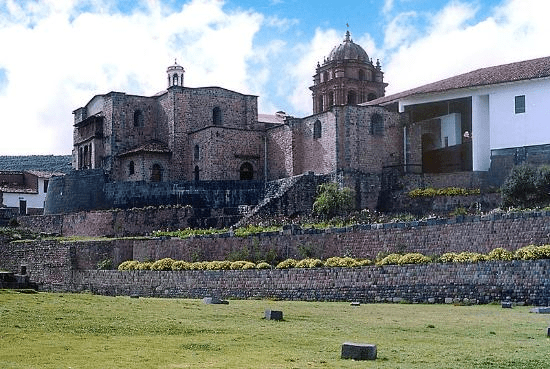
    To walk through sacred sites like Qoricancha, Apu Ausangate, or Qoyllur Rit’i is not just tourism—it is a rite of passage, a soul remembering its origins and its purpose.


    Why Sacred Sites Matters

    The Andean cosmovision teaches that each place on Earth holds unique energetic codes. These are not metaphors—they are living presences. The Apus (mountain spirits), Ñustas (female earth spirits), and rivers are all conscious beings.

    Each site activates different aspects of the self, depending on its energy.

    “Sacred Sites are teachers in themselves. The mountain speaks to your bones, the river to your blood, the wind to your spirit.”
    (Wilcox, 2004)


    Sacred Sites for Initiation

    Here are some of the most powerful Andean sites where spiritual initiation is traditionally received:

    Apu Ausangate

    One of the most revered Apus near Cusco, known for its masculine energy and snow-covered peaks. Pilgrimage here involves high-altitude hiking, silence, and profound dreams. It teaches endurance, clarity, and soul commitment.

    Qoyllur Rit’i

    A yearly pilgrimage that blends Indigenous and Catholic traditions at the base of glaciers. Thousands gather in dance, prayer, and communion. It’s considered a place of deep spiritual rebirth.

    Qoricancha

    Once the most important Inka temple in Qosqo, dedicated to Tayta Inti (Father Sun). Though the gold is gone, the energetic grid remains intact. It’s ideal for solar initiations and activating Yachay.

    Saqsaywaman

    An immense stone temple with serpent energy, linked to the Uku Pacha (underworld). Excellent for working with the subconscious and ancestral clearing.

    Tipón

    A site of sacred water engineering. Here, one can cleanse, flow, and receive messages from Yaku Mama (Mother Water). Perfect for releasing grief and opening the heart.

    “These places are not simply ruins—they are memory keepers, coded in stone and vibration.”
    (MacLean, 2012)


    Rituals and Practices Performed

    During initiation journeys, participants often receive:

    • Karpay: Energetic transmissions from Paqos (Andean priests or medicine people)
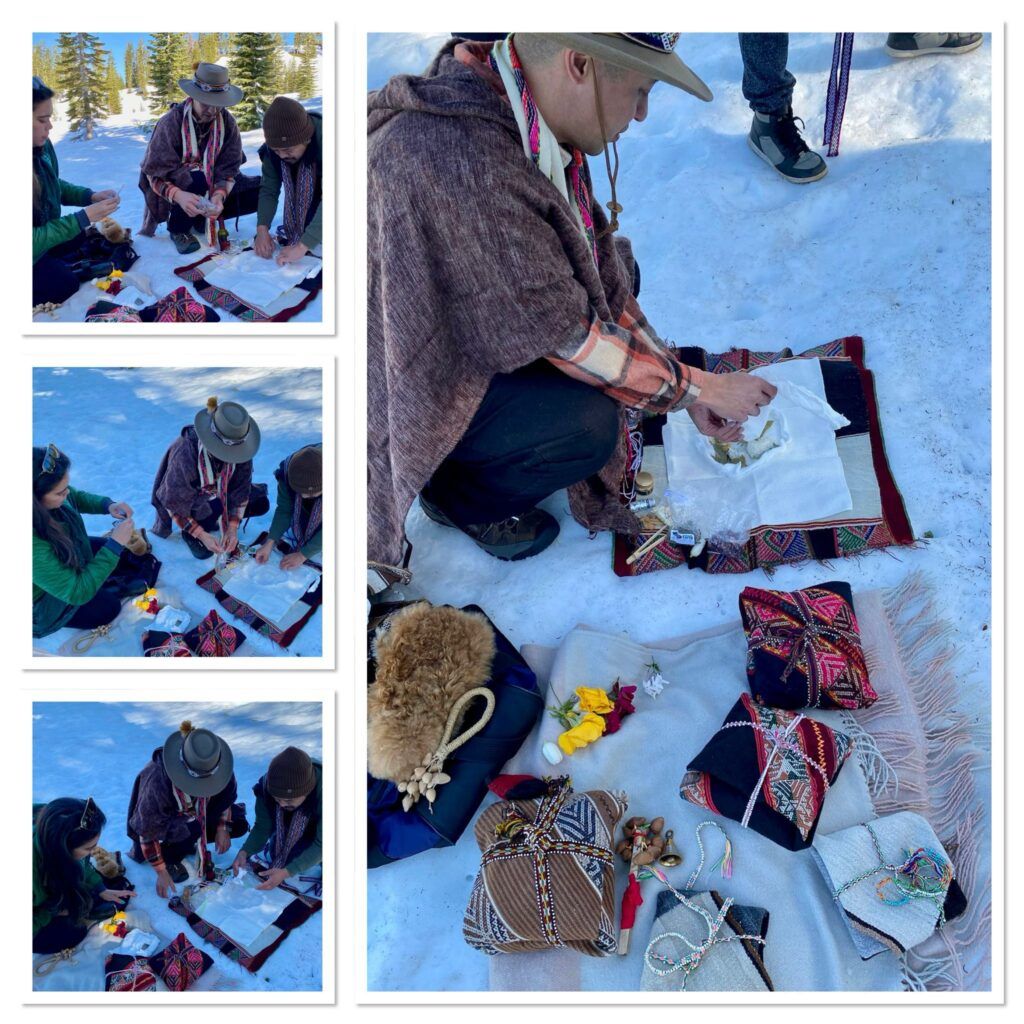
    • Despachos: Offerings to Pachamama and the Apus using flowers, seeds, sugar, and prayers
    • Vision quests: Time alone in nature, often fasting, in dialogue with the spirits
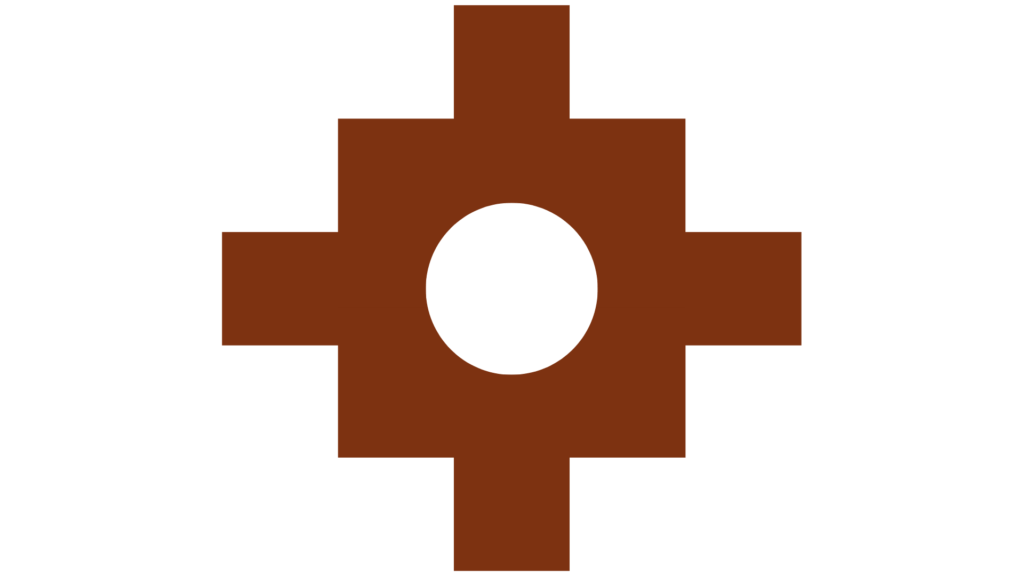
    • Chakana meditations: Aligning one’s body and energy field with the Andean cross
    • Fire ceremonies: To release old patterns and invite transformation

    These aren’t performances—they are acts of alignment that shift consciousness.


    Who Are These Journeys For?

    You don’t need to be from Peru or speak Quechua. If you feel a resonance with:

    …then these journeys may already be part of your spiritual contract.

    “When you stand on ancient ground with sacred intention, the mountain remembers you—and you remember yourself.”
    (Miro-Quesada, 2010)


    Bibliography

    • Wilcox, J. (2004). Keepers of the Ancient Knowledge: The Q’ero Mystics of Peru. Vermont: Inner Traditions.
    • MacLean, K. (2012). The Shape of the Inka Heart: Wisdom from the Q’ero Masters. UK: Heart of the Andes Press.
    • Miro-Quesada, O. (2010). Lessons in Courage: Peruvian Shamanic Wisdom for Everyday Life. Boulder: Sounds True.
    • Tola, F. & Dragonetti, C. (1997). Pensamiento Mítico Andino. Buenos Aires: Biblos.