logo im

Cusco – The Puma City

Posted on

Designing an entire Puma City, where the spatial layout mirrors the anatomy of an animal and the overall form embodies a moving creature. Therefore required the integration of multiple scientific disciplines operating at their most advanced conceptual levels.

Cusco-Perú

The construction of the city of Cusco represented the synthesis of a great era, the golden age of Inca culture.

The city’s urban beauty expressed art integrated with nature. Its construction blended into the northern hill of the city, Sacsayhuamán, which formed the head of the totem animal. In all aspects, this city was magnificent and admirable

The Archetype: Puma City

The puma, as an entity of power and archetype, imbued its energy into every inhabitant and visitor who set foot on its soil.

The people of this city had to resonate with the Totem Feline and, at some point in their lives, become the embodied Puma.

The new solar year began each June 21, when the sun moved away from the eastern point of its rise, heading toward the North, which it would never reach.

Pachakuti sought to leave us a message by designing the construction of the Puma City:

  • We will recover stability, transcendental consciousness, and harmony with the environment.
  • The puma will provide the intuition of transcendence and the expansion of consciousness to simultaneously embody the amaru (serpent), kuntur (condor), and puma.

The concept of “the trilogy as an ideological element” belong to every culture in the world. In life, at every step man takes, he will immediately encounter this spontaneous and natural manifestation of the number three, highlighting its universal significance.

In resume:

The design and construction of Puma City, the ancient city of Cusco, symbolize a profound synthesis of art, nature, and transcendental ideology.

Imbued with the energy of the puma, the city reflects a deep alignment with the natural and spiritual worlds.

Pachakuti’s vision for Puma City serves as a timeless message: to restore balance, expand consciousness, and harmonize with the environment.

Through the archetype of the puma, the trilogy of serpent, condor, and puma becomes a living experience.


Reference:

  • Merejildo, J.A (1997). The awakening of the puma. An initiatory path. Astronomical evidence in the Andes. Chaski. (pag. 71 – 74)

Archetypes in Andean Cosmovision

Posted on

In Andean Cosmovision, Archetypes embody essential forces of nature and spiritual growth, guiding individuals through cycles of transformation.

These symbolic animals, like the serpent, condor, and puma, represent different aspects of existence, connecting the material and spiritual worlds.

The Ecological Principle

The ecological principle par excellence is “life in harmony with what surrounds us.” It is the practice of MUNAY, LLANKAY, and YACHAY.

The Mith of Manco Capac and Mama Ocllo

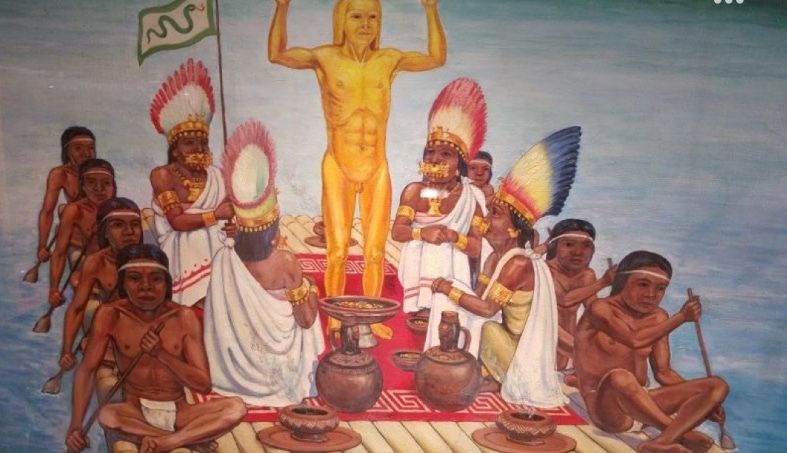
Wiracocha descended to Earth from the Sacred Lake Titicaca and raised the mythical couple, Manco Capac and Mama Ocllo. They followed Wiracocha’s path, journeying from South to North along the “Route of Wiracocha,” accompanied by the Sacred Condor. They reached the Valleys of Cusco, where they founded one of the largest empires in the world.

When these children of Wiracocha arrived in the lands of Qosqo, they came to the lands of the PUMA, the Puma that would help them transcend to the most unimaginable planes.

Archetypes of the Evolutionary Cycles

These evolutionary cycles in the Andean world were known as Pachakuti.

Each evolutionary cycle marked the presence of an archetypal animal; this archetype was the main symbol in the transcendental state of a society’s development.

The Archetypes: AMARU or SERPENT

Represents the development that the individual should experience from within, from their interior, from the Ucku Pacha, rising up like the serpent in a movement of control and security.

The Archetypes: CONDOR

Revealed the infinity of its space and became friends with KATATI URURU (Venus), the chacana, and other constellations.

The condor taught them to see through the inner stars.

The archetype of the condor took the serpent and, along its path, gave it wings to integrate into the world of the Hanan Pacha.

The power of Kay pacha, this world, is symbolized by the puma or jaguar.

During the reign of the Eighth Pachakuti, the Children of the Sun arrived in the lands of the Puma. The Incas followed the path of the Amaru, beginning to develop the consciousness of the awakening of the Puma.


Reference:

  • Merejildo, J.A (1997). The awakening of the puma. An initiatory path. Astronomical evidence in the Andes. Chaski. (pag. 65 – 67)

The Andean cycle of time

Posted on

The Andean time is not something that we “have” like a bank account that we can spend, lose, or invest. The runa lives in time just as they live in space.

Time is like breathing, the heartbeat, the ebb and flow of the tides, the change from day to night. Andean time is cosmic relationality, co-present with space or another representation of pacha.

The most important temporal categories are not advanced or delayed, nor past or future. They are “before” (ñawpaq) and “after” (qhepa).

Time has a qualitative order, according to the density, weight, and importance of an event. There is a time for sowing, for harvesting; there are ritual times for making offerings and payments to Pachamama.

Rituals and ceremonies are not neutral with respect to time; if it is not the right time, the ritual does not have the desired effect. There are also transitional phenomena related to time.

First, astronomical phenomena of change, such as the solstices, phases of the moon, but especially eclipses, sunrise, and sunset. At each sunset, the sun dies, and each sunrise is the celebration of its rebirth.

Curious fact of Andean Time

The popular handling of “time” is a confusing experience for a foreigner in Peru. The so-called “Peruvian time” is not simply a reflection of laziness, idleness, or failure to meet deadlines, but rather reflects a different attitude toward the concept of clock time.

The hour is considered “good” when it is the right moment; conversely, being on time is seen as the “bad” hour.

The expression “ahorita” does not reveal an immediate chronological relationship with an event, but rather something that is already present in experience, but that may actually happen in one or two hours.

It is interesting that in the English language, there is a phrase that expresses the same situation: “just a second.”


Reference:

  • Esternmann, J. (1998) Filosofía Andina. Estudio intercultural de la sabiduría autóctona andina. Seminario San Antonio Abad, Cusco Perú, (pag. 179 -181).

What is Ecosophy?

Posted on

The term “ecosophy” represents for us the “Andean wisdom of the ‘physical’ cosmos as an organically ordered home.”

The runa, before being a rational and productive being, is a natural being, an element that is related through countless vital links with the set of “natural” phenomena, whether they are astronomical, meteorological, geological, zoological, or botanical.

Its relationship with these phenomena is vital, ritual, almost magical. For the runa, nature cannot be “known” logically, but only “lived” organically and symbolically Ecosophy refers to the multiple relationships the runa maintains with its immediate natural environment in the plane of kay pacha.

In a certain sense, Pachamama serves a symbolic function similar to coca.

Ecosophy is, in this sense, Mother Earth.

A change in nature also affects humans, and an irregular change by humans leads to meteorological, agricultural, and even cosmic disturbances. For this reason, we speak of a cosmic ethics in the case of Andean philosophy.

The Andean person is in constant conversation or dialogue with Pachamama and is aware of important astrological events. They ask for permission before plowing the land and give thanks through offerings for the harvest, symbolically returning the products.

Likewise, before killing animals, the runa asks for permission so that the animal’s soul does not become angry.

In the end, Andean ecosophy makes manifest the “logical” principles of reciprocity, complementarity, and correspondence at the level of kay pacha.

These principles and their observation are the guarantee for the continuity of life, especially and of the cosmic order in general.

This observance is primarily of a ceremonial and celebratory nature, but in the sense of effective symbolism, not mere representation. Man is a co-creator of the cosmic order.


Reference:

  • Esternmann, J. (1998) Filosofía Andina. Estudio intercultural de la sabiduría autóctona andina. Seminario San Antonio Abad, Cusco Perú, (pag. 174 – 179).

The Chakana between Kay Pacha and Ukhu Pacha

Posted on

We talk about the chakana connections that exist between Kay Pacha and Hannaq Pacha, in order to talk today about Ukhu Pacha and Kay Pacha.

What means Ukhu Pacha?

And before we begin, we will clarify the term “Ukhu.” Literally, it means “lower region,” and contrary to common belief, it does not refer to the “Christian hell.”

Let us remember that Pacha refers to all levels of consciousness, that is, the lands and energies. Everything is interconnected in this ordered cosmos.

First, Ukhu Pacha is the lower part of the ecological floors and lowland jungle. The famous Paititi (the lost city of gold) is said to be located in this region, according to legend.

Second, it refers to the interior of the earth, the underground. It is associated with the realm of the dead, but also with springs and the origin of life.

According to Guaman Poma de Ayala, “Ukhu Pacha” is the Antisuyu, from where medicinal herbs and the sacred coca leaf are obtained. It is the land of the inside, of the unknown.

But at the same time, it is a place of abundance where no one sows or harvests. It is a paradisiacal place and at the same time one of distrust, a beautiful place that can also devour; it is the place of mystery.

Transitional phenomenas

Among the transitional phenomena, we find Pachamama, the springs (pukyu), caves (mack’ay), round stones (muyu rumi), and lagoons (qocha).

Springs and caves are places of danger and precariousness because they provide access to Ukhu Pacha. This does not mean that for the runa, it is a region of evil, but that every transition involves risk, requiring a specific ritual before crossing.

Mayu river is a path that must be traveled, and as such, none of the South American rivers were unknown to the Incas.

Spirits and souls wander through these sites by preference.

The round stones symbolize the universe due to their shape, with great magical force.

Sacred animals in Ukhu Pacha

The transitional animals are the serpent, the puma, and the toad.

Serpents (Amaru, which is also a mythical nameTúpac Amaru, for example, means “eminent snake”) serve as mediators.

The jaguar is the one who protects the passage between Kay Pacha in the sense of the “highlands” and Ukhu Pacha in the sense of the jungle.


Reference:

  • Esternmann, J. (1998) Filosofía Andina. Estudio intercultural de la sabiduría autóctona andina. Seminario San Antonio Abad, Cusco Perú, (pag. 170 -171)

The Chakana between Hanaq Pacha and Kay Pacha

Posted on

The main chakana correspondences between hanaq pacha and kay pacha are multiple meteorological phenomena. The peaks of the snow-capped mountains and some animals are intermediaries.

Pachamama is kind and tolerant

The lightning is the most visible and concrete connection between hanaq pacha and kay pacha. But at the same time, it is the most feared. Almost all the paqos were initiated in their role by lightning; those who were struck by lightning but survived.

The clouds (phuyus) are closely related to rain (para; poqoy), which symbolizes the fertilization of Pachamama (all feminine elements). It embodies a dual nature: ephemeral and sublime.

The need (pacha-phuyu: cloud of the earth) serves the same function as the clouds, but in the lower region.

The most symbolically significant meteorological phenomenon is undoubtedly the rainbow (k’uychi), an integral bridge of the entire spectrum of colors. It has been considered a symbol of Tawantinsuyu on the flag of Cusco.

It is a transversal symbol of cosmic relationship; in the Bible, it appears as the visible sign of the covenant between heaven and earth (Gen 9, 12-17).

Especially the high snow-capped mountains (rit’isqa), because of their white color and the origin of rivers (mayu), symbolize the transitional points where the two cosmic strata meet

.

Some animals are the protectors of livestock and the pairs of Pachamama.

The condor (kuntur) is a “royal” bird for the runa (people); it is the messenger (Hermes) and plays a significant role in the journey of souls after death.

The vicuña, the alpaca, the fox, the skunk, and the deer, due to their proximity to the apus, have a “sacred” function as chakana.


Reference:

  • Esternmann, J. (1998) Filosofía Andina. Estudio intercultural de la sabiduría autóctona andina. Seminario San Antonio Abad, Cusco Perú, (pag. 168 – 170)