logo im

The Duality

Posted on

Duality is a primordial knowledge, which showing a level of synchronicity many cultures have affirmed.

From the Indo-Iranian cultures, developed in ancient Persia, then spread by Greece. Where Pythagoras developed his numerical duality (Preciado,2018).

In the Asian continent the already famous Tao with its ying-yang that refers to the sunny and dark sides of the mountain.

Islam in its sacred book the Koran indicates “we have created everything in pairs” (Preciado,2018).

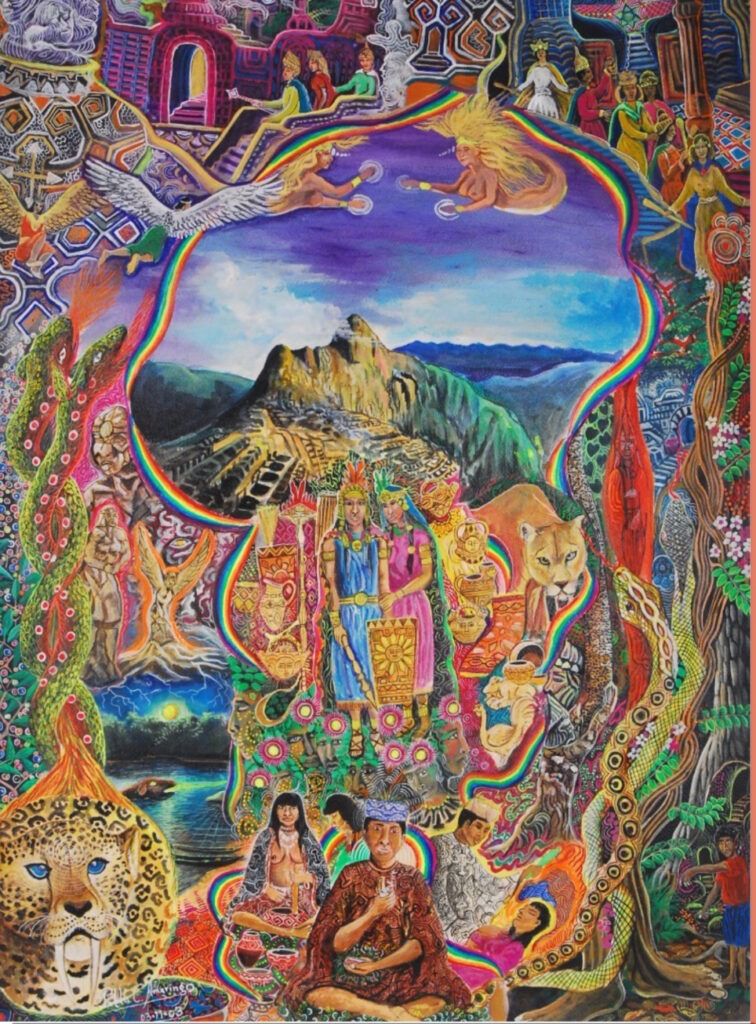
To refer to this duality, the Andean man uses the term Yanantin, which comes from the linguistic root Yana. This root indicates complementarity, opposition, dependence and interdependence (Depaz,2015). And the ending “ntin” is that accompanies its sister part (Núñez del Prado,2007).

In the Andean communities they call Yanantin to the male-female couples sentimentally united (Núñez del Prado,2007), giving mutual accompaniment and support, the term also refers to the permanent care within the coexistence.

Another important aspect that denotes the Andean values is that of Yanapay that is the cooperation and help for the questions of life, as well as the healing.

Although this refers mainly to social issues and human relations, it goes beyond, to the very existence as Depaz (2015) indicates, to exist is to cooperate, the full actions are in cooperation and the world is sustained in this way, so cooperation unites us with each other and are essential for community life, at the same time this becomes a macro level, with the whole cosmos and all beings.

Author: Joan De la colina Roman


References:

  • Depaz Toledo,Zenon(2015) La cosmo-vision andina en el manuscrito de Huarochiri
  • Preciado Idoeta, Iñaki,(2018) La ruta del silencio: Viaje por los libros del Tao
  • Núñez del Prado Béjar Daisy (2007) , Yanantin y Masintin: la cosmovision andina

The Importance of Ayni in Inca Culture

Posted on

Ayni, a concept that encapsulates the values of community, reciprocity, and harmony with nature, was foundational to the Inca civilization. This principle holds profound significance even today.

What is Ayni?

Ayni is an ancient Quechua term that translates roughly to “reciprocity” or “mutual aid.”

It reflects a deep-seated belief in balance and exchange, not just among humans but also between people and nature.

Ayni operates by interconnecting acts of giving and receiving, ensuring harmony and sustainability within a community and with the environment.

Characteristics

Mutual Support: Ayni emphasizes the importance of helping others with the expectation that the favor will be returned, either immediately or in the future. This mutual aid fosters strong bonds within communities.

Communal Work: In practice, Ayni often manifested through collective labor known as “minka” or “faena,” where community members worked together on tasks like agriculture, construction, or irrigation.

Connection with Nature: It extends beyond human relationships to include the natural world. The Incas believed that offering rituals and care to Pachamama (Mother Earth) would ensure bountiful harvests and ecological balance.

Temporal Reciprocity: Ayni does not limit itself to immediate exchanges; it spans generations, encouraging people to leave a legacy of support and sustainability for the future.

Impact on Modern Society

Although the Inca Empire fell centuries ago, the principle of Ayni continues to influence Andean communities and serves as a valuable framework for addressing contemporary challenges.

  1. Community Resilience: Ayni fosters interdependence, strengthening communities, especially in rural areas where resources are scarce.
  2. Sustainability Practices: The reciprocity with nature inherent in Ayni encourages environmentally friendly practices that align with modern sustainability goals.
  3. Ethical Leadership: People are reexamining Ayni’s principles as a model for ethical leadership and collaborative governance in various sectors worldwide.

Is Ayni Still Practiced Today?

While modern individualism and capitalism challenge traditional communal values, It remains alive in many Andean communities.

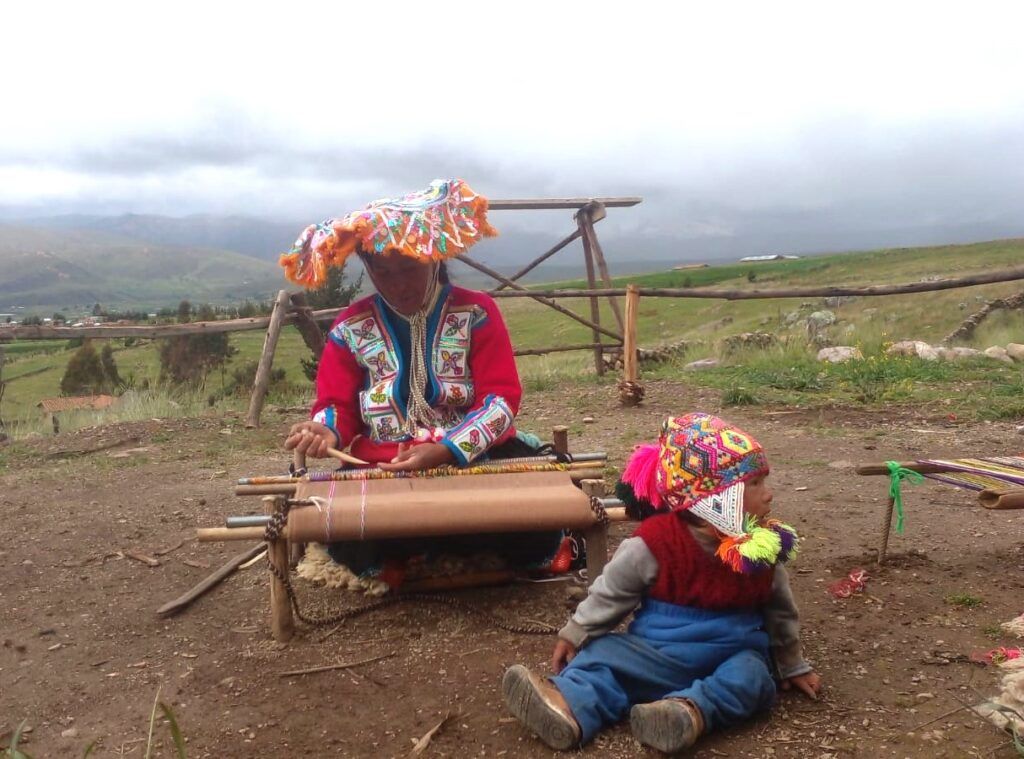
Apaza Family

Farmers still practice collective labor, and rituals to Pachamama continue to be an integral part of agricultural cycles.

Beyond the Andes, It’s philosophy is gaining global recognition as people seek more balanced and equitable ways of living.

A Reflection in the Contemporary World

Ayni teaches a timeless lesson: one’s well-being depends inherently on the well-being of others.

In a world facing ecological crises and social fragmentation, the Inca principle of mutual aid and reciprocity serves as a reminder of the power of community and the necessity of living in harmony with nature.

While modern societies may not replicate It in its traditional form, integrating its ethos could lead to more inclusive, cooperative, and sustainable futures.

By embracing the spirit of Ayni, we can honor the wisdom of the past while building a world that values reciprocity, balance, and interconnectedness.


References:

  • Gose, P. (1994). “The Inca Concept of Reciprocity and its Role in the Andean Economy.Latin American Research Review, Vol. 29, No. 1.
  • Mayer, E. (2002). “Reciprocity and Redistribution in Andean Communities.” Anthropological Quarterly, Vol. 75, No. 1.

Andean Genesis

Posted on

The Andean Genesis began like this:

The Shadow Realm’s Genesis

In the darkness of ancient times, Ch’amak Pacha was a realm of shadows. Within this infinite, boundless space, the sun and the moon coexisted in solitude. Overwhelmed by their longing for love, born of their mere presence together, they sought to satisfy that yearning with passionate love.

Cosmic Order and the Separation

However, this love had to be fleeting, as the cosmic order of the sidereal space, Pachakhamak, would not allow any generation to exist in a state where the warmth of the sun and the melancholy of the moon disrupted, at the same time, the beings who would populate a future world.

This future world—Earth (Pachamama)—stands between the love of the sun and the moon, separating day and night in an existence where heat and cold, joy and sadness, life and death intertwine cyclically through time.

The sun, resigned to its separation from its beloved moon, seeks to resolve the absence of his love through fleeting romances that arise by chance in the randomness of life.

The moon, in her solitude, loves from afar, casting her light over the world in her absence. She cried and created the first and only andean deluge.

The tears are sheltered in the earth and generate the sacred lake of Titicaca. Many decades passed when the sun decided to end that solitude.

The Sun and the Moon’s Reunion

The moon, hurt, did not want to see him again, so she hid as early as possible, and the sun rose earlier each time. Over time, the moon lagged a few moments on the horizon, hopeful.

The sun had just risen to distribute his light selflessly. There, they met again, face to face in the universe. They managed to stop their journey for a few moments in an infinite embrace.

The Vital Force and the Andean Genesis

Our ancestors say that every time the images of the sun and the moon copulate in the sacred waters of the lake, the vital force (wira) is generated, which gave birth and today generates and consolidates our lives in the unfolding of the cyclical Andean Genesis.


Reference:

  • Luizaga, J.M (1995). La enigmática etnoastronomía andina. Taipinquiri. (pag.363 – 364)

The spiritual quest

Posted on

This essay explores the spiritual quest, also known as the spiritual journey, emphasizing movement. As pilgrims and companions of the cosmos, like celestial bodies and all living beings, we remain in constant motion, with nothing ever fully concluded.

In many societies and eras people have wanted to cross the borders of their familiar territories to go in search of the solution to their problems and the earthly home of a God (Morinis, 1992).

Religious pilgrimages have been for devotional purposes, nowadays modern society is looking for answers.

The spiritual crisis of the West has created a desperate attempt to discover and recover original religious experiences: pagan practices, shamanism and Orientalism.

This individual pursuit focuses on personal growth and the experience of spirituality. (Kujawa, 2017).

That is why the ancient traditions have guided the human being to achieve wisdom to live in a better way.

The Spiritual Philosophy of Ancient Traditions

This requires self-knowledge, as emphasized by ancient Greek wisdom in the temples of Delphi, where the principles of moderation are expressed: “know yourself” and “nothing in excess” (Piñas Saura, 2022).

The Sufi wisdom in the same way :

“The right way to know the absolute is to know ourselves”.

For the Tao the knowledge of oneself is not something cognitive but rather intuitive and the knowledge outward something more intellectual, they are two different forms of knowledge, one sensitive and the other rational (Preciado,2018).

Thus many of us have had as a goal as Pindaro says: to learn to be what you really are.

And for Jung to reach the central point between the exterior and the interior “God in us” (Piñas Saura,2022). For this, it is necessary to have passed tests, challenges and initiations.

The very interesting guide of the Myths, can give us light in this society in search of meaning, for Campbell the search of the hero has phases and characteristics:

The self departs, breaking away from all it has been part of, driven by a fall into misfortune. It then begins initiation, experiencing transcendence and encountering suffering.

Finally, the self returns, transformed, either to society or another world, in an act of revolt (Ternas, 2017).

The ultimate goal is neither liberation nor happiness, but wisdom and power to serve others (Campbell,1988).

Author : Joan De la colina Roman

An invitation

Embark on your spiritual journey with guidance and support. Our services are designed to help you uncover your true self, connect with universal rhythms, and find growth through every step of your path. Begin your transformation today—because your spiritual quest deserves more than just contemplation.


References:

  • Morinis, A. (1992). Introduction. En A. Morinis, Sacred Journeys: The antropology of pilgrimage Westport: Greenwood press.
  • Kujawa, J. (2017). Spiritual tourism as a quest. Tourism Management Perspectives, 1-8.
  • María del Carmen Piñas Saura (2022), La esperanza habitada: Filosofía antigua y conciencia hermética.
  • Preciado Idoeta, Iñaki,(2018) La ruta del silencio: Viaje por los libros del Tao
  • Ternas, Richard.(2006) Cosmos y psique: indicios para una nueva visión del mundo .Atalanta
  • Campbell, Joseph.(1988) El poder del Mito.

What is this thing called “Ancestral Andean Religion”?

Posted on

Ancestral Andean Religion

Discussing Andean Religion is to tread difficult paths. It involves bringing the most authentic aspect of the Quechua Spirit into a modern world accustomed to artificiality—a world that has lost the ability to interpret myths, legends, rituals, and the faith of a unique people.

Cuadernos Andinos does not seek to fully understand the magical and co-religious world of the Andean man. Instead, it tirelessly searches for documents, data, and experiences that bring modern humanity closer to an initial understanding of the paraphernalia, rituals, and celebrations of Andean Religion. Little by little, these efforts reveal the precepts of its transcendental religion.

To better understand this section, we begin by exploring the Cosmogony of the Inca World and its intimate relationship with religion. These two aspects are considered inseparable. From their essential connection, two fundamental concepts emerge:


Cosmogony

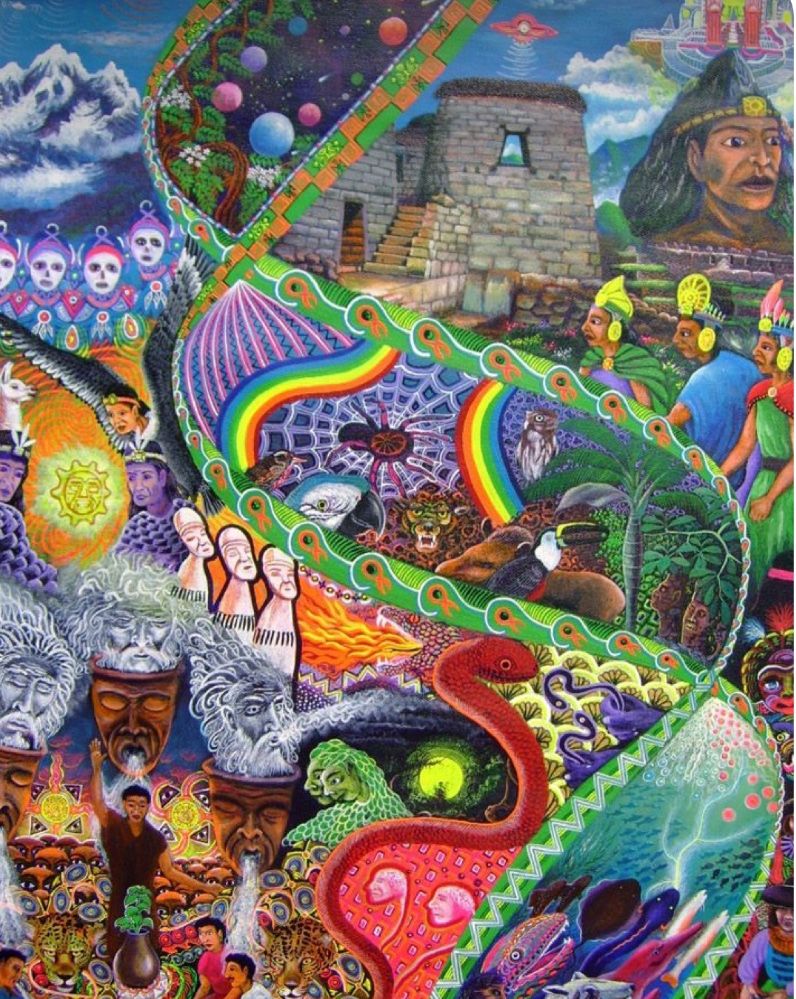
The Andean worldview is based on three main foundations:

  1. Hanan Pacha (The Universe):
    • The Sun, the Moon, the stars, lightning, rainbows, rain, wind, and clouds.
  2. Kai Pacha (The Earth):
    • Mountains, rivers, stones, water, animals, and plants.
  3. Uju Pacha (The Inner World):
    • Ancestors, subterranean dwellers, elves, spirits, demons, and “sacred beings.”

Religion

Andean Religion is deeply connected to the three worlds of their cosmogony, focusing on the following elements:

  • Pachayachachic:
    The Creator of heaven and earth, universal organizer, Supreme God, the beginning and the end.
  • Inti:
    The created God, “rantin” (mediator), the creator of nature and humanity.
  • Apus:
    Spirits inhabiting high altitudes, dwelling in mountains and sacred spaces such as:
    • Mallquis (mummies),
    • Conopas, Vilcas, and Illas,
      which are creators and protectors of humanity.

This structure reflects a deeply interconnected system where the natural, spiritual, and human realms coexist in harmony.


Reference:

  • Candia, C. (2002). Cuadernos Andinos n°1. Ancestral Religion. Centro de Estudios Cusqueños AYNI.

The Andean Tradition Today

Posted on

What is the place of the Andean Tradition today? To answer these questions, it is necessary to look at the historical development of the West with respect to its way of seeing cultures and itself.

The modern project, rooted in rationalism, began in medieval Europe, positioning itself as a discoverer and conqueror—first of its own culture and then of the “other” (Dussel, 1994). It pursued civilizing emancipation through control and violence. Indigenous peoples in America, Africa, and Oceania, among others, have experienced this process firsthand.

The Colonial Legacy in indigenous Knowledge and Religion

Colonizers succeeded not only through economic and material imposition but also by dominating knowledge and religion.

From their elevated position, they dismissed indigenous practices and knowledge as diabolical and inferior, considering them a lesser form of understanding (Depaz, 2015).

The efforts to understand, indigenous religions were marked by anthropologists such as Tylor (1871) who from the evolutionist perspective observed indigenous peoples as animists.

That is, as peoples in stages prior to a formal religion and a developed society, later it was tried to understand more animism as a religious respect to the living world (Chidister, 2018).

Be that as it may, taking indigenous peoples as animists contains colonizing dyes due to the legacy of Tylor.

Andean Wisdom: A Contrast to Divisive Thinking and Ecological Crisis

From this perspective the subject is separated from the object, there is a clear division between the human and its environment (Ricahrd,2017), traditional cultures do not recognize such division.

These ways of thinking have brought the ecological crisis, that humanity lives today, trying to control and domesticate reality without even knowing it (Zambrano mentioned in Piña Saura,2022 ).

The Andean people have expertly preserved and hidden their wisdom in the mountains, protecting it from destructive forces (Depaz, 2015).

This preservation is why some Andean logic endures today. Despite the absence of writing, myths, legends, and everyday speech hold this valuable knowledge (Emanuele and Edouard, 2023).

The Andean people value their strong relationship with both the earth and the cosmos. Favaron (2022), drawing inspiration from Peruvian writer Jose Maria Arguedas, emphasizes that humans must establish reciprocal relationships with other living beings.

Favaron explains that everything has voices and thought. He argues that the environmental crisis goes beyond being a quantifiable or technical issue; it stems from intellectual hardening and an impoverishment of human sensitivity, which blocks the ability to feel the voices and affections of other living beings.

Author: Joan De la colina Roman


 References

  • Dussel,Enrique(1994), El encubrimiento del otro: Hacia el origen del mito de la modernidad
  • Depaz Toledo,Zenon(2015) La cosmo-vision andina en el manuscrito de Huarochiri
  • Tylor, Edward (1871) Primitive culture
  • Chidester David(2018), Religion : material dynamics
  • Ternas, Richard.(2006) Cosmos y psique: indicios para una nueva visión del mundo .Atalanta
  • Emanuele, F., y Edouard, M. (2023). Epistemologías andinas amazónicas.Concepto indígenas de conocimiento o, sabiduría y comprensión (P. Quintanilla & M. L. Clarke Barret, Eds.). Fondo editorial PUCP.
  • Favaron Peyón, P. M. (2022). Poesía y territorio en José María Arguedas: La ecopoética andina de Los ríos profundos. La Palabra, 44, 1-17. https://doi.org/10.19053/01218530.n44.2022.14713