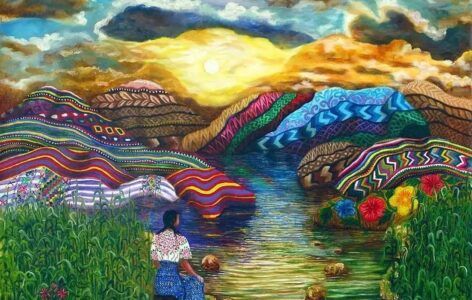
In the Andean calendar, January is not a beginning it is a threshold. While the Western world rushes into resolutions and visible progress, the Andes enter a period known energetically as Killa Unu, the union of Killa (Moon) and Unu (Water). This is a month governed by receptivity, emotional depth, and unseen transformation.

January is not meant to be productive in the outward sense. It is meant to be fertile.
Across the highlands of Cusco and the Sacred Valley, Andean communities living in relationship with Pachamama recognize this time as inner cultivation, when rain and moonlight nourish life forming beneath the soil.
Killa (Moon): Guardian of Cycles and Inner Knowing
In Andean cosmology, Killa, the Moon, is a feminine intelligence associated with cycles, memory, fertility, and the waters of the body. She governs:

- Emotions
- Menstrual and reproductive rhythms
- Dreams and intuitive perception
During Killa Unu, the Moon’s influence becomes especially potent. Emotional sensitivity increases, memories resurface, and the inner world becomes louder than the outer one.
Rather than being seen as instability, this emotional fluidity is considered wisdom in motion.
When people ignore the lunar pull of January and suppress feeling or force clarity, they generate hucha, heavy energy that disrupts personal and communal harmony.
Unu (Water): Rain as Living Intelligence
In the Andes, rain is never “just weather.” Unu is alive.
January marks the peak of the rainy season, when water returns to the land as teacher, cleanser, and carrier of memory. Rain penetrates the soil, awakens seeds, and dissolves what has hardened.

From an Andean perspective, water is a bridge between worlds:
- Hanaq Pacha – the upper, cosmic realm
- Uku Pacha – the inner, subterranean, ancestral realm
- Kay Pacha – the world of everyday life
When the rains fall, these realms communicate more freely. This movement is what brings vivid dreams, emotional release, and a sense of living between worlds in January.
The land listens. So do we.
January Is Not an Initiation – It Is the Womb
A key misunderstanding arises when January is treated as a time for action. In Andean wisdom, initiation does not begin here. January is the womb before initiation, the dark, wet, and silent space where form is still dissolving and reorganizing.

Nothing is required to be clear yet.
Just as seeds planted during the rains remain invisible for weeks, the work of Killa Unu happens below the surface. Forcing this stage disrupts what is quietly forming.
To live in ayni with this month is to rest in trust to allow confusion, slowness, and sensitivity without judgment.
Emotional Waters as Sacred Process

Many people experience January as emotionally heavy or disorienting. From a Western lens, this may be labeled as lack of motivation or direction. From an Andean lens, it is a sign that the waters are moving.
Tears, fatigue, and introspection are not failures, they are forms of cleansing.
Andean tradition does not separate emotional expression from spirituality. People understand deep feeling during January as a way of praying with the body.
Living January in the Modern World
To honor Killa Unu today does not require withdrawing from daily life.
It requires a shift in relationship:
- Trusting processes without immediate evidence
- Listening instead of pushing
- Feeling instead of forcing meaning
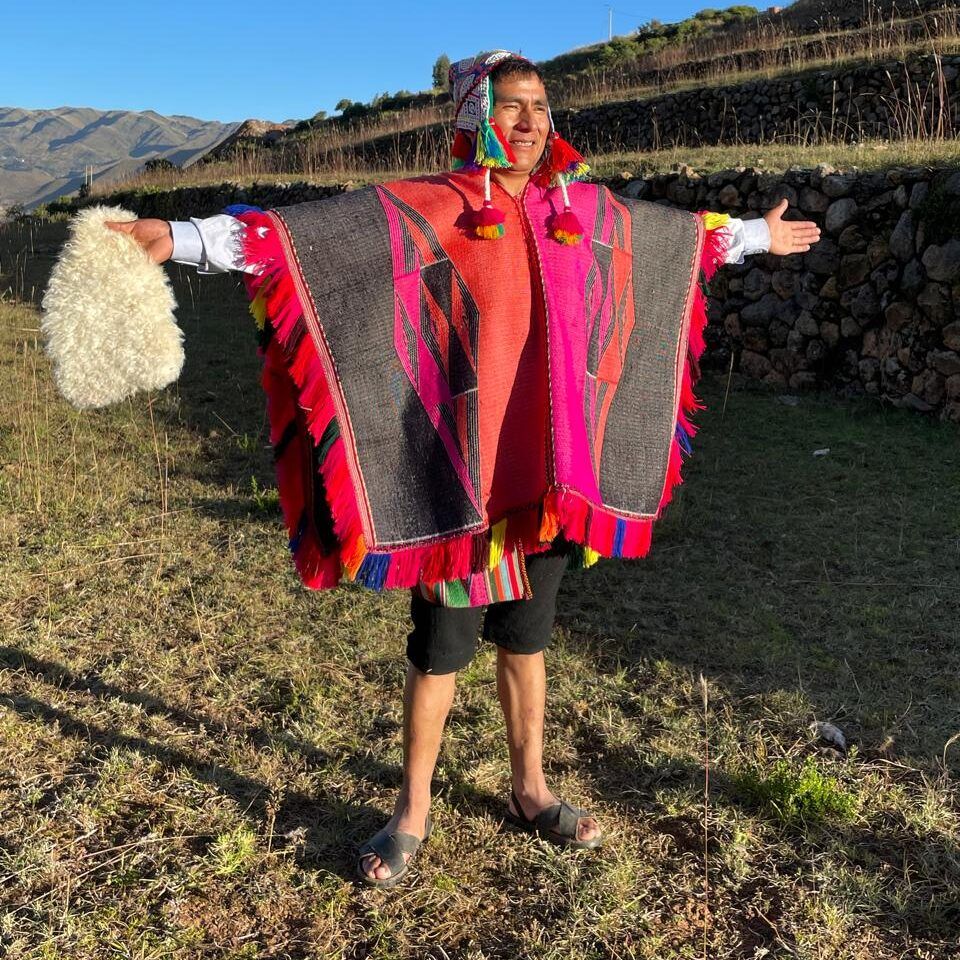
January asks us to remember that life does not always move forward, it sometimes moves inward.
And that inward movement is not delay.
It is preparation.
References
- Allen, C. J. (2002). The hold life has: Coca and cultural identity in an Andean community. Smithsonian Institution Press.
- Bastien, J. W. (1985). Mountain of the condor: Metaphor and ritual in an Andean ayllu. Waveland Press.
- Urton, G. (1981). At the crossroads of the earth and the sky: An Andean cosmology. University of Texas Press.