logo im

Strength and Stability

Posted on

At this stage, growth depends not only on favorable inputs but on the development of strength.

In this context, it refers to the capacity of organisms and systems to persist through variability. It reflects the ability to maintain function despite fluctuations in rainfall, temperature, and soil conditions.

Strength as Adaptive Capacity

In Andean agroecological systems, strength does not imply rigidity. Rather, it emerges through adaptive processes. Plants respond to environmental stressors by modifying their growth patterns, deepening root systems, or reallocating internal resources.

These responses illustrate that it develops through interaction with variability.

Environmental pressures, such as irregular precipitation or shifting microclimates, do not simply threaten growth. They also contribute to the formation of resilience and stability over time. Strength, therefore, is not separate from challenge; it is shaped by it.

Ecological Knowledge and the Cultivation of Strength

Andean farmers actively support the development of strength by working with ecological conditions rather than attempting to eliminate variability. Through long-term observation, they identify patterns in plant behavior and environmental response.

This knowledge informs agricultural practices that reinforce strength.

Crop diversity, soil management, and strategic timing of interventions contribute to the capacity of plants to endure changing conditions. These practices reflect a deep understanding of how strength develops within complex ecological systems.

Strength Within Biodiverse Systems

Biodiversity plays a central role in sustaining strength. Andean agricultural landscapes often include multiple crop varieties adapted to different altitudes, soil types, and climatic conditions.

When one crop experiences stress, others may continue to thrive, maintaining overall productivity. Strength, therefore, emerges not only at the level of individual plants but within the relationships that structure the entire system.

Implications for Human Systems

The concept of strength extends beyond ecological contexts. Human systems, social, psychological, and cultural, also depend on the capacity to endure variability.

It develops through repeated interaction with changing conditions, rather than through avoidance of difficulty.

April, as a seasonal phase, illustrates that growth becomes sustainable when it acquires endurance. What began as emergence must now stabilize through adaptive strength.

In this way, it represents a critical stage in the transition from initial growth to long-term continuity.


References

  • Zimmerer, K. S. (1996). Changing fortunes: Biodiversity and peasant livelihood in the Peruvian Andes. University of California Press.
  • Altieri, M. A., & Nicholls, C. I. (2017). The adaptation and mitigation potential of traditional agriculture in a changing climate. Climatic Change, 140(1), 33–45.
  • Brush, S. B. (2004). Farmers’ bounty: Locating crop diversity in the contemporary world. Yale University Press.

This article draws on both academic literature and oral, lineage-based Andean knowledge. Teachings that originate from living traditions are cited in recognition of their ongoing transmission within Andean communities, while scholarly sources are used to support contextual interpretation.
The Growth that Flow with Nature

Posted on

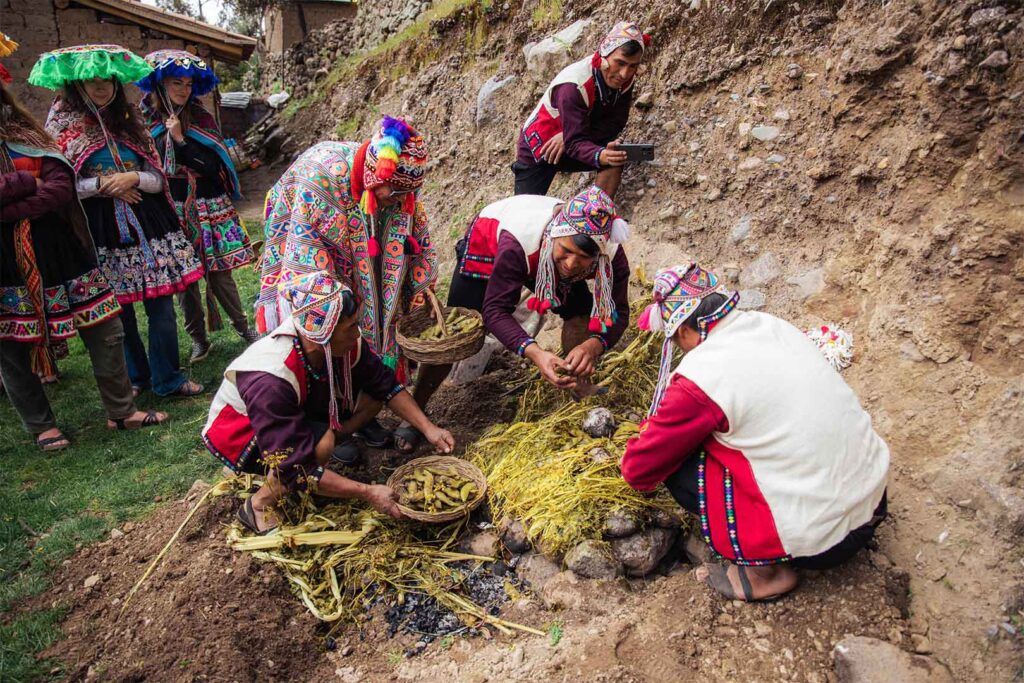
As April advances in the Andean highlands, ecological processes become increasingly dynamic. The initial stages of emergence and rooting give way to more complex interactions among water, soil, vegetation, and human activity. Growth no longer depends solely on establishment; it depends on the capacity of systems to sustain flow.

In this context, flow refers not only to the physical movement of water, but to the circulation of life across interconnected systems. Seasonal rains, soil absorption, plant uptake, and human intervention form part of a broader network of exchanges that sustain agricultural and ecological continuity.

Flow Within the Hydrosocial Cycle

Andean agricultural systems cannot be understood through purely naturalistic frameworks. Water, as a central element of life, moves through what has been described as a hydrosocial cycle, in which ecological processes and social practices remain inseparable.

Within this cycle, flow emerges through the interaction between environmental conditions and human management. Irrigation practices, land use decisions, and communal organization all shape how water circulates across the landscape.

Flow, in this sense, is not an autonomous process. It is co-produced through relationships between human and non-human actors.

Maintaining Flow as Agricultural Practice

Farmers across the Andes actively engage in maintaining the conditions that allow it to continue. This involves guiding water through irrigation channels, managing soil permeability, and adapting to seasonal variations in rainfall.

These practices do not impose external control over the land.

Instead, they respond to existing dynamics, ensuring that the movement of water and nutrients remains continuous.

Interruptions in flow, whether due to environmental shifts or mismanagement, can disrupt agricultural productivity. For this reason, maintaining flow becomes a central concern within Andean farming systems.

Flow as a Relational Ontology

Beyond its material dimension, flow also reflects a broader ontological perspective. Andean cosmology understands life as inherently relational and dynamic. Processes do not occur in isolation; they unfold through continuous interaction.

Within this framework, it represents the ongoing movement that connects different elements of the world. It links cycles of growth, patterns of climate, and forms of human participation.

This perspective challenges static interpretations of nature, emphasizing instead the importance of movement and exchange.

Implications for Human Experience

The concept of flow extends beyond agricultural contexts. Human processes, cognitive, emotional, and social, also depend on the ability to maintain continuity in movement.

When flow is sustained, development occurs with greater coherence. When it is obstructed, stagnation may arise.

April, therefore, offers a model for understanding how systems, both ecological and human, require movement in order to function effectively. Supporting flow becomes a way of sustaining life across multiple levels of experience.


References

  • Boelens, R. (2014). Cultural politics and the hydrosocial cycle: Water, power and identity in the Andean highlands. Geoforum, 57, 234–247.
  • Zimmerer, K. S. (1996). Changing fortunes: Biodiversity and peasant livelihood in the Peruvian Andes. University of California Press.
  • Gelles, P. H. (2000). Water and power in highland Peru: The cultural politics of irrigation and development. Rutgers University Press.

This article draws on both academic literature and oral, lineage-based Andean knowledge. Teachings that originate from living traditions are cited in recognition of their ongoing transmission within Andean communities, while scholarly sources are used to support contextual interpretation.

Relationship: Deepening Bonds With What Has Emerged

Posted on

At this stage, growth depends on relationship. Life does not simply expand; it becomes more deeply connected to everything that sustains it. April reveals that growth strengthens through the quality of these relationships.

Relationship as the Foundation of Life

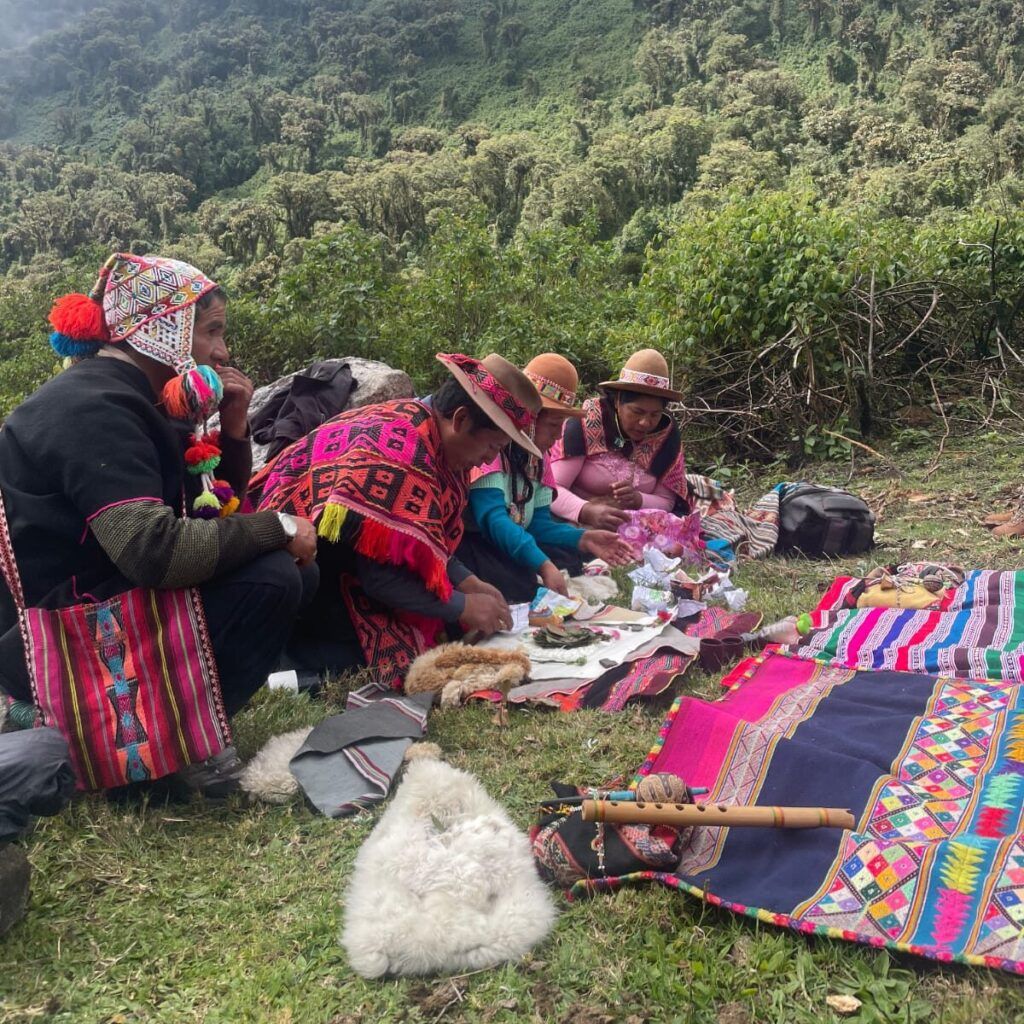
In Andean cosmology, nothing exists independently. Every form of life develops through relationship with other beings and forces. Soil nourishes roots, water sustains growth, sunlight activates development, and human care accompanies the process.

These interactions create a living system.

Growth continues because these relationships remain active and balanced. Without it, even strong beginnings may weaken over time.

Relationship, therefore, is not an addition to growth, it is its foundation.

Deepening Relationship Through Presence

As growth stabilizes, the nature of human participation also evolves. Earlier stages required protection and careful observation. April invites a deeper form of presence.

Farmers spend time within their fields, not only to observe, but to remain connected to the land. This presence strengthens relationship.

Through consistent interaction, people learn to recognize subtle changes and respond with sensitivity. Relationship develops through time, attention, and shared experience.

Beyond the Visible

Not all relationships are immediately visible. In Andean understanding, connections extend beyond what can be directly observed. The land holds memory, cycles carry meaning, and ancestral presence continues to shape the present.

These dimensions also form part of relationship.

Growth unfolds within this wider field, where visible and invisible elements interact continuously. Recognizing these connections deepens the understanding of how life develops.

Living in Relationship

April teaches that growth becomes sustainable when it remains connected. To live in relationship means recognizing that every action participates in a network of interactions.

It means acting with awareness of how each decision affects the balance of the whole.

Through it, growth gains depth, stability, and continuity. What has emerged no longer stands alone, it becomes part of a larger process that sustains life over time.

In this way, April moves beyond simple expansion.
It becomes a season of connection.


References

  • Allen, C. J. (2002). The hold life has: Coca and cultural identity in an Andean community. Smithsonian Institution Press.
  • Urton, G. (1981). At the crossroads of the earth and the sky: An Andean cosmology. University of Texas Press.
  • Isbell, B. J. (1978). To defend ourselves: Ecology and ritual in an Andean village. Waveland Press.

This article draws on both academic literature and oral, lineage-based Andean knowledge. Teachings that originate from living traditions are cited in recognition of their ongoing transmission within Andean communities, while scholarly sources are used to support contextual interpretation.

The Practice of Continuity in Andean Life

Posted on

At this stage, growth requires more than favorable conditions. It requires continuity.

Without it, even strong beginnings may weaken. Growth depends not only on how something starts, but on how it is sustained over time. April teaches that maintaining life is as important as initiating it.

Continuity as Sustained Relationship

In Andean cosmology, continuity does not occur automatically. It emerges through ongoing relationship between multiple forces: soil, water, sunlight, and human care.

These relationships must remain active.

Through it, life continues to receive what it needs to grow. Water must keep flowing, soil must remain nourished, and human attention must not withdraw too soon.

Continuity ensures that growth remains connected to the conditions that support it.

The Daily Practice of Continuity

Continuity develops through repeated actions. Farmers return to their fields day after day, observing, adjusting, and responding to what they find.

Small actions, such as guiding water, clearing obstacles, or reinforcing soil, help maintain the conditions that allow growth to persist. These actions may seem simple, but their consistency creates stability over time.

Continuity is built through presence.

When It Is Interrupted

Growth becomes vulnerable when continuity breaks. Irregular care, sudden absence of attention, or disrupted environmental conditions may weaken what has been developing.

In Andean understanding, these interruptions affect the relationships that sustain life.

For this reason, it requires awareness. Recognizing when support is needed allows people to respond before imbalance becomes more significant.

Living Through Continuity

April teaches that growth is not defined by isolated moments of action, but by the ability to sustain relationship over time.

To live through continuity means remaining present beyond the initial stages of growth. It means understanding that what has begun must be accompanied consistently in order to mature.

Through it, life maintains its direction, strengthens its presence, and prepares for further development.

In this way, growth becomes not only visible, but enduring.


References

Allen, C. J. (2002). The hold life has: Coca and cultural identity in an Andean community. Smithsonian Institution Press.

Gose, P. (1994). Deathly waters and hungry mountains: Agrarian ritual and class formation in an Andean town. University of Toronto Press.

Rengifo Vásquez, G. (2001). La crianza de la chacra en los Andes. PRATEC – Proyecto Andino de Tecnologías Campesinas.

This article draws on both academic literature and oral, lineage-based Andean knowledge. Teachings that originate from living traditions are cited in recognition of their ongoing transmission within Andean communities, while scholarly sources are used to support contextual interpretation.
Rooting Expansion: Growth That Strengthens From Within

Posted on

As April unfolds, the Andean landscape reflects a shift in the quality of growth. This phase marks a movement roward rooting.

What emerged during March no longer remains at the surface alone.

Plants extend not only upward, but also downward. Their roots deepen into the soil, anchoring what has begun to take form.

Growth no longer depends solely on favorable conditions. It begins to sustain itself through the strength of its connection to the earth. April, therefore, is not defined by rapid expansion, but by the consolidation of what has already emerged.

Rooting as Stability

In Andean cosmology, growth requires more than visibility.

Without strong roots, expansion remains fragile. Wind, rain, or changing conditions can easily disrupt what has not yet anchored itself. It provides stability, allowing life to continue developing without losing coherence.

This process often remains unseen. While leaves and stems signal visible growth, the most important work occurs beneath the surface. Rooting strengthens the foundation that supports everything that appears above ground.

Expanding Without Losing Ground

April introduces a form of expansion that does not separate from its source.

As plants grow, they maintain continuous contact with the soil that sustains them.

This relationship defines rooting.

Expansion without rooting may lead to imbalance. Growth that moves too quickly without deepening its foundation risks weakening over time.

For this reason, Andean practices emphasize strengthening the connection to the land as growth continues.

To expand in a grounded way means growing while remaining anchored.

Rooting in Human Experience

The principle of rooting extends beyond the agricultural cycle. In human life, processes that began to emerge in previous months now require stabilization.

New directions, ideas, or internal changes benefit from it before further expansion.

This may involve returning to foundational practices, reinforcing supportive relationships, or allowing time for experiences to settle. Rooting ensures that growth becomes sustainable rather than temporary.

The Quiet Strength of Rooting

Rooting does not seek visibility. It develops quietly, beneath the surface, where stability is formed. Its strength becomes evident over time, as what grows above ground remains steady despite changing conditions.

April teaches that rooting is not separate from growth, it is what makes growth possible.

By deepening connection, strengthening foundations, and maintaining relationship with what sustains life, rooting allows expansion to continue without losing balance.

In this way, the season moves forward, not through acceleration, but through depth.


References

  • Allen, C. J. (2002). The hold life has: Coca and cultural identity in an Andean community. Smithsonian Institution Press.
  • Urton, G. (1981). At the crossroads of the earth and the sky: An Andean cosmology. University of Texas Press.
  • Rengifo Vásquez, G. (2001). La crianza de la chacra en los Andes. PRATEC – Proyecto Andino de Tecnologías Campesinas.

This article draws on both academic literature and oral, lineage-based Andean knowledge. Teachings that originate from living traditions are cited in recognition of their ongoing transmission within Andean communities, while scholarly sources are used to support contextual interpretation.
The Threshold of Transition

Posted on

As March comes to an end we understand that transition is not abrupt. They unfold gradually, as one phase gives way to another.

The Andean landscape reflects the accumulation of an entire seasonal process. What began as subtle emergence has now developed into visible, structured growth.

Fields hold a stronger presence, and life moves with greater continuity.

This moment does not mark an ending. It marks a transition.

March stands at a threshold where what has been cultivated begins to prepare for its next stage.

Transition as Continuity

Transition does not interrupt growth. It carries it forward.

The processes that began beneath the soil, that later emerged and strengthened, now move toward further development. This movement requires transition in order to remain coherent.

Rather than separating one stage from another, transition connects them. It allows life to continue without rupture.

Recognizing the Signs of Transition

The land offers subtle signs that a shift is taking place.

Growth stabilizes, rhythms become more consistent, and the need for constant intervention begins to change.

What required protection earlier now shows signs of greater resilience.

These changes indicate transition.

Recognizing them requires attention. Without awareness, transitions may go unnoticed, and actions may remain tied to earlier stages that no longer correspond to present conditions.

March teaches the importance of adjusting perception as life evolves.

Letting Growth Move Forward

One of the challenges of transition is learning when to release control. What has been carefully accompanied, protected, and supported must now continue its process with greater autonomy.

Transition invites trust.

Farmers begin to step back from certain forms of intervention, allowing crops to follow their natural course. This does not mean abandoning care, but transforming it.

Through transition, care shifts from constant presence to strategic support.

Crossing the Threshold

The end of March represents a threshold between what has been established and what will continue to develop. Crossing this threshold requires awareness of what has already taken form and openness to what is still unfolding.

Transition is not only external. It also takes place internally.

As the season changes, people adjust their relationship with time, action, and expectation. What was once fragile has gained strength. What required protection now begins to sustain itself.

Preparing for Continuity

March does not close a cycle; it prepares it.

Through transition, growth moves toward its next expression. The relationships that sustained emergence now support continuity at a different level.

By recognizing transition, people remain aligned with the rhythm of the land.

In this way, the end of March becomes not a conclusion, but a passage, one that carries forward everything that has been cultivated, and opens space for what is yet to come.


References

  • Allen, C. J. (2002). The hold life has: Coca and cultural identity in an Andean community. Smithsonian Institution Press.
  • Gose, P. (1994). Deathly waters and hungry mountains: Agrarian ritual and class formation in an Andean town. University of Toronto Press.
  • Urton, G. (1981). At the crossroads of the earth and the sky: An Andean cosmology. University of Texas Press.

This article draws on both academic literature and oral, lineage-based Andean knowledge. Teachings that originate from living traditions are cited in recognition of their ongoing transmission within Andean communities, while scholarly sources are used to support contextual interpretation.