logo im

The Mistake of New Year Obsession

Posted on

The global narrative frames January as a fresh start, it creates obsession and Andean cosmology offers a radically different interpretation: January is not an initiation. It is an incubation.

During this month, life retreats inward. Seeds dissolve underground. Waters saturate the soil. Nothing visible asks to be finalized yet.

Forcing momentum during this time creates friction with natural intelligence.


The Western Obsession with Clarity

Western culture associates growth with decisiveness and clarity. The Andes honor ambiguity as fertile space.

January belongs to Uku Pacha, the inner and unseen realm, where transformation occurs through breakdown and reorganization. This process requires darkness, moisture, and time.

Demanding certainty during incubation interrupts formation and creates obsession.


Incubation as a Sacred Phase

In Andean thought, incubation is not passive. It is structural preparation.

Just as seeds break apart before sprouting, identities and intentions often dissolve before reforming. Confusion, emotional sensitivity, and lack of direction signal that repatterning is underway.

Mislabeling this phase as failure generates self-judgment and hucha.


Releasing the Pressure to Begin

Releasing the pressure to begin does not mean abandoning intention or direction. It means recognizing that not every moment is designed for initiation. In the Andean calendar, January holds a different responsibility: it prepares the ground so that future beginnings can root without strain.

During January, Pachamama invites people to loosen their grip on certainty. Plans may feel unfinished. Desires may lack shape. Rather than forcing definition, Andean tradition encourages staying in relationship with what is unclear. This relationship builds resilience.

When people release the pressure to begin, the nervous system settles. Energy stops leaking into premature decisions. Attention returns to the body, to feeling, and to subtle signals that often go unnoticed when urgency dominates.

This pause also protects what is forming. Just as seeds left undisturbed develop stronger roots, intentions held gently gain coherence before expression. Beginnings that arise after incubation tend to endure because they carry structural integrity, not reaction.

Releasing the pressure to begin is, ultimately, an act of trust. It affirms that life knows how to organize itself when given time, moisture, and space. January does not ask for answers—it asks for presence.

Clarity will come.
But first, the ground must soften.


References

  • Allen, C. J. (2002). The hold life has: Coca and cultural identity in an Andean community. Smithsonian Institution Press.
  • Isbell, B. J. (1978). To defend ourselves: Ecology and ritual in an Andean village. University of Texas Press.

Ayni with the Rain

Posted on

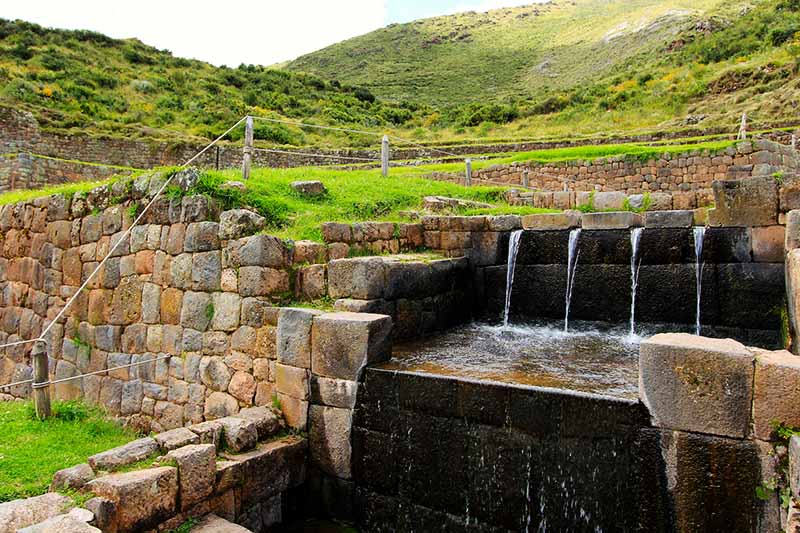
January teaches with rain, one of the most humbling spiritual lessons: humans do not set the rhythm, nature does. During the rainy season, daily life reorganizes itself around the arrival of water. Roads flood, schedules shift, and plans dissolve. This is not seen as disruption, but as instruction.

The Andes call this relationship ayni, sacred reciprocity between humans, land, and the living forces of the world.

To practice ayni with the rain means releasing the illusion of control and learning to move with natural timing rather than against it.


Rain as Authority, Not Obstacle

In Western frameworks, rain often represents inconvenience or delay. In Andean cosmology, Unu (Water) holds authority. Rain decides when to plant, when to travel, and when to rest.

Across the highlands of Cusco, the Sacred Valley, and rural ayllus, people do not ask how to overcome the rain. They ask how to respond properly to it.

When rain arrives, it demands presence:

  • Respect for forces beyond human will
  • Attention to the land
  • Flexibility in human plans

This response maintains energetic balance and prevents the accumulation of hucha, heavy energy born from resistance.


Ayni as Listening, Not Bargaining

Ayni does not mean asking nature for favors. It means listening and adjusting behavior accordingly.

During January, the rain teaches through repetition. It arrives daily, reminding people that productivity does not define worth. Relationship does.

Those who attempt to maintain rigid schedules during this time often experience exhaustion or frustration. Andean wisdom interprets this not as personal failure, but as misalignment with rhythm.

To return to ayni, one must soften.


Rain Learning: Yield Without Collapse

Yielding to the rain does not mean surrendering responsibility. It means cooperating intelligently.

Farmers still tend their fields. Families still gather. Life continues—but at a pace dictated by Pachamama, not urgency.

January reminds us that resilience includes adaptability. Strength lies not in resistance, but in responsive movement.


References

  • Bastien, J. W. (1985). Mountain of the condor: Metaphor and ritual in an Andean ayllu. Waveland Press.
  • Urton, G. (1981). At the crossroads of the earth and the sky: An Andean cosmology. University of Texas Press.

Sowing Without Seeing: The Andean Medicine of Patience

Posted on

In the Andean calendar, January carries patience: plant without proof. During the height of the rainy season, farmers place seeds into saturated soil, fully aware that weeks will pass before any visible sign appears.

This act requires discipline, humility, and trust in Pachamama.

Rather than offering confirmation or clarity, this month demands relationship with uncertainty. It teaches patience not as waiting, but as active trust in processes unfolding beyond perception.

Agricultural Wisdom as Spiritual Teaching

In Andean communities throughout the highlands of Cusco and the Sacred Valley, sowing during the rains follows precise ancestral timing.

Farmers do not plant to control outcomes; they plant to enter dialogue with land, weather, and unseen forces.

Seeds disappear beneath the soil. Doubt follows naturally.

Yet Andean wisdom holds that questioning the process too early interrupts ayni, the sacred reciprocity between human effort and natural intelligence.

To sow without seeing is to honor timing over urgency.


The Unseen Work of Uku Pacha

Once seeds enter the earth, their transformation begins in Uku Pacha, the inner and ancestral realm.

This phase involves:

  • Disintegration of the seed’s original form
  • Reorganization of energy and matter
  • Root formation before emergence

Nothing about this process looks productive from the surface.

Similarly, spiritual and psychological transformations often begin with confusion, fatigue, or loss of direction. From an Andean perspective, these states signal that deep rooting is underway.

Uku Pacha works in darkness by necessity.

Why Doubt Appears During January

Many people experience January as a month of doubt:

  • “Why does nothing feel clear?”
  • “Why haven’t I changed yet?”
  • “Why does progress feel invisible?”

Andean tradition does not interpret these questions as failure. Instead, it recognizes them as threshold experiences moments when the old self dissolves before the new one stabilizes.

Western Urgency vs. Andean Timing

Doubt surfaces because the ego cannot witness subterranean change.

Patience, in this context, becomes a form of spiritual strength.

Western frameworks often equate growth with visibility. Productivity, success, and healing must appear measurable. Andean cosmology challenges this assumption by honoring invisible labor.

Forcing clarity too soon creates hucha, heavy energy that disrupts natural unfolding. Trusting the unseen, however, preserves vitality and coherence.

The Earth never reveals growth on demand.

Patience as Sacred Discipline

In the Andes, patience does not mean passivity. It requires:

  • Consistent care without control
  • Attention without interference
  • Faith without reassurance

This discipline cultivates resilience, grounding, and long-term stability. What grows slowly tends to endure.

Seeds that rush toward light often weaken at the root.

Applying Patience to Modern Life

To live this teaching today means allowing periods of uncertainty without self-judgment. It means resisting the urge to explain, label, or finalize experiences prematurely.

January reminds us that clarity often arrives after rooting, not before.

Those who trust the process even when nothing appears to be happening align themselves with a wisdom far older than strategy.


References

  • Allen, C. J. (2002). The hold life has: Coca and cultural identity in an Andean community. Smithsonian Institution Press.
  • Bastien, J. W. (1985). Mountain of the condor: Metaphor and ritual in an Andean ayllu. Waveland Press.
  • Isbell, B. J. (1978). To defend ourselves: Ecology and ritual in an Andean village. University of Texas Press.
  • Urton, G. (1981). At the crossroads of the earth and the sky: An Andean cosmology. University of Texas Press.

Mama Cocha Awakens: Water as Sacred Memory in January

Posted on

In the Andean calendar, January marks the moment when water reclaims its voice. The rains arrive not as background weather, but as presence active, relational, and alive. This is the time when Mama Cocha, the Great Mother of Waters, awakens the land and restores movement to what has grown dry or rigid.

Water is the second most important element for the existence of life.

In Andean cosmology, water is not an element to be managed. Unu is a being with memory, agency, and consciousness.

When the rains fall across the Andes from the highlands of Cusco to the terraces of the Sacred Valley they initiate a seasonal conversation between sky, earth, and human life.


Who Is Mama Cocha?

Mama Cocha embodies all waters: oceans, rivers, lakes, springs, rain, blood, tears, and amniotic fluid.

She governs:

  • Emotional flow
  • Fertility and gestation
  • Memory carried through lineage and land

Unlike Western frameworks that separate emotion from knowledge, Andean tradition understands water as a carrier of intelligence. Every body of water holds stories of the mountains it touched, the prayers spoken nearby, and the ancestors who crossed it.

To relate to Mama Cocha is to recognize that feeling is a form of knowing.


January Rains as Ancestral Activation

When January rains saturate the land, they do more than nourish crops. They activate ancestral memory embedded in soil, stone, and seed. In Andean understanding, water awakens what rests in Uku Pacha, the inner and ancestral realm.

This activation often manifests through:

Rather than pathologizing these experiences, Andean wisdom interprets them as signs that memory is moving.

Water does not erase the past it brings it into motion so it can be integrated.


Mama cocha as a Bridge

In Andean cosmology, water travels freely between the Three Worlds:

  • Uku Pacha – the inner, subterranean, and ancestral realm
  • Kay Pacha – the world of embodied human experience
  • Hanaq Pacha – the celestial and cosmic realm

During January, increased rainfall thins the boundaries between these realms. Water carries messages upward and downward, translating what words cannot.

This movement explains why January often feels liminal like standing between what has been and what has not yet taken form.


Emotional Release as Sacred Cleansing

In Andean tradition, people do not treat emotional release as weakness. They recognize it as cleansing.

Tears mirror rain. Both soften hardened ground.

Suppressing emotion during this season disrupts the natural flow of Unu and can generate hucha, heavy or stagnant energy that accumulates in the body and psyche. Allowing feeling, however, restores circulation and balance.

In this way, emotional honesty becomes a spiritual practice.


Relating to Mama Cocha in Daily Life

Honoring Mama Cocha in January does not require elaborate ceremony. Relationship grows through simple, intentional acts:

  • Offering gratitude to rivers, lakes, or rain
  • Bathing or washing hands with conscious presence
  • Listening to water without distraction

These gestures reestablish ayni, sacred reciprocity, with the waters that sustain all life.

When people restore relationship with water, they often find their emotional world reorganizing naturally.

January as a Month of Fluid Intelligence

January teaches that clarity does not always come through structure or effort. Sometimes clarity emerges through movement, feeling, and release.

Mama Cocha reminds us that water does not resist obstacles, it reshapes them.

To walk with January is to trust that what feels overwhelming may actually be repatterning, guided by a wisdom older than thought.


References

  • Allen, C. J. (2002). The hold life has: Coca and cultural identity in an Andean community. Smithsonian Institution Press.
  • Bastien, J. W. (1985). Mountain of the condor: Metaphor and ritual in an Andean ayllu. Waveland Press.
  • Isbell, B. J. (1978). To defend ourselves: Ecology and ritual in an Andean village. University of Texas Press.
  • Urton, G. (1981). At the crossroads of the earth and the sky: An Andean cosmology. University of Texas Press.

Killa Unu: January, The Month of the Moon and the Rains

Posted on

In the Andean calendar, January is not a beginning it is a threshold. While the Western world rushes into resolutions and visible progress, the Andes enter a period known energetically as Killa Unu, the union of Killa (Moon) and Unu (Water). This is a month governed by receptivity, emotional depth, and unseen transformation.

January is not meant to be productive in the outward sense. It is meant to be fertile.

Across the highlands of Cusco and the Sacred Valley, Andean communities living in relationship with Pachamama recognize this time as inner cultivation, when rain and moonlight nourish life forming beneath the soil.


Killa (Moon): Guardian of Cycles and Inner Knowing

In Andean cosmology, Killa, the Moon, is a feminine intelligence associated with cycles, memory, fertility, and the waters of the body. She governs:

  • Emotions
  • Menstrual and reproductive rhythms
  • Dreams and intuitive perception

During Killa Unu, the Moon’s influence becomes especially potent. Emotional sensitivity increases, memories resurface, and the inner world becomes louder than the outer one.

Rather than being seen as instability, this emotional fluidity is considered wisdom in motion.

When people ignore the lunar pull of January and suppress feeling or force clarity, they generate hucha, heavy energy that disrupts personal and communal harmony.

Unu (Water): Rain as Living Intelligence

In the Andes, rain is never “just weather.” Unu is alive.

January marks the peak of the rainy season, when water returns to the land as teacher, cleanser, and carrier of memory. Rain penetrates the soil, awakens seeds, and dissolves what has hardened.

From an Andean perspective, water is a bridge between worlds:

When the rains fall, these realms communicate more freely. This movement is what brings vivid dreams, emotional release, and a sense of living between worlds in January.

The land listens. So do we.

January Is Not an Initiation – It Is the Womb

A key misunderstanding arises when January is treated as a time for action. In Andean wisdom, initiation does not begin here. January is the womb before initiation, the dark, wet, and silent space where form is still dissolving and reorganizing.

Nothing is required to be clear yet.

Just as seeds planted during the rains remain invisible for weeks, the work of Killa Unu happens below the surface. Forcing this stage disrupts what is quietly forming.

To live in ayni with this month is to rest in trust to allow confusion, slowness, and sensitivity without judgment.

Emotional Waters as Sacred Process

Many people experience January as emotionally heavy or disorienting. From a Western lens, this may be labeled as lack of motivation or direction. From an Andean lens, it is a sign that the waters are moving.

Tears, fatigue, and introspection are not failures, they are forms of cleansing.

Andean tradition does not separate emotional expression from spirituality. People understand deep feeling during January as a way of praying with the body.


Living January in the Modern World

To honor Killa Unu today does not require withdrawing from daily life.

It requires a shift in relationship:

  • Trusting processes without immediate evidence
  • Listening instead of pushing
  • Feeling instead of forcing meaning

January asks us to remember that life does not always move forward, it sometimes moves inward.

And that inward movement is not delay.
It is preparation.


References

  • Allen, C. J. (2002). The hold life has: Coca and cultural identity in an Andean community. Smithsonian Institution Press.
  • Bastien, J. W. (1985). Mountain of the condor: Metaphor and ritual in an Andean ayllu. Waveland Press.
  • Urton, G. (1981). At the crossroads of the earth and the sky: An Andean cosmology. University of Texas Press.

Why Not Everyone Is Called to Heal

Posted on

In modern spiritual culture, to heal is often presented as a universal calling as if everyone is meant to become a healer, guide, or facilitator.

From an Andean perspective, this idea misunderstands both service and medicine.

Healing is not a status or identity.

It is a responsibility that emerges through initiation, humility, and necessity.

Not everyone is called to heal and that is not a failure.

To Heal Is a Role, Not a Hierarchy

Andean societies do not organize themselves around spiritual hierarchies where healers stand above others. Instead, they recognize distinct roles within the ayllu, farmers, weavers, guardians, storytellers, midwives, leaders, and healers.

Each role serves life differently. No role is superior.

The Call Comes Through Crisis, Not Desire

In Andean tradition, the call to heal does not arise from fascination or aspiration. It emerges through crisis, illness, rupture, and survival.

Many healers become healers because they had no other choice. Life pushed them into relationship with suffering until medicine emerged (Eliade, 1958).

Failed Heal Initiation and Spiritual Inflation

When individuals assume the role of healer without undergoing initiation, the result is often spiritual inflation, power without containment.

Without disintegration, grief, and disciplined learning, healing practices can become performative or harmful rather than restorative (Turner, 1969).

To carry medicine is to carry responsibility for others’ vulnerability. It requires regulation, discernment, ethical restraint, and continuous relationship with land and community.

Not everyone is meant to carry this weight.

Service Takes Many Forms

From an Andean lens, service is not defined by healing alone. Teaching, protecting water, feeding others, preserving memory, raising children, and tending land are equally sacred acts.

To insist that everyone must heal diminishes these forms of service.

Knowing When It Is Not Your Path

True wisdom includes recognizing when healing is not one’s calling.

There is integrity in choosing to support, learn, witness, or protect rather than lead.

Right Relationship with Power

Healers exist not to be admired, but to maintain balance. When power is taken prematurely, imbalance follows.

The Andean path emphasizes restraint as much as action.

To honor the Andean tradition is to respect the difference between curiosity and calling.

Healing is not for everyone. Belonging is.


References

  • Eliade, M. (1958). Rites and symbols of initiation. Harper & Row.
  • Estermann, J. (2013). Andean philosophy: A reader. University of New Mexico Press.
  • Turner, V. (1969). The ritual process: Structure and anti-structure. Aldine.