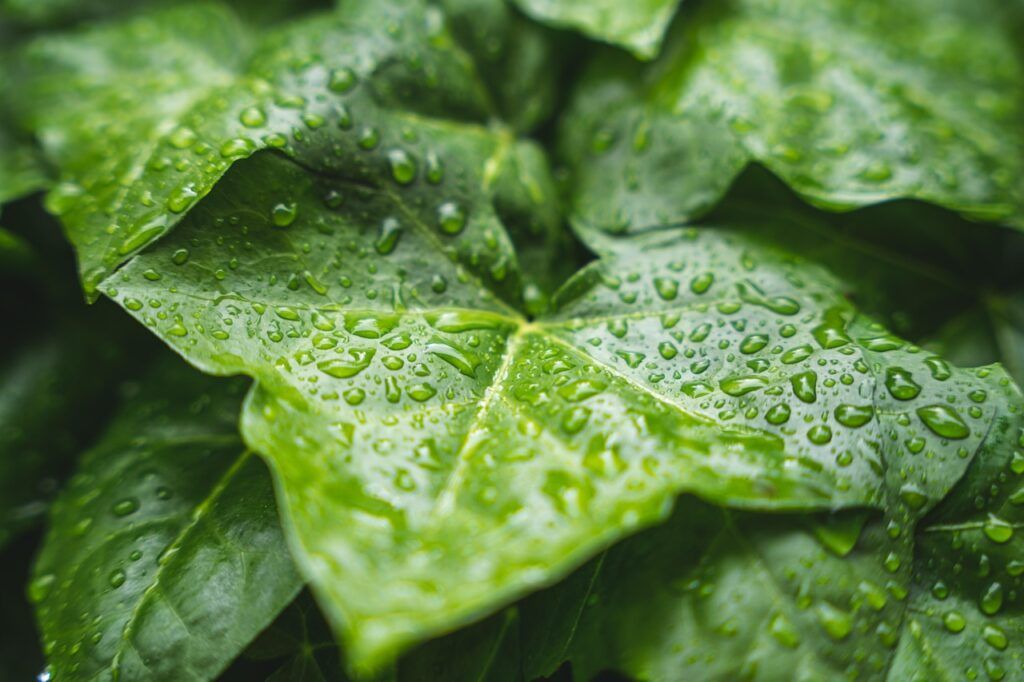
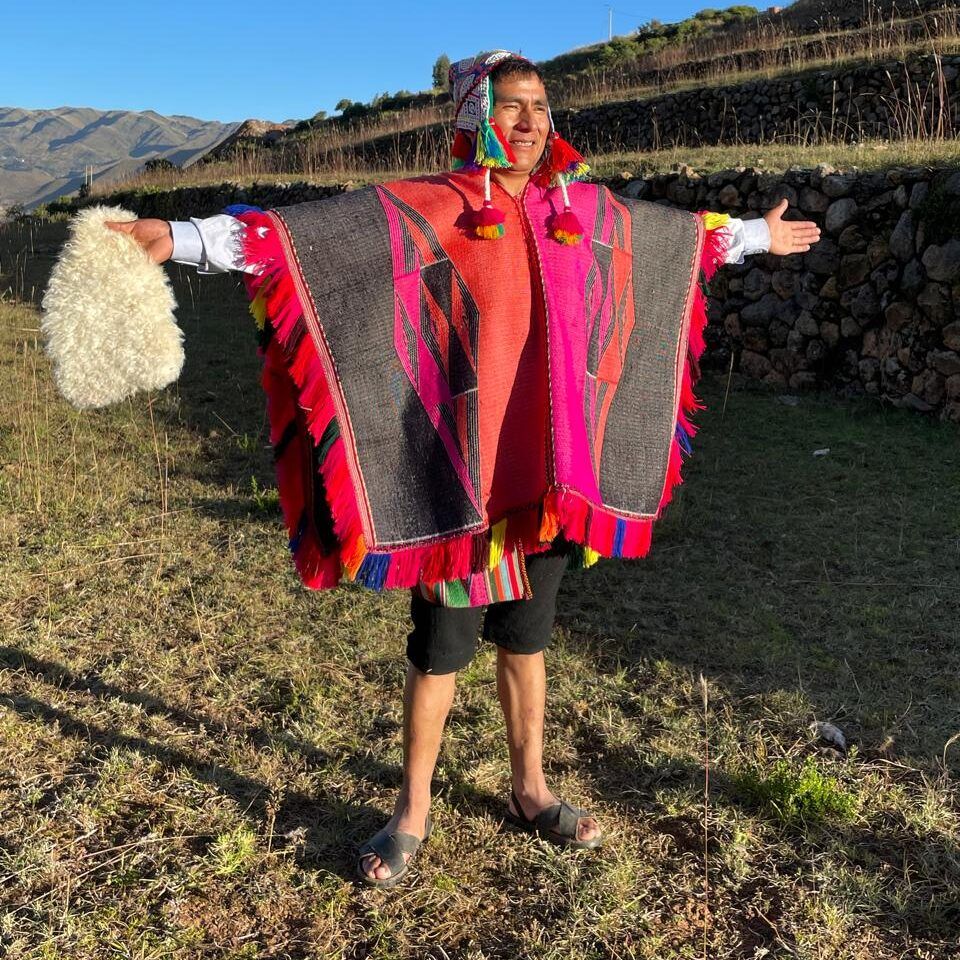
The “dry cold” (Chiri) does more than just freeze the ground; it concentrates the essential oils and spiritual potency of the local flora, medicinal plants. In the Andean tradition, this is the month of the Hampi-Camayoc (the keeper of medicines), where the harvest shifts from sustenance to healing.
The Potency of the Frost
In Western herbalism, people often judge plants by their active chemical compounds. However, in the spiritual Andes, people also determine a plant’s power through its relationship with the sun and the frost (Lasta).
During May, plants like Muña (Andean mint) and Sasawi are at their peak. People believe that the intense radiation of the May sun, combined with the freezing nights, “cooks” the spirit of the plant, making its Kallpa (force) more concentrated.
Collecting these medicinal plants in May is a ritual act of capturing the sun’s fire to survive the coming winter.
Muña – One of the most powerful Medicinal Plants
Muña is the queen of the May harvest. Beyond its ability to aid digestion, it is used mystically to “digest” the heavy experiences of the past year.
As the community gathers the last of the crops, Muña is used in smoke ceremonies to cleanse the Qollqas (granaries).
Spiritually, this represents the clearing of the mental space, removing the “pests” of negative thoughts so that the “harvest” of our personal growth can remain pure through the dark half of the year.
“The medicine of May is a medicine of preservation. We do not gather plants to use them immediately; we gather them to bridge the gap between the abundance of the sun and the scarcity of the frost. To smell Muña in the dry May wind is to breathe in the memory of the sun.”
The Language of Medicinal Plants
Hampi: Medicine or remedy. In the Andes, medicine is anything that restores Ayni(balance).
Ch’aki: Dry. This describes the climate of May and the state of the plants, which are entering a “dormant but potent” phase.
Q’utu: A bundle. In May, healers create bundles of dried herbs and hang them in the home as spiritual shields against the “winds of sickness” that arrive with the drop in temperature.
The Botanical Staircases
For those seeking the spirit of May’s medicine, certain locations vibrate with the energy of the Hampi:
The Terraces of Moray: Often viewed as an agricultural laboratory, Moray in May is a masterclass in microclimates. Here, one can see how different levels of stone and soil affect the “spirit” and potency of medicinal species.
Cachiccata (The Quarries of Ollantaytambo): The high trails leading to the ancient quarries are lined with high-altitude flora that thrives in the May frost. Hiking these trails is a literal inhalation of the Andes’ medicinal breath.
References
Franquemont, C., et al. (1990).The Ethnobotany of Chinchero, Peru. Field Museum of Natural History.
Girault, L. (1987).Kallawaya: Metaphor and Ritual in Andean Medicine. UNICEF.
Inamura, T. (1981).Adaptation to High Altitude: Ritual and Economy in the Andes.
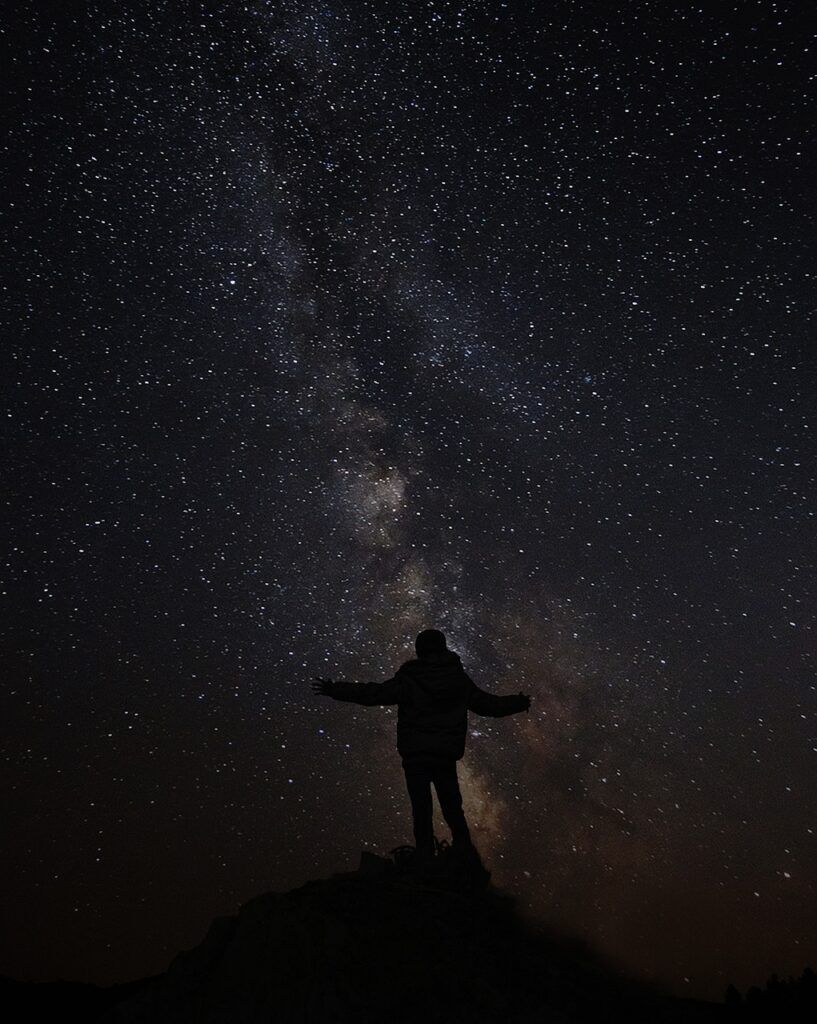
This is the time of the Unu Pachacuti, a period of celestial realignment where the “Great Storehouse” of the sky, the star cluster known as the Pleiadesor Qollqa, returns to visibility in the Southern Hemisphere.
In the Andean cosmovision, this is not a mere astronomical event; it is the moment the universe “resets” its energetic accounts.
The Pleiades as the Divine Accountant
In the Quechua language, Qollqa literally means “granary” or “storehouse.”
The ancient Incas and contemporary Paqos(priests) believe that these stars are the celestial counterpart to the terrestrial harvests happening in the valleys below. During the late weeks of May, people use the clarity with which these stars appear as a prophetic tool.
If the Qollqa shines with a sharp, crystalline light, it is a sign that the Pachamamahas accepted the offerings of the year and that the upcoming cycle will be one of abundance.
If they appear dim or flickering through the high-altitude haze, the community prepares for a year of “stewardship” and conservation.
This “celestial accounting” creates a bridge between human labor and cosmic will. It teaches us that the heavens always mirror our efforts on earth.
For the modern reader, this represents the Law of Correspondence: as we harvest our physical projects in May, we must also check our “spiritual granaries”, the intentions and wisdom we have stored to sustain us through the inner winter.
The Silence of the Night Sky
May offers the clearest nights of the year in the Andes.
People see this transparency as a “thinning of the veil” between the Kay Pacha (this world) and the Hanaq Pacha (the celestial world).
It is a time for Ch’allay, or the ritual libation directed toward the stars. By offering a small portion of the first harvest to the night sky, the practitioner acknowledges that while the hand sows the seed, it is the light of the stars and the warmth of the sun that grant the “Kawsay” (life force).
“The stars in May are the eyes of the ancestors looking down upon the harvest. To see the Pleiades rise is to witness the rebirth of time itself, a celestial confirmation that the cycle of reciprocity remains unbroken.”
Hanaq Pacha: The upper world; the realm of stars, light, and pure energy (Sami).
Pachacuti: A transformation of space-time. The rising of the Pleiades in May marks a “small Pachacuti,” a turning of the seasonal wheel.
Observatories of the Soul
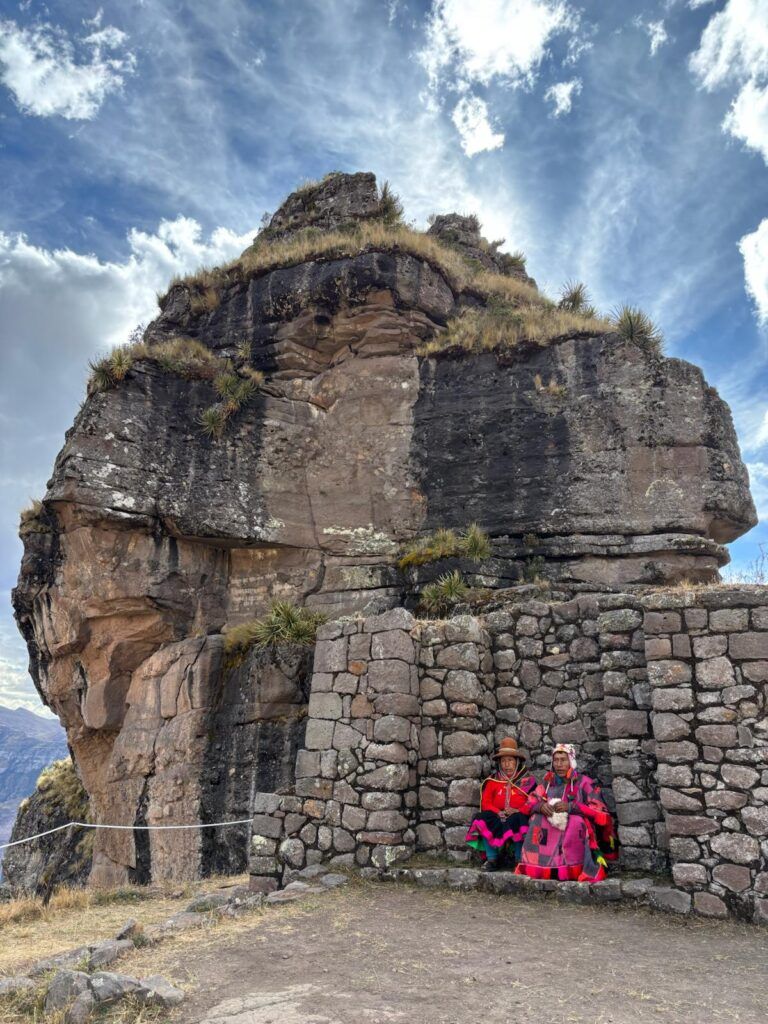
Kenko (Q’enqo): This limestone huaca near Cusco acts as a shadow-clock and ritual altar. During the clear nights of May, people say that the carved channels in the rock align with specific constellations, facilitating a “merging” of the initiate’s energy with the cosmos.
Sayhuite: People know this site in Apurímac for its “Big Stone,” which contains hundreds of carvings and is believed to represent a map of the Andean world. In May, the stone serves as a focal point for understanding the flow of water and energy from the peaks to the stars.
References
Zuidema, R. T. (1982).The Sidereal Lunar Calendar of the Incas. In Archaeoastronomy in the New World.
Urton, G. (1981).At the Crossroads of the Earth and the Sky: An Andean Cosmology.
Aveni, A. F. (2001).Skywatchers: A Revised and Updated Version of Skywatchers of Ancient Mexico.
This article draws on both academic literature and oral, lineage-based Andean knowledge. Teachings that originate from living traditions are cited in recognition of their ongoing transmission within Andean communities, while scholarly sources are used to support contextual interpretation.
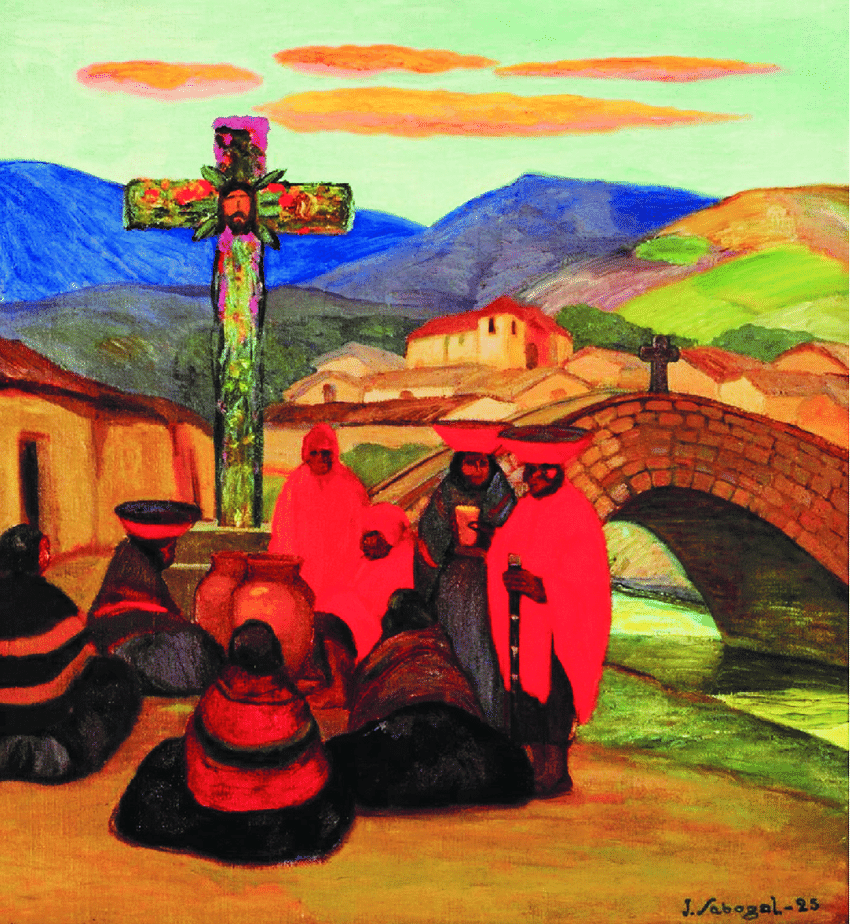
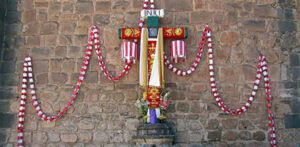
The festival of Cruz Velacuy or The Veiling of the Cross.
In the first week of May there is a sensory explosion: the scent of incense (palosanto), the rhythmic clashing of bronze bells, and the sight of massive wooden crosses being carried down precarious mountain paths.
The Alchemical Marriage: Wood, Stone, and Spirit
While the outward symbols are Christian, the internal logic is purely Andean.
In the pre-Columbian mind, the Huaca (sacred object or place) held a specific density of energy. When the Spanish replaced Huacas with crosses, the Andean people did not abandon their gods; they transferred the protection of the Apu(Mountain Spirit) into the wood of the cross.
“The cross in the Andes is not merely a symbol of crucifixion, but a ‘Chacana‘ in disguise, a bridge or ladder that connects the Kay Pacha (this world) with the Hanan Pacha (the upper world). Veiling the cross is an act of maintaining the energetic ‘heat’ of the community during the transition to the cold season.”
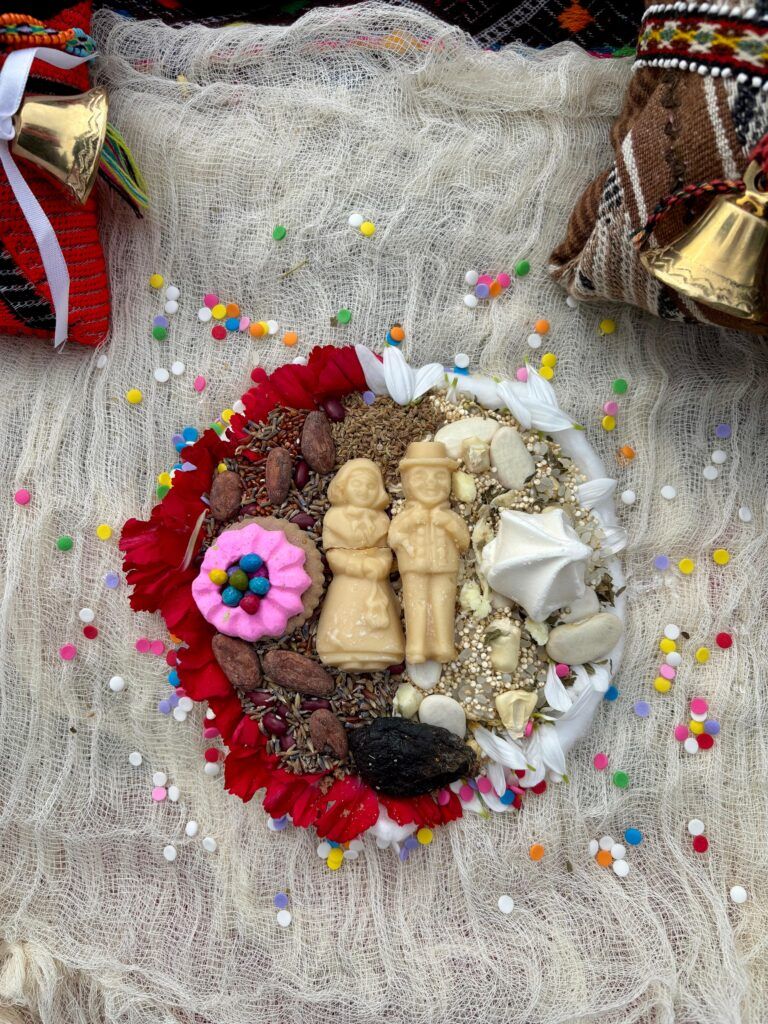
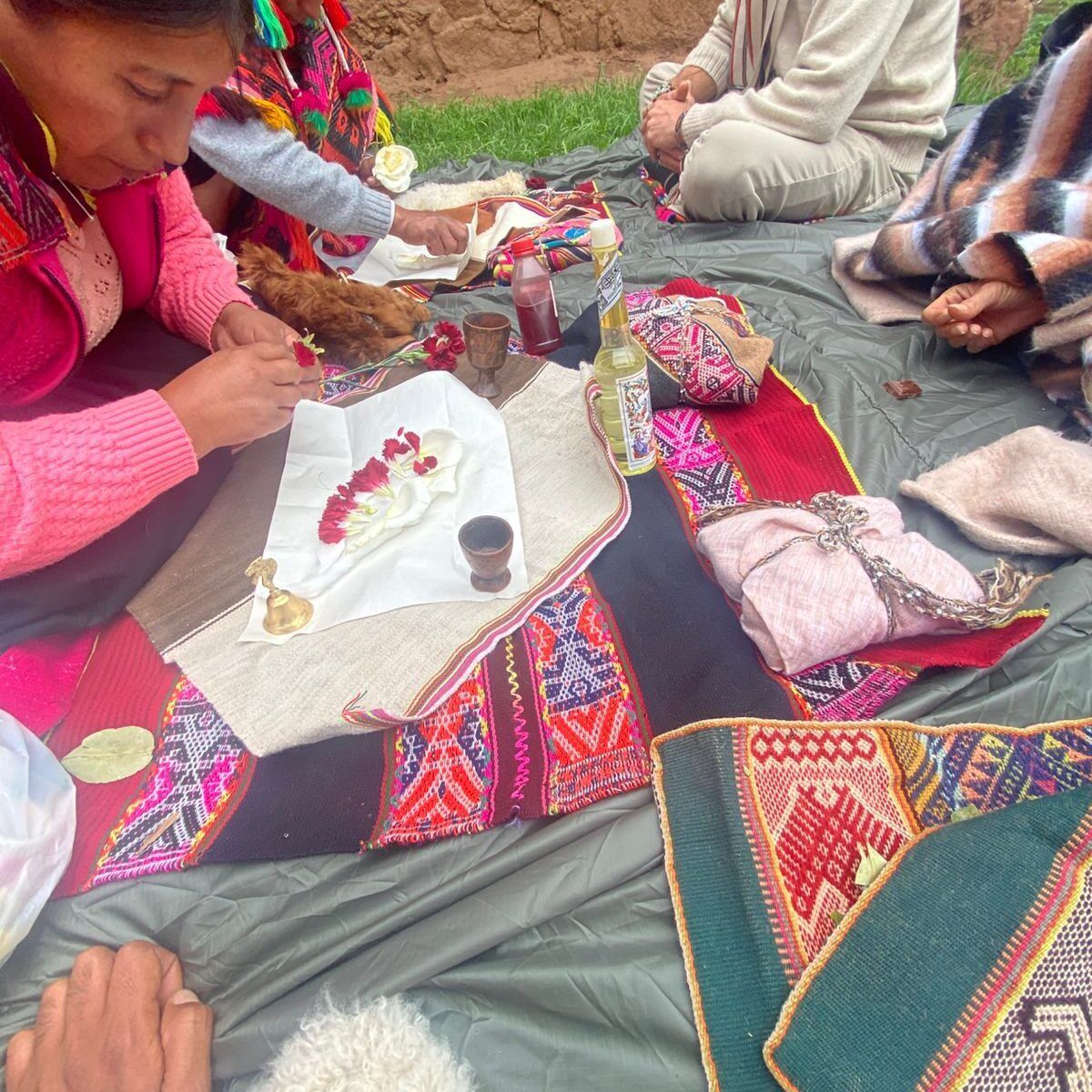
The Power of the ‘Despacho’
During May, the ritual of the Despacho (offering) becomes more rigorous. As the harvest ends, the Pachamamais considered “open” and hungry.
The Ritual Act: Practitioners offer K’intu (three perfect coca leaves) to the crosses.
The Goal: People do this to ensure that the Ispallas (the spirits of the seeds) remain safely stored in the Qollqas (granaries) and protected from the malevolent winds known as Supay Wayra.
Linguistic Portal: Words of Power of Cruz Velacuy
Velacuy: To keep watch or stay awake. In a mystical sense, it refers to maintaining “Consciousness” while the rest of nature begins its winter sleep.
Mallki: This refers to both an ancestor’s mummy and a living tree. In May, people treat the Cross as a Mallki, a living ancestor that protects the crops.
Tinkuy: The ritual encounter. May is a month of Tinkuy between the community and the sacred peaks.
Sacred Geography: The Cruz Velacuy Portals of Cusco
“The Andean landscape is a ritual stage where the movement of the human body across altitudinal zones is a form of prayer. In May, as we move toward the glaciers, we literally walk back toward the origin of water and life, seeking the “Ispalla,” the soul-essence of existence before winter freezes it into silence.
San Cristóbal (Qasqaparo): Overlooking the city of Cusco, this site sits atop what was once an important Inca palace. The “velación” here offers a panoramic connection to the city’s ceque lines (energetic pathways).
The Heights of Pisac: Here, people often keep the crosses in small niches carved directly into the ancient Inca masonry, representing the literal union of the old stone and the new faith.
References
Sallnow, M. J. (1987).Pilgrims of the Andes: Regional Cults in Cusco. Smithsonian Institution Press.
MacCormack, S. (1991).Religion in the Andes: Vision and Imagination in Early Colonial Peru. Princeton University Press.
Gade, D. W. (1999).Nature and Culture in the Andes. University of Wisconsin Press.
This article draws on both academic literature and oral, lineage-based Andean knowledge. Teachings that originate from living traditions are cited in recognition of their ongoing transmission within Andean communities, while scholarly sources are used to support contextual interpretation.
As the rains retreat and the high-altitude skies of the Andes turn a crystalline indigo, a profound energetic shift occurs. In the Southern Hemisphere, May marks the arrival of Aymuray, the month of the harvest and the sacred song of the corn.
For the Andean practitioner, this is not merely an agricultural milestone; it is a cosmic repositioning of the soul.
The Metaphysics of Aymuray: Beyond the Material
In Andean cosmology, the act of harvesting is a dialogue of reciprocity known as Ayni. As the corn is gathered, we are reminded that we are not “taking” from nature, but receiving a gift that requires a spiritual return.
“In the Andean world, the harvest is the culmination of a sacred marriage between the Runa(human) and the Pachamama(Earth). It is the moment where the energy invested in the soil returns as life-sustaining spirit.”
— Inca Wisdom and Philosophy
May’s Spiritual Gateway: The Chakana and the Cross
During the first days of May, the Cruz del Sur (Southern Cross) reaches its highest point in the night sky. This astronomical alignment birthed the symbol of the Chacana.
While modern festivities celebrate Cruz Velacuy (the Velation of the Cross), the indigenous roots trace back to the protection of the Apus(mountain spirits). We “veil” the cross to ensure that the vital energy of the mountains remains stable during the dry season.
Quechua Wisdom for the Soul
To integrate this energy, we must understand the vibration of these words:
Aymuray: The song of the harvest; the joy of completion.
Qollqa: Literally “storehouse,” referring both to the granaries and the Pleiades star cluster, which governs abundance.
Kallpa: The spiritual force or “inner power” we harvest within ourselves after a period of growth.
Mystical Places of Aymuray
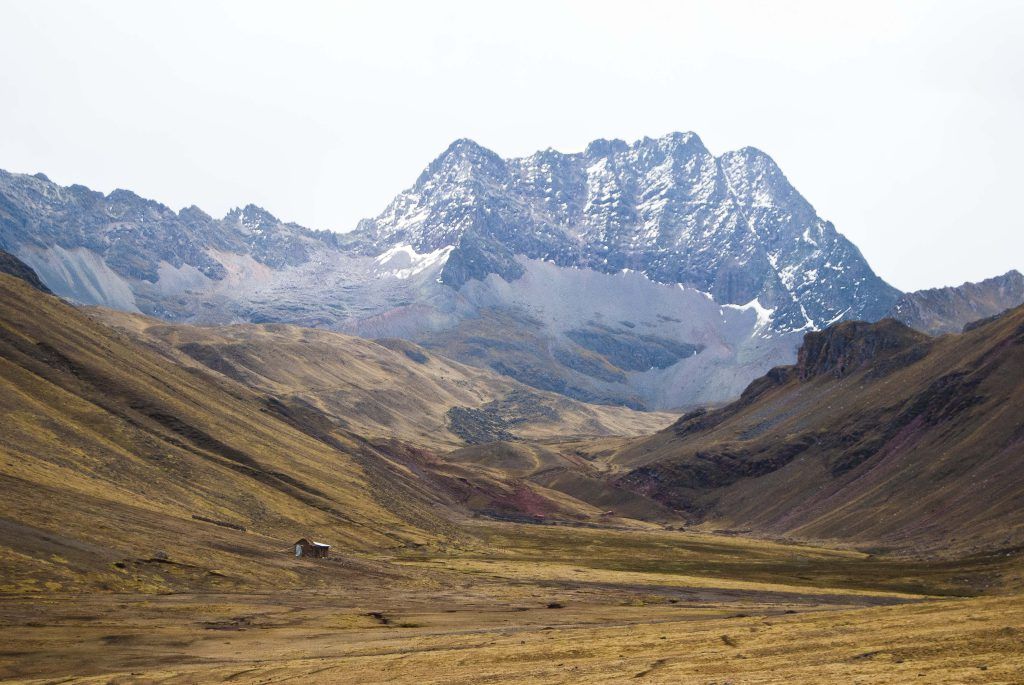
This month is the ideal time for pilgrimage. The “dry cold” (Chiri) purifies the air, making the energetic portals of the valley more accessible.
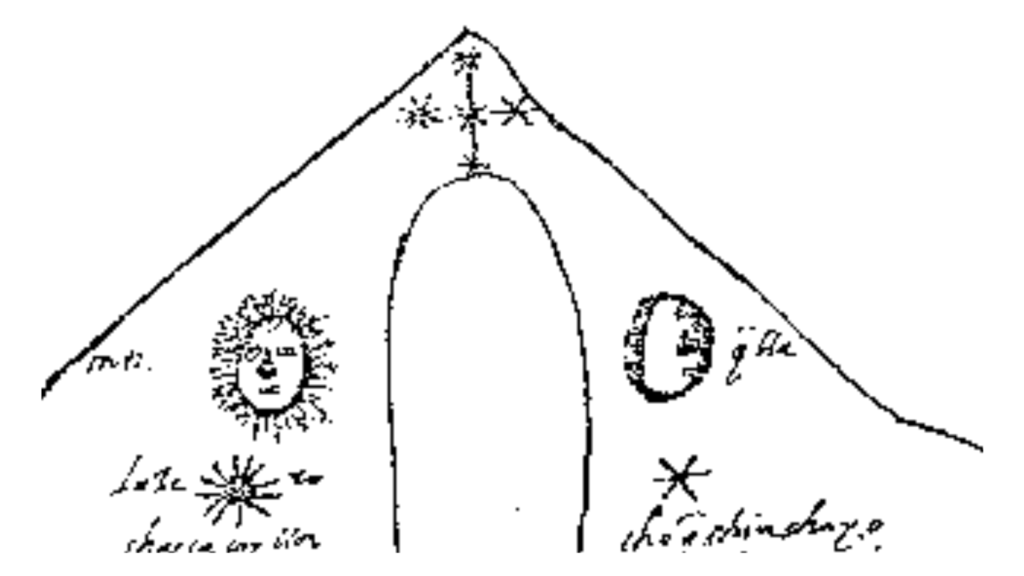
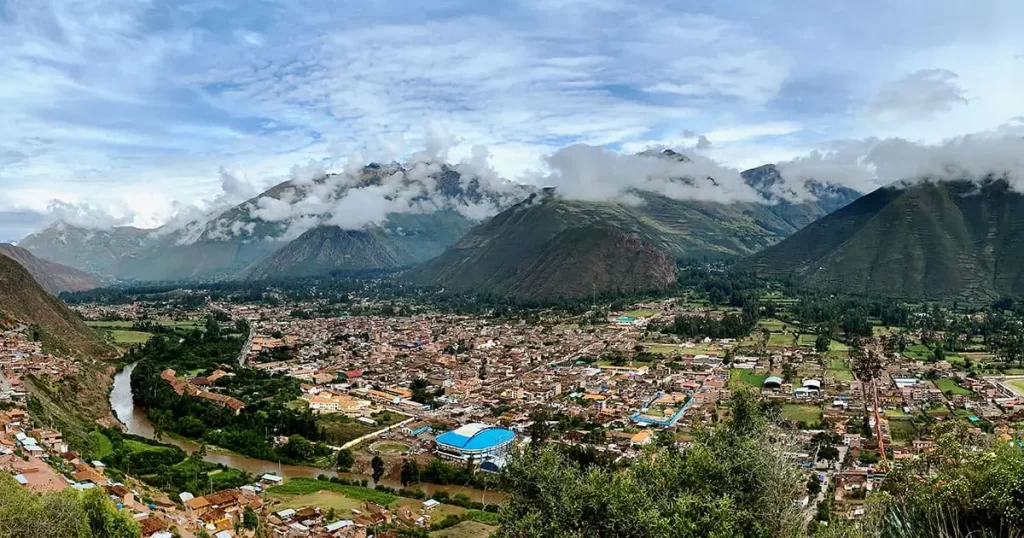
Urubamba (The Heart of the Valley): Home to the Lord of Torrechayoc. This is the month where the valley vibrates with the energy of the “Pampamesayoc” (earth priests) who offer thanks for the corn.
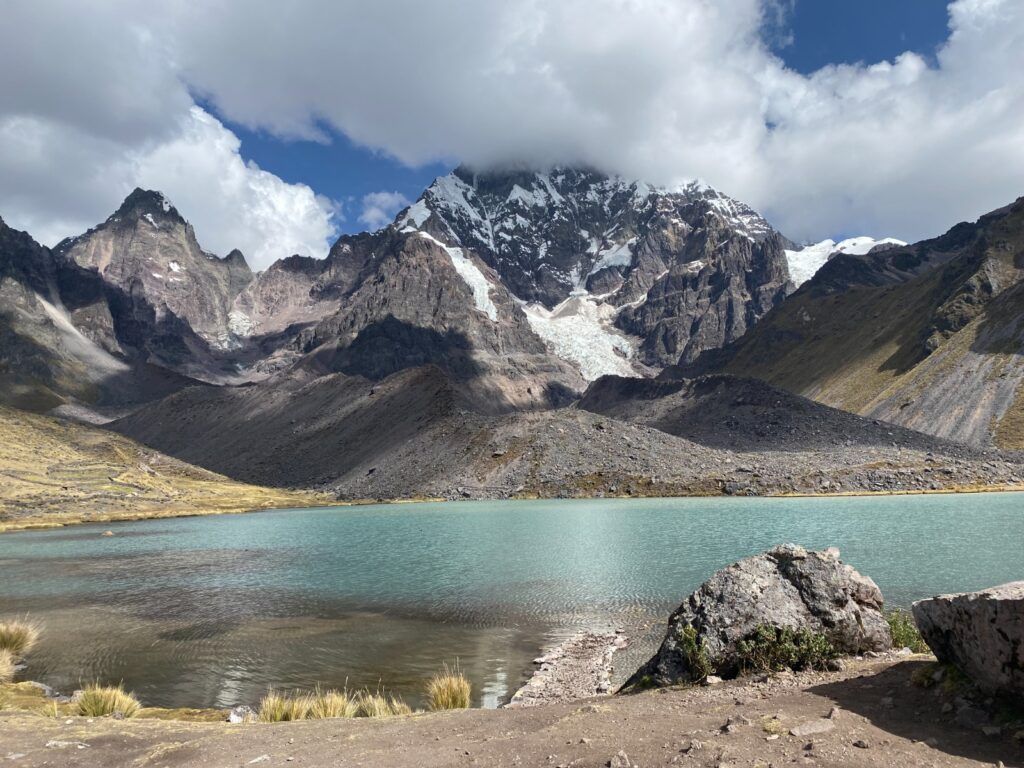
The Glaciers of Sinakara: As May progresses, the energy begins to pull toward the Qoyllur Rit’i, preparing the spirit for the most intense “mountain-top” experience in the world.
References
Urton, G. (1981).At the Crossroads of the Earth and the Sky: An Andean Cosmology.
Estermann, J. (2006).Andean Philosophy: Intercultural Study of the Cosmo-Andean Indigenous Wisdom. Abya-Yala.
Bauer, B. S., & Dearborn, D. S. (1995).Astronomy and Empire in the Ancient Andes.
This article draws on both academic literature and oral, lineage-based Andean knowledge. Teachings that originate from living traditions are cited in recognition of their ongoing transmission within Andean communities, while scholarly sources are used to support contextual interpretation.
What was initiated, stabilized, refined, and expressed now enters a moment of closure.
Doesn’t mean that ends.
It marks a phase in which experience becomes held. The cycle brings what you have received, materially, relationally, and internally and it now begins to settle into a form you can sustain.
Closure as Integration
In Andean cosmology, closure is not a separation from what has occurred. It is an act of integration.
Experiences do not disappear once they conclude. They become part of an ongoing field of memory and presence. What has been lived continues to inform what follows.
Closure allows this integration to take place.
Rather than dispersing or abandoning what has been experienced, closure gathers it into coherence. It creates continuity between past processes and future movement.
Holding What Has Been Given
The act of holding becomes central at this stage.
To hold the gifts you have received means to stay in relationship with them. It means recognizing that you have received gifts, whether visible or intangible, and that they carry significance beyond the moment they appeared.
Without closure, experience may fragment or lose its coherence. With closure, it becomes grounded, stable, and available for future continuity.
The Responsibility Within
Closure also introduces responsibility.
To receive implies a need to respond. What the cycles of relationship, exchange, and transformation have given you now calls for your acknowledgment and care.
Closure creates the space for this recognition.
It allows individuals and communities to reflect on what has taken place, to understand its implications, and to carry it forward in a conscious way.
Closure Within Ongoing Cycles
Even as closure takes form, the cycle does not end.
In Andean thought, all processes remain cyclical. Closure does not stop movement; it prepares it. It creates the conditions through which new phases can emerge with greater coherence.
It marks a transition point where one phase becomes complete enough to support the next.
What April teaches us
April teaches that closure is not an act of finalization, but of presence.
Living through closure requires you to remain with what life has brought you long enough for integration to happen. It means holding without rushing forward, allowing coherence to form.
You do not leave the gifts you have received behind. Life carries it forward, holding it within the cycles that keep unfolding.
References
Allen, C. J. (2002). The hold life has: Coca and cultural identity in an Andean community. Smithsonian Institution Press.
Urton, G. (1981). At the crossroads of the earth and the sky: An Andean cosmology. University of Texas Press.
Rengifo Vásquez, G. (2001). La crianza de la chacra en los Andes. PRATEC – Proyecto Andino de Tecnologías Campesinas.
Arnold, D. Y., & Yapita, J. de D. (1998). Río de vellón, río de canto: Cantar de los tejidos en los Andes. ILCA.
This article draws on both academic literature and oral, lineage-based Andean knowledge. Teachings that originate from living traditions are cited in recognition of their ongoing transmission within Andean communities, while scholarly sources are used to support contextual interpretation.
As April advances in the Andean highlands, the landscape begins to reveal the first signs of harvest. What was activated, stabilized, and deepened in previous months now reaches a moment of expression. This transition calls for reciprocity.
This moment does not represent an end. It marks a turning within the cycle.
Harvest introduces a shift in relationship. What has been cultivated is no longer only held, it is now received.
Reciprocity as Foundational Principle
In Andean cosmology, life does not operate through extraction. It unfolds through reciprocity, or ayni, a principle of mutual exchange that sustains balance across all relationships.
To receive implies the responsibility to give.
Harvest, therefore, is not simply an act of gathering. It is a relational moment in which humans acknowledge what has been provided by the land, the waters, the cycles, and the unseen forces that sustain life.
Reciprocityensures that this exchange remains balanced.
Harvest as Relational Event
Harvest does not occur in isolation. It takes place within a network of relationships that includes human communities, the land, and the broader cosmological field.
Each act of harvesting carries meaning.
It reflects recognition, gratitude, and participation in a cycle that extends beyond immediate need. Through this act, people reaffirm their connection to the sources of life.
Reciprocity transforms harvest into a relational event rather than a purely material one.
Offering and Return
In many Andean communities, moments of harvest are accompanied by acts of offering. These offerings do not function as symbolic gestures alone. They express a necessary return within the cycle of exchange.
To receive without returning creates imbalance.
Through offerings, whether material, energetic, or intentional, people restore reciprocity.
Reciprocity extends beyond physical resources. It includes attention, respect, presence, and care.
In human experience, receiving insight, support, or transformation also calls for reciprocity.
This may take the form of sharing knowledge, sustaining relationships, or acting in alignment with what has been received.
Living Reciprocity
April teaches that receiving is not passive. It requires awareness and response.
To live through reciprocitymeans recognizing that every moment of reception invites participation in return. It means maintaining balance within the flow of giving and receiving.
Harvest, then, is not a conclusion. It is a renewal of relationship.
References
Allen, C. J. (2002). The hold life has: Coca and cultural identity in an Andean community. Smithsonian Institution Press.
Gose, P. (1994). Deathly waters and hungry mountains: Agrarian ritual and class formation in an Andean town. University of Toronto Press.
Isbell, B. J. (1978). To defend ourselves: Ecology and ritual in an Andean village. Waveland Press.
Rengifo Vásquez, G. (2001). La crianza de la chacra en los Andes. PRATEC – Proyecto Andino de Tecnologías Campesinas.
This article draws on both academic literature and oral, lineage-based Andean knowledge. Teachings that originate from living traditions are cited in recognition of their ongoing transmission within Andean communities, while scholarly sources are used to support contextual interpretation.