logo im

Mother Earth: A Deeper Andean Understanding

Posted on

In many modern spiritual spaces, Pachamama is translated simply as Mother Earth (Estermann, 2013). While this translation is convenient, it is deeply incomplete. In the Andean worldview, Pachamama is not merely the ground beneath our feet, nor a symbolic goddess of nature. She is a living field of intelligence, a relational being, and a temporal-spatial matrix that sustains all life.

To reduce Pachamama to “earth” is to strip her of her cosmic, psychological, and energetic dimensions.

Pacha: Time, Space, and Consciousness

The word Pacha does not mean earth (Estermann, 2013; Arnold & Yapita, 2006).

It refers to time-space reality, the living container in which existence unfolds. Pacha holds memory, cycles, trauma, fertility, decay, and rebirth. It is both linear and non-linear, personal and collective.

Within this understanding, Pachamama is not something we stand upon, we exist within her.

She is the womb of becoming.

Mama Earth: Not a Metaphor, but a Relationship

The term Mama signifies more than motherhood (Bastien, 1985).

It expresses relational responsibility. Pachamama is Mama because she responds, nourishes, corrects, and remembers. Relationship with her is not devotional abstraction; it is reciprocity (Ayni).

In Andean culture, illness, imbalance, and misfortune often arise when reciprocity is broken, when humans take without listening, consume without gratitude, or forget their place within the web of life.

Mother Earth as Mirror and Memory

Pachamama holds ancestral memory (Gose, 1994; Rengifo Vásquez, 2003).

Trauma is not only psychological; it is ecological and collective. Land remembers colonization, extraction, displacement, and ritual neglect. Humans, as extensions of Pachamama, carry these imprints in their bodies.

This is why Andean healing does not separate personal pain from collective history.

To heal the self is to re-enter right relationship with Pachamama.

Offerings as Dialogue, Not Worship

Practices such as the Despacho ceremony are often misunderstood as offerings to Pachamama (Allen, 2002). In truth, they are conversations. They restore dialogue between human consciousness and the living intelligence of Pacha.

The offering is not payment. It is acknowledgment.

Beyond Romanticization

Pachamama is not always gentle (Bastien, 1985; Gose, 1994). She is fertile and destructive, nurturing and consuming. Earthquakes, droughts, and decay are not punishments; they are expressions of balance correcting imbalance.

True Andean wisdom does not romanticize nature, it respects her power.

To understand Pachamama beyond “Mother Earth” is to accept a humbling truth:

We are not owners.

We are participants.

When we remember Pachamama as living time-space consciousness, healing becomes less about fixing ourselves and more about remembering how to belong.


References

  • Allen, C. J. (2002). The hold life has: Coca and cultural identity in an Andean community. Smithsonian Institution Press.
  • Arnold, D. Y., & Yapita, J. de D. (2006). The metamorphosis of heads: Textual struggles, education, and land in the Andes. University of Pittsburgh Press.
  • Bastien, J. W. (1985). Mountain of the condor: Metaphor and ritual in an Andean ayllu. Waveland Press.
  • Estermann, J. (2013). Andean philosophy: A reader. University of New Mexico Press.
  • Gose, P. (1994). Deathly waters and hungry mountains: Agrarian ritual and class formation in an Andean town. University of Toronto Press.
  • Rengifo Vásquez, G. (2003). La crianza de la chacra en los Andes. PRATEC.

Invisible Altars: The Power of Energetic Shrines No One Can See

Posted on

In the Andean world, not all sacred spaces are built with stone, earth, or offerings like regular Altars. Some of the most powerful shrines are invisible, woven out of intention, presence, and living energy.

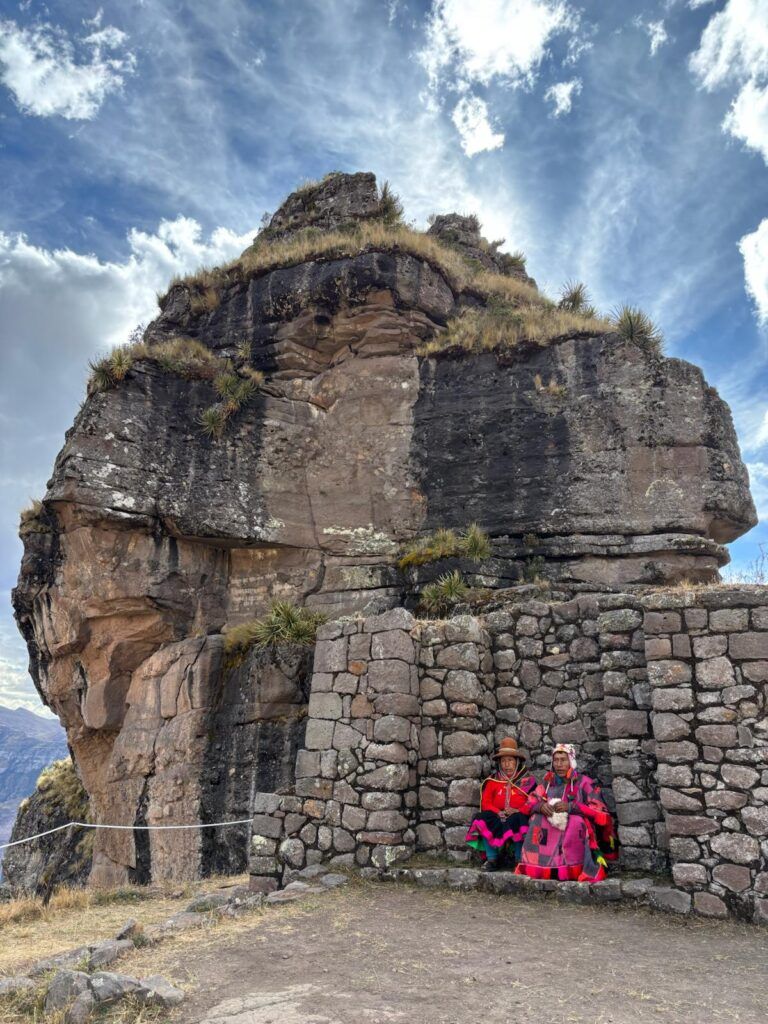
Maria Apaza is one of the last Altomesayoq who arrived 15 years ago from Qeros Nation

These altars, known as inner mesas or energetic temples, are constructed not with physical objects but with sami, memory, and consciousness.

In many Indigenous teachings, the greatest power is subtle. Andean paqos often say:
“The altar outside is a mirror of the altar within.”
When the inner altar is awakened, everything you touch becomes sacred.


What Is an Invisible Altar?

An invisible altar is a non-physical energetic structure built through:

  • Intention
  • Focus
  • Breath
  • Memory
  • Emotional clarity
  • Relationship with Pachamama and the Apus

It is a living field of kawsay, a space where your energy organizes itself in harmony with the cosmos.

Anthropologist Catherine Allen (2002) describes Andean rituals as “relational technologies,” meaning the power lies not in objects but in relationships. This is the essence of invisible altars: a place of relationship, not display.


Why Invisible Altars Matter in Andean Spirituality

Physical altars can be stolen, damaged, or forgotten.
Energetic altars cannot, they exist in Hanan Pacha, Kay Pacha, and Uku Pacha simultaneously.

Invisible altars allow you to:

  • Stay connected to your lineage
  • Practice anywhere, at any moment
  • Maintain continuous ayni
  • Heal without formal ceremony
  • Anchor your field in sami even during chaos
  • Carry the Apus with you

As Inge Bolin (1998) writes, Andean spirituality is “portable” carried in gestures, breath, and awareness. The invisible altar is the purest example of this portability.


How Invisible Altars Are Formed

Invisible altars emerge naturally when three energies meet:

1. Presence (Kawsay Ayni)

The willingness to be fully here, even for 30 seconds.

2. Intention (Munay)

A clear emotional posture, gratitude, love, or openness.

3. Alignment (Llankay + Yachay)

A coherent mind and body, moving in the same direction.

Even beginners can create one by breathing deeply and saying silently:

Pachamama, I open this space with love.”

In the Andean view, intention is a form of architecture.


Practices for Building an Invisible Altar

1. The Heart Altar (Sonqo Misa)

Place your awareness in the center of your chest.
Inhale slowly.
Visualize a small glow of sami expanding like a flower.
This becomes a portable altar of coherence.

2. The Walking Altar

With each step say internally:
“I walk in ayni.”
Your footsteps become offerings.

3. The Breath Altar

Each inhale draws energy from the Apus.
Each exhale gives gratitude back.
Over time, this creates a vertical axis altar connecting you to Hanan Pacha above and Pachamama below.

4. The Dream Altar (Muskay Wasi)

Before sleep, declare:
“Tonight, I build a shrine for clarity.”
The subconscious completes the architecture.

Why Invisible Altars Are the Future of Andean Practice

As the world accelerates, many people find it hard to maintain physical ritual spaces. Invisible altars restore the ancient truth:

Sacredness lives inside your awareness, not on your table.

They allow modern practitioners to embody Andean spirituality with authenticity, mobility, and depth, without depending on external conditions.

Healers often create invisible altars before sessions.
A simple breath with intention can shift an entire room.

According to Óscar Fernández (2018), many Andean rituals include moments of profound stillness because silence is itself an altar, a container where energy reorganizes.

This is the heart of universal Andean healing.


References

  • Allen, C. (2002). The Hold Life Has: Coca and Cultural Identity in an Andean Community.
  • Bolin, I. (1998). Rituals of Respect: The Secret of Survival in the High Peruvian Andes.
  • Fernández, Ó. (2018). Silencio Ritual en los Andes.
  • Sherbondy, L. (1992). “Water and Power in the Andean World.”
  • Oral wisdom from Q’ero Paqos, Inca Medicine School.

How Thunderstorms Reset Energy Fields

Posted on

In Andean cosmology, thunderstorms are not merely climatic events, they are ritual moments, when the sky and the Earth communicate with extraordinary intensity. Lightning, called Illapa, is a powerful deity associated with cleansing, initiation, and energetic rebirth.

But the greatest mystery is what comes after the strike:
the profound silence that follows thunder.
This silence is considered one of the most potent states of purification.

Lightning was believed to be the messenger of the sun.

Illapa: The Sacred Lightning

Illapa (or Libiac in some regions) was revered by the Inca as the messenger of sky gods, capable of splitting reality, clearing stagnation, and awakening hidden power. Ethnographic accounts describe lightning as a cosmic scalpel that removes dense energy from landscapes and people alike (Cobo, 1653/1990).

Paqos teach that lightning:

  • cuts hucha from the energetic body
  • reprograms stagnant patterns
  • awakens dormant spiritual capacities
  • opens portals between worlds

But the true healing arrives in the afterlight, the quiet space where energy reorganizes.


The Medicine of the Post-Thunderstorms Silence

After a lightning strike, there is often a brief moment when:

  • the wind pauses
  • animals fall silent
  • the air feels charged
  • time seems to expand

This “charged silence” is understood as a cosmic reset moment, similar to the stillness after deep breathwork or initiation.

Óscar Fernández (2018) notes that Andean rituals often create deliberate silence to replicate the post-storm energetic state, because in this silence:

  • the nervous system resets
  • ancestral memories surface
  • intuition becomes sharper
  • the veil between worlds thins

This is why many Andean healers step outside after storms to perform cleansing rituals.


Practices for Working With Thunderstorms Medicine

1. The After-Storm Sit (Illapa Ch’usaq Kawsay)

After a storm, sit on the ground.
Place your palms on your thighs.
Breathe slowly.
Let the silence enter your body like light.

2. Lightning Visualization

Imagine Illapa cutting a line of light through your spine, removing stagnation and fear.

3. Energetic Reorganization

After the storm, write any insights that arise. Lightning opens clarity that the mind usually blocks.


Why Thunderstorms Reset Energy Fields

Because lightning reorganizes the electromagnetic and spiritual field of the environment. The silence afterward is the integration phase, the body and spirit recalibrating.

When you learn to sit inside that silence, you access:

  • renewal
  • clarity
  • emotional release
  • heightened intuition
  • energetic rebirth

The storm awakens you.
The silence heals you.


References

  • Cobo, B. (1653/1990). Inca Religion and Customs.
  • Fernández, Ó. (2018). Silencio Ritual en los Andes.
  • Allen, C. (2002). The Hold Life Has.
  • Oral traditions of Q’ero Paqos, Inca Medicine School.

The Pulse of Mother Earth

Posted on

The Earth is not static, she breathes, feels, and moves. In the Andean world, Pachamama is a living, responsive being, and what we call “weather” is often understood as the emotional climate of the planet. Rain, wind, fog, and storms are expressions of the Earth’s shifting kawsay.

To understand the pulse of Pachamama is to learn how the Earth communicates her moods, warnings, and blessings.

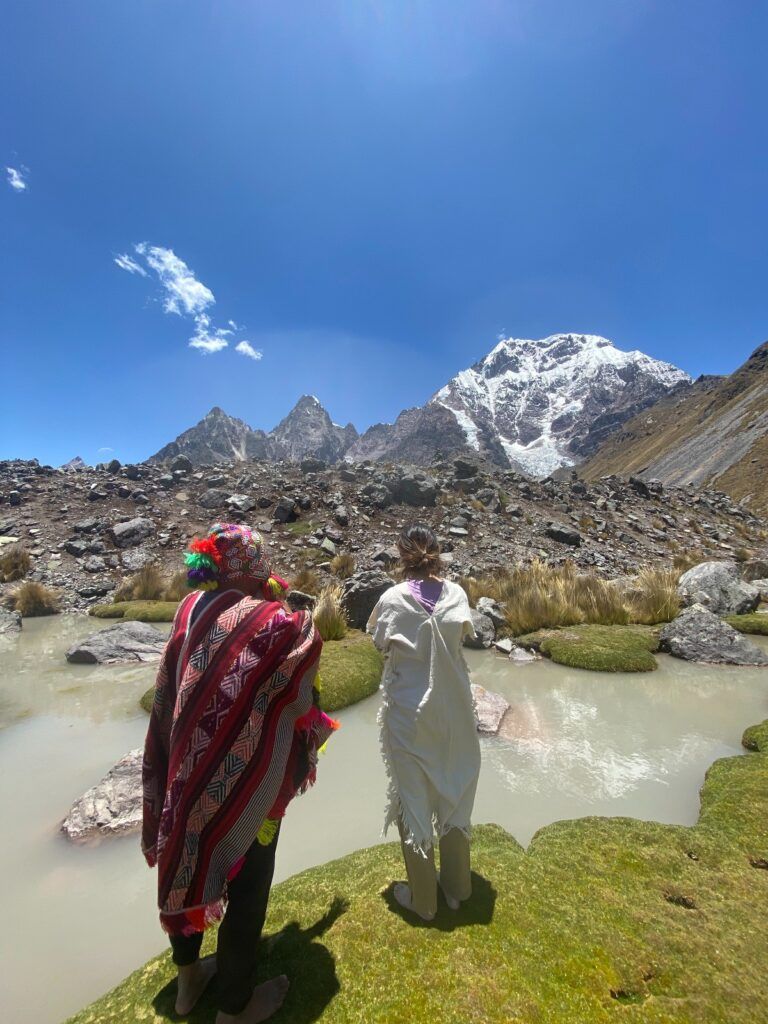
Pachamama is kind and tolerant

Weather as Emotional Expression

Anthropologist Inge Bolin (1998) explains that Andean people perceive natural events as part of a “social relationship with the Earth.” Weather patterns are not random but messages — signs of harmony, imbalance, or transition.

For example:

  • Storms = energetic recalibration.
  • Soft rain = Pachamama feeding her children.
  • Sudden winds = cleansing of stagnant energies.
  • Dense fog = invitation to introspection
  • Long droughts = request for ritual and ayni

Every shift is a statement of the Earth’s inner movement.


Feeling Earth’s Pulse Through the Body

Healers and paqos often say that the first task is to listen with your nerves, not your mind.

Signs that Pachamama is speaking:

  • Unexpected goosebumps
  • Heavy or light sensations in the legs
  • Emotional surges without clear cause
  • Unusual dreams
  • A pull toward a specific element (wind, water, fire, stone)

This is not superstition but energetic attunement, the capacity to feel the field of the Earth as it changes.


Practices for Reading Earth’s Emotional Weather

1. Wind Listening (Wayra T’ikariy)

Stand facing the wind. Let it touch your palms and chest. Notice:
Is it sharp? playful? warm? erratic?
Each quality reflects a movement in Pachamama’s emotional field.

2. Rain Communion

Allow a few drops of rain on your hands. Ask internally:
What are you giving? What are you asking?
Rain often brings sami and emotional release.

3. Ground Pulse Meditation

Sit with your back against a tree or stone.
Feel the subtle vibration of the Earth’s heartbeat.


Why Earth Emotional Weather Matters

When you learn to read Pachamama’s pulse:

  • Your intuition sharpens
  • Anxiety decreases
  • You synchronize with natural rhythms
  • You respond to life instead of reacting
  • You restore ayni with the planet

Human well-being depends on attunement with the Earth’s moods. When you understand her, you understand yourself.


References

  • Bolin, I. (1998). Rituals of Respect: The Secret of Survival in the High Peruvian Andes.
  • Dean, B. (2010). A Culture of Stone: Inka Perspectives on Rock.
  • Fernández, Ó. (2018). Silencio Ritual en los Andes.
  • Teachings of Q’ero Paqos, Inca Medicine School.

Expanding Consciousness Through Andean Sky Practices

Posted on

In the high Andes, the sky is not empty space, it is a living field of consciousness, a vast expanse where humans, spirits, and celestial beings meet.

Among these sky-spirits, none is more revered than the kuntur, the Andean condor.

Known as the messenger of Hanan Pacha (the Upper World), the condor symbolizes expansion, clarity, and the ability to see life from a higher perspective.

To breathe like the condor is to awaken a spacious awareness that dissolves fear and connects you to your soul’s wider horizon.


The Condor as an Consciousness Teacher

Andean communities describe the condor not only as a bird, but as a guardian force that teaches humans how to rise above emotional density (hucha) and open to sami, the refined energy of the mountains (Bastien, 1985).

The condor’s enormous wings are understood as extensions of consciousness; its flight is a ritual in itself, a reminder that clarity requires altitude.

According to Q’ero paqos, condor medicine awakens:

  • Vision beyond the immediate
  • Psychic spaciousness
  • Emotional detachment without coldness
  • The ability to see truth without distortion

This is why many Andean initiations begin by facing the sky and “calling the condor.”


The Breath of the Condor

Condor Breathing (Kuntur Ñawi Samay) is an ancient technique used to elevate consciousness. It works by expanding the chest, diaphragm, and energetic field, mimicking the condor’s broad wings.

Practice

  1. Stand facing Hanan Pacha, ideally at sunrise.
  2. Open your arms wide like condor wings.
  3. Inhale deeply through the nose while imagining air entering the crown and heart simultaneously.
  4. Hold for three seconds while visualizing yourself rising above your life situation.
  5. Exhale slowly through the mouth as your awareness expands outward.
  6. Repeat 7 times.

This breath creates a sense of vertical expansion, clearing the mind and enhancing intuition.


Sky Gazing as Andean Consciousness

Unlike some meditation traditions that emphasize emptiness, Andean sky practices emphasize connection. The sky is perceived as a teacher. Anthropologist Catherine Allen (2002) writes that Andean people relate to the heavens as “sentient presence,” not abstraction.

Try this:

  • Sit outdoors.
  • Fix your gaze softly on the open sky.
  • Let your breath follow the clouds.
  • Allow thoughts to dissolve into vastness.

This practice opens the upper bands of energy and activates visionary states.

Why Condor Medicine Expands Consciousness

Because altitude, literal and spiritual, restores perspective.

When you breathe like the condor, you rise above:

  • fear
  • overthinking
  • emotional entanglement
  • the urgency of daily life

This expanded awareness is one of the most powerful tools in the Andean path.


References

  • Allen, C. (2002). The Hold Life Has: Coca and Cultural Identity in an Andean Community.
  • Bastien, J. (1985). Mountain of the Condor: Metaphor and Ritual in an Andean Ayllu.
  • Villoldo, A. (2005). Shaman, Healer, Sage.
  • Oral Teachings of Q’ero Paqos, Inca Medicine School.

Learning to Heal Without Words

Posted on

This kind of heal does not speak, it listens. In Andean spirituality, silence is not emptiness but presence. It is known as ch’usaq, the fertile void, the open space where kawsay reorganizes itself. Silence is medicine because it clears hucha and amplifies sami without effort.

Silence as the Original Teacher

Before there were rituals, there was silence. Before there were prayers, there was breath. In the high Andes, silence is constant: in the snow, in the wind, in the space between footsteps.

This natural silence teaches a different kind of knowledge:

  • How to perceive subtle energies
  • How to hear the voice of the Apus
  • How to experience the heart without filters

As Fernández (2018) notes, Andean healers value “the quiet gaze more than the spoken word,” recognizing that true transformation happens in the body, not through explanation.

Why Silence Heal us

Silence allows the nervous system to settle. It invites the mind to soften and the heart to open. In Andean energy work, silence is the state in which sami descends, because the person is finally receptive.

In silence:

  • The person becomes their own guide
  • Trauma unfolds without pressure
  • Emotions rise and transform
  • The healer listens to the energy, not the story

Silence reveals what language hides.

Practices of Healing Through Silence

  1. Sami Bathing (Sami T’ikariy)
    Sit in silence with your palms on the earth or against your chest. Visualize sami flowing gently through your body.
  2. Observation Without Interpretation
    Watch your emotions rise and fall without naming them. This shifts the energy from hucha to sami.
  3. Quiet Ayni
    Offer gratitude to the land silently. Allow the reciprocity to happen energetically, not verbally.
  4. Breathing with Pachamama
    Imagine the earth breathing with you. Inhale the stability of the mountains; exhale your heaviness.

The Power of Heal Without Words

Some wounds cannot be spoken. Some transformations require no explanation. Silence gives space for the soul to reorganize itself.

The Andean path teaches:
When you stop speaking, your spirit begins to sing.


Bibliography

  • Fernández, Ó. (2018). Silencio Ritual en los Andes.
  • Villoldo, A. (2005). Shaman, Healer, Sage.