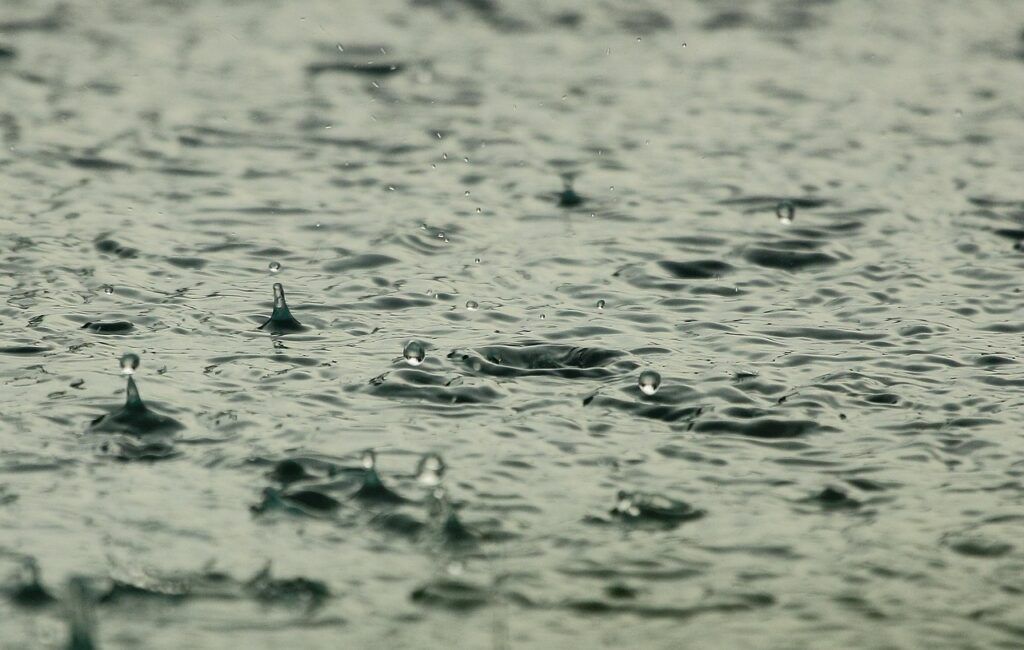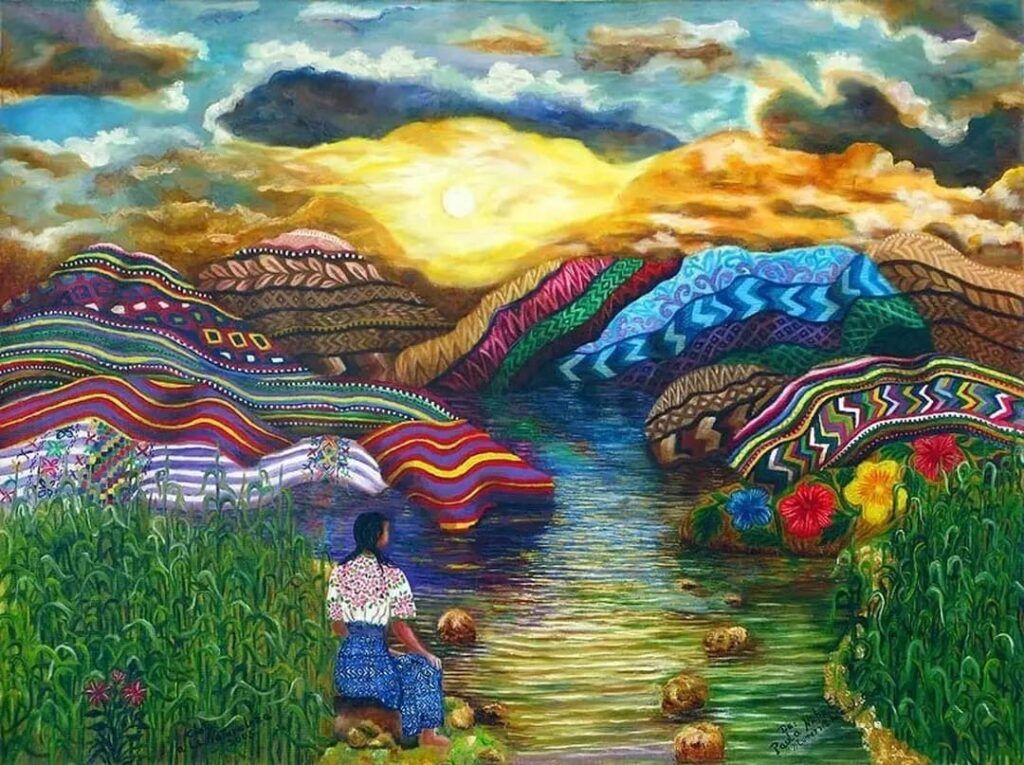
Among the many spiritual forces recognized by the Inca, Mama Cocha—literally “Mother Sea”—embodies the oceans, lakes, rivers, and springs that sustain all life. People both fear and revere her, for water can nourish but also overwhelm.
The Incas perceived the waters of Mama Cocha as the womb of creation. In fact, the 17th-century chronicler Bernabé Cobo observed that “the Indians of Peru adored the sea as their mother. They sacrificed to her so she would not grow angry and devour their lands” (Cobo, Historia del Nuevo Mundo, 1653). Offerings of coca leaves, chicha, and shells were often cast into rivers or lakes to maintain ayni—sacred reciprocity—with her.
In Andean thought, every body of water carries its own spirit.
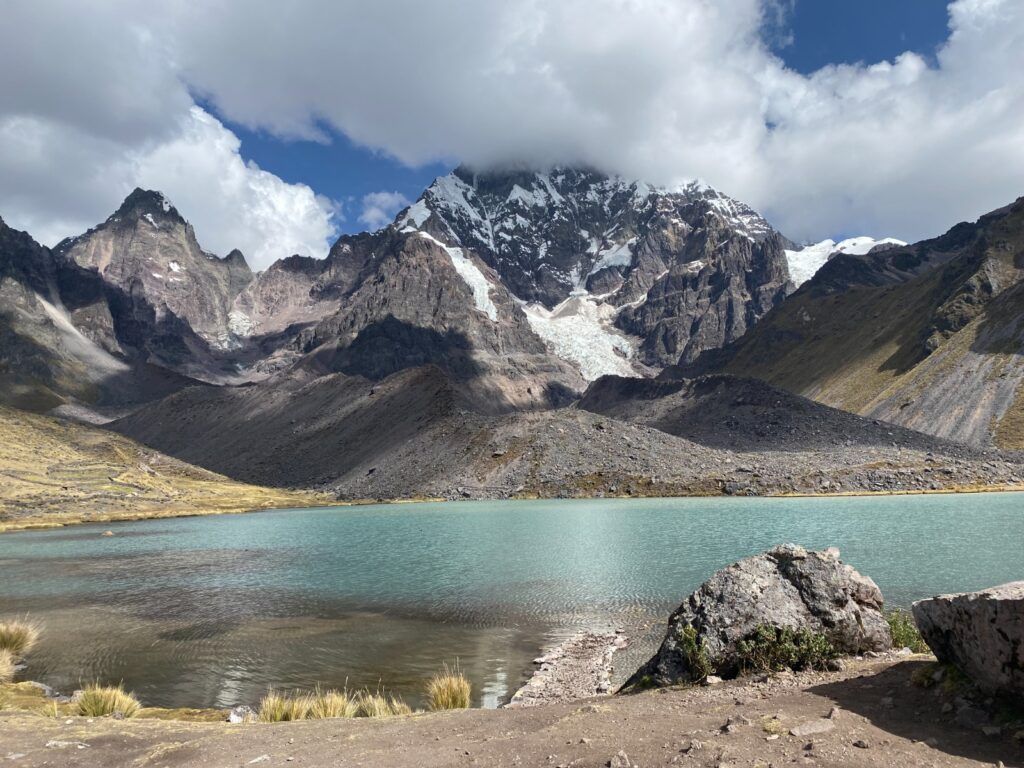
Myth tells that Manco Cápac and Mama Ocllo emerged from the great lake Titicaca to found Cusco, making it one of Mama Cocha’s most powerful manifestations. Springs and underground streams were understood as puqyos, portals where Mama Cocha breathes into the earth. Communities often linked these waters with fertility rituals, rainmaking ceremonies, and initiations.
Titicaca Lake
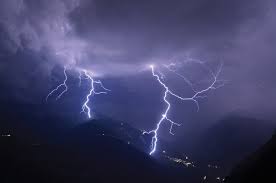
Mama Cocha embodies the duality of Andean cosmology: she represents both abundance and destruction. As storms and floods reminded the people of her fierce side, rituals emphasized respect, humility, and balance. To ignore her presence was to invite chaos. To honor her was to align with the cycles of life.
“Water is not just water; it is the flow of life itself. To drink, to bathe, to plant—every act with water is a dialogue with Mama Cocha.”
References
Cobo, Bernabé. Historia del Nuevo Mundo. Madrid: Biblioteca de Autores Españoles, 1653.
Allen, Catherine. The Hold Life Has: Coca and Cultural Identity in an Andean Community. Smithsonian Institution Press, 1988.
Bastien, Joseph. Mountain of the Condor: Metaphor and Ritual in an Andean Ayllu. Waveland Press, 1985.
Rostworowski, María. Pachacamac and the Andean Gods. University of Texas Press, 1992.
In theAndean worldview, health is not merely the absence of illness but the state of harmony between body, spirit, community, and the living environment. When this balance is disrupted, the Andean healer turns to one of the most profound practices of renewal: the ch’uya, or ritual cleansing.
The Meaning of Ch’uya
The Quechua word ch’uya means “to purify, to make clear” and it is performed to remove hucha (heavy energy). Andean wisdom does not see hucha as ‘evil’—it regards it as misplaced energy, which we release and return to nature for transformation
The Ch’uya Ritual in Practice
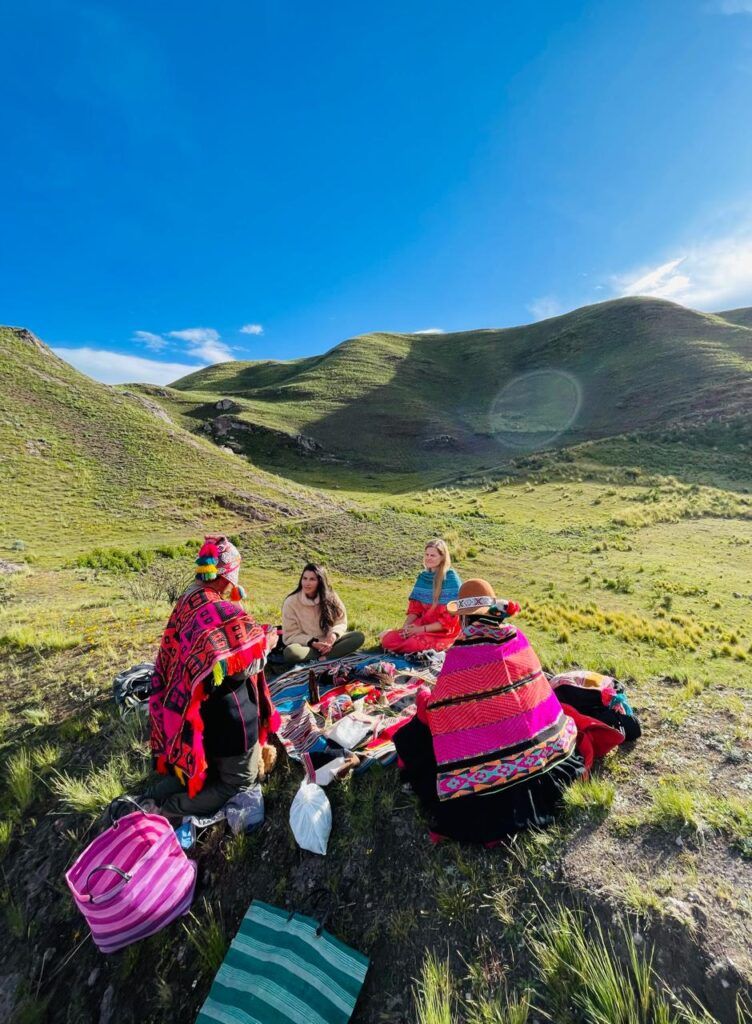
A paq’o (Andean healer) guides the ch’uya using sacred tools that may include:
Eggs or stones to absorb and carry away stagnant forces.
Through prayers and offerings, the paq’o invokes: Pachamama, the Apus, and protective spirits
They ask them to transmute what no longer serves.
The ritual often produces an immediate effect: people describe feeling lighter, calmer, and more open, as if it polishes and resets their energy field.
Preparing for Ceremony
Ch’uyas are not only used for healing. Healers also perform them before important ceremonies, initiations, or offerings. Just as one cleanses a sacred temple before prayer, the healer purifies the human body and spirit so that kawsay (vital energy) flows freely. In this way, the ritual becomes a doorway to deeper connection with the sacred.
The Andean Vision of Health
At its heart, the ch’uya reflects the Andean understanding that we are porous beings, constantly exchanging energy with people, places, and spirits. To live well is to maintain clarity in this exchange—releasing the heavy, welcoming the light, and remaining in reciprocity (ayni) with the cosmos.
Through the ch’uya, the Andes teaches us that healing is not about isolation from the world but about reintegrating into its living currents.
References
Bastien, J. (1987). Healers of the Andes: Kallawaya Herbalists and their Medicinal Plants. Salt Lake City: University of Utah Press.
Fernandez Juarez, G. (2006). Rituales Andinos de Curación. La Paz: Plural Editores.
Allen, C. (2002). The Hold Life Has: Coca and Cultural Identity in an Andean Community. Smithsonian Institution Press.
Every June, the city of Cusco comes alive with the vibrant celebration of Corpus Christi, a festival where Catholic devotion and Andean cosmology walk side by side. To the outsider, Corpus Christi may appear as a purely Christian feast honoring the presence of Christ in the Eucharist. But to those rooted in the Andes, it is also a profound act of continuity with ancestral ritual.
The Procession of Corpus Christi: Saints and Ancestor
During the festival, fifteen saints and virgins representing different parishes are carried through the streets and gathered into the Plaza de Armas. Then they meet the Señor de los Temblores, the protector of Cusco. This grand assembly mirrors ancient Inca ceremonies where the mummified ancestors were brought together into the plaza to reaffirm unity, reciprocity (ayni), and the sacred order of life.
In this way, Corpus Christi becomes more than a Catholic rite—it is a bridge between two worlds, a renewal of both Christian and Andean faith in the living forces that protect the community.
Sacred Food and Complementarity
No Andean festival is complete without food offerings. Corpus Christi is marked by chiriuchu, a traditional dish that unites ingredients from diverse ecological zones:
guinea pig from the highlands, seaweed from the coast, cheese, maize, and rocoto.
This symbolic plate embodies the Andean principle of complementarity—mountain and sea, masculine and feminine, fire and water—brought together in one sacred act of nourishment.
Through chiriuchu, the Andes reminds us that eating is not only physical sustenance but also a ritual of connection with Pachamama and the cycles of fertility.
Renewal Through Syncretism
What makes Corpus Christi unique is its syncretic power. The Andean people did not abandon their ancient devotion to Apus (sacred mountains) and Pachamama (Mother Earth). Instead, they allowed Christ and the saints to walk alongside their ancestral deities. This coexistence ensures that kawsay—the vital life energy—remains nourished and renewed.
Corpus Christi thus becomes a collective cleansing, a time when communities come together to honor both the Christian God and the Andean cosmos, reaffirming that true strength lies in unity and reciprocity.
References
Dean, C. (1999). Inka Bodies and the Body of Christ: Corpus Christi in Colonial Cusco. Durham: Duke University Press.
Flores Ochoa, J. (1998). Fiestas andean-católicas en el Cusco. Cusco: Centro Bartolomé de las Casas.
Few foods embody the profound relationship between humans, earth, and spirit as deeply as the potato (papa). Far more than a staple food, in the Andes it is revered as a sacred gift of Pachamama, a manifestation of fertility, resilience, and reciprocity. For the Inca, the potato was not only daily sustenance but also a symbol of communal abundance, ritual offering, and cosmic order. Today, its spiritual and cultural legacy continues to nourish both body and soul.
Pachamama is kind and tolerant
Origins and Diversity of Potato
The Andes are the birthplace of the potato, with over 4,000 varieties still cultivated across the highlands of Peru and Bolivia (Brush, 1992).
Each variety carries its own personality, color, and spirit, reflecting the biodiversity of Pachamama’s womb. Farmers traditionally select and plant potatoes not only for nutrition but also with ceremonial reverence, asking permission from the earth and the Apus(mountain spirits) before touching the soil.
In Inca times, potatoes were so central that the Quechua language developed hundreds of words to describe their textures, shapes, and flavors.
The diversity itself was seen as a mirror of human community: unity through difference, a field of many potatoes growing together, each necessary to the whole.
Food and Medicine
The potato was revered for its healing properties as much as its sustenance. Andean healers understood that each variety carried unique energies:
Purple potatoes were believed to strengthen the blood and spirit.
White potatoes brought clarity and balance, especially for those with digestive or emotional heaviness.
Chuño, a freeze-dried form of potato, symbolized endurance, surviving long winters and journeys across the empire.
To eat potatoes was to take in the strength of the Andes, anchoring the body in the high-altitude world and reminding the people of their connection to the land.
Rituals and Spiritual Meaning
The Inca did not see the potato merely as food. Potatoes were included in despacho offerings to Pachamama, buried in the soil with coca leaves, chicha, and flowers, asking for fertility of the fields and protection of the community. Before the first harvest, families often performed a pago (payment) to the earth, offering the best potatoes back to the soil as a gesture of ayni—sacred reciprocity.
Even the cycle of planting and harvesting potatoes was aligned with the cosmic calendar. Farmers observed the stars and the moon to know when to sow seeds, seeing the potato as an earthly reflection of celestial order.
Potato and Community
In Andean villages, potatoes are central to communal meals and festivals. Sharing potatoes embodies the principle of sumak kawsay (good living): harmony between humans, nature, and the divine. The act of peeling, cooking, and eating together becomes a ritual of belonging and gratitude.
Today, during fiestas, families prepare pachamanca—a meal where potatoes and other foods are cooked in an earthen oven. This practice is not only culinary but also ceremonial, returning food to the belly of Pachamama before bringing it forth to nourish the people.
Potato as Symbol for Our Times
In a modern world facing ecological crises, the potato stands as a teacher of resilience. It grows in harsh climates, survives thin air, and regenerates abundantly even from small fragments. For the Incas, this resilience symbolized the indomitable spirit of their people—a lesson we can still learn today: that life, when rooted in reciprocity and respect for the earth, flourishes even under difficult conditions.
The potato is not just food—it is a bridge between humanity and Pachamama. For the Inca and their descendants, every potato carries within it a story of origin, healing, celebration, and survival. To eat a potato consciously is to take part in a lineage of gratitude that stretches back thousands of years, a daily act of honoring the living energy (kawsay) of the Andes.
References
Brush, S. B. (1992). Farming Diversity and Crop Invention in Andean Agriculture. Cambridge University Press.
Murra, J. (1980). The Economic Organization of the Inka State. JAI Press.
Allen, C. (2002). The Hold Life Has: Coca and Cultural Identity in an Andean Community. Smithsonian Institution Press.
Estremadoyro, R. (2018). Papa: Patrimonio Cultural y Biodiversidad del Perú. Ministerio de Cultura del Perú.
The Quechua word pukllay translates as to play, but in the Andes it carries layers of meaning that reach far beyond recreation. Pukllay is joy embodied, a medicine of movement, laughter, and creativity that heals both individuals and communities.
During traditional Andean festivals, especially the Pukllay Carnival in Ayacucho, play becomes a sacred practice. People splash water, dance in circles, sing ancient songs, and engage in playful mock battles with flowers or colored powders. These acts are not frivolous — they are rituals of renewal, where communities release heavy energies and welcome fertility for the agricultural cycle.
The Cosmology of Play
In the Andean worldview, heaviness (hucha) accumulates when energy does not flow freely. Ritual play allows communities to shake loose the density of daily life, transforming it into laughter and dance.
Pukllay is a reminder that the universe itself is playful — stars spin, rivers dance, wind sings. By joining in joy, humans realign themselves with the vitality of kawsay (living energy).
The Healing Power of Joy
Scientific studies now affirm what Andean wisdom has long known:
Laughter boosts immunity and lowers stress hormones.
Play stimulates creativity, adaptability, and resilience.
Dance and music increase communal bonding and emotional wellbeing.
In this sense, pukllay is both ancient ritual and modern therapy — an ancestral psychology of joy.
Practicing Pukllay in Everyday Life
You don’t need a festival or a crowd to embrace this medicine. You can:
Dance alone in your living room, connecting with your body’s freedom.
Playfully sing or drum, letting sound shake loose stagnant energy.
Laugh with children, learning from their natural joy.
Allow yourself moments of silliness — unburdened by judgment.
Each act of play is a micro-ritual of liberation, loosening the grip of heaviness and inviting balance.
Celebration as Medicine
For the Andes, healing is not only solemn but also celebratory. If despacho teaches reverence through offering, pukllay teaches renewal through laughter. Both are essential: one grounds us, the other lifts us.
Together, they remind us that the path of wholeness is woven not only through prayer, but also through joy.
Suggested Reading
Flores Ochoa, J. (1979). El mundo mágico de los incas. Editorial Universo.
Abercrombie, T. (1998). Pathways of Memory and Power: Ethnography and History Among an Andean People. University of Wisconsin Press.
Allen, C. (1988). The Hold Life Has: Coca and Cultural Identity in an Andean Community. Smithsonian Institution Press.
How to Perform a Simple Intention Outside the Andes
In Andean spirituality, the most essential ingredient of any ritual is not an object, a word, or even the location. It is intention (munay) — the heartfelt focus that transforms a simple act into a sacred gesture.
The Despacho ceremony, one of the most profound offerings of the Andes, is not only a ritual of gratitude to Pachamama (Mother Earth) and the Apus (mountain spirits). It is a living mirror of the universe, where every seed, leaf, and flower becomes a symbol of connection.
And while it is born from the highlands of Peru and Bolivia, the despacho’s essence can be carried anywhere. What matters is not geography, but the quality of your heart’s offering.
Intention as Living Energy
A despacho without intention is just a bundle of objects. With intention, it becomes a bridge of ayni (reciprocity) between humans and the living world.
In the Andes, energy is called kawsay — the life force that flows through mountains, rivers, humans, and stars. Intention directs kawsay, just as a riverbed shapes water. When you place an offering into a despacho, you are not only putting down a physical item — you are anchoring your energy into the fabric of the cosmos.
Symbolism of the Despacho
A traditional despacho contains a wide range of items, each with symbolic value:
Coca leaves: carriers of prayer, representing the voice of the Andes.
Corn, quinoa, and seeds: fertility, abundance, and the continuity of life.
Candies or sugar: the sweetness of existence.
Flowers: beauty, impermanence, and the blossoming of spirit.
Colored papers: elements of the cosmos (sky, water, fire, earth).
Wool or thread: the weaving of connections.
These items form a cosmic mandala, where every detail reflects the harmony of Hanan Pacha (the upper world), Kay Pacha (the middle world), and Uku Pacha (the inner world).
Creating a Simple Despacho Outside the Andes
If you live far from the Andes, you can still honor Pachamama and your local spirits through a simplified despacho. The key is to work with what grows and breathes around you, recognizing that the sacred is present everywhere.
An Intention Guided Practice
Open Sacred Space: Begin with a moment of silence. Face the four directions, acknowledge the land you are on, and invite its guardians.
Choose Local Substitutes: Instead of coca leaves, you might use bay leaves, laurel, or any small, durable leaf. Local grains, seeds, or fruits can stand for fertility and abundance.
Infuse with Breath: Hold each offering, close your eyes, and blow softly into it, sending your prayer through your breath. This transforms the item into a vessel of your munay.
Create a Mandala: Place your offerings in circles or patterns, symbolizing balance and wholeness.
Close with Gratitude: Wrap the bundle carefully. Release it by burying it (return to earth), burning it (return to sky), or letting it float downstream (return to water).
Why Perform a Despacho?
To express gratitude for the life you receive each day.
To restore balance in relationships or communities.
To ask for guidance during times of transition.
To cleanse heavy energies and invite renewal.
By practicing despacho anywhere in the world, you affirm that Pachamama is not limited to one geography — she is the living body of the Earth beneath your feet.
References
Apffel-Marglin, F. (2011). Subversive Spiritualities: How Rituals Enact the World. Oxford University Press.
Dean, C. (2010). A Culture of Stone: Inka Perspectives on Rock. Duke University Press.
Bastien, J. (1985). Mountain of the Condor: Metaphor and Ritual in an Andean Ayllu. Waveland Press.