logo im

A Simple Ritual for Honoring Pachamama at Machu Picchu

Posted on

When visiting Machu Picchu, it is important to remember that you are not only entering an archaeological wonder but also stepping into a sacred temple. The Andean peoples teach that every act of presence in such places should be rooted in ayni. A ritual offering can serve as a bridge to honor Pachamama and the Apus while opening yourself to receive their guidance and healing.

Preparation

Before beginning, find a quiet place within the citadel—perhaps near a terrace, a stone wall, or where you feel a natural flow of energy. Take a few deep breaths to center yourself, imagining your breath as an exchange of energy with the surrounding mountains.

Simple Ritual: What you will need

  • A few natural elements (such as coca leaves, if available, or small wildflowers, seeds, or grains).
  • A clear intention—something you wish to release (hucha, heavy energy) and something you wish to invite (sami, light energy).

The Simple Ritual

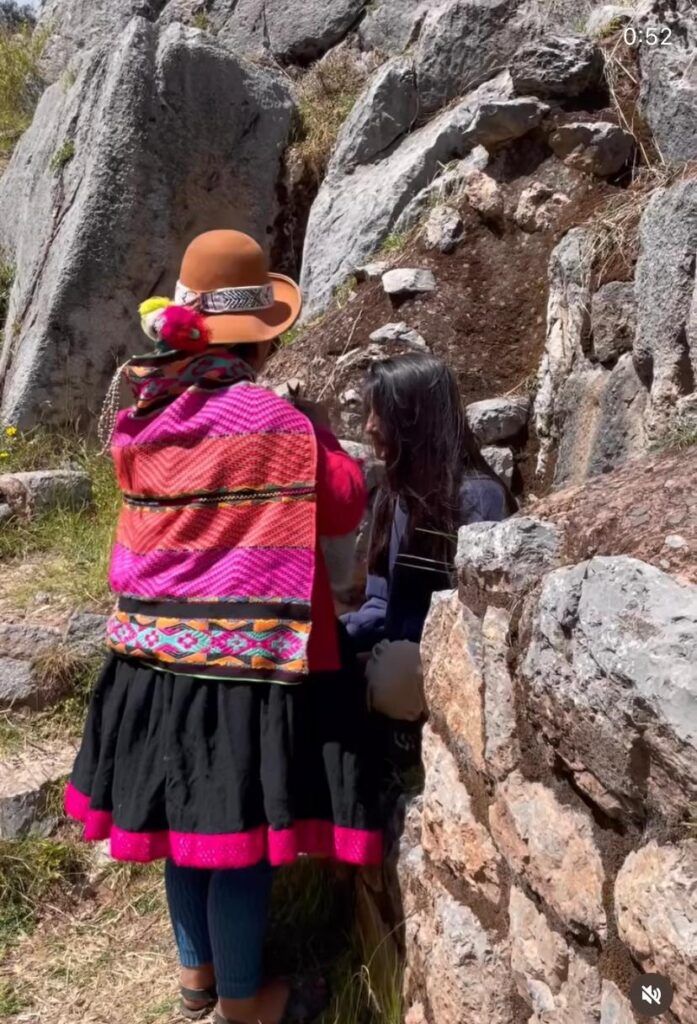
  1. Grounding – Place your hands on the earth or on the stones. Whisper softly: “Sulpayki Pachamama” (Thank you, Mother Earth). Feel the warmth and presence of the living stone.
  2. The Offering – Hold your coca leaves or natural elements to your heart. With your breath, infuse them with your intention. Release what no longer serves you, and call in what your spirit needs. Then, gently place them on the earth, between stones, or under a small rock as a humble despacho (offering).
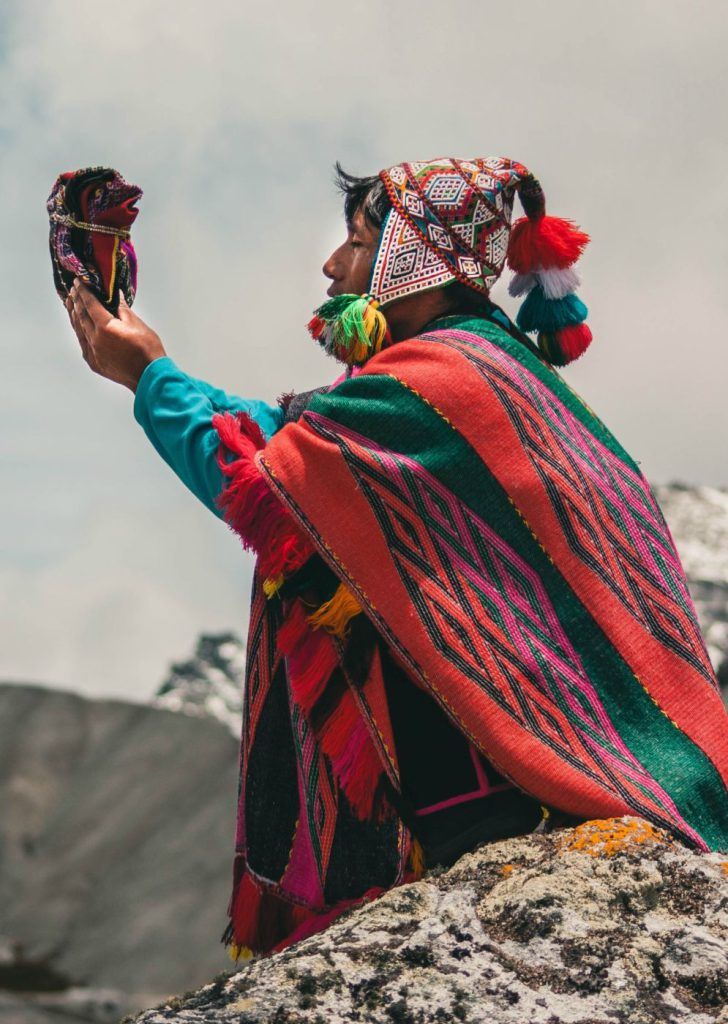
  3. Reciprocity with the Apus – Look up at the surrounding Apus: Huayna Picchu, Machu Picchu Mountain, and the sacred Vilcanota River below. Raise your hands in gratitude, acknowledging their presence as protectors and teachers.
  4. Integration – Close your eyes, feeling yourself as part of Kay Pacha, yet connected to Uku Pacha and Hanan Pacha. Whisper your promise to walk as a chakaruna, a bridge between worlds, carrying the energy of balance back into your daily life.

Closing

This simple act of offering reminds us that healing is rooted in relationship—not in taking energy from sacred places, but in giving, receiving, and remembering that we are always part of the greater kawsay pacha (the living cosmos).

Machu Picchu: A Sacred Portal

Posted on

Perched high in the Vilcabamba mountain range of Peru, Machu Picchu embodies not only a marvel of architecture but also a sacred geography where the Inca inscribed their worldview of energy, reciprocity, and cosmic order in stone. Beyond the lens of archaeology, the citadel reveals itself as a living temple—a place designed to maintain harmony between humans, Pachamama (Mother Earth), and the Apus (mountain spirits).

The Citadel of Machu Picchu as a Living Temple

In Andean thought, kawsay animates the universe as vital energy flowing through mountains, rivers, animals, humans, and even stones. The architecture of Machu Picchu reflects this sacred principle. The finely cut stones, fitted without mortar, were not just technical achievements but acts of ayni (sacred reciprocity). Building in this way honored the living essence of the rock, allowing the sami (subtle, refined energy) to circulate freely.

The Temple of the Sun exemplifies this. Its orientation to the solstices reveals an intentional dialogue between the citadel and the celestial cycles of Inti (the Sun). This alignment demonstrates a profound understanding: healing is found when human rhythms are synchronized with the rhythms of the cosmos.

Machu Picchu and the Three Worlds

The Inca cosmology divides existence into three interconnected realms:

  • Uku Pacha (the inner or underworld, the realm of origins, ancestors, and subconscious forces).
  • Kay Pacha (the here-and-now world of human life).
  • Hanan Pacha (the upper world of celestial beings, the divine, and future potential).

Machu Picchu was conceived as a bridge among these worlds. Through ceremonial practices, pilgrims and healers could journey inward to release hucha (heavy, stagnant energy) and open themselves to sami, embodying renewal and balance. The Intihuatana stone, often referred to as the “hitching post of the Sun,” was not merely an astronomical instrument but a spiritual anchor that linked human consciousness to cosmic order.

The Path of the Chakaruna

In Andean tradition, the chakaruna—literally “the bridge person”—is one who mediates between dualities: spiritual and material, human and divine, ancient and modern.

Visiting Machu Picchu can be understood as an initiatory journey, a call to awaken the inner chakaruna.

Walking among its terraces and temples, one encounters not only the genius of the Inca builders but also the invitation to participate in a living dialogue with Pachamama, Apus, and the ancestors.

A Place of Healing and Remembering

To engage with Machu Picchu is to engage with memory—personal, ancestral, and cosmic. At this site, the pilgrim cleanses their energetic body, renews reciprocity with the land, and remembers that healing is not simply individual but collective. The citadel continues to act as a portal, inviting us to remember that we are threads in the vast tapestry of kawsay pacha—the living cosmos.


References

  • Reinhard, J. (2007). Machu Picchu: Exploring an Ancient Sacred Center. Cotsen Institute of Archaeology, UCLA.
  • Dean, C. (2010). A Culture of Stone: Inka Perspectives on Rock. Duke University Press.
  • Zuidema, R. T. (1990). Inca Civilization in Cuzco. University of Texas Press.
Create Your Own Pachamama Altar Abroad- Part 2

Posted on

When we have our Pachamama Altar, even if we live far from the Andes, we remain connected to the mountains, rivers, and sacred sites that nourish Andean spirituality. The essence of Pachamama is not bound to geography—it is a living presence that dwells wherever we honor her.

In this second part, we will explore how to use your altar, adapting ancestral traditions to modern life.

Creating a home altar is more than decoration; it is a daily practice of reciprocity (ayni), a reminder that our lives are woven into the cycles of nature.

Whether you live in a busy city apartment or a quiet rural home, you can shape a sacred space where offerings, prayers, and silence bring you back into harmony with the Earth.

How to use your Pachamama Altar

Daily (3–7 minutes)

  • Open: light the candle; offer a breath and a word of gratitude.
  • Exchange: hold a kuya; exhale hucha into the stone; inhale sami from your Apu stone.
  • Offer: a petal, a few seeds, or a sip of water returned to the earth bowl.

Weekly (10–20 minutes)

  • Clean & refresh: replace wilted flowers; wipe the cloth edges; reorder with care.
  • Small despacho: on a leaf/paper, place sugar, seeds, flower petals, your written thanks. Blow prayers. Burn safely or bury in a planter.

Seasonal anchors (adjust for hemisphere)

  • Solstices & equinoxes: renew vows of ayni; make a larger offering; add or retire stones reflecting lessons learned (Zuidema, 1964; Urton, 1981).
  • Personal rites: new home, birth, grief, completion—mark them here.

Women-centered practices (Mamakilla focus)

  • Womb blessing: place silver or a moon token on the altar; hold it at your lower belly; breathe gently and say, “I honor the sacred body that carries wisdom and cycles.”
  • Grief & renewal: place a bowl of water for tears; add rose petals; after prayer, return the water to a plant.
  • Fertility & creativity: offer white/yellow flowers and a spoon of honey; ask for sweetness and right timing.

Travel Pachamama Altar (portable kit)

  • Small cloth, tea-light, travel tin of herbs (rosemary/eucalyptus), 2–3 tiny stones, a few bay leaves, seed mix.
  • Hotel room ritual: open window, set cloth, place stone + candle, say hello to local land, make a tiny offering (seed/petal), close with gratitude.

Safety, legality, respect in front of Pachamama Altar

  • Fire/smoke: never leave flames unattended; use water nearby; consider smokeless incense if needed.
  • Coca: respect local laws; use bay leaves as a perfect prayer substitute.
  • Sourcing: buy from living artisans; avoid trafficked “sacred” goods.
  • Cultural respect: credit the Andean lineages that inspire you; let your practice emphasize reciprocity, not display.

Simple opening & closing words for Pachamama Altar

  • Opening: Pachamama, Apus, Inti, Mamakilla—receive my gratitude. May this space hold sami for all my relations.”
  • Closing: “I give thanks. I walk in ayni. May the light I’ve received flow outward.”

Troubleshooting (common questions)

  • “I don’t feel anything.” Keep it simple and consistent. Daily 3-minute visits build sensitivity.
  • “It got cluttered.” Beauty matters. Remove extras; refresh flowers weekly.
  • “I moved.” Gather a pinch of soil from the old place; place it on the new altar; thank and release the old pacha.

References

  • Allen, C. J. (2002). The Hold Life Has: Coca and Cultural Identity in an Andean Community. Smithsonian.
  • Bastien, J. W. (1985). Mountain of the Condor: Metaphor and Ritual in an Andean Ayllu. Waveland.
  • Glass-Coffin, B. (1998). The Gift of Life and Death: Female Spiritual Healing in Northern Peru. Univ. of New Mexico Press.
  • Reinhard, J. (2005). The Ice Maiden: Inca Mummies, Mountain Gods, and Sacred Sites in the Andes. National Geographic.
  • Sharon, D. (2000). Wizard of the Four Winds: A Shaman’s Story. Prism.
  • Urton, G. (1981). At the Crossroads of the Earth and the Sky: An Andean Cosmology. Univ. of Texas Press.
  • Zuidema, R. T. (1964). The Ceque System of Cuzco. Brill.

Create Your Own Pachamama Altar Abroad

Posted on

A Pachamama Altar anchors your relationship with Mother Earth wherever you live. You don’t copy a museum display; you enter ayni—reciprocity—with the land you stand on. A well-kept altar helps you clear hucha (heavy energy), invite sami (refined, luminous energy), and stay in dialogue with mountains, waters, ancestors, and the living Earth.


What your Pachamama Altar embodies

The offering from one of our students.
  • Pacha (space-time): In the Andes, time and place form one living field. Your altar situates you inside that field—present, grounded, responsive (Urton, 1981).
  • Ayni (reciprocity): You give beauty and gratitude; the world gives guidance and vitality in return (Allen, 2002).
  • Sami & Hucha: You cultivate sami through offerings, breath, and beauty; you release hucha through cleansing and right relationship (Bastien, 1985).
  • The Sacred Family:
    • Pachamama—earth/womb/abundance.
    • Apus—mountain spirits/protection (Reinhard, 2005).
    • Inti (Sun)—clarity/order; Mamakilla (Moon)—care/intuition, with special resonance for women’s healing.

Materials for your own Pachamama Altar

Use what you have. Prioritize ethical, local, and sustainably sourced items.

Earth & elements

  • A small jar of soil (from a place you love), stones (preferably found, not bought), water (spring/ocean/river—local if possible), a candle (fire), incense or aromatic herbs (air).

Foundation

  • Pachamama Altar cloth or mestana (substitute: any clean, beautiful cloth you reserve for ceremony).
  • Small bowl or plate (earth/ceramic preferred).

Sacred objects

  • Photo or symbol for ancestors.
  • One or three kuyas (favorite stones) for protection, healing, gratitude.
  • A small Apu stone (a rock that reminds you of a mountain).

Offerings

  • Coca leaves where legal; substitutes: bay leaves or laurel for prayer bundles (k’intus).
  • Seeds/grains (corn, quinoa), flowers/petals, a bit of honey or sugar (sweetness for Pachamama).
  • Optional: silver piece (moon/feminine), sun symbol (gold/bronze), shell (mullu/Spondylus substitute).

Ethical note: avoid endangered materials (e.g., wild Spondylus); buy from artisans when possible; use local plants instead of overharvested palo santo.


Step-by-step: build your altar anywhere

  1. Choose the place
    Quiet, clean, and elevated if possible (shelf, small table, windowsill). Keep it separate from work/clutter.

4. Ground with the four
Place a stone (earth), bowl of water, candle (fire), and incense/herbs (air) in a simple cross or circle. Feel the room settle.

7. Add offerings
A few k’intus (3 bay leaves), a pinch of corn/quinoa, flower petals, a thread of honey. Say: Pachamama, I give beauty so beauty returns to all.”

2. Clean the space
Sweep and wipe. Open a window. Light a candle. Fan the area with herb smoke (muña/eucalyptus/rosemary). State: “I clear what is heavy; I welcome what is light.”

5. Invite the Sacred Family

  • Center: a small earth item (soil, seed, or a bowl of grain) for Pachamama.
  • Upper area: sun token for Inti; left or right: moon token (or silver object) for Mamakilla.
  • Back or upper corners: Apu stones (one or two), pointing outward as guardians

8. Greet the local land
Speak the name of the land/river/mountain where you live. Acknowledge Indigenous stewards if you know them. Promise reciprocity.

3. Lay the cloth (mestana)
Spread it smoothly. This becomes your ceremonial field—your micro-pacha.

Chumpi, the woolen sash

6. Place your kuyas (heart stones)
Three is classic: healing, protection, gratitude. Hold each stone to your heart; name its job; place it with intention.

9. Seal with breath
Take three slow breaths toward the altar—exhale whatever feels heavy; inhale as if the mountain itself is breathing you.

10. Close neatly
Extinguish flame respectfully (snuffer or gentle pinch). Keep the altar tidy; beauty is part of the medicine.


References

  • Allen, C. J. (2002). The Hold Life Has: Coca and Cultural Identity in an Andean Community. Smithsonian.
  • Bastien, J. W. (1985). Mountain of the Condor: Metaphor and Ritual in an Andean Ayllu. Waveland.
  • Glass-Coffin, B. (1998). The Gift of Life and Death: Female Spiritual Healing in Northern Peru. Univ. of New Mexico Press.
  • Reinhard, J. (2005). The Ice Maiden: Inca Mummies, Mountain Gods, and Sacred Sites in the Andes. National Geographic.
  • Sharon, D. (2000). Wizard of the Four Winds: A Shaman’s Story. Prism.
  • Urton, G. (1981). At the Crossroads of the Earth and the Sky: An Andean Cosmology. Univ. of Texas Press.
  • Zuidema, R. T. (1964). The Ceque System of Cuzco. Brill.

The Andean Calendar: Time as a Living Energy

Posted on

The Andean calendar embodies this living relationship, offering not only a way to track days but also to align with cosmic harmony.

In the Western world, time is often measured in straight lines—seconds, minutes, hours—marching toward deadlines. In the Andes, time (pacha) is not simply a measurement but a living energy. It breathes, cycles, and interweaves human life with the rhythms of Pachamama (Mother Earth), the Apus (sacred mountains), and the heavens.


Pacha: Space-Time as Unity

The Quechua word pacha means both time and space, revealing that the two cannot be separated.

Pachamama loves to receive offerings of flowers, food, and coca leaves from her children.

To live in alignment with pacha means to recognize that every moment exists in relationship—with place, with energy, with the natural and spiritual worlds. For the Andean people, the calendar is not abstract; it is inscribed in the movement of stars, the agricultural cycles, and ritual ceremonies.

The Agricultural Andean Calendar: Seeds, Harvests, and Rituals

Andean communities traditionally aligned their lives with the agricultural year.

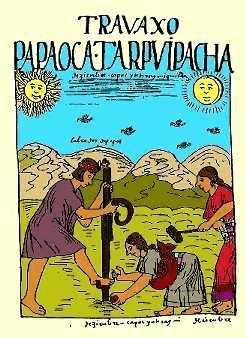
  • Planting Season (Ayar Pacha): Rituals of offering coca leaves and chicha to Pachamama ensured fertile soil and protection of crops.
  • Harvest Season (Coya Raymi): Gratitude ceremonies honored the abundance received, recognizing reciprocity (ayni) with the Earth.
  • Time of Rest: After the harvest, communities entered a period of renewal, reflecting the cyclical nature of life itself.

These agricultural times were not merely economic—they were spiritual thresholds, marking moments to honor reciprocity with the land.

The Lunar Andean Calendar: Women’s Time

The moon (Mamakilla) structured cycles for women, guiding menstruation, fertility, and ceremonies.

Each lunar phase carried different energies for planting, healing, and ritual.

Women, as guardians of this lunar wisdom, kept the rhythm of ceremonies tied to the feminine body and the cycles of water, reinforcing that time itself was feminine, fertile, and flowing.

The Solar Calendar: The Inti Raymi and Solstices

The sun (Inti) marked the great solstices and equinoxes.

“Father Sun, my Father,”

  • Inti Raymi (June Solstice) celebrated the rebirth of the sun and the renewal of life.
  • December Solstice represented the balance between dark and light, reminding the people of life’s duality.

These solar markers formed sacred pauses in the year where entire communities gathered for pilgrimage, offerings, and renewal.

Time as Spiral, Not Line

Unlike the Western linear concept of progress, Andean time unfolds in a spiral.

The past (ñawpa pacha), present (kay pacha), and future (qhipa pacha) are not separate but coexisting layers.

Healing work, ceremonies, and ancestral honoring allow people to re-enter past wounds and release them, while planting seeds for the future. Thus, time is a medicine, a spiral that carries us through cycles of growth and rebirth.

Living With the Calendar Today

For Andean healers and practitioners abroad, the Andean calendar continues to offer a guide:

  • Mark the solstices and equinoxes with ritual.
  • Observe the moon’s phases as guidance for rest, fertility, and creation.
  • Honor the agricultural cycles, even symbolically, by planting or cooking with seasonal foods.

In this way, the Andean calendar reminds us that to live fully is to walk in rhythm with the cosmos.

The Andean calendar is not a relic of the past—it is a living dialogue with time itself. By returning to its wisdom, we remember that every day carries sacred potential, every cycle holds medicine, and time is not a weight to endure but a living energy to embrace.


References

  • Allen, Catherine J. The Hold Life Has: Coca and Cultural Identity in an Andean Community. Smithsonian Institution Press, 2002.
  • Bastien, Joseph W. Mountain of the Condor: Metaphor and Ritual in an Andean Ayllu. Waveland Press, 1985.
  • Zuidema, R. Tom. The Ceque System of Cuzco: The Social Organization of the Capital of the Inca. Brill, 1964.
  • Urton, Gary. At the Crossroads of the Earth and the Sky: An Andean Cosmology. University of Texas Press, 1981.

What is Sami?

Posted on

In the Andean world, sami refers to the light, refined, and harmonious form of living energy that nourishes body, spirit, and land. Quechua-speaking peoples distinguish between sami (subtle, luminous energy) and hucha (dense, heavy energy).

Unlike Western frameworks that often divide reality into body, mind, and spirit, the Andean perspective sees energy as a continuum of life, flowing through all beings. Sami sustains this flow, like sunlight permeating the fields and waters of the Andes.

Sami as a Gift of Pachamama and the Apus

Andean people believe sami originates from Pachamama (Mother Earth), the apus (sacred mountains), and the stars. By walking in ayni (sacred reciprocity), humans invite it into their lives.

Farmers receive sami when they offer coca leaves to the earth before planting; healers draw it from springs and mountains to restore balance in their communities. Sami is not simply “positive energy,” but a sacred vitality that aligns the individual with the larger cosmic order.

Practices to Cultivate Sami

Despacho Ceremonies

During a despacho, practitioners arrange offerings of coca leaves, flowers, silver, corn, and sweets in a ritual bundle. When they blow prayers into the coca leaves, they infuse the offering with it, sending gratitude to Pachamama and inviting reciprocity.

Breathwork and Qhaqoy

Healers also cultivate sami through Andean breathwork (samiy or qhaqoy). By breathing consciously with the land—exhaling dense energy and inhaling it from mountains, rivers, or the sky—participants realign their bodies with the flow of kawsay (living energy).

Sacred Landscapes as Sources

Pilgrimage sites such as Ausangate or Qoyllur Rit’i are revered as fountains of sami. Pilgrims ascend mountains not only for physical endurance but to bathe in the radiant energy of glaciers, stars, and sacred fire.

Sami and Healing

Andean healers view illness not as a purely biological dysfunction but as an energetic imbalance—an accumulation of hucha (dense energy). Healing involves transforming hucha into sami. For example, during a limpia (cleansing ritual), a healer may pass herbs, stones, or an egg over the body, asking Pachamama to absorb hucha and return it to the patient.

Women, especially, have been seen as carriers of it because of their connection to fertility, moon cycles, and the womb as a vessel of life force. In ceremonies, women often channel sami through song, weaving, and offerings, embodying the balance of receptivity and creative power.

Sami in Daily Life

The Andean approach reminds us that sami is not reserved for ceremonies alone. People cultivate it by living in ayni—sharing food with neighbors, caring for the land, honoring ancestors, and practicing gratitude. Every act of reciprocity strengthens the flow of it.

Why it Matters Today

In a world burdened by stress, disconnection, and exploitation of nature, sami offers an alternative vision of health and spirituality. It calls us to see energy not as abstract, but as a living thread binding us to Pachamama, our communities, and ourselves. To live with it is to live in balance—receiving, giving, and walking with lightness.


References

  • Allen, C. J. (1988). The Hold Life Has: Coca and Cultural Identity in an Andean Community. Smithsonian Institution Press.
  • Bastien, J. (1985). Mountain of the Condor: Metaphor and Ritual in an Andean Ayllu. Waveland Press.
  • Classen, C. (1993). Inca Cosmology and the Human Body. University of Utah Press.
  • Joralemon, D. (1990). The Selling of the Andean Soul: Shamanism and Global Commerce. Anthropological Quarterly, 63(2).
  • Van den Berg, H. (1990). La cosmovisión andina y su vigencia. Cuzco: Centro Bartolomé de Las Casas.